
I remember the moment clearly. I was hobbling out of my gym session, frustrated and puzzled. My IT band was inflamed again, despite all the stretching and foam rolling I had done. The pain was sharp, nagging, and relentless. It felt like my body was betraying me, and I couldn’t quite understand why the usual remedies weren’t working anymore.
Why Your IT Band Won’t Calm Down—Even When You Think You’re Doing It Right
This experience is surprisingly common among athletes and fitness enthusiasts. You might spend hours foam rolling, stretching, or using methods touted as “fixes” for IT band issues. Yet, the inflammation persists. That’s because there’s a sneaky culprit hiding in plain sight—the way your feet move when you walk or run might be silently sabotaging your efforts. It’s like trying to fix a leaky faucet without tightening the main valve—you’re working on the symptoms, not the cause.
Is Your Foot Acting Up and Wrecking Your Knee?
Here’s a fact that might surprise you: over 70% of knee pain cases are linked to foot mechanics, yet many overlook this vital connection. Early on in my journey, I made the mistake of solely focusing on my knee and hip stretches. I ignored how my foot was striking the ground, which turned out to be a critical oversight. Addressing foot motion and alignment changed everything for me.
In today’s post, I’ll share how that subtle foot flaw could be the Achilles heel of your ongoing IT band inflammation—and more importantly, how to correct it. Improving your foot function isn’t just about comfort; it can significantly influence your overall biomechanics, helping you heal faster and prevent future flare-ups.
Are you tired of dealing with persistent IT band pain despite following all the so-called “best practices”? If so, keep reading. What I discovered changed my approach—and it might do the same for you. We’ll dive into the real root cause and practical steps that you can implement today to finally get relief.
Let’s start by understanding what’s really happening beneath the surface. It’s time to look down at your feet—because that’s where the solution begins.
Assess Your Foot Position
Start by noticing how your foot lands during walking or running. Use a mirror or record yourself to observe if your feet collapse inward or roll excessively outward. This subtle misalignment can silently tension your IT band, perpetuating inflammation. I once caught myself overpronating during a quick walk, which was a game-changer. By identifying the issue, I could focus on corrective steps.
Use a Simple Foot Check
Sit with your feet flat on the ground, knees bent at 90 degrees. Place a small towel or paper under one arch and see if it stays snugly in place when you shift weight or walk. If it slips or feels unstable, your foot’s arch isn’t supporting properly, which can cascade up to your knee and hip. Addressing this issue early prevented me from further IT band flare-ups.
Implement Targeted Foot Drills
Activate and strengthen your foot muscles with exercises like toe curls and arch lifts. For instance, try picking up marbles with your toes or squeezing a resistance ball beneath your arch. I dedicated five minutes daily, and gradually, my foot’s stability improved. This stabilization reduces abnormal strain on the IT band, speeding recovery.
Manage Overpronation or Supination
If your foot rolls inward (overpronation) or outward (supination) excessively, consider custom insoles or supportive footwear. I initially ignored my poorly fitted shoes, but after switching to shoes with proper arch support, my pain diminished significantly. Dynamic assessments, like checking your foot strike during movement, also help refine your correction plan. For in-depth insights, see how foot mechanics influence knee load at the foot trick to stop your knees from caving during squats.
Corrective Exercises for Better Alignment
Incorporate exercises like short foot drills, where you consciously activate your intrinsic arch muscles. Lie on your back, and press your big toe into the ground without curling your toes—this trains your arch control, akin to a micro-repatterning of your gait. During a personal trial, I stuck with this daily, which noticeably improved my foot’s support and helped settle my IT band irritation.
Address Compensation Patterns
Sometimes, habitual foot misalignments lead to compensatory movements higher up. Use mirrors or prompts to ensure your knees track over your toes during squats or lunges. If your knees cave inward, it could be due to poor foot control. Correcting this involved focusing on foot placement during movement, which over time decreased load on my IT band. For more on optimizing movement mechanics, explore how foot control impacts knee stability.
Remember, adjusting your foot mechanics isn’t a quick fix; it requires consistency. My initial attempts were messy—slip-ups and frustration—but perseverance paid off, leading to a pain-free stride and healthier knees.
While it’s common to assume that proper adjustments and rehab follow a straightforward, linear process, the reality is far more nuanced. Many practitioners and patients fall into the trap of oversimplification, believing that a quick fix or a single treatment can resolve complex issues like back pain or post-injury recovery. This misconception can lead to persistent problems or even exacerbate existing conditions. For example, some believe that chiropractic adjustments alone will permanently correct functional misalignments, but research shows that without addressing underlying movement patterns and neuromuscular control, such corrections are often temporary. Studies like those published in the Journal of Manipulative and Physiological Therapeutics highlight that sustained improvements depend on comprehensive approaches, not just spinal manipulation.
One common myth is that pain indicates the site of injury: in reality, pain often reflects compensation patterns or neural sensitization rather than the primary source. This misunderstanding can cause practitioners to focus solely on symptomatic areas—like performing adjustments directly on a painful vertebra—without correcting the flawed movement mechanics upstream, such as inefficient core stability or poor foot biomechanics. Overlooking these factors is a classic mistake that keeps patients trapped in a cycle of temporary relief.
**Beware the Maintaining progress in back pain relief and sports rehabilitation requires the right set of tools and a commitment to consistent maintenance routines. Personally, I rely heavily on a combination of targeted mobility devices and specialized software to track my progress and ensure ongoing improvements. A high-quality foam roller remains a staple in my toolbox; however, I avoid generic ones and opt for the Rumble Roller because its variable surface texture offers more effective tissue release, especially when I suspect my lower back is tightening up—something I frequently observe when addressing postural issues like 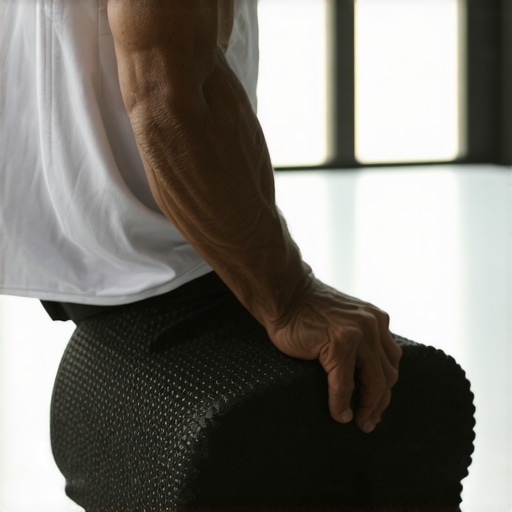 with its textured surface designed for deep tissue massage. I use this regularly, especially after heavy lifting sessions or long periods of desk work, to prevent spasms and stiffness, aligning with insights shared in articles like https://motiontherapypro.com/why-foam-rolling-your-lower-back-is-worsening-your-spasms.
Reflecting on my journey with IT band inflammation, I realize that the real breakthrough came not from pushing harder with stretches or foam rolling, but from uncovering the silent role of foot mechanics. That insight transformed my approach and accelerated my recovery.
Lessons That Changed My Perspective on Movement
- Comfort Isn’t Always Correct: I used to assume that relieving pain meant pushing through it, but I learned that often pain is a sign to re-evaluate fundamental mechanics, especially at the foot level.
- Small Adjustments Matter: Tiny shifts in foot alignment had outsized effects on my knee and IT band health. It taught me that precision in movement habits can be more impactful than big, sweeping exercises.
- Patience Pays Off: Correcting ingrained movement patterns takes time. Rushing or impatient efforts only prolonged my discomfort. Persistence with targeted drills gradually rewired my body.
- Holistic Approaches Win: No single fix suffices. Combining foot awareness, supportive footwear, and alignment exercises created a synergy that finally brought lasting relief.
- Listen to Your Body Intuitively: Over time, I tuned into subtle cues—like arch stability or knee tracking—that guided me toward effective corrections, rather than relying solely on external advice.
Tools That Made the Difference in My Practice
- Foam Rollers with Texture: I swear by the Rumble Roller, which provided deeper tissue release and reminded me that quality tools matter.
- Supportive Footwear and Insoles: Custom insoles tailored to my foot mechanics helped restore stability and prevented re-injury—underscoring the importance of proper shoe fit.
- Video Analysis Apps: Recording my gait allowed me to spot issues like overpronation or uneven weight distribution, facilitating targeted corrections.
- Professional Guidance: Working with a movement specialist early on prevented me from developing compensatory patterns and accelerated my path to health.
Keep Moving Forward with Confidence
If you’re battling persistent IT band woes, remember that healing often requires peeling back layers to find the root cause—sometimes, beneath your feet. Your journey might be different, but the principles of patience, awareness, and tailored corrections will serve you well. Embrace the process, trust your body’s feedback, and cherish each small victory along the way. Ready to take those first steps toward freedom from pain? Share your thoughts or questions below—you’re not alone in this.