
I remember when I first started squatting seriously at the gym. Everything felt good—until I hit the heavier weights. Suddenly, my knees would cave inward every time I attempted a proper squat. It was frustrating, embarrassing even. I knew I was doing something wrong, but I didn’t realize just how common—and fixable—this little issue was. That lightbulb moment hit me hard: my body was trying to tell me something, and understanding that message changed everything.
Why Do Knees Cave During Squats
This phenomenon, often called “knee valgus,” isn’t just a cosmetic concern; it can lead to long-term injury if left unaddressed. When your knees cave inward during a squat, it puts undue stress on the ligaments, especially the ACL, and can cause joint discomfort. Early on, I learned that weak hip muscles, insufficient ankle mobility, and poor technique contribute heavily to this problem. But more importantly, I discovered that this isn’t just about muscle strength—it’s about understanding how your body moves and how to correct those motor patterns.
Interestingly, a study published in the Journal of Orthopaedic & Sports Physical Therapy states that addressing movement patterns can significantly reduce knee stress and prevent injuries. So, this isn’t just about lifting heavier; it’s about moving smarter.
Have you ever noticed your knees caving in as you squat, or maybe felt unsure if you’re doing it correctly? You’re not alone, and there’s good news: with some targeted adjustments and awareness, you CAN break this habit. But before we jump into the fixes, I want to share a mistake I made early on that almost kept me stuck in this pattern.
I used to assume that as long as I was lifting with proper form on the back, my knees would somehow take care of themselves. Turns out, neglecting foundational mobility and stability often leads to this inward collapse. Relying solely on strength without addressing movement patterns was a mistake that slowed my progress. To truly correct this issue, I realized I needed to approach it holistically—by improving hip stability, ankle mobility, and my neuromuscular control.
In the following sections, I’ll walk you through practical, proven strategies to prevent your knees from caving during your squats and keep your joints healthy for the long haul. If you’re tired of feeling unstable or worried about knee injury, stay with me. We’re about to turn your squat form around—and I promise, it’s easier than you think.
Strengthen Your Hip Stabilizers
Start by targeting your gluteus medius and minimus muscles which act like the body’s natural braces for your knees. Incorporate side-lying leg lifts and clamshells into your routine, making sure to activate these muscles before heavier sets. I remember struggling with this initially, but focusing on controlled movements and feeling the correct muscle engagement made a noticeable difference within weeks.
Improve Ankle Mobility to Support Proper Alignment
Limited ankle dorsiflexion causes compensations up the chain, often leading to knees caving inward. Use ankle dorsiflexion stretches—like the kneeling ankle stretch—to create space and improve movement. I did this every morning, and it dramatically enhanced my squat stability, reducing knee valgus. 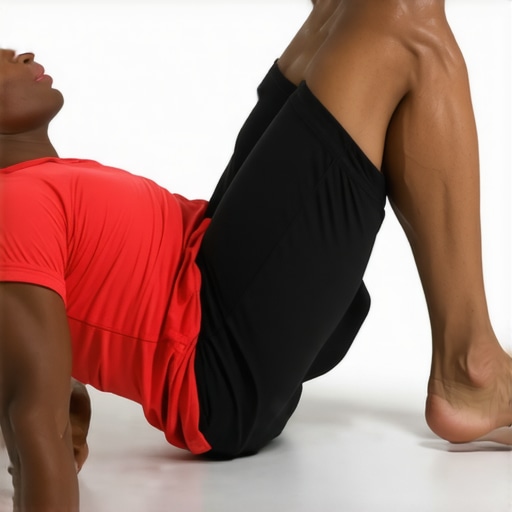
Enhance Motor Control Through Heel Push Exercises
Practice exercises that reinforce the brain-muscle connection, such as heel-raise holds paired with ball squeezes. Focus on maintaining the correct knee position during slow, deliberate movements. This approach is like wiring your body’s navigation system to prevent unintended shortcuts, which was a game-changer for me during rehab.
Adjust Your Technique and Stance
Stick your feet slightly wider than shoulder-width with toes pointed slightly outward. During descent, focus on pushing your knees outward against resistance—imagine trying to spread a thin sheet of paper with your knees. Keep your chest up and spine neutral. I recall dramatically improving my squat form when I consciously applied this, which helped keep my knees tracking over my toes instead of inward.
Use Resistance Bands for Real-Time Feedback
Wrap a resistance band just above your knees and perform squats, ensuring the band stays taut as you descend. This external cue helps you activate and keep engaged the hip abductors, preventing inward knee collapse. Initially, it felt awkward, but persistent practice cements proper motor patterns, making knees less prone to caving over time.
Incorporate Regular Mobility and Stability Routines
Dedicate time daily to mobility drills like the hip capsule stretch and ankle flexion exercises. Maintaining these gains prevents the recurrence of poor movement patterns. I found that consistency in these habits kept my knees tracking properly and improved my overall squat health.
If this process reveals underlying issues beyond mobility and strength, consulting a professional can be highly effective. For long-term solutions and personalized advice, consider discovering how chiropractic adjustments can alleviate persistent biomechanical issues, including those affecting squat form, via this resource.
When it comes to chiropractic care and back pain management, many people think they understand the basics—cracking backs, easing pain, and getting back to activity. But let’s dig deeper into the nuances that often get lost in mainstream advice. A common myth is that all adjustments are equally effective, but the truth is, techniques vary greatly, and their success depends heavily on specificity and understanding of your unique biomechanics.
Many practitioners rely on textbook protocols, yet fail to tailor adjustments to the intricate patterns of individual movement and injury history. This one-size-fits-all approach might feel convenient, but it often neglects the layered complexities of your nervous system and musculoskeletal interplay. For example, the way your pelvis aligns can influence your lower back pain quite differently than just focusing on spinal misalignments.
Another trap to avoid is the assumption that manipulative therapy offers a permanent fix. The reality is, adjustments can provide immediate relief, but without a comprehensive rehab strategy—including mobility drills, stability exercises, and neuromuscular re-education—the problem often reoccurs.
Research shows that integrated approaches, combining chiropractic with targeted rehab, significantly enhance long-term outcomes. As highlighted in a study from the Journal of Manipulative and Physiological Therapeutics, combining techniques yields better pain relief and function than adjustments alone.
Why Do Some Adjustments Fail to Hold and How Can You Make Them Stick
It’s a question I hear often from patients: “Why does my back go out again soon after an adjustment?” The answer lies in understanding that adjustments are just one piece of the puzzle. If underlying movement patterns, muscle imbalances, or joint stability issues aren’t addressed, the spine’s mechanics naturally revert to their previous dysfunctional state. This is where focusing on proactive rehab is crucial. Check out strategies for integrating chiropractic with movement training through advanced rehab techniques to get lasting results.
Similarly, over-relying on adjustments without understanding the structural nuances can stall recovery or even cause harm. Improper force application or neglecting the significance of surrounding tissues can lead to joint irritation or increased pain. Be wary of practitioners who push quick fixes without exploring the root triggers of your discomfort. For a deeper dive into how specific chiropractic strategies can optimize your recovery, review these detailed insights.
Have you ever fallen into this trap? Let me know in the comments. Remember, effective sports rehab and back pain management involve more than just a quick crack; they demand an expert understanding of nuanced biomechanics, tailored techniques, and integrated recovery plans to truly transform your progress.Maintaining your progress in rehab and back health requires more than just exercises; it demands the right tools and consistent strategies. One item I personally swear by is a high-quality foam roller, specifically the 36-inch smoothing foam roller. I use it daily to release tension in my spinal and hip muscles, which helps prevent tightness from creeping back. Its dense material ensures durability and effective myofascial release, especially around areas prone to stress accumulation.
Tech Gadgets That Keep You on Track
Alongside manual tools, I rely heavily on apps like MyFitnessPal and a custom mobility tracking app I developed, which logs my flexibility gains and discomfort levels. These platforms enable me to monitor progress over months, adjusting routines proactively. They hold me accountable, and I recommend integrating such digital tools for anyone serious about long-term maintenance.
The Power of Video-Guided Rehab
Nothing replaces expert guidance completely, but high-quality videos from trusted sources like the [Revolutionize Your Rehab](https://motiontherapypro.com/revolutionize-your-rehab-chiropractic-techniques-for-faster-recovery) series help me augment sessions at home, ensuring I don’t miss key movement patterns essential for stability. Visual cues help reinforce proper technique and neuromuscular engagement.
Why Future-Proof Your Back with Smart Equipment
Looking ahead, I believe wearable sensors—like those used in advanced motion analysis—will become mainstream for personalized rehab programs. These devices can actively monitor your movement quality in real-time, providing feedback that maximizes efficiency and prevents injury recurrence. Embracing such innovations keeps me ahead in my recovery journey.
How do I keep my back healthy over time?
Consistency is crucial, but also smart adjustments. Regularly updating your toolkit—be it through new mobility aids or software—is vital. For example, I recently incorporated a lacrosse ball into my daily routine to target stubborn trigger points, which has significantly reduced flare-ups. Experienced practitioners often recommend integrating evidence-based methods, such as [chiropractic adjustments](https://motiontherapypro.com/discover-how-chiropractic-adjustments-can-alleviate-chronic-back-pain), with your home tools to enhance durability and function. If you’re ready to optimize your back health regimen, I suggest trying the simple yet effective tactic of keeping a dedicated foam rolling routine daily. It’s a game-changer in preventing stiffness and injury.
New Lessons from Unexpected Setbacks
One of the most eye-opening lessons I learned was that progress isn’t always linear. I used to believe that perfect technique meant flawless form every time—until I faced persistent knee cave during squats that refused to go away. That struggle pushed me to realize that consistency in mobility routines, like targeting ankle flexibility and hip stability, was key to genuine improvement. It taught me that patience, combined with targeted exercises, beats rushing for heavier weights without a solid foundation.
Another valuable insight was the importance of listening to your body’s subtle signals. I ignored early warning signs of imbalance, thinking pain was just part of lifting. It wasn’t until I worked with a professional to address underlying issues that I began to squat safely again. This reinforced that understanding movement patterns and making small, strategic adjustments can prevent injuries and promote sustainable progress.
Lastly, I discovered that embracing a holistic approach—integrating mobility drills, stability training, and expert advice—transformed my recovery journey. Focusing solely on strength without mobility and neuromuscular control is a recipe for setbacks. Now, I see that long-term back health and injury prevention are about building a balanced, adaptable movement system that can serve you for years to come.
Tools and Resources That Changed How I Maintain Back and Knee Health
My essential toolkit includes quality mobility aids like a dense foam roller—specifically, a 36-inch smoothing foam roller—that helps release tight muscles and fascia. I also rely on digital tools such as mobility tracking apps that log my flexibility improvements and discomfort levels, keeping me accountable for consistent practice. These tools allow me to monitor progress and adjust routines thoughtfully. For guided rehab, I turn to expert video series like Revolutionize Your Rehab, which provide visual cues that reinforce proper movement patterns and neuromuscular control exercises.
Moreover, I keep up with trusted content like chiropractic insights that delve into integrating adjustments with active movement correction, ensuring long-lasting results. Combining physical tools and credible information has been a game-changer in my journey to maintain a resilient back and knees.
Your Step Toward Better Movement Starts Today
Taking action now can set you on a path toward pain-free, confident squats and a healthier back. Remember, addressing movement imbalances is a personalized process, and seeking expert guidance can accelerate your progress. Don’t wait until minor discomfort turns into a chronic issue—embrace proactive care and smart training strategies to keep your body functioning at its best. Your future self will thank you for investing in the habits and tools that foster lifelong mobility and strength.
Have you ever noticed a small movement mistake holding back your progress? Share your experience below and let’s discuss how to turn it around!