
I’ll never forget the night I literally jumped out of bed because it felt like someone had driven a live electrical wire into my big toe. I wasn’t even moving. I was just lying there, trying to sleep, when zap—my foot decided it was time to scream. I spent the next three hours pacing on the cold tile floor, wondering if I’d ever walk normally again. It’s a lonely feeling, isn’t it? That burning, buzzing, or sharp stabbing that no one else can see but feels like your world is ending.
Stop Treating the Symptom and Find the Real Source
For a long time, I made the classic rookie mistake: I thought the problem was just my skin or muscles being “tight.” I’d spend twenty minutes every morning aggressively pulling my toes back, thinking more flexibility was the cure. It wasn’t. In fact, why your arch support might be weakening your ankle stability is a lesson I learned the hard way—sometimes “support” just masks a deeper mechanical failure. I was treating my foot like a separate piece of machinery instead of part of a whole system. When that nerve pain hits, your body isn’t just complaining; it’s firing off a distress signal. Whether you’re dealing with Morton’s neuroma or general neuropathy, the fix isn’t usually in a bottle of ibuprofen. I eventually realized that my desk chair and even how to adjust your bike seat to stop numb feet play massive roles in how those nerves down low behave.
Is all this nerve gliding talk actually worth the hype?
You’ve probably seen people online waving their legs around and calling it “flossing” or “gliding,” and if you’re like I was, you’re rolling your eyes. It sounds like some new-age gym fad. But here is the reality: nerves don’t like to be stretched; they like to slide. According to the Foundation for Peripheral Neuropathy, nerve damage affects about 30 million people in the U.S. alone, and many of those cases are exacerbated by simple compression that we ignore for years. When I finally stopped pulling and started using a nerve glide for chronic burning leg pain, the “electric shocks” actually started to quiet down. It wasn’t overnight magic, but it was the first time I felt like I was in control instead of just waiting for the next zap. If you’ve ever tried a 30-second foot massage and wondered why the relief only lasted five minutes, you’re exactly where I was three years ago. Have you ever felt that sudden, sharp “zing” in your foot while just sitting on the couch? Tell me about it—I want to know if yours feels like heat, ice, or electricity. Let’s get into the actual mechanics of why this is happening and how we can finally shut it off.
Stop Stretching and Start Gliding
Think of your nerves like a garden hose running through a slightly larger PVC pipe. If the hose gets caught on a rough edge or if the pipe gets pinched, the water—or in your case, the electrical signal—stops moving smoothly. Most people try to fix this by pulling on the ends of the hose, which just makes the kink tighter. This is why your aggressive calf stretches often lead to more burning. Instead of tension, we need movement. I remember a specific Tuesday three years ago when I was determined to ‘stretch’ my way out of a burning sensation in my arch. I spent twenty minutes doing deep lunges, only to find that by the time I stood up, my foot felt like it was on fire. That was the day I realized that nerve gliding is about creates space, not length. You aren’t trying to make the nerve longer; you are trying to make it slide through the surrounding tissue without getting snagged.
Look Higher Than Your Foot
If the ‘zing’ is in your big toe, the problem might actually be originating 18 inches north of your ankle. Many people don’t realize that the nerves serving your feet exit the spine at the L5-S1 level. If you are constantly slumped, you are likely putting pressure right on the source. Learning how to sit without compressing your l5-s1 disc is often the missing link in foot rehab. When I finally combined my foot movements with better spinal alignment, the relief lasted hours instead of minutes. You can also discover how chiropractic adjustments can alleviate chronic back pain by addressing these mechanical hang-ups that keep your nerves in a state of constant irritation. It’s about clearing the path for the signal before it even reaches your leg.
The Floss Technique That Silences the Zaps
To perform a proper nerve glide, you have to coordinate two joints simultaneously to ‘floss’ the nerve back and forth. Sit on the edge of a chair and slowly straighten your knee while looking up at the ceiling. Then, as you bend your knee back under the chair, tuck your chin to your chest. This creates a rhythmic sliding motion. If you feel a sharp pull, you’re going too far. This isn’t a ‘no pain, no gain’ situation. Using a nerve glide for chronic burning leg pain twice a day worked better for me than any ice pack ever did. 
Restore Toe Mechanics to Free the Nerve
The nerves in the bottom of your foot are often compressed because the small muscles in the foot have become weak and rigid. When your big toe loses its ability to move independently, the entire arch collapses, dragging the nerves with it. I found that performing a 30-second big toe stretch for better squat depth didn’t just help my gym form—it actually decompressed the medial plantar nerve. If you’ve spent years in narrow shoes, your feet have essentially forgotten how to function as a shock absorber. This mechanical failure keeps the nerves in a state of ‘high alert.’ You need strategic chiropractic solutions for long-term back health and foot function to ensure that your gait isn’t actively causing the next flare-up every time you take a step. Every time you walk, your foot should expand and contract; if it’s a rigid block, the nerves are the first to pay the price.Let’s get real about why those zaps keep coming back even after you think you’ve fixed your form. Most people are taught that ‘perfect posture’ is the holy grail of back and nerve health, but in my experience, obsessing over a rigid spine is exactly what keeps your nerves screaming.
Why Sitting Up Straight Might Be Ruining Your Progress
When you force yourself into a military-straight position, you often create excessive muscular tension that actually compresses the very nerve roots you’re trying to save. In fact, why your back hurts more when you try to sit perfectly straight is one of the most common complaints I hear from people who have ‘tried everything.’ Nerves need a dynamic environment, not a rigid one. If you’re locked into a posture, your nerves can’t slide properly through the tissues. This is where essential tips for managing back pain through healthy lifestyle choices move beyond simple ‘do’s and don’ts’ and into understanding how your unique anatomy moves throughout the day.
Does Your Spine Actually Need a ‘Reset’ to Fix Your Toes?
It sounds counterintuitive, but a foot problem is rarely just a foot problem. Advanced sports rehab isn’t just about icing the sore spot; it’s about looking at the entire kinetic chain. Research published in the Journal of Manipulative and Physiological Therapeutics highlights that spinal manipulation can significantly reduce peripheral nerve sensitivity by altering the neurophysiological response. This is why the science behind chiropractic adjustments for back pain relief is so critical—it’s not just about ‘popping’ bones, it’s about resetting the electrical signals and reducing the ‘noise’ in your nervous system. When the source is cleared, the symptoms at the end of the line—like that burning in your big toe—finally have a chance to dissipate.
The Danger of the Tennis Ball ‘Massage’
Here is a trap I see high-performers fall into all the time: ‘smashing’ the pain. If you feel a knot in your lower back or glute, your first instinct is probably to grab a tennis ball and lay on it. Stop. If that knot is actually an inflamed nerve, you are essentially bruising a sensitive wire. This is why you should stop rolling your lower back on a tennis ball immediately if you’re experiencing radiating pain. You’re trading thirty seconds of ‘good pain’ for three days of increased inflammation. 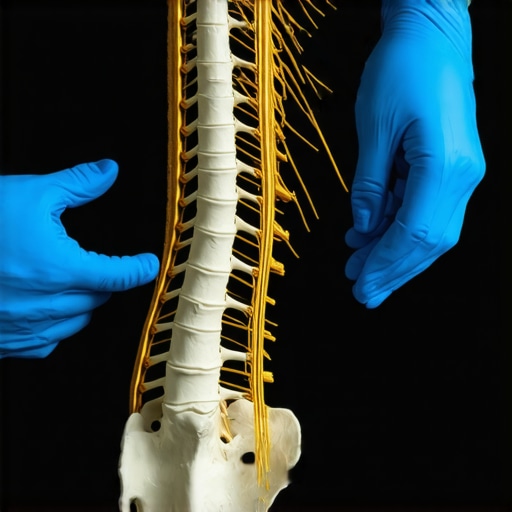
Moving from Temporary Relief to Permanent Stability
To truly break the cycle, you have to integrate strategic chiropractic solutions for long-term back health that focus on mobility and stability. In high-level sports rehab, we recognize that the nervous system is the ultimate governor of performance. If your brain senses that a nerve is being pinched or over-tensioned, it will literally shut down muscle recruitment to prevent damage. This is why you might feel weak in the gym despite having plenty of muscle mass. This disconnect is central to the role of chiropractic care in effective sports injury recovery—it bridges the gap between raw strength and neurological precision. Have you ever fallen into the ‘posture trap’ or made your pain worse with a foam roller? Let me know in the comments; I’ve been there, and I want to help you steer clear of those rookie mistakes.Once you stop making those ‘rookie mistakes’ like smashing your nerves with tennis balls, you enter the phase I like to call the ‘maintenance of freedom.’ It’s that sweet spot where the zaps have faded, but you know your anatomy well enough to realize they are just one bad habits’ distance away from returning. For me, staying pain-free meant investing in tools that actually respect the mechanics of the human foot. I threw away my narrow ‘fashion’ sneakers and switched to footwear that allows for full toe splay. Why? Because when your toes can’t move, your arch collapses, and your nerves get strangled. It’s one of those essential tips for managing back pain through healthy lifestyle choices that people often overlook until it’s too late. I also started using a firm cork roller—unlike a soft ball, it provides the structural feedback my fascia needs to stay supple without irritating the deeper nerves.
The Gear That Actually Saved My Sanity
If I could go back and tell my younger self one thing, it would be that consistency beats intensity every time. I now use a specific 5-minute decompression routine after a 10-hour shift that resets my spine and gives my lower leg nerves room to breathe. The American Academy of Physical Medicine and Rehabilitation (AAPM&R) notes that multi-modal care—the combination of specific exercise, manual therapy, and environmental adjustments—is the gold standard for preventing the recurrence of radicular pain. This is exactly where strategic chiropractic solutions for long-term back health come into play. It isn’t just about fixing what is broken; it’s about optimizing the hardware so it doesn’t break again under the stress of daily life or heavy lifting. 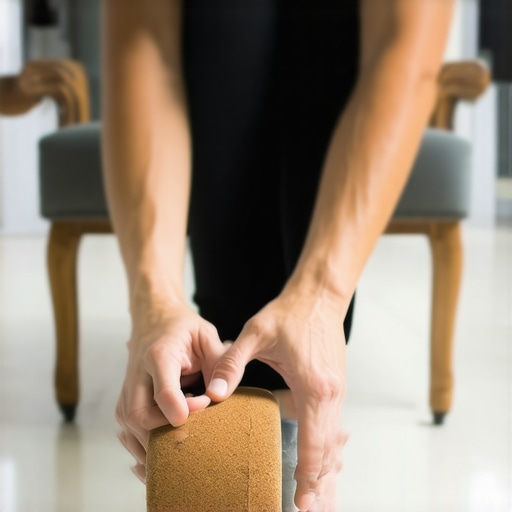
How do I keep my feet and nerves healthy over the long haul?
Maintenance isn’t a chore; it’s a series of small, high-reward pivots. I’ve learned that the role of chiropractic care in effective sports injury recovery extends far beyond the initial rehab phase. I now treat my adjustments like a ‘software update’ for my nervous system. If I feel even a hint of that old stiffness, I know it’s time to check my gait. Often, I find that why your ankle sprain from high-school still affects your gait is the culprit, as old compensations try to sneak back into my walking pattern.
Where the Future of Nerve Health is Heading
I predict we are moving toward a world of ‘wearable biofeedback’ where your socks or shoes will alert your phone when your arch begins to collapse or your stride becomes asymmetrical. We are already seeing the beginning of this in high-end sports labs. Until then, you are your own best sensor. If you start to feel that ‘phantom’ heat or a slight hum in your big toe, don’t wait for it to become a full-blown electrical shock. I want you to try that five-minute decompression tonight—don’t overthink it, just do it. It’s the simplest way to tell your nervous system that it’s safe to relax. We’ve covered the ‘why’ and the ‘how’ of the immediate fix, but the real magic happens when you turn these small moves into a lifestyle that your body actually enjoys.
Hard Truths from the Nerve Pain Trenches
After years of trial and error, I’ve realized that the ‘shock’ in your toe is rarely just a localized fluke. One major lesson I learned is that ‘perfect’ posture is often a trap. In fact, why your back hurts more when you try to sit perfectly straight explains how rigidity actually chokes the nerves instead of freeing them. I also discovered that the science behind chiropractic adjustments for back pain relief isn’t about chasing ‘pops’; it’s about lowering the overall noise in your nervous system. Lastly, never underestimate your footwear—if your toes can’t splay, your nerves simply cannot breathe. Movement, not static stretching, is the only way out.
The Gear That Actually Earned a Spot in My Gym Bag
You don’t need a room full of gadgets, but you do need tools that respect human mechanics. I swear by a firm cork roller for fascia work, as it doesn’t compress the nerves like a tennis ball does. I also recommend a consistent essential tips for managing back pain through healthy lifestyle choices approach, which includes switching to wide-toe-box shoes that prevent the foot from becoming a rigid block. For long-term maintenance, strategic chiropractic solutions for long-term back health are my go-to for ensuring my L5-S1 junction stays open and functional, preventing the ‘zing’ before it starts.
Finding Certainty in a Body That Used to Surprise You
Nerve pain makes you feel like you’re walking on eggshells, never knowing when the next ‘zap’ will hit. But as you integrate these glides and structural fixes, that anxiety starts to fade. You begin to trust your gait again. By prioritizing the role of chiropractic care in effective sports injury recovery, you aren’t just masking a symptom—you’re rebuilding a resilient system. It’s a journey of small wins that lead to big, pain-free miles. What does your foot pain feel like—is it a sharp zap, a buzzing hum, or a slow burn? Let’s talk about it in the comments below.