
I remember sitting at my kitchen table, staring at a half-full jar of pickles I couldn’t open. It wasn’t just embarrassing; it was painful. Every time I tried to twist, a sharp, white-hot needle seemed to drive itself right into the side of my elbow. Like many of you, I assumed I had ‘tennis elbow’ from too much typing. I spent weeks religiously icing the joint and wearing those bulky neoprene sleeves that just made my arm sweaty. I even tried the nerve glide trick for instant carpal tunnel relief thinking maybe it was a pinched nerve. But the pain stayed. It wasn’t until I looked at my training logs that I realized my mistake: I was treating the symptom, not the source. My elbow was screaming because my grip was failing to do its job.
Stop Rubbing Your Elbow Bone and Start Looking at Your Hand
If you are currently dealing with that nagging ache during your morning coffee or while typing, you have likely tried every massage and stretch under the sun. My early mistake—and it is a common one—was focusing solely on the ‘ouch’ spot. I ignored the reality that the muscles responsible for moving your wrist and fingers actually anchor right at that bony bump on your elbow. If those muscles are weak or imbalanced, the tendon takes the brunt of every move you make. Research has shown that grip strength is a powerful biomarker for overall vitality and joint integrity. When your hand can’t stabilize a load, your elbow joint is forced to compensate, leading to chronic inflammation. We are going to dive into how the grip change that stops elbow pain during pull-ups can be applied to your everyday life, from carrying groceries to using a mouse.
Is a weak handshake really the cause of this burning ache?
It sounds too simple, doesn’t it? You might think your elbow pain is a ‘joint’ issue or a ‘bone’ issue, but the truth is usually found in the soft tissue connection. If your grip isn’t conditioned, your forearm muscles stay in a state of constant tension just to keep up. I want to help you break that cycle of tension. Have you ever felt like your hand just ‘gives out’ when you try to lift something heavy, followed immediately by a zing of elbow pain? Today, we are going to fix that. We will also touch on how why your grip strength predicts your shoulder longevity because, as I learned the hard way, the body is one long, connected chain. Let’s get your hands strong so your elbows can finally rest.
Move the Tension Away From the Bone
To stop the cycle of elbow irritation, you have to change how you interact with every object you touch. Most people with lateral elbow pain have developed a ‘death grip’ habit where they over-recruit the small muscles of the forearm to compensate for a lack of stability elsewhere. When I was first navigating my own recovery, I noticed I was white-knuckling my steering wheel on the drive to work, which kept my tendons in a state of high alert before I even started my day. You need to practice the 80% rule: grip objects with enough force to be secure, but never so hard that your knuckles turn white. This subtle shift reduces the constant tugging on the tendon. For those who spend long hours at a desk, integrating the nerve glide for people who game 6 hours a day can help reset the neural tension that often accompanies these grip imbalances. 
Load the Tendon with Heavy Carries
The most effective way to build a resilient elbow is through isometric loading. I started incorporating ‘Farmer’s Carries’ into my routine—simply walking while holding heavy dumbbells. At first, I could barely hold 20 pounds without that familiar ‘zing’ in my elbow. The key was to keep my wrists perfectly neutral, avoiding any curling or extension. Much like how the eccentric calf fix for chronic achilles tension works by lengthening and strengthening the tissue under load, heavy carries force your forearm muscles to stabilize the joint without the repetitive friction of opening and closing the hand. This builds a ‘shield’ of muscle that protects the sensitive bony attachment point.
Fix Your Alignment to Save Your Forearms
We often treat the elbow as an island, but it is actually the middleman between your shoulder and your wrist. If your upper back is rounded and your shoulders are slumped forward, your arms are forced into a permanent state of internal rotation. This position puts the elbow tendons at a mechanical disadvantage. I discovered that by unlocking back pain relief expert chiropractic adjustments that work, I could open up my chest and allow my shoulders to sit back properly. This immediately took the ‘stretch’ off the forearm muscles. You can test this yourself: try to squeeze a ball with your shoulders slumped, then try it with your chest tall and shoulders back. You will feel significantly more power and less strain in the second position.
Apply the Vertical Grip Strategy
Whenever you are pulling or lifting—whether it’s a suitcase or a barbell—pay attention to your palm orientation. A fully ‘palms down’ (pronated) grip is the most stressful for an irritated elbow. Switching to a ‘neutral’ or ‘hammer’ grip (palms facing each other) shifts the workload to the larger brachioradialis muscle. This is a core component of the grip-change that stops elbow pain during pull-ups, but it works just as well for carrying a heavy grocery bag or using a hammer. By rotating the forearm slightly, you move the peak force away from the inflamed tendon and onto the meat of the muscle. This isn’t just about avoiding pain; it’s about enhancing athletic performance with targeted chiropractic care and smart mechanics so you can keep training while you heal.This path from the elbow back to the spine isn’t just a metaphor; it is the reality of how your nervous system manages load. If you have been around the rehab block, you have heard the ‘weak core’ argument a thousand times. But let’s dig deeper into what most people—and even many trainers—get fundamentally wrong. The assumption is usually that if a muscle feels tight, it needs to be made longer. However, in my experience, the ‘tight’ sensation you feel is rarely a length issue; it is a tension issue orchestrated by your brain to prevent you from hurting yourself further.
Stop Stretching Your Hamstrings if Your Back Hurts
It is the most common advice in the world: ‘Your back hurts because your hamstrings are tight.’ But here is the contrarian truth: your hamstrings are often acting as a secondary stabilizer because your deep spinal muscles aren’t doing their job. When you aggressively try to lengthen them, you are essentially removing the ‘parking brake’ from a car parked on a hill. I have seen countless patients whose pain spiked because they insisted on why stretching your hamstrings wont fix your chronic tightness. The real ‘Oops’ factor here is mistaking neural tension for muscle shortness. If you feel a burning or ‘stringy’ pull that goes behind the knee, you aren’t stretching a muscle—you are yanking on a nerve. 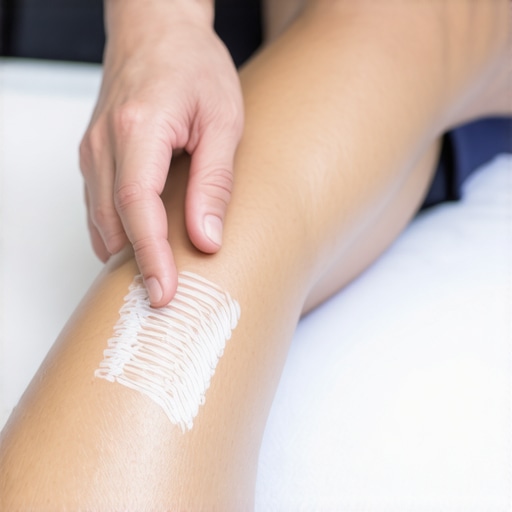
Could your ‘tight’ muscles actually be a protective neural brake?
This is a question every advanced lifter needs to ask. Your nervous system is incredibly smart. If it senses instability in the lumbar spine, it will ‘turn up the volume’ on the surrounding musculature to create a natural brace. This is where boost your sports rehab journey with proven chiropractic strategies come into play; we aren’t just ‘fixing’ a bone, we are signaling to the brain that the area is safe so it can finally release that protective brake. You also need to learn how to tell if your sciatica is actually a muscle knot in your glute because mistreating a nerve issue as a simple muscle cramp is a recipe for chronic inflammation.
Why the Loudest Pop Doesn’t Always Mean the Best Result
Another pervasive myth is that the louder the ‘crack’ during an adjustment, the more successful the treatment. This focus on the sound leads many to seek out ‘aggressive’ cracks rather than precise movements. According to research published in the Journal of Manual & Manipulative Therapy, the therapeutic effect of an adjustment is likely due to the rapid modulation of the central nervous system rather than just shifting a bone back into place. When we look at the science behind chiropractic adjustments for back pain relief, we see that the goal is a neuro-physiological reset. This is why something as simple as the lung drill that instantly lowers your stress and back tension can sometimes do more for your mobility than twenty minutes of static stretching. Have you ever fallen into the trap of stretching a ‘tight’ muscle only to feel stiffer an hour later? Let me know your experience in the comments below.If you want to keep these results, you need a toolkit that doesn’t rely on me being in the room with you. I personally swear by a standard lacrosse ball—not for your spine, but for the soft tissue around your hips. Most people fail here because they go too hard too fast. I’ve found that understanding why you should stop rolling your lower back on a tennis ball prevents you from irritating the very nerves we just calmed down. Instead, focus on the glutes to support the lumbar spine. For long-term durability, I also use a heavy-duty resistance band for ‘distraction’ work, which helps create space in the hip joint that years of sitting has compressed. This is how you revolutionize your rehab with chiropractic techniques for faster recovery from the comfort of your living room. 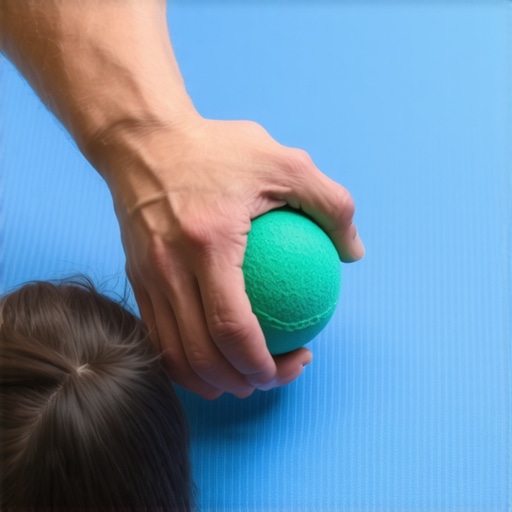
How can I stay pain-free without a weekly appointment?
Consistency beats intensity every single time. You don’t need a grueling hour-long routine; you need five minutes of strategic chiropractic solutions for long-term back health integrated into your morning. I’ve seen the best results in patients who treat their spine like a bank account—you have to make daily deposits of movement to afford the ‘withdrawals’ of heavy lifting or long flights. This is the foundation of essential tips for managing back pain through healthy lifestyle choices. If you ignore the small daily habits, no amount of adjusting will hold. You have to be proactive about boosting your sports rehab journey with proven chiropractic strategies that emphasize functional movement rather than just temporary relief.
The High-Tech Future of Your Spinal Health
We are moving toward an era of ‘precision rehab.’ Soon, wearable sensors will alert you the moment your gait shifts or your pelvis tilts during a run. Until that tech is in every sneaker, you have to be your own sensor. You can improve by enhancing athletic performance with targeted chiropractic care and filming your lifts to check for that ‘butt wink’ at the bottom of a squat. As noted by Dr. Stuart McGill in his technical manual The Back Mechanic, maintaining a neutral spine under load via ‘spinal hygiene’ is the single greatest predictor of career longevity. I recommend integrating how chiropractic adjustments can alleviate chronic back pain long-term by focusing on your bracing patterns first. Try this: Spend exactly 60 seconds tonight in a deep ‘couch stretch’ to open your hip flexors. It is the most aggressive way to take the pressure off your lower back before you go to sleep tonight.
Everything I Had to Unlearn About Chronic Tension
Reflecting on my own journey through elbow and back pain, I realized that my biggest hurdle wasn’t a lack of effort, but a lack of direction. One of the most vital lightbulb moments was understanding that why your morning stretching routine is making you stiffer by noon often comes down to the body trying to protect itself from perceived instability. I also learned that grip strength isn’t just about how hard you can squeeze; it’s a deep neurological indicator of how well your shoulders and neck are functioning. Finally, I stopped viewing ‘cracks’ as the goal and started looking at the role of chiropractic care in effective sports injury recovery as a way to recalibrate my nervous system, not just ‘fix’ a bone.
Tools That Actually Help You Stay Mobile
You don’t need a basement full of gadgets to see progress. I personally rely on a few high-value items that have stood the test of time. First, a standard lacrosse ball is indispensable for targeting the glutes and hips, which indirectly relieves the lower back. Second, heavy-duty resistance bands are my go-to for joint distraction, helping to create space where sitting has caused compression. I also highly recommend The Back Mechanic by Dr. Stuart McGill; it completely changed how I approach spinal hygiene. Finally, understanding what your chiropractor wishes you knew about heavy lifting will save you from years of avoidable wear and tear.
#IMAGE_PLACEHOLDER_E#
Your Path to Pain-Free Performance Starts Now
Recovery is rarely a straight line, but it becomes much clearer when you stop chasing symptoms and start addressing the chain of movement. Whether it’s adjusting your grip on a pull-up bar or finally getting that thoracic adjustment you’ve been putting off, every small change adds up. Remember that your body wants to heal; you just have to provide the right environment for it. Integrating regular chiropractic care and smart movement patterns isn’t just about getting out of pain—it’s about staying out of pain so you can keep doing what you love. Have you ever tried stretching a tight spot only for it to feel worse the next day? Let me know your experience in the comments below.