
I spent three months sleeping on a yoga mat in my living room because my lower back felt like it was being twisted by a giant pair of pliers. I tried the fancy lumbar pillows. I bought the ergonomic chair that looked like a spacecraft. I even tried those weird gravity boots. Nothing worked. It wasn’t until I sat down with a specialist that I realized I had been ignoring the foundation of my entire body. I was so focused on the site of the pain that I completely missed the source: my ankles were as stiff as a pair of old work boots.
Your Spine is Only as Good as Your Foundation
Most of us treat our bodies like a collection of separate parts, but we are actually one big kinetic chain. When one link gets rusty, the rest of the chain has to pull double duty. Early in my journey, I made the classic mistake of thinking I could just fix the symptoms. I spent way too much time trying to foam roll my lower back, which honestly just made the inflammation worse. I didn’t realize that my limited ankle range of motion was forcing my lower back to overcompensate for every step I took. If your ankles can’t bend properly—a movement called dorsiflexion—your body has to find that mobility elsewhere. Often, it steals it from your lumbar spine, leading to that nagging ache you feel after a long walk or a day on your feet. Have you ever felt like you’re stretching your back for hours but the tension just keeps coming back the next day?
Can stiff joints three feet away really wreck my spine?
It sounds a bit far-fetched until you see the mechanics in action. When your ankles are locked up, your center of gravity shifts. You might start leaning forward or arching your back just to stay balanced. This is especially true for athletes or anyone who spends time running on hard surfaces. According to a study published in the Journal of Biomechanics, restricted ankle dorsiflexion significantly alters the landing mechanics of the lower extremities, which increases the load on the proximal joints, including the lower back. This constant micro-trauma adds up. If you’ve been struggling, you might need strategic chiropractic solutions that look at your movement as a whole, rather than just poking at where it hurts.
The Quick Test to See if Your Ankles Are the Culprit
I used to think my ankles were fine because they didn’t ‘hurt.’ But pain isn’t the only indicator of a problem; lack of movement is a huge red flag. I finally found relief when I stopped obsessing over my spine and started working on improving my ankle dorsiflexion. It was a total game-changer. Suddenly, my back didn’t have to work so hard just to keep me upright. Today, we are going to break down how to bridge that gap between your feet and your lumbar health, so you can stop chasing the pain and start fixing the cause.
Find Your Range with the Wall Test
To fix the back, you have to start at the floor. The “Knee-to-Wall” test is my go-to metric for figuring out if your foundation is cracked. Stand facing a wall, place your big toe about four inches away, and try to touch the wall with your knee without your heel lifting off the ground. If you can’t make contact, your ankle is essentially a closed gate. This restriction forces your lower back to arch excessively to maintain balance, absorbing the impact of every step you take. I remember a weekend hike where my back felt like a coiled spring by mile two. I stopped, performed the 45-second drill to improve your ankle dorsiflexion, and the relief was almost instantaneous because it allowed my hips to finally sit back where they belonged.
Reset Your Footing to Free Your Spine
Once you identify the restriction, you need to clear the mechanical traffic jam in the joint. Think of your ankle joint like a door hinge with a pebble stuck in it. No amount of oil or stretching will fix the hinge if that physical obstruction remains. This is where you can discover how chiropractic adjustments can alleviate chronic back pain by addressing the actual joint mechanics. When a practitioner adjusts the talus—the bone that connects your foot to your leg—it is like removing that pebble. Suddenly, the joint glides, and the tension in your calves and hamstrings begins to melt away. 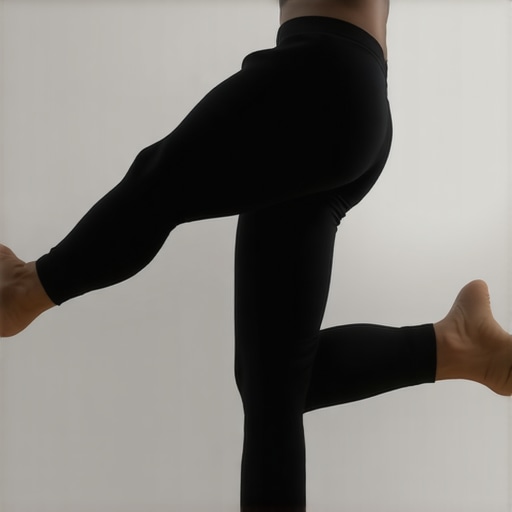
Avoid These Common Stretching Traps
Most people instinctively reach for their toes the moment their back starts to throb. I’m telling you now: stop. I learned the hard way that the 3 stretching mistakes that make sciatica worse usually involve over-stretching the sensitive tissues of the lumbar spine while the real culprits stay locked tight. Instead of rounded bending, you need to protect the area. You should also remember that why you should never roll your lower back on a foam roller is because it can increase inflammation in the very joints you are trying to soothe. Focus your mobility work on the joints above and below the pain—the hips and the ankles.
Master the Hip Hinge for Daily Survival
With your ankles finally moving, you have to relearn how to move through space. This is where the “hip hinge” becomes your best friend. It is the fundamental difference between lifting a grocery bag with your spine and lifting it with your powerhouse—the glutes. Utilizing the hip hinge secret for people with chronic lumbar issues ensures that your lower back remains a stable anchor rather than a primary mover. For long-term success, you need strategic chiropractic solutions for long-term back health that focus on these movement patterns. When I finally started hinging instead of rounding, the morning stiffness that used to haunt me simply evaporated. By training your body to move as a single, cohesive unit, you stop the micro-trauma that leads to those middle-of-the-night flares.
Most people equate ‘tightness’ with a need for length. In the clinical world, we call this the ‘stretching trap.’ If you have a ‘tight’ hamstring or lower back that never seems to loosen up despite daily yoga, you likely aren’t dealing with a short muscle; you are dealing with protective neural tension. Your brain is essentially keeping the muscle in a state of high ‘tone’ because it doesn’t trust your spine to stay stable without it. If you force a stretch on a muscle that the brain is using as a biological splint, the nervous system will only snap back harder, making you feel even stiffer the next morning.
Why Stretching Your Way Out of Pain Usually Backfires
The common belief is that more flexibility equals less pain. In my experience, the opposite is often true for chronic back sufferers. We see patients who are ‘hypermobile’—meaning they can contort into a pretzel—yet they are in constant agony because their joints lack the necessary brakes. When you over-stretch the lumbar region, you risk irritating the very nerves you are trying to soothe. This is one of the primary reasons the truth about why your adjustments dont seem to last is often linked to a lack of stability elsewhere in the chain. Instead of chasing length, we should be chasing control.
The Danger of Chasing the ‘Self-Crack’ High
We’ve all been there: your back feels ‘stuck,’ so you twist violently in your office chair until you hear a loud pop. You feel an instant rush of relief, but twenty minutes later, the urge to do it again returns. This is the ‘Oops’ factor of self-adjusting. You aren’t actually hitting the joint that is restricted. Instead, you are likely over-mobilizing the segments that are already moving too much. This creates a cycle of hypermobility and local inflammation. To break this habit, you need unlocking back pain relief expert chiropractic adjustments that work by targeting the specific, frozen segments rather than the ones that are already loose. Remember, the truth about cracking your own neck at your desk is that it provides a temporary endorphin hit while masking a deepening mechanical issue in your spine.
Why does my back still hurt even though I have a ‘strong’ core?
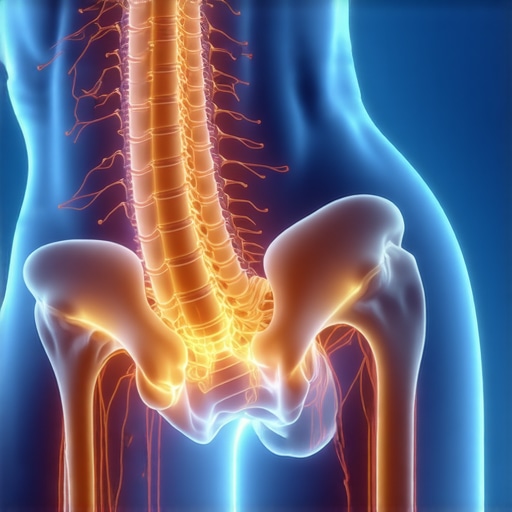
This is a sophisticated trap for many athletes. You might have ‘six-pack’ abs, but your deep stabilizing muscles—the ones that actually protect your discs—might be completely offline. Often, why most core exercises actually make lower back pain worse is because they focus on ‘crunching’ and movement rather than bracing and stillness. A study published in the Journal of Physical Therapy Science highlights that proximal stability (a rock-solid core and hips) is the mandatory prerequisite for distal mobility (free-moving ankles and shoulders). If your core isn’t ‘bracing’ correctly, your nervous system will ‘lock’ your ankles to prevent you from falling over. It is a top-down security system.
Reframing the Science of the Adjustment
When you understand the science behind chiropractic adjustments for back pain relief, you realize it is more about the brain than the bones. An adjustment provides a high-velocity, low-amplitude input to the nervous system, essentially telling the brain: ‘You are safe to let go of this protective tension.’ By combining these adjustments with proper movement patterns, you stop the cycle of chronic stiffness. Have you ever fallen into this trap of stretching a ‘tight’ muscle only to have it feel worse the next day? Let me know in the comments.
Maintenance isn’t about avoiding movement; it’s about curating it. After years of trial and error, I’ve found that the best tools aren’t the expensive recovery pods you see on Instagram, but the simple ones that provide immediate feedback to your nervous system. For instance, I personally rely on a heavy-duty 12-inch loop resistance band to wake up my glutes before any hike or gym session. Learning how to choose the right resistance band for shoulder rehab or hip stability is crucial because the wrong tension can actually encourage the very compensation patterns you are trying to break. When the band is just right, it forces your hips to do the heavy lifting, effectively shielding your lumbar spine from unnecessary stress.
The Gear That Actually Earned a Spot in My Gym Bag
I am often asked what I use daily to keep the pain from returning. My ‘survival kit’ is surprisingly low-tech. It includes a firm lacrosse ball for pinpoint tissue work, a wedge for ankle dorsiflexion, and a simple PVC pipe for bracing drills. These tools aren’t just for comfort; they are part of essential tips for managing back pain through healthy lifestyle choices that prioritize consistency over intensity. I use the lacrosse ball specifically to target the gluteus medius, a muscle that, when inhibited, is a primary driver of lower back instability. By keeping this muscle ‘awake,’ I ensure that my role of chiropractic care in effective sports injury recovery stays a preventative measure rather than an emergency one.
How do I keep these results for the long haul?
True longevity in spinal health requires a shift from ‘fixing’ to ‘managing.’ Dr. Stuart McGill, professor emeritus at the University of Waterloo and author of Low Back Disorders, emphasizes that spinal hygiene is a 24-hour-a-day job. It is not just about the thirty minutes you spend stretching; it is about how you brush your teeth, how you sit in your car, and how you pick up your kids. Integrating strategic chiropractic solutions for long-term back health means you are building a lifestyle that respects the mechanical limits of your discs and ligaments. I’ve found that when I treat my movement patterns like a bank account—depositing good reps and minimizing bad ones—my back stays resilient even during high-stress periods.

Why Biofeedback is the Next Frontier in Spine Care
Looking ahead, I predict a massive shift toward wearable biofeedback technology. We are moving away from generic protocols and toward real-time data that tells us exactly when our form is breaking down. Imagine a sensor that vibrates the moment your lumbar spine begins to round during a deadlift or when your posture slumps at your desk. This type of precision is already enhancing athletic performance with targeted chiropractic care by allowing athletes to correct movement errors before they turn into injuries. For those in sports rehab journeys with proven chiropractic strategies, this tech will provide the objective proof that their movement patterns are actually changing.
If you want to take your recovery to the next level, try this advanced tip: the next time you perform a squat or a hip hinge, place a light resistance band just above your knees. As you descend, focus on ‘ripping the floor apart’ with your feet. This simple cue activates the entire lateral chain and creates a ‘bracing’ effect that protects the spine more effectively than any core crunch ever could.
Hard Truths from the Yoga Mat to the Treatment Table
Reflecting on my three months on that living room floor, I’ve realized that recovery isn’t a straight line—it’s a series of pivots. One major lightbulb moment was discovering that pain is often a loud distraction from the real issue. My back was screaming, but my ankles were the silent saboteurs. I also learned that revolutionizing your rehab with specific chiropractic techniques is less about fixing a bone and more about retraining a nervous system that has forgotten how to feel safe. Finally, I stopped chasing the pop and started chasing the hold. Stability is the currency of a healthy spine, and once you stop spending it on unnecessary stretches, your body starts to heal itself.
My Personal Arsenal for a Resilient Spine
I don’t believe in cluttering your life with gadgets, but these three items are non-negotiable for my daily maintenance. First, a firm lacrosse ball is my secret weapon for releasing the glutes; it’s a simple way to maintain the benefits of diaphragmatic breathing by removing physical tension that restricts your ribcage. Second, I highly recommend reading Dr. Stuart McGill’s work on spinal hygiene. It changed how I view core strength forever. Lastly, pay attention to your environment; checking the signs your mattress is destroying your spinal alignment can save you from undoing all your hard work while you sleep. These aren’t just tools; they are the pillars of a proactive lifestyle.
Moving Toward a Future Without the Ache
The journey from chronic pain to fluid movement is rarely about one big change. It’s about the cumulative power of small, intentional choices. Whether it’s fixing your ankle mobility or knowing the best way to handle a flare-up while traveling, you are now equipped with a deeper understanding of your body’s kinetic chain. Don’t be afraid to slow down and listen to what your foundation is telling you. Your back doesn’t have to be your weakest link anymore. Have you ever noticed that your back pain gets worse after your feet or ankles feel particularly stiff? Let me know in the comments below.