
I was three miles into what I thought was a glorious comeback to fitness when the fire started. Not the ‘good’ muscle burn that makes you feel like an athlete, but a sharp, rhythmic throbbing right against the bone of my shins. I limped off that belt feeling completely defeated. If you’ve ever stood there, white-knuckling the treadmill rails while your lower legs pulsed with a life of their own, you know exactly how frustrating it is. You want to get healthy, but your body is screaming at you to stop. I used to think I was just ‘weak’ or that my bones weren’t built for cardio. I was wrong. Today, I’m going to pull back the curtain on why that moving belt is specifically punishing your lower legs and give you the blueprint to run pain-free. I spent years ignoring my body’s signals and ended up needing targeted chiropractic care just to walk without a limp. I don’t want that for you.
The Moment I Realized My Shins Werent Just Tired
For a long time, I made a classic mistake: I assumed more cushion was the answer. I went out and bought the thickest, most expensive ‘stability’ shoes I could find, thinking I’d finally solved the puzzle. Instead, the throbbing got worse. It turns out, that extra squish was actually destabilizing my ankles, which is a major factor in why your feet ache after running in the first place. My shins were working overtime just to keep me upright on a surface that was literally moving underneath me. It was a lightbulb moment for me when a mentor pointed out that the treadmill isn’t just a ‘fake road’; it’s a totally different mechanical challenge for your nervous system. If you have ever had to cut a workout short because your shins felt like they were about to explode, you are definitely not alone.
Is the treadmill actually worth the pain?
A lot of people ask me if they should just ditch the machine entirely and stick to the pavement. It’s a fair question. You might worry that your body just isn’t ‘made’ for the gym. But the truth is, the treadmill is a tool, and like any tool, if you use it wrong, you get hurt. According to a study published in the Journal of Biomechanics, the way our feet interact with the compliant, often bouncy surface of a treadmill can lead to higher peak tibial acceleration—essentially more shock to the bone—compared to running on firm, natural ground. This shock vibrates right up the leg, and if your mechanics are off, your shins take the hit. I learned the hard way that ignoring the hidden link between your ankles and lower back health can turn a simple shin splint into a full-body alignment issue. We aren’t just fixing a throb; we are fixing the way you move.
Why That Moving Belt Is a Nightmare for Your Lower Legs
When you run outside, you are the motor. You push off the ground to propel yourself forward. On a treadmill, the ground is being pulled out from under you. This changes your ‘gait’ or the way you step. Most people end up ‘overstriding,’ reaching their foot out too far in front of them to keep up with the belt. This puts an incredible amount of stress on the tibialis anterior—the muscle on the front of your shin. If you aren’t careful, this constant tension leads to the very shin splints you are trying to avoid. I’ve seen so many people try to ‘power through’ this, only to end up with stress fractures. Trust me, ‘no pain, no gain’ is a lie when it comes to bone-on-muscle throbbing. We need to look at how you are landing and how your footwear is either helping or sabotaging that process.
Fix Your Treadmill Form Before You Break a Bone
The first thing you have to do is stop treating the treadmill like a flat road. It isn’t. Because the belt moves under you, your body doesn’t naturally engage the muscles needed to propel you forward. This creates a mechanical lazy leg syndrome where your shins absorb the shock rather than your glutes. To fight this, we need to manually adjust the environment and your movement patterns to mimic natural terrain.
Crank the Incline to One Percent
Running on a 0 percent incline is actually like running slightly downhill because there is no wind resistance and the belt helps pull your foot back. This subtle downhill effect increases the impact on your shins. I found that setting the incline to at least 1.0 percent or 1.5 percent mimics the natural resistance of the outdoors. The first time I did this, the change was instantaneous; the sharp pinging in my legs subsided because my hamstrings and glutes finally woke up. If your posterior chain is asleep, your shins will pay the price in inflammation. This is a foundational part of the role of chiropractic care in effective sports injury recovery—adjusting the load before the tissue fails.
Shorten Your Steps to Save Your Shins
When the belt is moving fast, our instinct is to reach out with our heels to catch up. This is overstriding, and it is the fastest way to develop a stress fracture. Think of your legs like pistons, not pendulums. You want your foot to land directly under your center of mass. I used to count my steps; I realized I was only hitting about 150 steps per minute. Once I consciously shortened my stride to hit closer to 170 steps, the heavy thud of my landing turned into a light tap. This change reduces the shearing force on the bone. If you are struggling with foot mechanics, you might also need to look into the foot exercise that prevents plantar fasciitis in runners to keep the entire kinetic chain stable.
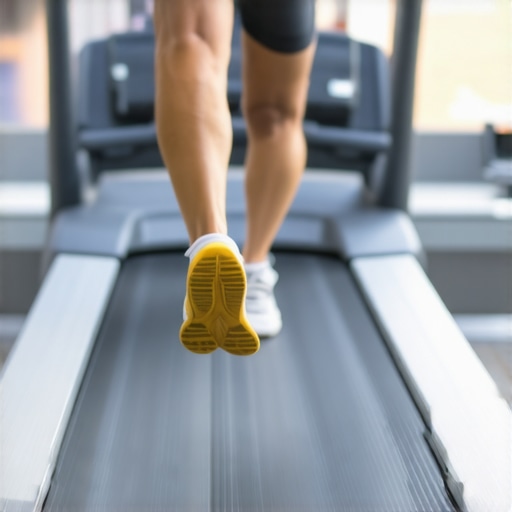
Fix Your Ankle Stiffness
If your ankles are locked up like rusty hinges, your shins have to absorb all the shock. I spent weeks stretching my calves, but it did not help until I addressed the joint capsule itself. You need adequate dorsiflexion—the ability to pull your toes toward your shin—to land softly. Without it, your foot slaps the belt, sending a shockwave straight into the bone. I highly recommend performing the 45-second drill to improve your ankle dorsiflexion before you even step on the gym floor. It is the difference between landing like a cat and landing like a bag of bricks.
Audit Your Footwear for Actual Support
Do not just buy what looks cool. If you have flat feet or high arches, the treadmill’s repetitive surface will exploit those imbalances. I once wore a pair of racing flats on a long treadmill run and could not walk for three days. You need to understand why your running shoes might be the cause of your shin splints. A shoe with the right arch support keeps your foot from collapsing inward, which prevents the muscle from being yanked off the bone. This structural alignment is key to enhancing athletic performance with targeted chiropractic care, as it ensures your foundation is solid before you add speed.
Let’s dig deeper into the physiological reality of why your shins are failing you. Most people treat shin splints like a localized fire that needs to be put out with ice and rest. But here is where the experts often get it wrong: They focus on the symptom, not the system. You might think you have ‘tight’ calves that need aggressive stretching, but in reality, your brain is often locking those muscles down to protect a shaky foundation. This is exactly why stretching your hamstrings won’t fix your chronic tightness; the tension is a defensive reflex, not a length issue. If you keep pulling on a muscle that is trying to stabilize a vulnerable joint, you are effectively fighting your own nervous system, which only leads to more inflammation and longer recovery times.
Stop Stretching Your Way into More Pain
In my experience, the ‘more is better’ approach to mobility is the fastest way to stay injured. We see runners all the time who spend thirty minutes on a foam roller, yet their pain returns the second they hit five miles per hour on the belt. The truth is that your shins are often the ‘canary in the coal mine’ for a lack of stability elsewhere. When your glutes don’t fire or your core is inhibited, the lower leg becomes the primary shock absorber. To truly revolutionize your rehab chiropractic techniques for faster recovery, you have to stop chasing the pain and start looking at the kinetic chain. If you are just icing the front of your leg without addressing the hip’s inability to rotate, you are just putting a band-aid on a structural leak.
The Danger of the Foam Roller Obsession
There is a massive ‘oops’ factor I see every day in the gym: the misuse of recovery tools. While it feels productive, you should know why you should never roll your lower back on a foam roller. When you apply that much direct pressure to the lumbar spine without the structural support of the rib cage, you risk ligamentous strain rather than muscle release. This matters for your shins because any irritation in the lower back can interfere with the nerve signals traveling down to your legs. It’s a classic example of a ‘well-intentioned’ habit that actually sabotages your progress. Have you ever fallen into this trap? Let me know in the comments.
Can a Misaligned Spine Actually Weaken Your Ankles?
This is the level of nuance that most runners miss. Your lower legs do not operate in a vacuum. A study published in the Journal of Manipulative and Physiological Therapeutics found that spinal manipulation can immediately improve muscle activation and recruitment in the lower limbs by clearing ‘interference’ in the nervous system. When your low back or SI joint is restricted, the signals to your glutes and ankles get muffled. This forces your shins to do a job they weren’t designed for, leading to that familiar, agonizing throb. This is where strategic chiropractic solutions for long-term back health come into play. We aren’t just ‘cracking’ your back; we are restoring the communication line so your legs can actually handle the mechanical load of the treadmill. 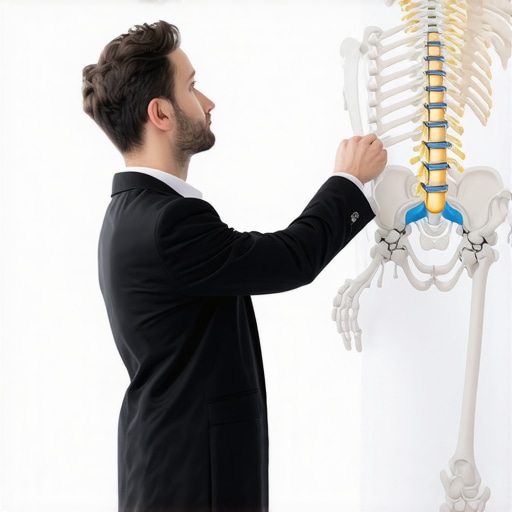
I used to be the runner who spent 20 minutes icing my legs after every session. It felt good for five minutes, but I was actually slowing down my recovery by restricting the blood flow needed to repair the micro-tears in the bone and muscle tissue. The goal isn’t just to numb the pain so you can suffer through another mile; it’s to enhance your athletic performance with targeted chiropractic care so your foundation is as solid as the ground you run on. If you want to keep your fitness goals on track, you have to respect the mechanics of the entire body, not just the part that hurts.
Once you’ve addressed the immediate fire in your shins, the conversation shifts from survival to sustainability. I quickly realized that if I didn’t have a system to maintain my progress, I’d be right back in the cycle of icing and limping. One tool I swear by isn’t a fancy recovery boot or an expensive laser; it’s a simple metronome app. Specifically, I use the Soundbrenner app set to 175 beats per minute. I use it because it removes the guesswork from my cadence. By syncing my footfalls to a steady beat, I prevent that dangerous ‘overstriding’ I mentioned earlier. It’s a cognitive anchor that keeps my form tight even when I’m exhausted. If you want to boost your sports rehab journey with proven chiropractic strategies, you have to embrace these small, technical consistency boosters. Maintaining that 170-180 step-per-minute range reduces the vertical oscillation—the ‘bounce’—that sends shockwaves into your tibia.
The Maintenance Routine That Stops Relapses
Maintenance isn’t just about what you do on the belt; it’s about how you live between sessions. I’ve found that my shin health is inextricably linked to my overall systemic inflammation. This is why I focus heavily on essential tips for managing back pain through healthy lifestyle choices, such as sleep quality and hydration. If my nervous system is fried from stress, my muscles stay hyper-tonic, and my shins pay the price. You might feel like you’re doing everything ‘right’ in the gym, but the truth about why your adjustments dont seem to last often comes down to the sixteen hours you spend outside the clinic. Are you sitting in a way that compresses your lumbar spine, or are you moving enough to keep the fascia hydrated? Consistency in your daily habits is what turns a temporary fix into a permanent lifestyle.
How do I keep my legs and back healthy over time?
The secret to long-term success is a ‘micro-dose’ approach to mobility. I no longer believe in the hour-long Sunday stretch session. Instead, I perform two minutes of ankle mobility and a quick spinal check every single morning. I’ve learned that how spinal alignment directly impacts your athletic performance isn’t just theory—it’s a daily reality. When my hips feel ‘off,’ I know my gait will suffer on the treadmill. To combat this, I’ve integrated strategic chiropractic solutions for long-term back health into my monthly routine. This isn’t ’emergency care’; it’s an oil change for the human machine. By clearing out joint restrictions before they cause a compensation pattern, I ensure that my shins never have to take a ‘promotion’ to primary shock absorber ever again.
Smart Sensors and the Future of Running
Looking ahead, I’m incredibly excited about the integration of wearable gait analysis sensors like Stryd or RunScribe. We are moving away from ‘guessing’ why we hurt and toward real-time data. In the next few years, I predict we will all be wearing sensors that alert us via our headphones the moment our ground contact time becomes asymmetrical. This kind of tech will allow us to stop an injury before the first throb of a shin splint even starts. As Dr. Rich Willy, a leading researcher in running biomechanics at the University of Montana, often notes, the key to preventing bone stress injuries is managing the ‘rate’ of loading. If we can see that rate climbing in real-time, we can adjust our incline or speed immediately. For now, I want you to try this: Download a metronome app and set it to 175 for your next five-minute warm-up. Focus solely on hitting the beat. You’ll be surprised at how much ‘lighter’ your legs feel when you aren’t fighting the belt.
The Moment I Stopped Fighting My Own Nervous System
The hardest lesson I had to learn was that pain isn’t a design flaw—it’s a data point. I used to think I could just outrun the discomfort, but my brain was actually locking my muscles down to protect me. I eventually realized the truth about why your adjustments dont seem to last is often because you’re still using the same broken movement patterns that caused the issue. You have to learn how to identify if your back pain is muscular or nerve-related so you can stop treating every ache with the same generic solution. My ‘lightbulb moment’ was realizing that my shins weren’t weak; they were just overworked because my hips were completely offline.
My Personal Toolkit for Impact-Free Running
If you want to stop the cycle of injury, you need more than just willpower. Here is what I keep in my gym bag to ensure my shins stay quiet: First, a metronome app like Soundbrenner to keep my cadence at 175 BPM. Second, a heavy-duty resistance band to wake up my glutes before I ever step on the belt. Third, I stopped the cycle of temporary relief; you should stop icing new injuries and try this instead by focusing on active recovery and blood flow. Finally, I committed to a schedule that allows me to boost your sports rehab journey with proven chiropractic strategies, ensuring my alignment supports my ambition.
Reclaiming the Joy of the Run
You don’t have to choose between your cardio goals and your physical health. By adjusting your incline, shortening your stride, and respecting your body’s mechanical limits, you can turn the treadmill from a torture device back into a training tool. We are all aiming for longevity, and enhancing athletic performance with targeted chiropractic care is the safest way to ensure your bones and joints stay resilient for years to come. Don’t be afraid to start slow; the road to a pain-free run is a marathon, not a sprint. Have you ever felt like your shins were literally on fire after a treadmill session? Let me know in the comments below!