
I remember the exact moment I realized my office chair was sabotaging my lower back—after a long day, I stood up feeling a sharp twinge in my lumbar region that wouldn’t go away. It was a lightbulb moment; I was unknowingly sacrificing my spine’s health for the sake of convenience. Like many, I thought a comfy chair was enough. But it turns out, our seating choices can have immediate and lasting impacts on our lumbar discs, especially the L5 segment.
Why Your Office Setup Might Be Uncleansed for Your Spine
Here’s the harsh truth: if your office chair doesn’t support your lower back properly, you’re setting yourself up for chronic pain and even disc herniation. A study from the American Journal of Preventive Medicine shows that prolonged poor seated posture increases pressure on the lumbar discs—particularly the L5-S1 herniation risk—by up to 40%. This means every hour spent slouched or unsupported could be contributing to ongoing back problems.
Have you ever caught yourself sinking into your chair, slouching, or neglecting to adjust your workspace for better support? I used to dismiss these habits—until my back pain worsened every week. That mistake was critical: I ignored the importance of ergonomic support and failed to notice how small adjustments could make a big difference.
In this post, I promise to walk you through three simple yet effective fixes that can protect your lower back and keep your spine happy. Whether you’re working from home or at an office, these tips will help you avoid turning a minor discomfort into a lifelong problem.
Let’s get into the nitty-gritty of making your office setup work for, not against, your back.
Adjust Your Chair Height and Depth Immediately
John recalled the last time he set his chair height too low, causing his knees to be higher than his hips. He experienced persistent lower back discomfort after hours of slouching forward to see his screen. To fix that, he stood up, adjusted his chair so his feet rested flat on the floor, and his hips were at a 90-degree angle. Think of your chair like a saddle on a bike: proper height ensures optimal support without strain. Ensuring your knees are level or slightly lower than your hips helps distribute weight evenly, reducing lumbar pressure.
Prop Your Lower Back with Proper Lumbar Support
Next, consider the lumbar pillow or lower back support built into your chair. I once added a small rolled-up towel, secured with a velcro strap, into my chair’s lumbar curve. Immediately, I felt the tension ease out of my lower back after just a few days. If your chair lacks support, use rolled towels or purchase an adjustable lumbar pillow. This support fills the natural inward curve of your lumbar spine—like a “spine cradle”—preventing your pelvis from tilting posteriorly and reducing disc compression in the L5-S1 area. Look for support that contours to your lower back, mimicking the natural spine shape.
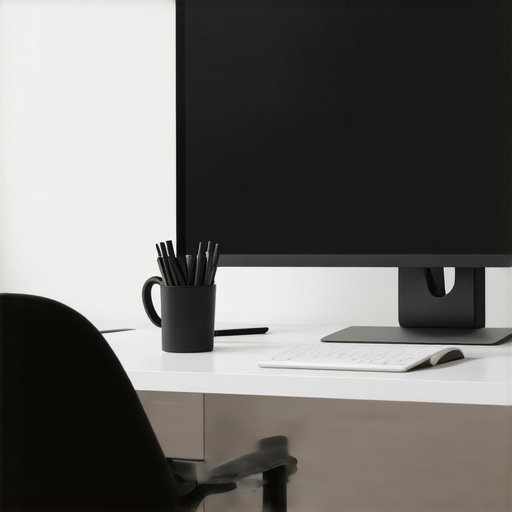
Position Your Monitor for Optimal Alignment
The monitor’s height is crucial. I once kept my monitor too low, causing me to crane my neck down, which increased strain on my cervical spine and led to upper back pain. To correct this, raise my monitor to eye level using a stand or stack of books. Your screen should be about an arm’s length away; the top of the screen is at or just below eye level. This setup keeps your neck neutral, preventing forward head posture that overworks your cervical and upper thoracic muscles. Imagine your head as a marble balanced atop your spine—maintenance means keeping it aligned without effort.
Optimize Desk Geometry to Support Your Posture
You need a desk surface that allows your forearms to rest comfortably, keeping elbows close to your sides and bent at 90 degrees. I found that shifting my keyboard closer prevented me from reaching forward and slouching. Additionally, keeping your mouse within reach avoids shoulder hunching. Think of your workspace like a cockpit: controls within easy reach, clear lines of sight, and support tailored to your ergonomic needs. Using an adjustable chair with armrests set correctly can remove shoulder elevation or depression, maintaining even weight distribution and preventing shoulder and neck tensions.
Incorporate Micro-Movements During Breaks
Staying static for hours is a recipe for stiffness. I started setting a timer for every 25 minutes to stand, stretch, or walk a few steps. Simple actions like shoulder rolls, neck tilts, or spinal twists activate the muscles and promote circulation. These micro-movements—akin to a well-tuned machine lubrication—prevent your lumbar discs from remaining compressed for extended periods, cutting down herniation risk. Aim to integrate these mini-movements periodically to keep your spine resilient.
Practice Consistent Posture Checks and Adjustments
Finally, make it a habit to periodically reassess your position. Once, I noticed my hips shifted forward after an hour; a quick readjustment restored comfort. Use visual cues or mirror checks if possible; your pelvis should be square, and your shoulders relaxed. Regular small corrections are more effective than sporadic overhauls. Like tuning a musical instrument, these adjustments keep your spine aligned and functioning optimally, reducing the load on vulnerable discs such as L5-S1.
Many assume that chiropractic adjustments are straightforward solutions: get realigned, and pain disappears. However, as an expert in spinal health, I can tell you that this perspective overlooks complex nuances. For instance, a common myth is that adjustments provide immediate, long-lasting fixes for all types of back pain. While they can be highly effective, the reality is that the effectiveness depends on understanding the underlying causes and avoiding oversimplification. The *trap* many fall into is believing that a single adjustment can permanently resolve chronic issues. In reality, adjustments often need to be part of a comprehensive approach, including strengthening, postural corrections, and lifestyle changes. Studies, such as those in the *Journal of Manipulative and Physiological Therapeutics*, show that combining adjustments with targeted rehabilitation yields better outcomes than adjustments alone.
Why Do Some Adjustments Fail?Keeping your spine healthy and your performance at its peak requires more than just good habits; it demands reliable tools and routines that support your ongoing progress. One essential device I personally rely on is the **TheraBand FlexBar**. I use it during rehab to improve grip strength and spinal stability, especially after chiropractic adjustments. Its versatility allows me to perform targeted rotational exercises that strengthen core muscles, which are crucial for long-term back health. Pairing this with the **Elast + Pelvic Support Belt** helps maintain proper pelvic alignment during daily activities, reducing strain on your lumbar discs.
On the software side, **CorBack** is a game-changer. This app guides you through daily posture checks and micro-movement routines, making it easier to stay vigilant about your spinal positioning. I’ve found it invaluable for tracking progress and ensuring compliance with my posture correction strategies. Its reminders for micro-movements work seamlessly with my schedule, reinforcing habits that protect my discs, particularly the vulnerable L5-S1 segment.
In addition, I advocate for incorporating **Foam Rolling** with the **Rumble Roller**. This specific foam roller is tough enough to target deep tissue and fascia, releasing adhesions that can cause or exacerbate back pain. I perform targeted rolling sessions for 5-10 minutes each day, especially focusing on the lower back and hips, which are integral to a resilient kinetic chain.
Looking ahead, I predict that wearable technology is going to become even more sophisticated. Devices that monitor spinal posture in real time and provide immediate feedback will be commonplace, allowing for dynamic correction during your daily activities. Already, some biofeedback tools integrate with smartphone apps, which makes consistent maintenance more accessible.
**How do I maintain my back over time?** Consistency is key. Using tools like the **TheraBand FlexBar** and employing apps such as **CorBack** help embed micro-movements into my routine, preventing stiffness and disc compression. Additionally, investing in targeted self-care tools like the **Rumble Roller** ensures I can perform effective tissue work at home, saving time and money while supporting my chiropractor’s efforts.
For those serious about long-term results, I recommend scheduling regular check-ins with a rehabilitation chiropractor who can tailor adjustments and exercises as your needs evolve. Integrating these tools and knowing how to utilize them properly is the secret to maintaining a healthy, pain-free back and optimizing sport performance. You might consider trying the **micro-movement routines** suggested by **CorBack**, which are proven to reinforce spinal stability—see how a small daily investment can pay dividends over months and years. Learn more about these strategies [here](https://motiontherapypro.com/boost-your-sports-rehab-journey-with-proven-chiropractic-strategies).
Unanticipated Wisdom from My Back Journey
One of the most surprising lessons I’ve learned is how easily small habits can erode the progress made through chiropractic adjustments. I used to think that scheduling regular visits was enough, but neglecting daily ergonomics secretly set me back. Recognizing this, I realized that integrating micro-movements and workspace mindfulness is just as vital as professional care.
Another insight was the significance of listening to my body’s warnings signs. Ignoring early discomforts often led to bigger setbacks. So, I began journaling my pain patterns and posture habits—these notes became my personal blueprint for staying ahead of issues before they escalated.
Lastly, I discovered that resilience is built layer by layer. Combining chiropractic care with targeted strengthening, consistent micro-movements, and lifestyle adjustments created a holistic shield against injury. It’s a slow, steady process, but one that ultimately empowers you to take control of your back health.
Tools That Have Changed My Approach
My toolkit is simple but powerful. The Revolutionize Your Rehab program offered me pragmatic strategies that integrate seamlessly into my daily routine, reinforcing spinal stability. The Role of Chiropractic in Sports Injury Recovery helped me understand how precision adjustments combined with active self-care prevent recurrence. Additionally, the Healthy Lifestyle Tips advice from experts underscored the importance of holistic habits—nutrition, movement, and rest—in maintaining long-term back health.
Your Next Step Toward Better Back Health
Remember, every journey is unique, but taking proactive steps today can profoundly impact your future mobility and comfort. My experience has shown me that combining professional chiropractic adjustments with consistent self-care routines transforms back pain from an unavoidable burden into a manageable aspect of life. I invite you to explore these tools and strategies, and see how small changes can lead to big improvements. Now, it’s your turn—what small habit will you start today to protect your lower back? Share your thoughts below and start your personalized back care journey today.