
Ever felt that creeping numbness in your lower back after a long day at your desk? I remember the first time I ignored those signals, thinking it was just fatigue. But soon, that dull ache became a stabbing pain during my nightly walk. It was a lightbulb moment—realizing that sitting all day isn’t just uncomfortable; it’s actually damaging my spine.
My journey toward relief started with a simple truth: if I want to keep working, moving, and living pain-free, I need to prioritize my body’s needs. And that begins with understanding the importance of targeted stretches. Today, I’ll share how strategic stretching can undo the damage caused by hours of sitting, helping you reclaim your comfort and mobility.
Why Sitting All Day Wears Down Your Body—and Why You Should Care
Sitting is often called the new smoking for a reason. According to research, prolonged sitting increases risks of chronic pain, especially in the lower back and hips, and even contributes to poorer posture over time (source). The problem isn’t just discomfort—it’s the way sitting causes your muscles to weaken and your joints to tighten. Over months and years, these small misalignments and tight spots can snowball into serious chronic issues.
Early in my career, I made a big mistake: I thought I could ignore the tight hips and cramped shoulders accumulating from sitting. I didn’t realize how crucial mobility work was until I started experiencing persistent back stiffness that no chiropractic adjustment could fix permanently. It’s a common pitfall—believe me, I’ve been there—and one I want you to avoid.
So, if you’re tired of that sluggish, stiff feeling, know that you’re not alone—and there are concrete, effective ways to counteract the damage. During our session today, I’ll guide you through some of the best stretches tailored for desk workers and anyone trapped in a chair all day. Ready to get moving and feel better? Let’s dive into the stretches that can help restore your body’s natural balance.
Are Stretches Really Worth the Effort?
Some skeptics worry that stretching is just a temporary fix or a waste of time. I used to think the same—until I experienced how regular, targeted stretches transformed my back health. Besides, research confirms that consistent stretching improves flexibility, reduces muscle tension, and enhances overall posture (source). But here’s the trick: not all stretches are created equal, and doing the wrong ones can even cause harm. That’s why I’ll show you evidence-based moves that truly make a difference.
Get Moving: How to Do Effective Back Stretches
During my early days of neglecting mobility, I tried a quick hamstring stretch after a long sitting session, expecting immediate relief. Instead, I ended up pulling a calf muscle because I didn’t engage my hip flexors properly. That messy experience taught me the importance of a structured approach. Here’s my step-by-step process to ensure your stretches are both safe and effective.
Warm Up Before Stretching
Think of your muscles like elastic bands—cold and stiff, they’re more prone to injury. I start with 5 minutes of gentle movement—like walking or arm circles—to increase blood flow. This primes my muscles, making stretches more beneficial and less risky.
Target Key Areas: Hip Flexors, Hamstrings, and Lower Back
These muscles tighten from hours of sitting, creating a chain reaction affecting your posture. I focus on stretching each with specific moves. For hip flexors, I do a lunge stretch: step one foot forward into a lunge position, lower your hips, and hold. For hamstrings, a seated forward fold works well. To address lower back tension, I perform a gentle spinal twist lying on your back, pulling knees to the side. Learn more on targeted mobility.
Hold for 20-30 Seconds and Breathe
Don’t rush the stretch—hold each pose steadily, and breathe deeply. My first attempt was a quick bounce, which didn’t help—I felt more pain. Steady breaths help muscles relax and maximize benefit. After each stretch, I usually perform a brief light movement to come out of the stretch gently.
Integrate Dynamic Movements
Static stretches are necessary, but they should be complemented by gentle movements. I incorporate cat-cow stretches or pelvic tilts to enhance spinal mobility. Think of this as fine-tuning your body’s flexibility, much like tuning a musical instrument for harmony. These movements help prevent the muscles from meeting at a static point of tension, reducing stiffness and pain over time. Discover dynamic solutions.
Consistency Is Crucial
Doing these stretches once in a while isn’t enough—it’s like watering a plant irregularly. I set a reminder to stretch at least twice daily, especially after long periods of sitting. Over weeks, I noticed my back felt looser, and the dull ache diminished. Persistent practice rewires your muscular memory, leading to lasting relief.
Remember, every body responds differently. Keep monitoring your sensations, and if you experience sharp pain or persistent discomfort, consult a healthcare professional. These stretches aren’t magic bullets but essential tools in a broader mobility and posture improvement routine.

Many people believe that a single spinal adjustment is a quick fix for chronic back pain, but the reality is far more nuanced. While chiropractic adjustments can provide immediate relief, **assuming they are a standalone solution is a common misconception** that can hinder long-term recovery.
One prevalent myth is that adjustments realign your spine permanently, but studies show that the effects are often temporary without accompanying lifestyle and movement modifications (source). In my experience, clients who combine adjustments with targeted rehabilitation exercises achieve far better outcomes.
There’s also the trap of oversimplifying back pain causes. Many assume misaligned vertebrae are solely responsible, neglecting factors like muscular imbalances, joint mobility, and even gut health (source). Recognizing these interconnected elements is crucial for a holistic approach.
Why Do Some Adjustments Fail to Last?
It’s a question I get often. The answer lies in understanding the body’s adaptability. If underlying issues—such as weak core muscles or improper movement patterns—aren’t addressed, the spine is likely to revert to its previous misalignments. Think of adjustments as part of a broader toolkit, not a magic wand.
Another advanced nuance is the role of neuroplasticity. Adjustments can influence the nervous system, helping to reprogram pain pathways and improve proprioception when combined with movement therapy (source). This underscores why a comprehensive rehabilitation plan often surpasses isolated adjustments.
Be wary of the ‘quick fix’ mindset; it can lead to recurrent pain if not coupled with proper mobility, strength, and habits. **A strategic, informed approach** involves understanding these subtleties to optimize your healing process.
Have you ever fallen into this trap? Let me know in the comments. Being aware of these nuances helps you become an active participant in your recovery rather than a passive recipient of treatments.
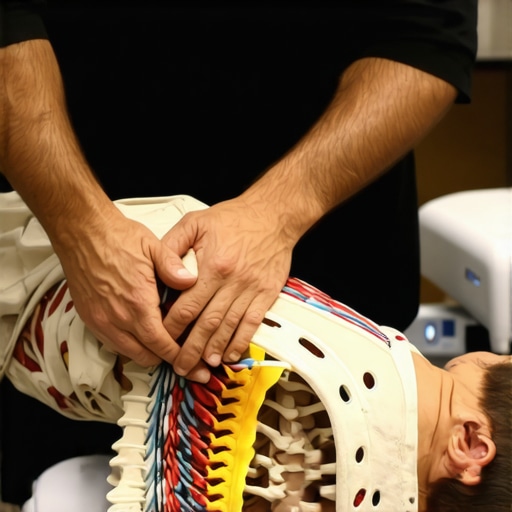 Maintaining long-term back health requires more than temporary fixes; it involves strategic use of tools and proven methods that empower you to take control of your recovery and ongoing wellness. One of my go-to devices is the **foam roller**, a simple yet powerful tool that I personally use daily to break up muscle adhesions and improve my spinal mobility. Unlike passive stretching, rolling helps release myofascial restrictions, particularly in the thoracic and lumbar regions, which are often tight due to sedentary habits.
Another indispensable tool is a **lacrosse ball**. I use it for pinpoint release of stubborn knots in my psoas and hip flexors, targeting areas that often remain overlooked but significantly influence back pain. Applying gentle pressure with a lacrosse ball against a wall or on the floor, I can effectively reduce tissue tension, thereby improving my posture and movement patterns.
On the software side, I rely heavily on **mobility tracking apps** that prompt me to perform daily movement routines. These apps incorporate evidence-based protocols I’ve learned from scientific research (see more here), enabling me to monitor progress and maintain consistency. Regular use of these digital tools helps reinforce healthy habits, especially during busy periods when routine might falter.
In terms of professional support, I continuously engage with **therapeutic exercises** recommended by my chiropractor. Programs like targeted core activation and stability movements are tailored to my specific needs, reinforcing the structural foundation necessary for long-term back health. Combining these exercises with periodic **chiropractic adjustments**—which I see as part of a comprehensive approach—maximizes my results according to recent research (details here).
Looking ahead, I believe the future of back health management will integrate **wearable technology** that provides real-time feedback on posture and movement, similar to current developments in biofeedback devices. Early adoption of these innovations can help individuals continue doing the right movements outside of clinical settings.
Wondering how to keep your back pain at bay over time? Start by integrating a **foam rolling routine** into your daily habits—it’s an accessible, effective way to maintain tissue health and prevent the buildup of restrictions that cause pain. Actually trying out my recommended **step-by-step foam rolling technique** can set you on a path toward lasting relief. Remember, consistency and the right tools are your best allies in this journey.
What I Wish I Knew Starting Out with Chiropractic and Mobility
One of the hardest lessons I learned was that quick fixes like a single adjustment rarely provide lasting relief. My early belief that a single session could solve chronic back pain transformed into a realization: sustainable healing requires embracing movement and lifestyle changes. Recognizing that muscles and movement patterns are just as important as adjustments made all the difference for my recovery.
Another insight was understanding the importance of integrating tools like foam rollers and lacrosse balls into my routine. These simple devices help release tissue restrictions that adjustments alone can’t address, reinforcing the importance of active participation in healing—something I overlooked initially.
Lastly, I discovered that long-term back health hinges on consistency and education. Tracking my mobility and understanding the science behind chiropractic care empowered me to take control of my wellness, rather than relying solely on periodic treatments. This holistic view has transformed how I approach back care and injury prevention.
Tools That Changed My Approach to Back Wellness
My essential toolkit now includes a high-quality foam roller, which I use daily to maintain tissue health and prevent stiffness. Its ability to break up myofascial adhesions is unmatched for supporting spinal mobility (discover more here). Additionally, a lacrosse ball is invaluable for targeting stubborn knots, especially in hips and psoas, helping me maintain proper alignment and reduce back strain.
Digital resources like mobility tracking apps keep me accountable and allow me to monitor my progress. They incorporate evidence-based protocols I trust, ensuring my routines are effective and consistent. Coupled with professional guidance from my chiropractor, these tools form a comprehensive system for long-term back health (learn more about the science behind adjustments).
Looking ahead, I’m excited about emerging technologies like wearable biofeedback devices that promote good posture in real time. Staying proactive with these innovations will help maintain the gains I’ve worked hard to achieve and serve as a reminder: investing in the right tools is crucial for enduring back wellness.
This Is Your Wake-Up Call for Lasting Relief
Your journey to pain-free living begins today. By integrating targeted stretches, effective tools, and continuous education, you can rewrite your back health story. Remember, real change happens through small, consistent steps—each one building toward a stronger, more resilient spine. Don’t wait for pain to become unmanageable; start now and take control of your mobility and comfort.
What’s been your biggest challenge in maintaining back health? Share your experiences below—I’d love to hear what’s worked or what’s holding you back, so we can learn together and move toward lasting relief.
,