
I was standing in a terminal in Heathrow, clutching a lukewarm espresso, when my lower back decided to stage a full-scale mutiny. It wasn’t a slow build; it was an overnight coup. One minute I was excited about a museum tour, and the next, I was calculating the shortest path to a pharmacy while walking like a question mark. If you’ve ever felt that soul-crushing moment where your body betrays your itinerary, you know the panic. You aren’t just hurt; you’re frustrated because you’ve spent months planning this and paid a small fortune to be here. My biggest mistake in those early days? I thought I could out-stretch the pain. I would drop into a deep forward fold in the middle of a terminal, not realizing that I was actually irritating my nerves even further. Today, I am going to show you how to avoid my blunders and actually reclaim your trip before you are forced to spend it in a hotel bed.
Stop the Vacation-Ending Back Spasm Before It Starts
Travel is essentially a marathon of bad positions. You are crammed into a pressurized metal tube for hours, then you are lugging a suitcase that is definitely over the weight limit, and finally, you are sleeping on a hotel pillow that has the structural integrity of a marshmallow. It is no wonder your spine is screaming. Most people think they just need to tough it out, but that is how a minor tweak turns into a week of bed rest. You need to understand how to sit without compressing your l5-s1 disc during those long hauls. I learned the hard way that why your lumbar spine hates your car seat—or an airplane seat, for that matter—is because of the total loss of your natural curve and the constant vibration of travel.
Is This Flare-Up Just an Inevitable Part of Traveling?
I used to tell myself that my back just hated traveling, as if it were an unchangeable personality trait. But the truth is more mechanical than mystical. According to a study published in the Journal of Orthopaedic & Sports Physical Therapy, static loading during long-duration sitting leads to significant creep in the spinal tissues, making them far more vulnerable to injury the moment you stand up and grab your bags. It is not just old age; it is physics. Have you ever had a dream trip ruined because your back gave out on the second day? It is the absolute worst feeling in the world, isn’t it? To get through this, you need a plan that does not involve hoping for the best. You need to master 3 tactical moves to stop sciatica while sitting in an airplane and realize that why heat is often the wrong choice for a sudden back spasm—something I wish someone had told me before I spent forty euros on heat patches in a Parisian drugstore that only made my inflammation worse.
Reset Your Spine Without a Professional Massage
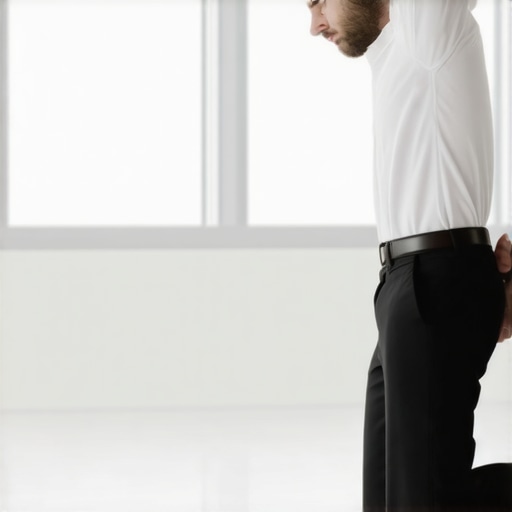
When you land, your first instinct is likely to collapse onto the hotel bed. Resist it. Your spine has been under constant axial loading, meaning gravity has been pushing your vertebrae together like a set of stacked accordions. To fix this, you need to think of your spine like a pressurized spring that needs to be gently unwound. I remember landing in Tokyo after a grueling 14-hour flight. My SI joint felt like a rusted hinge, and every step felt like a shockwave. Instead of hunting for a local therapist, I found a sturdy wall and performed a modified decompression. By creating a ‘long’ spine and focusing on breathing into my lower ribs, I managed to decompress the tissue enough to walk to dinner without a limp. This is where the 5-minute decompression routine after a 10-hour shift becomes your most valuable travel asset. It’s not about stretching; it’s about creating space.
The 30-Second Move to Re-Hydrate Your Discs
Your spinal discs are primarily fluid. After hours of sitting, they lose height as fluid is squeezed out. To get that ‘cushion’ back, you need movement that isn’t aggressive. Think of the science behind chiropractic adjustments for back pain relief—it’s about restoring proper joint motion so the surrounding tissues stop panicking. A simple standing pelvic tilt can act as a pump for those discs. If you’re stuck in a hotel room with no equipment, focus on slow, controlled hip hinges. This prevents the sharp ‘stabbing’ sensation that happens when you reach down to grab your suitcase. You are essentially telling your nervous system that it is safe to move again. If you have a history of issues, knowing how to sleep with a bulging disc without increasing pain while using those thin hotel pillows is the difference between waking up ready to explore or waking up needing a walker.
Wake Up Your Glutes Before You Lift Your Luggage
Long-duration sitting doesn’t just stiffen the back; it literally turns off the muscles meant to protect it. It is called ‘gluteal amnesia.’ When your glutes go on strike, your lower back has to pick up the slack to stabilize your entire body. This is why your glutes turn off when you sit too long and why your back feels so vulnerable the moment you try to lift a heavy bag off the carousel. Before you even touch your luggage, do twenty bodyweight squats or some standing glute squeezes. It sounds silly in a public airport, but it’s better than a trip to the ER. If you have a bit more space, the 90-90 hip flow for lifters who cant squat deep can help reset your hip internal rotation, which often gets locked down during travel.
Ditch the Forward Fold for a Better Way to Move
Stop reaching for your toes. When your back is in an acute flare-up, a deep forward fold is like pulling on a frayed rope. It feels like a ‘good’ stretch for three seconds, but it’s actually placing immense tension on the already irritated nerves. This is a classic trap; why your morning stretching routine is making you stiffer by noon is usually because you are over-stretching the nerve rather than mobilizing the joint. Instead, focus on ‘nerve glides’—gentle movements that let the nerve slide through the canal without being yanked. Think of it like flossing a tooth. You want the nerve to move freely, not to be stretched to its breaking point. This shift in mindset from ‘pulling’ to ‘gliding’ is what saved my second trip to London, allowing me to hit my 20,000-step goal daily without a single ibuprofen.
We need to talk about the ‘bone-out-of-place’ theory because it is the most common misconception I see in sports rehab and travel recovery. People often think their spine is like a crooked fence that needs a hammer to be straightened out. This leads to a dangerous ‘Oops’ factor: the desire for more force. In my experience, more force does not equal more healing. If you are constantly chasing that ‘crack’ or trying the truth about cracking your own mid-back over a chair, you might be ignoring the real reason your si joint keeps shifting out of place. Often, the joint feels ‘out’ because the surrounding muscles are weak or imbalanced, creating a sensation of instability that your brain interprets as a misalignment.
Why a ‘Pop’ Is Not Always Progress
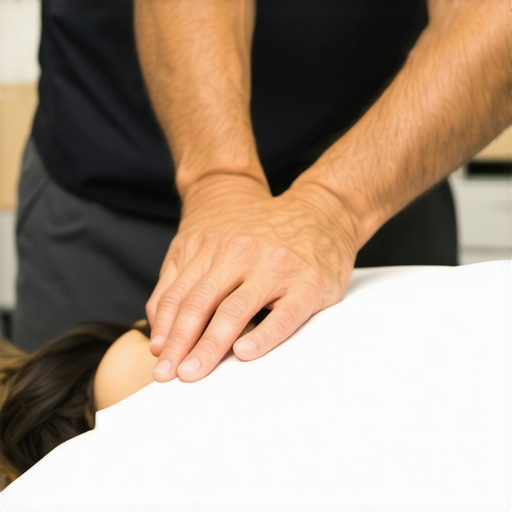
Everyone loves the sound of a good ‘crack.’ We have been conditioned to think that if it doesn’t pop, the adjustment didn’t work. But here is the professional nuance: that sound is just a pressure change, a phenomenon called cavitation. It is the release of oxygen, nitrogen, and carbon dioxide from the joint capsule. Thinking that your vertebrae are like Lego bricks that need to be snapped back into a straight line is one of the most persistent myths in the industry. In reality, the science behind chiropractic adjustments for back pain relief shows that the benefit is mostly neurological. You are resetting the ‘software’ of your nervous system, telling it to relax the protective guarding around the joint, rather than just moving the ‘hardware’ of your bones.
Does a Louder Pop Actually Equal Better Results?
Actually, no. A study published in the Journal of Manipulative and Physiological Therapeutics demonstrated that the presence of a ‘pop’ does not correlate with better clinical outcomes. The relief you feel is often the result of a sudden drop in muscle tone and an increase in local range of motion. If you keep trying to force a sound by twisting yourself in a hotel bed, you risk irritating the joint capsule and worsening your inflammation. Have you ever fallen into this trap of thinking you needed a louder crack to feel better? Let me know in the comments.
The Distal Secret to Unlocking Your Lower Back
Another major mistake is looking only at where it hurts. If your lower back is screaming after a flight, the problem might actually be your ankles. I know it sounds crazy, but the 30-second foot massage for instant lower back relief works because it addresses the superficial back line—a chain of connective tissue running from your toes to your forehead. If the bottom of that chain is tight from walking miles in unsupportive sandals, the tension will manifest at the weakest point: your lumbar spine. This is why you should boost your sports rehab journey with proven chiropractic strategies that look at the whole kinetic chain, not just the spot that aches. For those who lift heavy or engage in sports while traveling, remember what your chiropractor wishes you knew about heavy lifting: your spine needs to be dynamic and adaptable. By focusing on essential tips for managing back pain through healthy lifestyle choices, such as varied movement and proper hydration, you can break the cycle of chronic stiffness and actually enjoy your vacation.
Maintaining your progress isn’t about doing more; it’s about being more precise with the inputs you give your nervous system. I never travel without a specific high-density lacrosse ball in my carry-on. Why? Because the Quadratus Lumborum (QL) acts like a stabilizer that refuses to let go after a long flight. I don’t just roll on it aimlessly; I find a specific trigger point and use an active release technique by slowly cycling my hip. This precision is a core part of building strategic chiropractic solutions for long-term back health rather than just chasing temporary relief. Another tool I swear by is a hook-shaped psoas release device. Your psoas is the only muscle that connects your spine directly to your legs. When it is shortened from hours in a cramped airplane seat, it pulls your lumbar vertebrae into a shear position. Practicing the psoas release you can do while watching tv in your hotel room is my secret weapon for preventing that ‘stuck’ feeling the next morning.
How do I maintain spinal health on the road?
Maintenance is less about stretching and more about providing a ‘safe’ signal to your brain. Dr. Stuart McGill, a leading expert in spine biomechanics, emphasizes the ‘Big 3’ exercises for a reason: they create stiffness where you need it (the core) so you can have mobility where you want it (the hips). When I am away from my usual gym setup, I focus on the ‘Anti-Fragile’ mindset. This means I prioritize the lung drill that instantly lowers your stress and back tension during my morning routine. It helps reset the diaphragm, which is often the first thing to lock up when we are stressed or tired. By integrating essential tips for managing back pain through healthy lifestyle choices, like maintaining a consistent walking cadence even on travel days, you ensure that your expert chiropractic adjustments that work actually ‘stick’ instead of washing away the moment you lift your suitcase.

Looking toward the future, I predict we are going to see a massive shift toward bio-feedback wearables that track spinal loading in real-time. Imagine a device that gently vibrates when your L5-S1 disc has reached its maximum compression threshold during a flight, prompting you to stand up before the pain cycle even begins. Until then, you have to be your own sensor. Don’t forget the one muscle you arent strengthening for better posture—the serratus anterior—which helps stabilize your upper body while you are navigating busy terminals. If you want to boost your sports rehab journey with proven chiropractic strategies, you must treat your spine with the same respect you give your phone’s battery: don’t let it run all the way to zero before you decide to recharge it. Try this tonight: spend just two minutes on a psoas release before bed and see how much lighter your legs feel when you wake up.
The Reality Check I Had to Face About Travel Recovery
After years of trial and error in airport lounges and cramped hotel rooms, I realized that my back wasn’t fragile; it was just poorly managed. One of the biggest breakthroughs I had was learning that essential tips for managing back pain through healthy lifestyle choices matter more than any expensive gadget. First, remember that pain is often a ‘danger’ signal from your brain, not a sign that something is broken. Second, micro-movements—like a simple standing pelvic tilt every hour—are far more effective than trying to ‘fix’ yourself with a massive stretch once you reach your destination. Finally, I learned to boost your sports rehab journey with proven chiropractic strategies by focusing on the whole kinetic chain rather than just the spot that hurts.
My Must-Have Gear for Any Long Haul
I never check a bag without these specific items because they are the difference between sightseeing and bed rest. I always carry a high-density lacrosse ball for localized trigger point work on the QL and glutes. I also highly recommend reading ‘Back Mechanic’ by Dr. Stuart McGill; it changed how I perceive spinal stability forever. For those looking for immediate relief, incorporating the 30-second foot massage for instant lower back relief into your nightly routine can prevent tension from migrating up to your lumbar spine. These aren’t just tools; they are your insurance policy for a pain-free trip.
#IMAGE_PLACE_HOLDER_E#
Reclaim Your Freedom of Movement
Travel is one of life’s greatest joys, and you shouldn’t have to experience it through a haze of discomfort. By shifting your focus from ‘cracking’ your back to building a resilient, adaptable system, you can discover how chiropractic adjustments can alleviate chronic back pain and keep you moving. You have the power to influence how your body responds to the stresses of the road. Don’t let a long flight be the end of your adventure; let it be the start of a more mindful approach to your spinal health. What’s the one piece of travel gear or a specific stretch you never leave home without to keep your body feeling good? Let me know in the comments below!