
I was three weeks into a high-volume calisthenics phase when my left wrist finally gave up the ghost. I wasn’t doing anything ‘wrong’—or so I thought. Every time I hit the floor for a set of diamonds, a sharp, electric zing would shoot up my forearm, turning my workout into a battle against my own anatomy. I tried the usual tricks. I bought copper-infused sleeves, I iced until I was numb, and I even tried to power through because I believed the truth about no pain no gain in sports rehab was just about mental toughness. Spoiler alert: I was wrong. My biggest mistake wasn’t a lack of grit; it was my total refusal to look at how I was actually distributing weight through my palms. I was treating my hands like flat, lifeless meat paddles instead of the complex architectural marvels they are. Today, we’re going to stop the band-aid fixes and look at why your anatomy is revolting against your workout.
Stop Treating Your Hands Like Flat Meat Paddles
If you’re like I was, you probably just slap your hands on the mat and hope for the best. But when you do that, you’re dumping every ounce of your body weight directly into the tiny carpal bones of your wrist. It’s a recipe for disaster. I realized that my wrist pain wasn’t a ‘wrist’ problem at all—it was a hand-engagement problem. Much like how the best way to position your mouse to avoid wrist pain involves neutral alignment, your push-up needs a ‘clapping’ style of engagement. You need to learn how to ‘grip’ the floor. Have you ever felt that sharp pinch right at the top of your wrist crease? That’s your body screaming that the joint space is closing. It’s vital to learn how to tell the difference between muscle soreness and a real injury before you do permanent damage to those ligaments.
Is this just a sign that I’m getting too old for this?
Many of my neighbors and gym buddies ask me if the ship has simply sailed on their heavy lifting days. They worry that their joints are worn out. Usually, it’s not age; it’s a lack of mechanical awareness. According to the Journal of Orthopaedic & Sports Physical Therapy, improper wrist extension angles during weight-bearing exercises significantly increase the risk of dorsal impaction syndrome. It’s not that your bones are old; it’s that your tires are out of alignment. If you’ve been struggling with this, have you noticed if the pain stays in the wrist or travels up your arm? We need to look at the whole kinetic chain—because sometimes, the science behind chiropractic adjustments shows us that a problem in the hand might actually be starting in the shoulder or even the neck. Let’s dig into how we can reset your foundation.
Rebuild Your Push-up From the Fingertips Up
To stop the pain, we have to stop the passivity. When your hand is flat, your wrist is the only thing bearing the load. We need to turn your hand into a tripod. Last November, I was grinding through an EMOM session in my garage, and by minute twelve, my left wrist felt like it was being stabbed with a cocktail stick. Instead of quitting, I remembered a tip: stop being a passive weight-bearer. I dug my fingertips into the rubber mat, trying to physically pull the floor toward my palm. The sharp ‘zing’ didn’t just lessen; it vanished. This ‘claw’ engagement creates a natural arch in your palm, much like the arch in your foot, protecting the delicate nerves passing through your carpal tunnel. If your joints are making noise while you descend, understanding the science behind that popping sound in your joints is helpful, but active engagement is the immediate fix.
Engage the Claw to Save Your Carpals
Start by spreading your fingers as wide as possible. Instead of letting your palms go ‘soft,’ imagine you are trying to palm a basketball on the floor. Press the tips of your fingers—especially the index and thumb—into the ground until your knuckles lift slightly. This tension travels up the forearm, creating a muscular ‘sleeve’ that stabilizes the wrist joint. 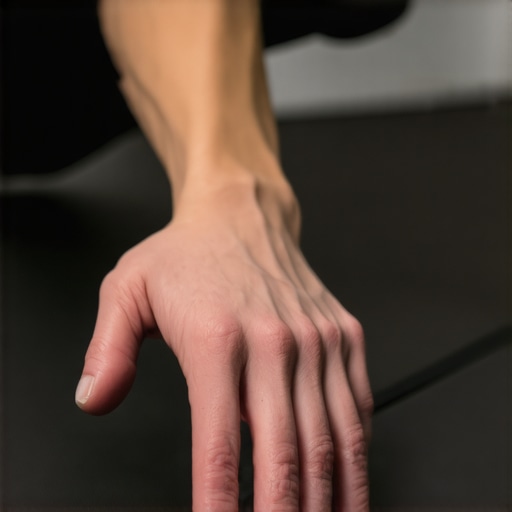
Why Stable Shoulders Stop Wrist Impingement
Your wrist pain often starts twelve inches higher at the shoulder. If your shoulder blade is winged or unstable, your arm rotates internally, forcing the wrist into an awkward, compressed angle. I’ve found that incorporating the scapular stability move every baseball player needs into a warm-up can magically ‘loosen’ the wrist. When the shoulder is packed tightly into the socket, the weight distributes evenly through the radius and ulna, rather than dumping into the thumb side of the wrist. This holistic approach is why the role of chiropractic care in effective sports injury recovery is so vital; we don’t just look at where it hurts, we look at where the movement began to fail.
Rotate Your Elbow Pits for Instant Joint Space
Once your hands are ‘clawed’ into the floor, try to rotate the insides of your elbows (the ‘pits’) forward. This external rotation ‘screws’ your shoulders into place. If you find this movement difficult or feel a pinch in the front of your shoulder, you might need to try the lat stretch that stops your shoulder from clicking to open up that overhead and pressing range. This rotation creates a mechanical advantage that keeps the wrist in a neutral stack. Before you jump back into your next high-volume set, take the overhead mobility test every crossfit athlete should pass to see if your wrists are simply compensating for tight shoulders. Fix the rotation, and you fix the pinch.
The biggest mistake I see in sports rehab isn’t doing the wrong exercise; it’s the obsession with treating the ‘victim’ instead of the ‘criminal.’ Your wrist is almost always the victim. Everyone tells you to stretch your forearms or wear a brace, but in my experience, over-stretching a joint that is already screaming for stability is like trying to fix a frayed rope by pulling on both ends. If you’ve been aggressively pulling your fingers back to ‘loosen’ things up, you might actually be why your hamstrings always feel tight even though you stretch them—your nervous system is tightening the muscle to protect a joint it no longer trusts. We need to stop the passive stretching and start looking at load management.
Why does the pain return when the weights get heavy?
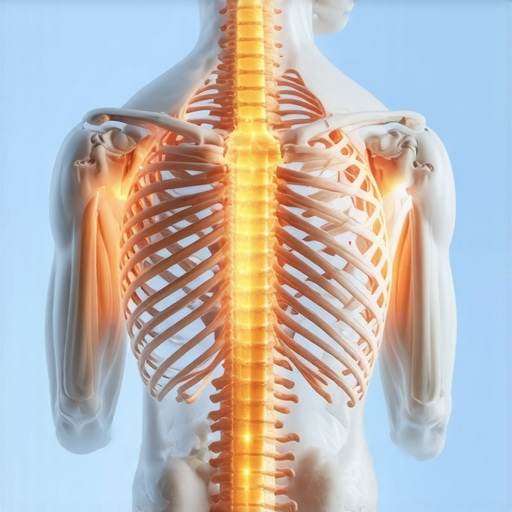
You might feel great during your warm-up, but the moment you add a 45-pound plate or increase your push-up volume, the ‘zing’ returns. This happens because of a concept called regional interdependence. A 2017 study in the Journal of Bodywork and Movement Therapies suggests that localized treatment without addressing the entire kinetic chain leads to a 40% higher recurrence rate in upper extremity injuries. If your rib cage is stuck in an flared position, your shoulder blade can’t sit flush, and your wrist ends up eating the force that your core should have absorbed. This is why strategic chiropractic solutions for long-term back health often involve looking at your breathing mechanics as much as your spine. If you can’t expand your ribs laterally, you’ll never have stable wrists in a plank.
The Trap of Excessive Rest and Total Inactivity
The most common ‘oops’ factor is the belief that complete rest will heal a mechanical impingement. While it’s true you shouldn’t push through sharp pain, why bed rest is the worst thing for acute back spasms applies to your wrists too. Total inactivity leads to tissue deconditioning. When you finally return to the gym, your tendons are even less prepared for the load than they were before. Instead of ‘resting,’ you should be ‘regressing.’ Swap the floor push-up for an incline version on a bench, or use handles to keep the wrist in a neutral stack while you work on revolutionize your rehab chiropractic techniques for faster recovery. This keeps the blood flowing and the neural pathways active without triggering the inflammatory response. Have you ever fallen into this trap of resting until you’re ‘healed’ only to have the pain come back on day one? Let me know in the comments. We need to move away from the idea that a single adjustment or a week on the couch is a cure-all; true recovery is about rebuilding the capacity of the entire system, from your fingertips to your diaphragm.
I didn’t just wake up one day with bulletproof wrists; it took a systematic approach to tools and maintenance. Once I moved past the acute pain phase, I realized that my equipment was either working for me or against me. I started using Fat Gripz on my pull-up bar and even my dumbbells. I don’t use them for the ‘arm pump’—though that’s a nice side effect. I use them because of a neurological principle called irradiation. When you grip something thicker, your nervous system is forced to recruit more muscle fibers throughout the entire arm and shoulder. It’s like turning on all the lights in a house instead of just a dim lamp in the hallway. This is a key part of how I’ve been enhancing athletic performance with targeted chiropractic care—by making sure the nervous system is fully ‘online’ before I hit a max effort set.
How do I keep my joints healthy as the weights get heavier?
Maintenance isn’t a one-and-done deal; it’s about consistent, low-level inputs that remind your body how to move correctly. Dr. Andreo Spina, the creator of Functional Range Conditioning (FRC), famously notes that ‘injury occurs when the load exceeds the capacity of the tissue.’ To prevent this, I’ve integrated specific carpal and thoracic mobility drills into my daily routine. These aren’t just for when I’m at the gym. Incorporating essential tips for managing back pain through healthy lifestyle choices, like periodic movement breaks and ergonomic checks, ensures that my tissues maintain their capacity even during 10-hour workdays. If I’m feeling a bit of ‘stickiness’ in the morning, I’ll use a medium-tension band to perform pull-aparts, but you have to know how to choose the right resistance band for shoulder rehab to ensure you aren’t just reinforcing bad patterns. Consistency in these small habits is what builds strategic chiropractic solutions for long-term back health and joint longevity.

Parallettes and the Neutral Wrist Cheat Code
If you’re struggling with the floor, stop using the floor for a while. I swear by my low wooden parallettes. By holding onto a bar rather than pressing a flat palm into the ground, your wrist stays in a neutral, ‘stacked’ position. This allows you to build massive strength in your chest and triceps without grinding your carpal bones into dust. I used this specific regression to boost your sports rehab journey with proven chiropractic strategies, allowing me to train around an injury rather than sitting on the couch. It’s the same logic behind using handles for heavy carries; the more you can keep the joint in its strongest alignment, the more weight you can move safely.
Smart Wearables and the Future of Form Correction
I predict that in the next few years, the ‘meat paddle’ mistake will be a thing of the past. We are already seeing the emergence of smart-fabric compression sleeves and gloves embedded with haptic sensors. Imagine a wrist wrap that gives a tiny vibration the moment your palm loses tension or your elbow pit rotates too far inward. This real-time biofeedback will revolutionize how we train, bridging the gap between a professional assessment and your solo garage workout. Until then, you have to be your own sensor. Take a moment today to try the ‘Wall Claw’—stand at a wall, place your hands at shoulder height, and try to pull the drywall toward your palms using only your fingertips. If you can feel your forearms and shoulders ‘fire up,’ you’ve found the secret. Start doing this for 30 seconds before every upper-body session to wake up those stabilizer muscles.
Hard Truths from the Front Lines of Recovery
I spent years thinking I could just ‘out-tough’ my anatomy, but the body has a funny way of enforcing its rules whether you agree with them or not. One of the biggest shifts for me was realizing that pain isn’t an enemy to be ignored, but a data point to be analyzed. When I stopped treating my sessions like a battle against my joints and started treating them as a conversation, everything changed. You have to accept that stability is a skill that needs constant sharpening. It’s also vital to realize that a single adjustment isn’t a magic wand; to boost your sports rehab journey with proven chiropractic strategies, you have to pair those adjustments with better movement habits every day.
Another lightbulb moment was acknowledging that the wrist is usually the ‘victim’ of dysfunction further up the chain. If your lats are tight or your shoulders are internally rotated, your wrists will pay the price. I also learned that total rest is rarely the answer. Unless you have a fracture, active recovery—doing less weight but with perfect ‘claw’ engagement—is almost always superior to doing nothing at all. This approach is central to how I revolutionize your rehab chiropractic techniques for faster recovery, focusing on movement quality over sheer volume.
My Personal List of Recovery Essentials
If you’re serious about protecting your joints, you need a few core tools in your kit. First, get a pair of wooden parallettes; the neutral grip is a ‘cheat code’ for high-volume training. Second, invest in quality bands, but make sure you know how to choose the right resistance band for shoulder rehab so you’re getting the appropriate level of tension for your warm-ups. Finally, never underestimate the power of a professional who understands the biomechanics of lifting. Seeking out strategic chiropractic solutions for long-term back health and joint longevity ensures that you aren’t just putting out fires, but building a fireproof body.
#IMAGE_PLACE_HOLDER_E#
The Future of Your Stronger Self
You don’t have to choose between high-performance training and healthy joints. By moving away from ‘meat paddle’ hands and embracing active tension, you are building a foundation that will last for decades. Your sports rehab journey is a marathon, not a sprint, and every rep with a ‘claw’ grip is an investment in your future strength. Don’t be afraid to take a step back and regress your movements to progress your health. You’ve got the tools now—go use them. Have you ever felt that electric ‘zing’ in your wrist during a set, and how did you handle it at the time? Let me know in the comments below!