
I still remember the sound of my own frustration. I was at the local track, trying to hit my old 40-yard dash time, but every time I pushed off, my body felt like a handbrake was permanently pulled. I wasn’t just slow; I felt fragile. I’d spent months aggressively stretching my hamstrings, thinking they were the culprit. I was wrong. It wasn’t my hamstrings that were tight—it was my hips that were locked in a protective cage. I realized then that my enhancing athletic performance with targeted chiropractic care strategy was missing the most crucial piece of the puzzle: hip extension.
The Day I Realized Stretching Isn’t the Same as Mobility
My biggest mistake early on was treating my body like a collection of rubber bands that just needed to be pulled longer. I’d sit in a pigeon stretch for ten minutes, feel great for a second, and then go back to sprinting with the same clunky gait. Real sprinting power doesn’t come from being flexible like a yoga instructor; it comes from having the active range of motion to snap your leg back into the ground. When I finally discovered the psoas secret to running faster without more effort, everything changed. My stride felt longer, not because I was reaching forward, but because my hips were finally letting my legs move backward. According to research published by the National Strength and Conditioning Association (NSCA), hip extension strength and range of motion are the primary drivers of horizontal velocity in elite sprinters. Without it, you’re just spinning your wheels. Have you ever felt like you’re fighting your own body just to stay at pace?
Does This Actually Work or is it Just Fitness Fluff?
I get it. You’ve heard about mobility until your ears bleed. You’re probably worried that this is just another complicated series of drills that take 45 minutes before you even touch the track. I felt the same way until I stopped doing the hip hinge error causing your sharp lower back stabs and started focusing on functional flow like the 90-90 hip flow for lifters who cant squat deep. Today, I’m going to show you exactly how to bypass the fluff and get right to the mechanical glitch that is slowing you down. We aren’t just going to loosen things up; we are going to rewire how your hips handle high-speed tension.The problem isn’t that you lack power; it’s that your power is being muffled by a mechanical “stuckness” at the front of your hips. Think of your hip joint like a door hinge. If there’s a wedge of wood jammed in the front side of the hinge, the door can’t swing open wide, no matter how hard you push it from the back. That wood wedge is your shortened psoas and an overactive anterior pelvic tilt. To fix this, we have to clear the obstruction before we can strengthen the engine.
Clear the Path for Maximum Stride Length
Most athletes I talk to are obsessed with “firing” their glutes. But here’s the reality: if your hip flexors are chronically tight, your glutes literally cannot fully contract. It’s a neurological phenomenon called reciprocal inhibition. Your brain shuts down the back side to protect the front side. I spent years doing heavy squats and deadlifts, wondering why my top-end speed was still garbage. It wasn’t until I started using the psoas release you can do while watching tv that I felt my hips “unlock.” It felt like someone had finally greased the gears.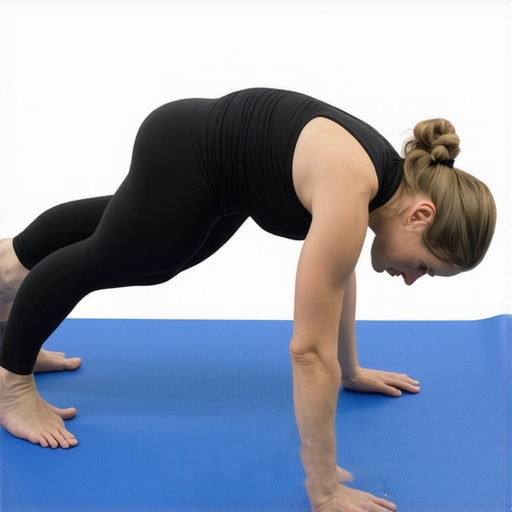
The Pelvic Tilt Hack for Instant Range
If your pelvis is dumped forward (anterior tilt), your hamstrings are already stretched to their limit before you even move. That’s why they feel tight—they aren’t actually short; they are over-lengthened and screaming for help. I remember one specific training camp where I couldn’t even touch my toes without a sharp pull. I was certain I’d torn something. My coach didn’t give me a stretch; he gave me the pelvic tilt fix for chronic tight hamstrings. Within three minutes of resetting my pelvis, the “tightness” vanished. It was a mechanical shift, not a flexibility miracle. Resetting your pelvis creates the structural space needed for your femur to move backward without tugging on your lower back.
Build Side-to-Side Stability to Move Forward Faster
Speed isn’t just about moving in a straight line; it’s about how well you stabilize that movement. If your hips wobble side-to-side, you’re leaking energy with every step. I used to think lateral work was only for “agility,” but it’s actually the foundation of straight-line speed. When I integrated the glute medius drill for faster lateral cuts, my 40-yard dash time dropped because my hips finally stayed level during the transition from the drive phase to the upright sprint. For long-term success, combining these movements with strategic chiropractic solutions for long-term back health ensures your joints are actually aligned to handle the increased force you’re now capable of generating.
How to Test Your Extension at Home
You can check this right now with the Thomas Test. Sit on the edge of a sturdy table, hug one knee to your chest, and lay back. If your hanging leg stays parallel to the floor or higher, you are locked up. I failed this test miserably for years. I was so stiff that my hanging leg looked like I was still sitting in a chair. It took focused work on the one muscle you arent strengthening for better posture—the deep core—to finally stabilize my spine so my hips felt safe enough to let go. This isn’t just about performance; it’s about avoiding the hip mobility drill every golfer needs to stop lower back tweaks by making sure your back isn’t doing the work your hips should be doing.
But here’s where most people get it wrong. We are conditioned to think the goal of rehab is ‘symmetry’ or a ‘perfect’ posture that looks like a textbook illustration. In my years of training and clinical observation, I’ve found that chasing a static ideal is often what keeps people in a cycle of chronic tightness. Your body is a dynamic system that thrives on variability, not rigidity. If you are constantly trying to hold yourself together, you aren’t actually stable; you’re just brittle.
Stop chasing the ‘perfect’ posture myth
I see it every day: athletes sitting bolt-upright because they’ve been told that slouching is the enemy. However, the reality is that staying in any single position for too long—even ‘perfect’ ones—is what causes issues. This is precisely why your back hurts more when you try to sit perfectly straight. When you force a rigid upright position, you are essentially asking your paraspinal muscles to perform an isometric hold for eight hours a day. They aren’t built for that. A study published in the Journal of Orthopaedic & Sports Physical Therapy (JOSPT) confirms that there is no single ‘correct’ posture that prevents back pain; rather, it’s the lack of frequent movement that leads to discomfort.
Can your nervous system actually ‘block’ your physical progress?
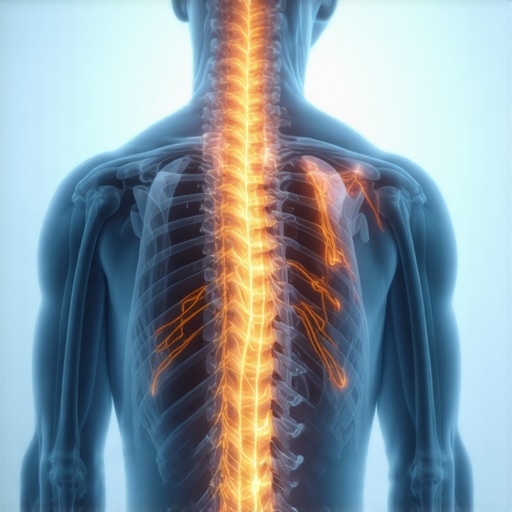
This is the advanced nuance that many overlook: your brain is the ultimate governor of your performance. If your nervous system perceives a threat—whether from an old injury or a lack of stability—it will physically limit your range of motion to protect you. This is why you can’t just stretch your way out of a problem. You have to convince your brain that the new range is safe. This is where the intersection of manual therapy and movement becomes critical. By utilizing discover how chiropractic adjustments can alleviate chronic back pain, we aren’t just ‘clicking’ joints; we are sending a high-velocity, low-amplitude signal to the brain that says, ‘It is okay to let go of this tension.’
The dangerous foam roller trap
The most common ‘oops’ factor I see is the aggressive use of foam rollers on areas that are already inflamed. For example, why your foam roller is useless for it band syndrome is a hard pill for many to swallow. You are essentially trying to compress a thick band of connective tissue that has the tensile strength of a seatbelt. Instead of smashing the painful area, you should be looking at the mechanics of the hip and ankle. This is what I mean by what your chiropractor wishes you knew about heavy lifting: the site of the pain is rarely the source of the problem.
To truly boost your sports rehab journey with proven chiropractic strategies, you have to move beyond the symptom-chasing phase. You need to address the neurological ‘guarding’ that prevents your glutes from firing and your hips from extending. It’s about creating a lifestyle of movement rather than a 15-minute ‘fix’ on a mat. For more long-term success, I always recommend integrating essential tips for managing back pain through healthy lifestyle choices into your daily routine. Have you ever fallen into this trap of trying to stretch through a ‘stiffness’ that just won’t budge? Let me know in the comments below.
The three items in my gym bag that actually matter
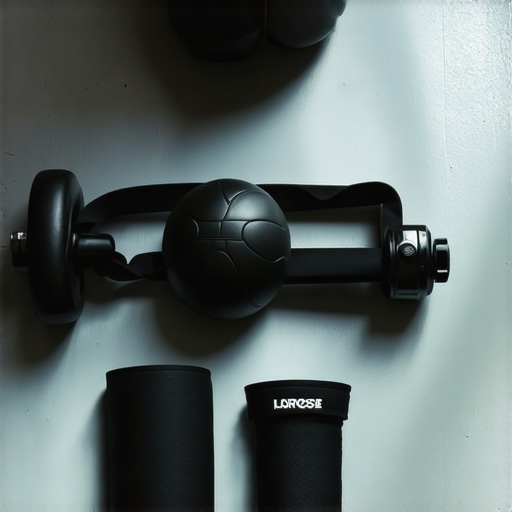
I used to be the person who carried every gadget under the sun. I had vibrating massage guns, five different foam rollers, and enough kinesiology tape to mummify a small elephant. But after years of trial and error, I’ve narrowed it down to three essentials that provide the highest return on investment. First is a simple lacrosse ball. I use it for the 30-second foot massage for instant lower back relief before every single workout. By releasing the plantar fascia, I’m essentially giving my entire posterior chain a green light to move. Second is a heavy-duty resistance band to wake up the lateral stabilizers; if I don’t use it, I can feel my gait start to shift. Finally, I keep a small lumbar roll for my car. It’s a simple version of the car seat hack for people with chronic tailbone pain that prevents my spine from slumping into that ‘C’ shape during my commute home.
How do I keep my hips and back from locking up again?
Maintenance isn’t about doing a two-hour mobility session once a week; it’s about micro-dosing movement. I’ve found that the best results come from ‘spinal hygiene,’ a term coined by Dr. Stuart McGill, a world-renowned expert in spine biomechanics at the University of Waterloo. He emphasizes that the way you move during your daily tasks—brushing your teeth, tying your shoes, or picking up a grocery bag—matters more than the 30 minutes you spend at the gym. This is why essential tips for managing back pain through healthy lifestyle choices are so vital. If you’re moving poorly for 23 hours a day, one hour of ‘rehab’ can’t outrun that damage. You need to integrate strategic chiropractic solutions for long-term back health into your routine to ensure your structure is actually capable of maintaining that hygiene.
The future of personal spinal maintenance
I predict we are moving toward a ‘bio-individual’ era of recovery. We are already seeing wearable sensors that track spinal curvature in real-time, vibrating when you’ve been in a compromised position for too long. But even with all the tech in the world, nothing replaces the neurological reset of a manual intervention. High-performance athletes are increasingly using the science behind chiropractic adjustments for back pain relief not as a ‘fix’ for an injury, but as a way to calibrate their nervous system for peak output. When your joints are stacked correctly, your muscles don’t have to work overtime just to hold you upright. This is the difference between surviving your workouts and actually thriving in them.
Your next step toward permanent relief
If you’re tired of feeling like your progress resets every Monday morning, you need to stop guessing. To truly boost your sports rehab journey with proven chiropractic strategies, you need a plan that addresses your specific mechanical glitches. I want you to try this: for the next three days, stop all static stretching of your hamstrings and instead focus on the pelvic reset drills we discussed. If you feel that ‘lightness’ return to your stride, it’s time to take it seriously. Unlocking back pain relief expert chiropractic adjustments that work isn’t just about the crunch; it’s about the clarity it gives your body to move. If you’re ready to see how your body is actually meant to feel, contact us today to set up an assessment. Let’s find out exactly where your ‘stuck’ points are and clear them out for good.
Lessons from the Years I Spent Fighting My Own Body
Looking back, the biggest takeaway wasn’t a specific stretch; it was the realization that my body was often being ‘stiff’ for a reason. I used to think I could bully my muscles into submission, but I learned that neurological safety is the prerequisite for any physical gain. When I finally embraced the role of chiropractic care in effective sports injury recovery, it wasn’t just about fixing a ‘kink’ in my neck. It was about teaching my brain that I was stable enough to move fast again. If you’re constantly fighting recurring tightness, you likely have a software issue, not just a hardware one. To truly revolutionize your rehab chiropractic techniques for faster recovery must include both manual adjustments and consistent, intentional movement patterns.
Gear That Actually Earned a Spot in My Bag
I’ve wasted hundreds of dollars on fancy gadgets, but I always come back to the basics. If you’re serious about your mobility, I recommend focusing on three core tools. First, a simple lacrosse ball for trigger point work—it’s unbeatable for targeted release. Second, Dr. Stuart McGill’s book, ‘Back Mechanic,’ which is the gold standard for understanding spine health. Third, a set of mini-bands to keep your lateral stabilizers firing. I’ve found that why your morning stretching routine is making you stiffer by noon is usually because athletes lack the stability these tools provide. For those long days at work, I also swear by the 5 minute decompression routine after a 10 hour shift to reset the spine before it becomes a permanent slump.
It is Time to Stop Managing Pain and Start Moving Again
You don’t have to accept ‘getting older’ or ‘old sports injuries’ as an excuse for a lack of mobility. Your body is incredibly resilient when you give it the right inputs. By enhancing athletic performance with targeted chiropractic care, you are giving yourself the mechanical advantage needed to break through plateaus you thought were permanent. Remember, the goal isn’t just to be ‘not in pain’—it’s to be capable of whatever movement your life demands. If you are ready to stop the cycle of temporary fixes, contact us to build a plan that lasts. Have you ever felt like your hamstrings were tight no matter how much you stretched them? Let me know in the comments below.