
I was exactly three blocks from my front door when the lightning strike hit—not from the sky, but from deep inside my right glute, screaming all the way down to my pinky toe. I had to lean against a neighbor’s picket fence, pretending to tie my shoe while I waited for the electric fire to dim down to a dull throb. For years, I believed that walking was my therapy, the one thing keeping me healthy, but I was actually making a massive mistake. I was over-striding, reaching my lead foot out too far and slamming my heel into the pavement, which sent a shockwave directly into my already irritated sciatic nerve. If you have ever felt that sickening ‘zip’ while just trying to enjoy a stroll, you know exactly how frustrating it is when your primary form of exercise becomes your primary source of pain. Have you ever felt like you were walking on eggshells just to avoid a flare-up? Today, I’m going to show you how a minor adjustment to your gait can be the difference between a painful limp and a mile-long smile. This isn’t about expensive gear or weeks of bed rest; it’s about mechanical efficiency. Many people struggle to distinguish their pain sources, so it helps to know how to tell if your sciatica is actually piriformis syndrome before you change your routine.
Walk Without That Electric Shock Down Your Leg
I spent months trying to ‘power through’ the discomfort, which is the worst advice I ever gave myself. I thought if I just walked faster, my muscles would warm up and the pain would vanish. Instead, my stride got longer and my lumbar spine took the brunt of the impact. I eventually realized that my body was compensating for old injuries, and I’ve learned that even an ankle sprain from high school can fundamentally shift how you distribute weight today. By shortening my stride and focusing on a mid-foot land, I took the literal pressure off the nerve. It sounds so simple it’s almost annoying, right? But the biomechanics don’t lie. According to research cited by Harvard Health, overstriding creates a ‘braking force’ that increases the impact on your joints by up to 25%, sending those vibrations straight to your discs. When you combine these gait changes with expert chiropractic adjustments, you give your nervous system the breathing room it desperately needs. I used to think I needed a surgical overhaul, but the real ‘aha’ moment came when I stopped trying to cover more ground and started focusing on how my foot actually met the earth. If you are constantly wondering if your sciatica is actually a muscle knot, you might be surprised to find that your walking style is the one keeping that knot tight.
Is a tiny foot-strike change actually worth the effort?
You might be skeptical—I certainly was. It’s easy to think that such a small tweak couldn’t possibly override years of chronic back issues. However, the goal is to stop the repetitive micro-trauma that occurs every time your heel slams down. When I finally surrendered my ego and stopped trying to walk like a speed-demon, my recovery accelerated. I stopped needing to sit on a park bench every ten minutes. We often overlook the basics, like how we carry ourselves, in favor of complex solutions, but sometimes the most profound relief comes from the simplest corrections. Let’s dive into the specifics of how to re-train your brain and your boots to move without the misery.
Stop Slamming Your Heel into the Pavement
Think of your leg like a pogo stick. If you lock it out and lean back, the shock has nowhere to go but up into your spine. Most people walk by reaching their heel forward, locking their knee, and practically ‘braking’ with every step. To fix this, you need to aim for a mid-foot landing. Imagine you are walking on a sheet of thin ice. You wouldn’t stomp; you would place your foot directly under your center of mass. When I first tried this, I felt like I was marching in place, but that’s because I was so used to over-striding. Every time your heel hits the ground with a locked knee, a shockwave travels through your tibia at the speed of sound and slams into your lower vertebrae. It’s like hitting a nail into a board with a steel hammer—there is no ‘give.’ I once forced myself to walk backward for a block in an empty park just to feel what a ‘front-foot’ landing felt like. It felt weird, but the silence from my sciatic nerve was golden. If you’ve struggled with this, the science behind chiropractic adjustments for back pain relief shows that keeping your joints stacked properly is the only way to avoid long-term inflammation. 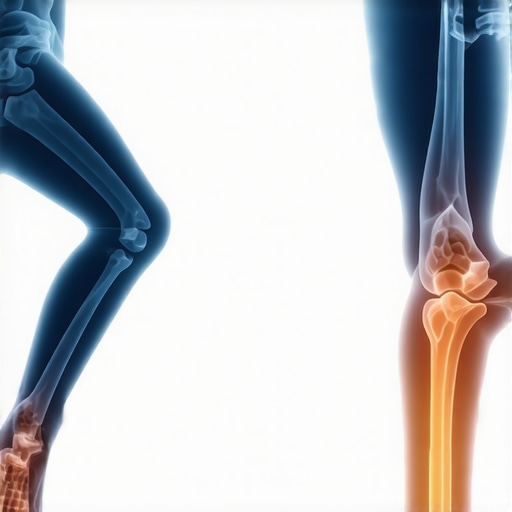
Keep Your Pelvis Level Like a Bowl of Water
Your pelvis is the foundation for your spine, and if it tips too far forward, it pinches the nerves in your lower back. I like to imagine my pelvis is a bowl full of water. If I arch my back too much, the water spills out the front. This ‘spilling’ creates a massive amount of tension in your hip flexors, which leads to a psoas secret that most runners ignore: a tight hip flexor pulls your spine into a compromise. To fix this, tuck your tailbone slightly—not enough to look like a frightened dog, but just enough to feel your core engage. This creates the ‘breathing room’ your sciatic nerve needs. I remember a hike where I forgot this rule. Within ten minutes, I was leaning over a log in agony. I had to stop, reset my pelvic bowl, and consciously engage my lower abs. The sharp ‘electric’ stabs turned into a manageable hum because I stopped the bone-on-nerve compression.
Your Big Toe Is the Secret Shock Absorber
Don’t let your big toe fall asleep on the job. Proper gait requires your foot to push off through the big toe, which activates the glutes. When your glutes are firing, they act as a shock absorber for your back. If you are just ‘flopping’ your feet down, you’re missing out on the body’s natural suspension system. This is why strategic chiropractic solutions for long-term back health often start with the feet and work their way up. Think of your foot as a tripod; the big toe is one of the legs. If it’s not grounded, the whole structure—up to your neck—wobbles. I spent years buying cushioned shoes, thinking I needed more ‘pillows.’ In reality, I needed to learn how to use my feet to protect my spine. This isn’t just about walking; it’s about rebuilding the kinetic chain from the pavement up.
Three Tactical Resets for Instant Relief
Sometimes a flare-up happens regardless of your form. If you feel that familiar zing, don’t just keep walking and ‘power through.’ Use a quick postural reset. I used to think I had to find a gym to stretch, but you can actually find relief using 3 tactical moves to stop sciatica that work just as well on a sidewalk. These movements are about immediate de-compression. If you’ve ever felt a sharp lower back stab during a hip hinge, you know that the wrong movement can set you back weeks. These resets are about nerve gliding—keeping the nerve moving through its sheath rather than letting it get snagged on a tight muscle.We often treat our bodies like a collection of rubber bands, assuming that if something feels tight, we just need to pull harder. But here is the hard truth that took me years to accept: you cannot stretch your way out of a nerve problem. When your sciatic nerve is inflamed, it doesn’t want to be elongated; it wants to be desensitized. This is where most people go wrong. They feel that ‘tightness’ in their leg and immediately start aggressive hamstring stretches. In reality, why stretching your hamstrings won’t fix your chronic tightness is because that ‘pull’ you feel is often protective tension from the nervous system, not a short muscle. By cranking on it, you’re just tugging on a raw nerve, which is like pulling on a live electrical wire. It might feel ‘good’ for thirty seconds because of the gate control theory of pain, but you’ll pay for it ten minutes later when the inflammation flares up again.
Your Foam Roller Might Be Your Spine’s Worst Enemy
Another massive trap I see is the ‘roll it out’ obsession. We’ve been conditioned to think that every knot needs to be crushed by a high-density foam cylinder. However, why you should never roll your lower back on a foam roller is a lesson in basic anatomy. Your lumbar spine is inherently less stable than your ribcage. When you bridge your body weight over a roller in that soft lumbar curve, you are essentially shoving your vertebrae forward into a vulnerable, hyper-extended position. This can cause the very spinal joints we are trying to protect to jam together. Instead of fixing the ‘tightness,’ you are triggering a muscle spasm as your body tries to protect your spinal cord from the pressure. 
Why does my adjustment feel like it ‘wears off’ after a few days?
This is the most common question I get from those who are just starting to understand the science behind chiropractic adjustments for back pain relief. If you feel great for forty-eight hours and then the old ‘ghosts’ of pain return, it’s usually not because the adjustment ‘didn’t take.’ It’s because your soft tissue—the muscles and fascia—is still singing the old song. Your brain has a ‘blueprint’ of how you move, and it takes more than one session to overwrite that code. To make it stick, you have to boost your sports rehab journey with proven chiropractic strategies that involve active loading. Research published in the British Journal of Sports Medicine suggests that the ‘PEACE & LOVE’ protocol, which prioritizes gradual loading and movement, is far superior to old-school rest. Your adjustment creates the window of opportunity, but your movement through that window determines if the pain stays gone.
The Nuance of Mechanical Stability
We need to stop looking for a ‘quick pop’ and start looking for a systemic shift. When you understand what your chiropractor wishes you knew about heavy lifting, you realize that stability is a dynamic process. It isn’t about being stiff; it’s about having the right muscles fire at the right millisecond. Most ‘rehab’ fails because it focuses on isolated muscles rather than movement patterns. If you are only doing glute bridges but still walking with a locked-out knee, you are pouring water into a leaky bucket. True recovery happens when the clinical adjustment meets the tactical gait change. Have you ever fallen into this trap of over-stretching or over-rolling only to feel worse the next day? Let me know in the comments below, and let’s figure out where your kinetic chain is breaking down.
Stop Buying the Most Cushioned Shoes You Can Find
I used to think that more foam meant less pain, but I was dead wrong. When you wrap your feet in three inches of memory foam, you effectively blindfold your nervous system. You lose the ability to feel the ground, which leads to the very over-striding and heel-striking I mentioned earlier. To maintain my progress, I transitioned to footwear with a wider toe box. Why? Because your big toe is the anchor of your entire kinetic chain. If it’s squished, your arch collapses, your knee rotates inward, and your lower back takes the hit. I started implementing the 30-second big toe stretch every morning before my walk to wake up those dormant nerves. Dr. Kelly Starrett, a renowned physical therapist and author of Becoming a Supple Leopard, argues that torque and foot stability are the primary foundations for spinal health. He notes that without a functional foot, the ‘downstream’ effects on the hip and lower back are inevitable. This is why I advocate for tools that enhance your proprioception, not dull it. If you’re serious about recovery, look for essential tips for managing back pain through healthy lifestyle choices that prioritize your natural anatomy over marketing gimmicks. 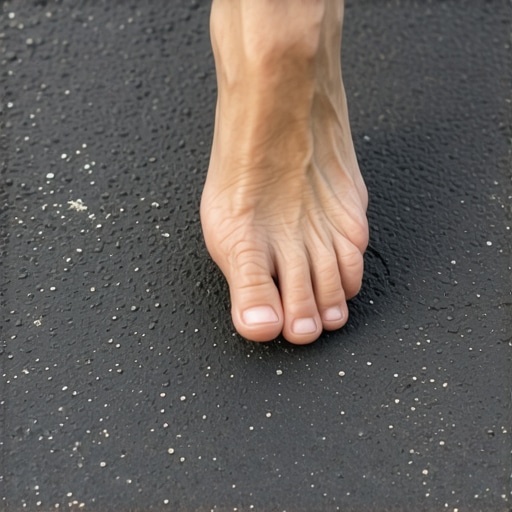
How can I keep my back healthy for the long haul?
Maintenance isn’t a one-time event; it’s a lifestyle shift. I personally use a simple lacross ball for targeted trigger point work—but never on the lumbar spine. I use it on my glutes and the soles of my feet to keep the soft tissue pliable. When this home-care is paired with strategic chiropractic solutions for long-term back health, you create a system that catches minor misalignments before they turn into a week-long flare-up. I’ve found that my most successful months are the ones where I treat my spine like a high-performance vehicle—regular ‘tune-ups’ rather than waiting for the engine to smoke. Integrating the role of chiropractic care in effective sports injury recovery into your routine ensures that your joints stay mobile while your muscles provide the necessary stability. This balanced approach is the only way to scale your activity level without hitting a wall of pain.
Proprioception is Your New Superpower
Looking ahead, I predict a massive shift toward wearable biofeedback. We are moving away from simple step-counters and toward sensors that can detect the millisecond your gait begins to falter due to fatigue. This real-time data will allow us to adjust our movement patterns before the first ‘zip’ of sciatica even occurs. Until that tech is in every sneaker, you have to be your own sensor. I want you to try one specific advanced tip this week: next time you are walking, try to ‘shorten’ your foot by pulling the ball of your foot toward your heel without curling your toes. It’s called the ‘Short Foot’ exercise. This tiny movement engages the deep intrinsic muscles of your foot and instantly stabilizes your pelvis. When you combine these ‘active’ movements with enhancing athletic performance with targeted chiropractic care, you aren’t just avoiding pain—you are building a body that is genuinely resilient. If you’ve been relying on passive treatments alone, it’s time to take the wheel and start driving your own recovery.
The Hard Lessons That Turned My Limp Into a Stride
Looking back at my recovery journey, the biggest shift wasn’t just physical; it was a total mental rewrite of how I viewed discomfort. For years, I treated pain like an enemy to be ignored or a fire to be put out with ice and rest. Now, I see it as a very sophisticated feedback loop. Here are the three ‘lightbulb’ moments that changed everything for me:
- Nerve sensitivity isn’t the same as muscle tightness. I wasted years trying to stretch out my hamstrings when my nerves actually needed space, not tension. If it feels like an electric cord, stop pulling on it.
- The clinic visit is only 10% of the battle. You can discover how chiropractic adjustments can alleviate chronic back pain, but if you go back to walking like a ‘clop-clop’ horse with heavy heel strikes, you are undoing the work within the hour.
- Shoes are sensory tools, not just fashion. Switching to footwear that allows my toes to splay changed the physics of my lower back. If your toes are cramped, your glutes won’t fire, and your back will pay the price.
The Kit That Keeps Me Moving Without Flare-ups
I don’t believe in hoarding gear, but I do believe in having the right tools to maintain my kinetic chain. To keep my gait smooth and my spine happy, I rely on a few specific resources. First, I always keep a high-density lacrosse ball in my bag for glute release—just remember to stay off the bone. For those looking to revolutionize your rehab, focusing on active mobility rather than passive resting is the gold standard. I also highly recommend looking into barefoot-style footwear brands to regain foot proprioception; just make sure you how to vet your running shoes for proper arch support so you don’t over-stress your arches during the transition. Finally, I stopped relying on external supports because I learned the truth about back braces and muscle atrophy—your internal core is the only brace you truly need.
#IMAGE_PLACEHOLDER_E#
Reclaim Your Freedom from Chronic Sciatica
The journey from a painful limp to a fluid, confident walk is not a straight line. There will be days when your form slips and the ‘zip’ returns, but you now have the tactical awareness to reset your pelvis, engage your big toe, and shorten your stride. Don’t let a fear of movement keep you on the sidelines. By incorporating essential tips for managing back pain through healthy lifestyle choices, you are building a body that is resilient enough to handle a mile, a mountain, or just a walk to the grocery store. You deserve to move without fear. What is the biggest thing holding you back from your daily walk right now? Let me know in the comments below!