
I remember standing in the middle of a crowded airport, staring at my carry-on bag like it was a personal enemy. My right hand was cramping so badly I could barely hold the handle, but the real alarm bell was the searing, white-hot pinch radiating deep inside my shoulder socket. I’d spent months babying that shoulder, doing every rubber-band external rotation exercise in the book, yet there I was, humbled by a piece of luggage. It was a visceral realization: my shoulder wasn’t the weak link; my hands were. I had fallen into the trap of treating the site of the pain rather than the source of the mechanical failure. If you have ever wondered why your shoulder pinches during overhead presses, the answer might be sitting right in your palm. Today, we are going to bridge that gap between your fingers and your shoulder blade so you can stop living in fear of a simple reach into the backseat of your car.
Your Shoulder Pain Is Actually a Hand Problem in Disguise
Look, I’ll be the first to admit that I spent years making a massive mistake in my own rehab. I thought the rotator cuff was a tiny, isolated group of muscles that just needed to be ‘activated’ with light weights. I completely ignored the fact that the human body operates on a kinetic chain. When you grab something—whether it is a heavy barbell or a grocery bag—your brain sends a signal that starts at your hand and travels up to your rotator cuff to tell it to ‘brace for impact.’ If your grip is weak, that signal is muffled. Your shoulder doesn’t get the memo to stabilize, and suddenly you are wondering why your lateral raises cause a sharp pinch in your arm. A study published in the Journal of Shoulder and Elbow Surgery found a direct, measurable correlation between handgrip strength and rotator cuff force, proving that your grip acts as a neurological ‘on switch’ for shoulder stability. Have you ever noticed your hands giving out long before your actual muscles feel tired during a workout? Let me know, because that is the first red flag we need to address.
Is Grip Training Just Bro-Science or Actually Worth the Hype?
I get the skepticism. You might think that ‘grip strength’ is just for rock climbers or powerlifters, but for the average person dealing with nagging aches, it is the ultimate insurance policy. When I finally stopped focusing solely on stretching and started actually squeezing things, my chronic ‘impingement’ vanished within weeks. We often think we need to check our own shoulder mobility and fix a range-of-motion issue, when the reality is that the brain is limiting that range because it doesn’t feel ‘safe’ without a strong grip to lock the joint in place. This isn’t about getting massive forearms; it’s about restoring the reflexive stability that protects your joints. If you’ve found that your adjustments don’t seem to last, it might be because your foundation—your grip—isn’t providing the support your nervous system demands. In fact, many people find that elbow pain is actually a grip strength problem that eventually migrates north to the shoulder if left unchecked. It is time to stop the migration and fix the root.
How to Turn Your Grip Into a Shoulder Shield
I remember a specific Tuesday at the gym when I was struggling with a heavy Turkish Get-up. My shoulder felt like a bowl of jelly; every time I transitioned from the floor to my knee, my arm would wobble, and I’d feel that familiar, sharp zing in the joint. My coach didn’t tell me to fix my posture or adjust my hips. He just barked, “Break the handle of that kettlebell!” I squeezed that iron handle until my knuckles turned white and my forearm burned. The result was instantaneous: the wobble vanished. My shoulder felt like it was bolted into a steel frame. That is the magic of irradiation—a physiological process where intense muscle contraction in the extremities sends a “lockdown” signal to the proximal joints. When you crush a handle, your brain automatically recruits the rotator cuff and serratus anterior to provide a stable base. This is why proven chiropractic strategies often prioritize distal strength to solve proximal pain. 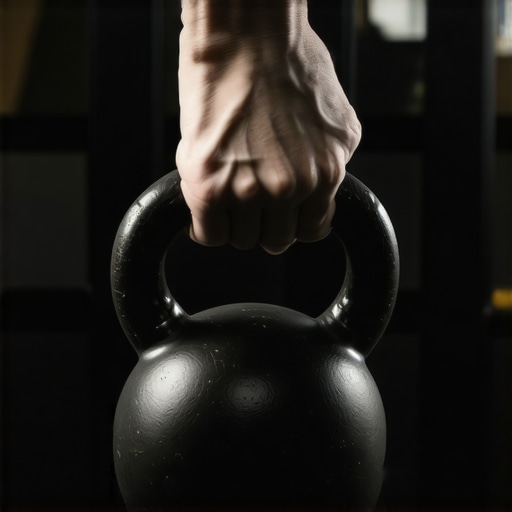
The White-Knuckle Secret for Instant Stability
To apply this, you need to change how you interact with every weight you touch. Stop “holding” the bar and start “owning” it. For any overhead movement, imagine you are trying to leave fingerprints in the cold steel. This intentional squeeze acts like a dimmer switch for your nervous system; the harder you squeeze, the brighter the stability signal glows in your shoulder. If you find that your grip is still the limiting factor, you might need to address underlying tension with a nerve flossing technique for carpal tunnel relief to ensure the signal can actually reach your brain without interference. I’ve seen patients who couldn’t even lift a gallon of milk without pain suddenly perform pain-free presses just by focusing on this hand-to-shoulder connection. It is one of the fastest ways to revolutionize your rehab because it bypasses the need for complex “corrective” drills and goes straight to the neurological root.
Why Loaded Carries Are the Ultimate Rehab Tool
If you want to bake this stability into your DNA, you have to do loaded carries. Grab the heaviest dumbbell you can safely hold and just walk. The constant micro-oscillations of walking while maintaining a death grip forces your shoulder blade to find its “home” position. It is remarkably similar to the scapular setting trick for pain-free pull-ups, but it happens reflexively rather than through conscious thought. I used to spend twenty minutes doing band pull-aparts and “I-Y-T” raises, only for my pain to return the next morning. Once I switched to heavy farmer’s carries three times a week, my shoulder started feeling robust rather than fragile. This transition from “babying” the joint to demanding performance from it is the bridge between temporary relief and permanent health. If you’ve been stuck in a cycle of “rehab” that never ends, it’s time to stop stretching the shoulder and start squeezing the hand.
I see it every single day in the clinic: patients who are diligent with their bands and their stretches, yet they are frustrated because their progress has plateaued. They think they are doing everything right, but they are missing the most critical nuance of human movement: your brain cares more about survival than it does about your bench press. When you have chronic tightness, your first instinct is to stretch it out. However, why stretching your hamstrings won’t fix your chronic tightness is often the same reason your shoulder feels perpetually ‘stiff’ despite your best efforts. Your nervous system is using that tension as a makeshift splint because it doesn’t trust your joints to stay in place. If you keep stretching that ‘splint’ away without providing a reason for the brain to feel stable, you are essentially trying to tear down a load-bearing wall without putting up a support beam first. Have you ever fallen into this trap where stretching actually makes the pain sharper the next day? Let me know in the comments, because that is a classic sign of ‘protective tension.’
Why Most Traditional Rehab Drills Fail the Stress Test
The biggest mistake I see—and I’ll admit, I used to coach this too—is performing ‘corrective’ exercises with low intensity and zero focus. We call it ‘garbage volume.’ If you are doing lateral raises or rotations while scrolling through your phone, you aren’t training your rotator cuff; you are just moving your arm in a circle. To revolutionize your rehab, you have to realize that the brain requires high-fidelity sensory input to change its output. This is where most people fail. They focus on the ‘muscle’ but ignore the ‘motor control.’ Research published in the Journal of Physical Therapy Science indicates that localized pain often leads to ‘cortical smudging,’ where the brain’s map of a body part becomes blurred, making targeted muscle activation nearly impossible without high-intensity sensory input. If your brain’s map of your shoulder is blurry, no amount of light-band work will fix it. You need to ‘sharpen’ the image by using heavy grip work and reflexive stability drills that force the brain to pay attention.
Can You Really Think Your Way Into a More Stable Joint?
It sounds like science fiction, but the ‘mind-muscle’ connection is actually a matter of neurological efficiency. One of the hidden reasons your adjustments don’t seem to last is that you are returning to the same movement patterns that caused the misalignment in the first place. When you don’t engage your grip and your core during a lift, your spinal alignment directly impacts your athletic performance by leaking energy. That ‘leak’ manifests as a pinch or a pop. Instead of just going through the motions, you need to practice ‘active’ stability. This is why enhancing athletic performance with targeted chiropractic care always includes a component of neurological re-education. You aren’t just ‘fixing a bone’; you are updating the software that runs the hardware. If you’ve been stuck in a cycle of temporary relief, it’s likely because you haven’t addressed the ‘Oops Factor’ of passive movement. Stop being a passenger in your own rehab and start being the driver.
Once you’ve moved past the acute ’emergency’ phase of a shoulder pinch, the real work begins: keeping it that way. I’ve found that the biggest hurdle in effective sports injury recovery isn’t the injury itself, but the slow slide back into old habits. To prevent this, I’ve refined my ‘Minimum Effective Dose’ of maintenance. I don’t spend hours in the gym doing rehab anymore; I just use the right tools during my actual workout to maintain that connection.
The Gear That Actually Earns a Spot in My Gym Bag
I am a minimalist when it comes to equipment, but there are two things I will not train without. First is a pair of thick rubber grips (like Fat Grips). By increasing the diameter of the bar, you force the hand and forearm to work harder, which—as we discussed—triggers that massive stability signal in the rotator cuff through irradiation. It’s like an insurance policy for your bench press. I’ve seen this one simple tool help people alleviate chronic back pain by ensuring the upper body is a locked, solid unit that doesn’t leak energy into the spine. Second, I use a simple pull-up bar for daily decompressions. It is the most overlooked tool for spinal health in the modern home.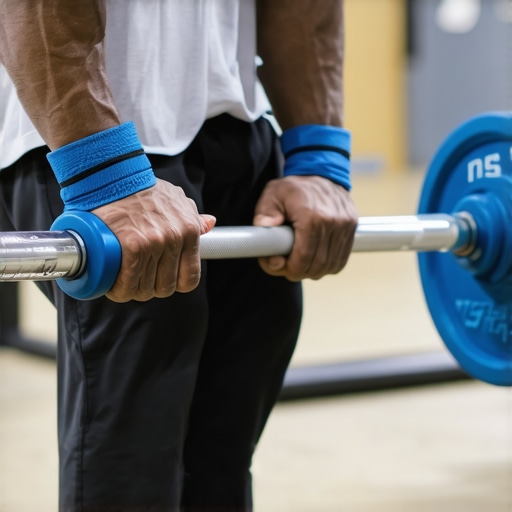
How do I keep these results for the next decade?
The gold standard for long-term shoulder health is ‘The Hanging Protocol,’ popularized by Dr. John Kirsch, an orthopedic surgeon who authored Shoulder Pain? The Solution & Prevention. His research suggests that simple, passive hanging for a few minutes a day can actually reshape the subacromial arch and increase joint space through mechanical tension. It’s a passive way to unlock back pain relief and shoulder mobility without ‘trying’ so hard. If you find that your overhead press hurts your lower back, it is often because your shoulders are too tight to get fully vertical, causing your lumbar spine to arch excessively to compensate. Hanging fixes that root restriction naturally.
Predicting the Future of Proactive Maintenance
I believe we are moving toward a world where ‘maintenance’ is guided by real-time biometric data rather than guesswork. I’ve already started using Heart Rate Variability (HRV) to decide when I need a ‘recovery’ day versus a ‘heavy’ day. It’s fascinating to see how regular adjustments can lower your resting heart rate and improve your nervous system’s capacity to handle stress. This isn’t just about athletic performance; it’s about longevity. If you want to boost your sports rehab journey, start tracking your recovery data to see when your body is actually ready for load. It takes the emotion out of the process and keeps you consistent.
Try the 30-Second Hang Challenge
My advanced tip for you today is simple but brutal: after your next workout, find a pull-up bar and just hang. Don’t engage your shoulders; let your bodyweight pull your joints apart. Aim for 30 seconds of pure, passive gravity. It’s the ultimate reset button for the tension we build up throughout the day. If you’re ready to stop guessing and start building a body that lasts, contact us today to map out your long-term maintenance plan. Stop waiting for the next ‘pinch’ and start building your shield.
The Brutal Truth About Fixing Shoulder Pain That No One Told Me
Looking back, the biggest lightbulb moment for me was realizing that my brain was actually trying to protect me. When I felt that ‘stiffness,’ it wasn’t a muscle that needed to be lengthened; it was a joint that needed to be stabilized. Much like why stretching your hamstrings won’t fix your chronic tightness, over-stretching a vulnerable shoulder only makes the nervous system scream louder. Another lesson? Consistency beats intensity every time. You can’t out-train poor mechanics with one heavy session a week; you need to revolutionize your rehab by making grip awareness a daily habit. Finally, remember that your body is a closed loop. If your foundation is unstable, your shoulder will feel the vibration. It is all connected, and the sooner you respect the kinetic chain, the sooner you find lasting relief.
My No-Nonsense Toolkit for Building Bulletproof Shoulders
If you are serious about moving without pain, you don’t need a gym full of machines. I rely on three things specifically. First, Fat Grips—they turn every lift into a grip-strength session, which instantly quiets my rotator cuff through irradiation. Second, I recommend the book Shoulder Pain? The Solution & Prevention by Dr. John Kirsch. It changed my perspective on joint space and the power of simple gravity. Third, I prioritize strategic chiropractic solutions for long-term back health. Keeping the spine aligned ensures the signals from your hands actually reach their destination without getting ‘lost’ in a compressed nerve. I also suggest enhancing athletic performance with targeted chiropractic care because it bridges the gap between just ‘getting by’ and truly excelling in your sport.
Take Back Control of How Your Body Moves
You don’t have to live in a state of constant ‘body-anxiety,’ waiting for the next time your shoulder pinches during overhead presses. By shifting your focus from the site of the pain to the power in your palms, you are giving your nervous system the safety it craves to perform. It takes time to rebuild that neurological trust, but the reward is a body that feels like a precision tool rather than a burden. If you’re ready to start this journey with an expert guide who looks at the whole picture, feel free to contact us and let’s get you moving properly again. Which of these grip drills or hanging techniques are you going to try during your next workout? Let me know in the comments!