
I remember the exact moment it happened. I was in a crowded gym, trying to look like I knew what I was doing with a pair of thirty-pound dumbbells. I stepped forward into a deep lunge, and pop. It wasn’t a quiet sound. It was the kind of sharp, rhythmic crack that makes everyone in a five-foot radius pause and look at you with pity. I turned bright red and pretended I was just checking my form in the mirror, but inside, I was panicking. I was only twenty-eight, yet my joints sounded like a bag of gravel in a dryer. For months after that, I avoided leg day like the plague. I was convinced my cartilage was disintegrating and that I was one rep away from a total blowout. If you have ever felt that sickening crunch or heard that annoying click every time you drop into a split squat, I know exactly where your head is at. You are not alone, and more importantly, your knees are likely not as broken as you think they are. Today, we are going to dive into why that noise is happening and how we can silence the symphony for good.
Your Knees Aren’t Actually Rotting Away
It is a terrifying thought. You hear a noise, and your brain immediately jumps to bone-on-bone grinding. I made the mistake early on of thinking I needed to stop moving entirely to save my joints. I spent hundreds on specialized sleeves and even considered surgery before I realized that movement is actually the medicine. Most of the time, that clicking—technically called crepitus—is just gas bubbles popping or a tendon snapping over a bony prominence because things are slightly out of whack. It is a mechanical issue, not a structural failure. When I started looking into why your knee pain gets worse on stairs and the fix, it clicked for me that my lunges were failing for the same reasons. We often focus on the knee because that is where the noise is, but the knee is just a bridge between your hips and your feet. If the bridge is creaking, you need to check the foundations.
Is that clicking sound actually permanent damage?
This is the question that kept me up at night. We are conditioned to think that noise equals injury. However, a landmark study published in the Journal of Orthopaedic & Sports Physical Therapy found that crepitus is incredibly common in healthy knees and does not necessarily correlate with pain or loss of function. Have you ever skipped a workout because your joints sounded like a percussion section? I want to know, so drop a comment below. The fear of the sound is often more debilitating than the sound itself. I wasted years avoiding the movements I loved because I did not understand this simple fact. Once you realize the noise is usually just a signal of poor tracking, you can start enhancing athletic performance with targeted chiropractic care to get things back in line.
Why Your Ankle Might Be the Real Saboteur
When I finally stopped obsessing over the knee itself, I found the real culprit: my stiff ankles. If your ankle does not have the range of motion to let your shin bone travel forward, your knee has to twist or cave inward to find the space it needs. That twist is exactly what causes the patella to track poorly and click. I discovered that ankle stiffness is the real cause of knee pain for many of us who sit at desks all day. I was so focused on my knees that I ignored my feet, which is like trying to fix a wobbly table by sanding the top instead of leveling the legs. I even found that using the box squat tweak that saves your knees helped me rebuild the strength I needed without the constant clicking, allowing me to slowly transition back into full lunges with confidence.
Test Your Ankle Range Before You Blame the Joint
To stop the noise, you have to treat the knee like a middle child—it usually only acts out because the older sibling (the hip) or the younger sibling (the ankle) is being difficult. If your ankle is locked up, your shin cannot lean forward, and your kneecap gets jammed into the groove it sits in. Check this: stand a few inches from a wall and see if you can touch your knee to the drywall without your heel lifting. If you cannot, you have found your culprit. I spent weeks doing the ankle mobility fix for deep pain-free squats and the difference was night and day. It is like greasing a rusty door hinge; once the pivot point moves freely, the creak disappears. Think of your leg like a car’s front-end alignment. If the tires are pointed in and the steering rack is loose, the struts are going to take a beating. To fix the strut noise, we fix the alignment.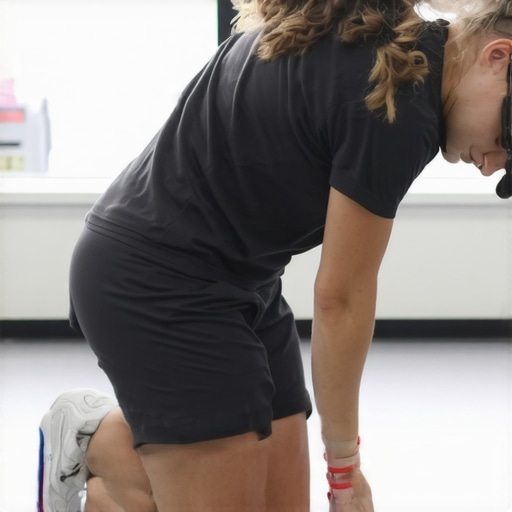
Wake Up Your Glutes to Guide the Kneecap
When your glutes are ‘quiet,’ your thigh bone rotates inward, dragging the kneecap out of alignment. This is the tracking issue that sounds like sandpaper. I remember trying to lunge with forty-pound dumbbells and my knees sounded like a bowl of Rice Krispies. I realized my glutes were not even firing. I switched to the lateral hip move that stops runners knee in its tracks and the sound literally vanished within two sets. It was not magic; it was just putting the train back on the tracks. You can even try the psoas release you can do while watching tv to stop the front of your hip from pulling your pelvis into a tilt that wreaks havoc on your leg alignment.
The Pelvic Alignment Secret for Silent Squats
Sometimes the issue starts even higher up. If your pelvis is wonky, your whole leg is basically a crooked pillar. If you feel like one leg is shorter or just noisier, you might need to check if the real reason your si joint keeps shifting out of place is why your knee is screaming. When I finally addressed my pelvic tilt, my lunges felt like they were on rails. No more crunch, no more hesitation. This is why strategic chiropractic solutions for long term back health often solve leg issues you never thought were connected.
When Arch Supports Make the Clicking Worse
Your feet are the primary sensors for the rest of your body. If your arch collapses, the knee follows it into the abyss, creating a twisting force that causes clicking. I used to think I needed more cushion and stiffer shoes, but I found out why your arch support might be weakening your ankle stability. Strengthening the actual muscles in my foot allowed my knee to stay neutral, finally silencing that rhythmic clicking during my morning walk. I once tried to ‘fix’ my crunchy knee by just wearing a thick neoprene brace, but it just masked the weakness and made my hip so lazy I could barely climb stairs the next day. The real fix was rebuilding the foot-to-hip connection from the ground up.
We’ve all been there—trying to ‘crack’ our own back or stretch a clicking knee into submission. But here is the nuance most people miss: chiropractic isn’t just about moving a bone from point A to point B like a Lego piece. In fact, the idea that a bone is ‘out of place’ is largely a simplified myth we tell ourselves to make sense of the complexity. In reality, the science behind chiropractic adjustments for back pain relief shows it’s more about a neurological reset. When we adjust a joint, we are sending a high-velocity, low-amplitude signal to the brain that says, ‘Hey, you can let go of the tension here.’ If you’ve ever felt like your joint ‘slipped back out’ ten minutes after a session, it’s likely because the nervous system wasn’t convinced to stay relaxed. Have you ever fallen into this trap of thinking you just needed a ‘quick pop’ to be fixed? Let me know in the comments.
Forget Everything You Know About Bones Popping Into Place
The biggest ‘oops’ I see in sports rehab is the obsession with stretching. I used to be the person who would spend twenty minutes on a yoga mat before hitting the weights, thinking I was ‘opening up’ my joints. But if your knee is clicking because of instability, stretching the surrounding ligaments is like loosening the lug nuts on a shaky car tire. This is exactly why your morning stretching routine is making you stiffer by noon. You are likely irritating the joint capsule rather than fixing the tracking. Research, such as the data found in the Journal of Bodywork and Movement Therapies, suggests that over-stretching can actually inhibit the very muscles—like the gluteus medius—that you need to stabilize the knee.
#IMAGE_PLACE_HOLDER_C#
Can you actually stretch your way into a worse injury?
The short answer is yes, especially if you have hypermobility. If your joints are already ‘loud,’ they might be screaming for more tension and stability, not less. This is where enhancing athletic performance with targeted chiropractic care becomes about creating stability through the core and hips rather than just ‘releasing’ things. We often see athletes who stop icing new injuries and try this instead—focusing on blood flow and controlled loading—and find their clicking vanishes. The ‘hidden nuance’ is that the click is often a result of a lazy muscle failing to hold the joint in its optimal centration. If you don’t address the motor control, you’re just chasing symptoms. To truly move forward, you need strategic chiropractic solutions for long term back health that integrate the whole kinetic chain, from your big toe to your cervical spine.
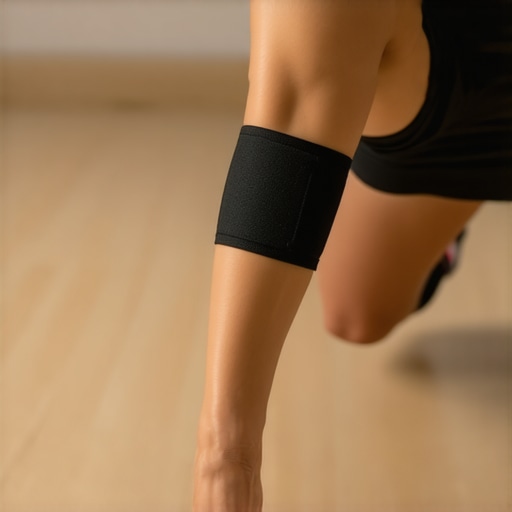
Once I stopped treating my knees like fragile glass and started treating them like high-performance machinery that just needed a little grease, everything changed. But I didn’t do it with generic gym machines. I had to get specific. If you’re serious about making your progress stick, you need to look into joint flossing with compression bands. I personally use these high-tension latex bands—often called Voodoo Floss—to ‘tack’ the skin and fascia down while I move through a range of motion. It creates a temporary pressure differential that, when released, flushes the joint with fresh blood. I’ve found that using this for two minutes before a leg day is the difference between a crunchy warm-up and a silent, smooth session. It is one of those chiropractic techniques for faster recovery that you can actually do in your own living room.
My Essential Kit for Grumpy Joints
Another tool that lives in my gym bag is a simple 15-degree slant board. Most people think they have ‘bad knees,’ but what they actually have is a weak Vastus Medialis Oblique (VMO)—that teardrop-shaped muscle above the kneecap. By using the slant board for split squats, I can isolate that muscle and force it to stabilize the patella. This is how you unlock relief that lasts. I also swear by a hard lacrosse ball for my feet. I spend five minutes every morning rolling out my plantar fascia because I know a quick foot massage provides instant lower back relief and helps my knees track better by improving my foundation.
How do I maintain joint health over the long haul?
Maintenance isn’t a 30-day challenge; it’s a lifestyle of ‘micro-adjustments.’ Dr. Stuart McGill, a world-renowned expert in spine biomechanics and author of Back Mechanic, emphasizes the concept of ‘spinal hygiene.’ This means being mindful of how you brush your teeth, tie your shoes, and pick up your kids. If you spend all day rounding your back and then wonder why your chiropractic adjustment didn’t ‘hold,’ you’re fighting a losing battle. I’ve learned that you must boost your sports rehab journey with proven strategies like maintaining a neutral spine even when you aren’t training. This is why essential tips for managing back pain are so critical—they bridge the gap between the clinic and your cubicle.
Why Real-Time Biofeedback is the Next Big Thing
I predict that the future of sports rehab is moving away from ‘guessing’ and toward real-time wearable biofeedback. We are already seeing sensors that can tell you exactly how many millimeters your knee caved inward during a squat. This technology will eventually allow us to optimize sports injury recovery by providing instant alerts when our form breaks down. Instead of waiting for the ‘pop’ to realize we are out of alignment, our phones will vibrate to tell us our glutes have turned off. Until that becomes mainstream, your best bet is to rely on strategic chiropractic solutions for long term health that focus on functional movement. If you want to start today, I challenge you to try the 30-second big toe stretch and see if your next lunge feels just a little bit quieter. Your future self will thank you for the five minutes of maintenance you did today.
What My Drills Won’t Fix if Your Mindset Stays Broken
The hardest lesson I learned during my recovery was that my knees weren’t the problem—my brain was. I was hyper-vigilant, listening for every tiny ‘pop’ as a sign of failure. In reality, enhancing athletic performance with targeted chiropractic care taught me that the noise is just data. If it doesn’t hurt, it’s usually just a sign that your tracking needs a minor adjustment. I also discovered that ‘rest’ is a trap; your cartilage needs the pumping action of movement to stay hydrated and healthy. Stop treating your joints like glass and start treating them like the resilient machinery they are.
The Gear I Actually Use to Stay Strong and Silent
You don’t need a thousand-dollar gym to fix your tracking. My essential toolkit consists of three things: a dense lacrosse ball, a 15-degree slant board, and Voodoo Floss bands. If your foundation is off, start with the 30-second foot massage every morning. It sounds simple, but it resets the tension in your entire posterior chain. For those who feel blocked at the bottom of a lunge, the 30-second big toe stretch is the secret weapon for better ankle and knee mechanics. These small wins add up to a much quieter workout experience.
#IMAGE_PLACEHOLDER_E#
Step Into a Future Where You Aren’t Afraid of the Noise
The path to silent joints isn’t found in a pill or a permanent brace. It is found in consistent, smart movement and understanding the role of chiropractic care in effective sports injury recovery. You have the tools now to stop the ‘creak’ before it becomes a ‘crack.’ Don’t wait for the pain to get worse before you take action. If you’re feeling stuck, feel free to visit our contact page to see how we can help you get back to your peak performance without the background noise. Have you found that your joints are noisier in the morning or after a heavy lifting session? Let me know in the comments below!