
I remember sitting through a three-hour budget meeting last year, and by hour two, I felt like someone was driving a dull nail into the very base of my spine. I tried the ‘discreet’ lean to the left. I tried the forward slouch. I even tried sitting on my hands like a kindergartner. Nothing worked. It was embarrassing, distracting, and frankly, exhausting. I spent the drive home sitting on one butt cheek, wondering if I was just getting old or if I had somehow managed to break a bone while doing absolutely nothing but answering emails.
Stop Blaming Your Office Chair for Your Coccyx Pain
It is so easy to hop online and drop five hundred bucks on a fancy ergonomic throne. Trust me, I did exactly that, and it was one of the biggest mistakes I made early on. I thought the equipment was the enemy, but the chair is usually just the accomplice. The real issue is often how our pelvic floor and glutes interact with the sacrum when we are stationary. When we sit, the tailbone—or coccyx—is meant to act as a weight-bearing tripod leg, but it was never designed to take the full brunt of your torso’s weight for eight hours straight. If you find why your lower back throbs after sitting on soft couches to be a mystery, you are likely dealing with the same mechanical failure. We are going to solve this today by looking at the tension in your hips and the way you actually distribute your weight. According to a study published in the Journal of Bodywork and Movement Therapies, prolonged sitting without adequate pelvic support leads to significant increases in coccygeal pressure, which can trigger chronic inflammatory responses in the surrounding ligaments. Have you ever felt that sharp, localized sting the moment you try to stand up after a long movie?
Is sitting perfectly straight actually making the pain worse?
You might think that pulling your shoulders back and tucking your chin is the ‘right’ way to sit, but for your tailbone, it can be a nightmare. In fact, why your back hurts more when you try to sit perfectly straight is a common complaint because rigid posture often forces the coccyx into a locked, vertical position. This doesn’t allow for the natural ‘give’ the joint needs. You need to learn how to sit without compressing your l5-s1 disc, which simultaneously offloads that sensitive tailbone area. Most people think they need more padding, but what they really need is better mechanical alignment and a way to wake up the muscles that are supposed to be supporting them. I wasted months on donut pillows that just shifted the pressure elsewhere. Don’t fall for the quick-fix gadgets before you understand the ‘why’ behind the ache. We are going to dive into how your glutes are essentially ‘falling asleep’ on the job and how to wake them up without leaving your desk. Have you ever tried one of those specialized cushions only to find your back hurting even more the next day?
Stop Sitting on Your Tail and Find Your Rockers
To fix the ache, you have to stop treating your tailbone like a kickstand. Think of your pelvis like a rocking chair. If you rock too far back, you are grinding that sensitive coccyx into the foam of your seat. If you rock too far forward, you are straining your lower back. The sweet spot is right on those two hard bumps at the bottom of your pelvis called the ischial tuberosities. I call them your ‘rockers.’ To find them, literally sit on your hands with your palms up while in your chair. Feel those two hard, rounded points? Those are the only parts of your skeleton designed to bear your weight while seated. If you feel pressure between those points or behind them, you are currently crushing your tailbone. I remember the first time I realized this; I had been ‘slump-sitting’ for a decade, basically using my coccyx to stay upright, which is why my sacrum felt like it was on fire by noon.
The Pelvic Tilt That Actually Works
Instead of trying to sit perfectly straight, which often locks the joints, try a gentle forward pelvic tilt. This is not about arching your lower back until it hurts; it is about rotating your entire pelvis forward so the weight moves off the tailbone and onto your thighs and rockers. You might find that the pelvic tilt fix that instantly boosts your squat depth is the exact same mechanical shift you need for pain-free emails. When I first tried this in a crowded coffee shop, I felt like I was leaning way too far forward, almost as if I were about to slide off the chair. But after ten minutes, that familiar burning sensation in my tailbone simply did not arrive. It was the first time in months I had not needed to stand up every fifteen minutes just to catch my breath from the discomfort. 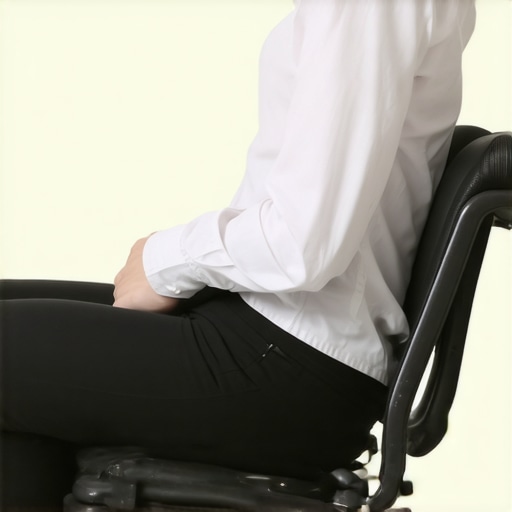
Why Your Glutes Need a Wake-Up Call
When you sit for hours, your brain eventually forgets how to use your glutes. This is a phenomenon often called ‘gluteal amnesia.’ Because those muscles are stretched out and compressed under your weight, they stop providing the active cushion your tailbone relies on for stability. This is exactly why your glutes turn off when you sit too long and leave your coccyx to do all the heavy lifting. To combat this, you can perform ‘glute squeezes’ right in your chair. Every time you finish a task or an email, squeeze your glutes for five seconds. It sounds silly, but it forces blood flow back into the tissue and provides a momentary lift that takes the pressure off the bone.
Small Adjustments for Big Relief in the Car
Driving is often worse than the office because you are trapped in a bucket seat that naturally forces a ‘C’ curve in your spine, tucking the tailbone under. I used to dread my forty-minute commute because my car seat felt like a torture device for my lower back. I finally learned how to fix your posture while driving long distances without a pillow by adjusting the actual seat angle rather than just adding more foam. Most modern car seats are tilted backward, which automatically shoves your coccyx into the seat crease. By leveling the seat base or raising the rear of the seat, you create a slight downhill slope for your thighs. This small change offloads the spine and prevents the ‘tucking’ motion that irritates the nerves. If you are struggling with a specific vehicle, you should look into the car seat hack for people with chronic tailbone pain to see how a simple firm wedge can change your pelvic angle. You can even try the si-joint exercise you can do while sitting at work while you are stuck at a red light. It helps stabilize the base of your spine so the tailbone is not pulled out of alignment by lopsided hip tension during the drive.
Stop Chasing the Stretch and Start Seeking Stability
Most people assume that if something feels tight, it needs to be pulled, lengthened, and stretched until it gives way. I used to spend twenty minutes every morning doing deep lunges and toe touches, thinking I was helping my back. In reality, I was making it worse. In my experience, why stretching your hamstrings wont fix your chronic tightness is because that sensation isn’t actually a short muscle—it is your nervous system’s way of ‘braking’ because your spine feels unstable. If your coccyx is already irritated, over-stretching the surrounding ligaments can lead to hypermobility, which just keeps the inflammatory cycle spinning. A study by Dr. Stuart McGill, a leading expert in spinal biomechanics, suggests that for many chronic back sufferers, building ‘stiffness’ or stability in the core is far more protective than increasing flexibility. This is the hidden nuance: sometimes the best thing you can do for a painful joint is to stop moving it so much and start strengthening the muscles that hold it still.
Could your lack of thoracic rotation be the secret cause of your tailbone sensitivity?
It sounds crazy to look at your mid-back when your tailbone is the part that hurts, but the human body is a single kinetic chain. If your upper back is stiff—common for those of us glued to a monitor—your pelvis has to overcompensate for every twist and turn you make during the day. Understanding what to expect during your first thoracic adjustment is often the missing piece of the puzzle for chronic lower back issues. When the mid-back moves properly, the lower back doesn’t have to work as hard, which finally gives the tailbone a chance to heal. I have seen clients who spent years focusing on their sacrum only to find relief once we addressed why your ankle sprain from high school still affects your gait. A stiff ankle changes how your foot hits the ground, which sends a jarring force straight up into the pelvis with every single step you take. 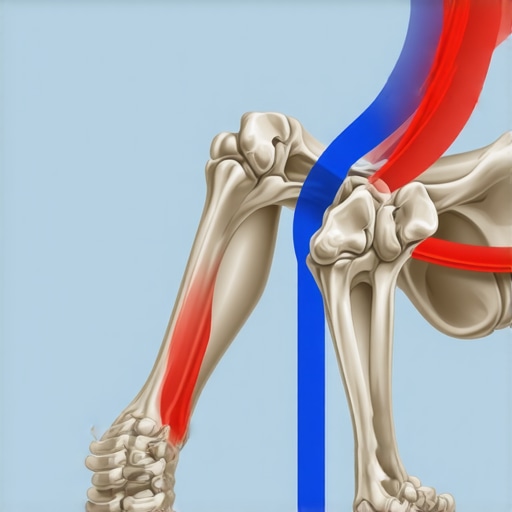
Don’t Fall for the Loudest Pop Reward
The biggest ‘trap’ in the world of sports rehab and chiropractic care is the belief that the louder the ‘crack,’ the better the adjustment. This is the ‘Oops’ factor that leads many people to seek out aggressive treatments that don’t actually solve the underlying mechanical failure. While the science behind chiropractic adjustments for back pain relief is sound, the goal is a neurological reset, not just a sound effect. If you are constantly chasing that ‘pop’ yourself by twisting your back in your office chair, you might be creating more joint laxity. This is often the real reason your si joint keeps shifting out of place. You are temporarily relieving pressure but permanently weakening the ligaments. Instead of DIY cracking, focus on decompression and activation. You also need to be wary of over-relying on external supports; the truth about back braces and muscle atrophy is that they can make your deep stabilizing muscles lazy, leaving you more vulnerable once the brace comes off. Have you ever fallen into the trap of thinking more stretching or more cracking was the answer? Let me know in the comments.If you want to move past the ‘putting out fires’ phase of back pain, you have to shift your perspective toward long-term structural integrity. When you shift your focus toward strategic chiropractic solutions for long-term back health, you stop looking for a temporary fix and start looking for a sustainable way to exist in a world that wants you to stay seated. I spent years thinking my tailbone was the problem, but it was really just the victim of a poorly maintained system. Establishing a daily routine that reinforces your alignment is the only way to ensure the pain doesn’t just come roaring back the next time you have a deadline.
The Gear That Finally Ended My Sitting Misery
I stopped using soft ‘donut’ pillows because they offer zero mechanical advantage. Instead, I swapped to a 10-degree high-density foam wedge. Unlike soft cushions that let your pelvis sink into a ‘C’ curve, a firm wedge forces a slight forward tilt, which naturally opens the space for your coccyx to hang freely. I started using the car seat hack for people with chronic tailbone pain—not just in my SUV, but even on my hard wooden dining chairs. This tool is effective because it uses gravity to your advantage rather than fighting against it. I also swear by a simple ‘standing desk’ converter. The goal isn’t to stand all day—that’s just as bad for your back—but to change your position every 25 minutes. To facilitate this, I’ve added the 5-minute decompression routine after a 10-hour shift into my daily ritual, which focuses on lengthening the spine after a day of gravity doing its worst. 
How do I keep my tailbone from flaring up again?
Maintenance is less about hours of stretching and more about micro-adjustments throughout your day. Dr. Kelly Starrett, the author of Becoming a Supple Leopard and a leader in human performance, often discusses the ‘two-hand rule’ for spinal organization. By keeping your ribcage and pelvis parallel—like two bowls stacked perfectly on top of each other—you prevent the shearing forces that irritate the sacrum. I often pair this postural check with the psoas release you can do while watching tv. If your hip flexors are tight, they are constantly pulling your pelvis into a tilt that crushes your tailbone. Implementing essential tips for managing back pain through healthy lifestyle choices, like staying hydrated to keep your spinal discs plump and mobile, is the boring but necessary work that keeps you out of the doctor’s office. You might discover how chiropractic adjustments can alleviate chronic back pain when you finally address the root mechanical failure, but the daily habits are what keep the adjustment ‘locked in.’
Wearable Tech is Coming for Your Lower Back
I predict that in the next five years, we will see a massive shift away from ‘dumb’ ergonomic chairs and toward bio-mechanical feedback systems. We are already seeing the rise of wearable sensors that vibrate when your pelvis tilts into a dangerous ‘slump’ position. Eventually, our chairs will likely have haptic feedback that subtly adjusts the seat angle the moment it detects your glutes are turning off. Until then, you are your own best sensor. Try the ‘two-hand rule’ today—stand up, set your pelvis, and feel the difference in how your weight distributes before you sit back down.
Three Subtle Shifts That Finally Silenced My Chronic Tailbone Pain
Reflecting on my journey, the biggest breakthrough wasn’t a magic pillow; it was realizing that softness is a trap. I spent years sinking into plush chairs that essentially swallowed my pelvis, forcing my coccyx into a vulnerable, weight-bearing position it was never meant to handle. Another vital lesson was that posture isn’t a static ‘statue’ you maintain; it is a dynamic process of movement and micro-adjustments. I learned to discover how chiropractic adjustments can alleviate chronic back pain by resetting the neural pathways that were keeping my muscles in a defensive, rigid state. Finally, I stopped viewing my tailbone as the ‘problem’ and started seeing it as the ‘canary in the coal mine.’ When it hurts, it’s usually telling me my hips are locked or my glutes have gone offline. Once I addressed those global issues, the localized sting simply vanished.
The Only Gear Worth Keeping in Your Home Office
I have tested dozens of gadgets over the years, but only a few earned a permanent spot in my daily routine. First, the book Becoming a Supple Leopard by Dr. Kelly Starrett is an absolute must-read for anyone trying to master their own human mechanics. Second, a 10-degree high-density foam wedge is far superior to any donut pillow because it actually alters your pelvic tilt rather than just providing a hole for your tailbone. Third, I highly recommend looking into strategic chiropractic solutions for long-term back health rather than just seeking a quick ‘pop’ when things get tight. These professionals help you identify the root mechanical failures in your kinetic chain that lead to tailbone pressure. Lastly, a simple standing desk converter allows you to break the cycle of compression every thirty minutes. #IMAGE_PLACEHOLDER_E#
Your Future Beyond the Constant Sitting Struggle
You do not have to accept tailbone discomfort as an inevitable part of office life or aging. By reclaiming your ‘rockers,’ waking up your glutes, and using gravity to your advantage with a proper pelvic tilt, you can transform your relationship with your chair. Regularly incorporating essential tips for managing back pain through healthy lifestyle choices will ensure that your structural progress sticks for the long haul. The relief of being able to sit through a dinner or a movie without that nagging, burning ache is within your reach. Start with one small adjustment today and watch how your body responds to the lack of pressure. Have you ever tried a specific seat cushion or ‘ergonomic’ chair that actually made your pain worse instead of better? Let me know in the comments below!