
I remember hobbling into my kitchen three years ago, clutching a bag of frozen peas like it was a holy relic. I’d just rolled my ankle during a morning jog, and the first thing I did—without even thinking—was reach for the freezer. I sat there for hours, numbing the pain and feeling quite proud of my “proactive” recovery. But weeks later, my ankle was still stiff, weak, and oddly swollen. I had followed the classic RICE protocol to the letter, yet I was recovery-stalled. That was my lightbulb moment: I realized that by trying to “kill” the inflammation, I was actually sabotaging my body’s natural healing rhythm. We’ve been told for decades that ice is the gold standard, but the truth is, we might be freezing our progress in place.
The Cold Truth About Why Your Recovery Has Stalled
For a long time, I believed that inflammation was the enemy. I used to tell everyone I knew to ice until they couldn’t feel their toes. I was wrong. When you get a sudden tweak or a sprain, your body sends a specialized cleanup crew to the site of the injury. This “fire” we call inflammation is actually the signal for white blood cells to start the repair process. When we apply ice, we constrict the blood vessels and essentially tell the repair crew to go home. It’s no wonder why icing your sprained ankle might be a huge mistake when you’re looking for a quick return to the gym. Even Dr. Gabe Mirkin, the man who originally coined the RICE acronym in 1978, has since recanted his stance, noting that ice actually delays recovery by preventing the release of cells that are crucial for healing.
Today, I want to show you how to move past the freezer and embrace a strategy that actually supports your tissue. We’re going to dive into how the role of chiropractic care in effective sports injury recovery can facilitate the movement your body craves, rather than the stagnation that comes with a cold pack. Have you ever noticed that your injuries feel stiffer the more you ice them?
Is skipping the ice actually safe for my recovery?
It sounds radical, doesn’t it? The fear of “letting it swell” is real. We worry that without ice, the pain will become unbearable or the swelling will get out of control. But there is a massive difference between managed swelling and stagnant congestion. By switching your focus to gentle movement and circulation, you can boost your sports rehab journey with proven chiropractic strategies that prioritize long-term joint health over a temporary numbing effect. If you’ve been stuck in the cycle of “ice, rest, repeat” with no results, it’s time to try something that works with your biology, not against it.
Why Movement Trumps the Freezer Every Single Time
The transition from ‘frozen and stiff’ to ‘mobile and mending’ starts with a shift in mindset. Instead of seeing your injury as a fire to be extinguished, view it as a construction site that needs supplies. When I tweaked my wrist during a heavy set of kettlebell cleans last November, my instinct was to grab the ice. My wrist was throbbing, and the skin was turning a light shade of angry red. Instead, I forced myself to use the 3-minute wrist prep for pain-free kettlebell cleans logic. I performed tiny, pain-free circles and gentle pulsing contractions. By the next morning, the swelling hadn’t ‘ballooned’ like I feared; it had distributed. The movement acted like a pump, clearing out the cellular debris that ice would have just trapped in place.
Get the Waste Out with Muscle Pumping
Your lymphatic system—the drainage pipes of your body—doesn’t have a heart to pump its fluid. It relies entirely on muscle contraction. When you ice an area to the point of numbness, you stop those muscles from firing, which effectively clogs your pipes. To revolutionize your rehab chiropractic techniques for faster recovery, you need to engage in active recovery from hour one. This doesn’t mean hitting a PR on your squat; it means finding the smallest range of motion that doesn’t hurt and repeating it. Think of it like a sponge: every time you contract the muscle, you’re wringing out the old, stagnant fluid and allowing fresh, nutrient-rich blood to rush back in once you relax.
#IMAGE_PLACE_HOLDER_B#
Align the Gears Before You Add the Gas
Movement is medicine, but moving on a misaligned frame is like driving a car with a bent axle. This is where professional intervention becomes a game-changer. You can’t just walk off a structural blockage. When your joints aren’t sitting right, your nervous system stays in a state of high alert, tightening muscles to protect the area. By utilizing strategic chiropractic solutions for long-term back health, you address the mechanical root of the problem. An adjustment resets the sensors in your joints, telling your brain that it’s safe to let go of that protective tension. I’ve seen patients who struggled for months with what they thought was permanent stiffness find instant relief because we finally addressed the joint mechanics rather than just the symptoms. You can even discover how chiropractic adjustments can alleviate chronic back pain by restoring that lost mobility, which in turn allows your body to flush out the lingering inflammatory markers that ice ignored.
Control the Load Without Killing the Signal
The goal isn’t to be a hero; it’s to be a smart engineer of your own body. You want to apply enough stress to stimulate repair but not enough to cause more damage. This is the Goldilocks zone of rehab. If you have a back spasm, for instance, lying perfectly still on a cold pack often makes the muscles seize up further once you finally try to stand. Instead, gentle pelvic tilts or focused breathwork can keep the tissues sliding. This approach respects the biology of healing. We aren’t trying to trick the body into not feeling pain; we are providing the environment it needs to fix the issue permanently. By keeping the joints moving through a safe range, you prevent the formation of excessive scar tissue that leads to long-term stiffness.
Most people think that if an injury still hurts, they should keep resting. In my clinic, I see this ‘wait and see’ approach backfire more than almost anything else. We’ve been conditioned to believe that pain is a stop sign, but in the world of advanced rehab, pain is often just a navigation tool. If you wait until you are 100% pain-free to start moving, you’re essentially letting your joints rust. According to a landmark editorial in the British Journal of Sports Medicine, the traditional RICE protocol has been replaced by ‘PEACE & LOVE,’ where the ‘O’ stands for Optimisation—loading the tissue as early as possible to stimulate mechanotransduction. This is the process where your cells feel the physical load and respond by building stronger, more organized fibers. Without that load, the repair is often sloppy and prone to reinjury.
Stop Chasing the Myth of the Perfectly Straight Back
I can’t tell you how many patients come in with worsening disc issues because they’ve been trying to force themselves into a rigid, upright posture 24/7. It sounds counterintuitive, but why your back hurts more when you try to sit perfectly straight often comes down to constant muscular co-contraction. You’re essentially putting your spine in a vice grip. True stability isn’t about being a statue; it’s about ‘stiffness’ that is reactive and dynamic. When you force a position, you increase intradiscal pressure without the benefit of natural movement to pump nutrients into the disc. This is a classic ‘expert-level’ trap: over-correcting a problem until you create a new one.
The Mistake of Stretching What Is Already Overstretched
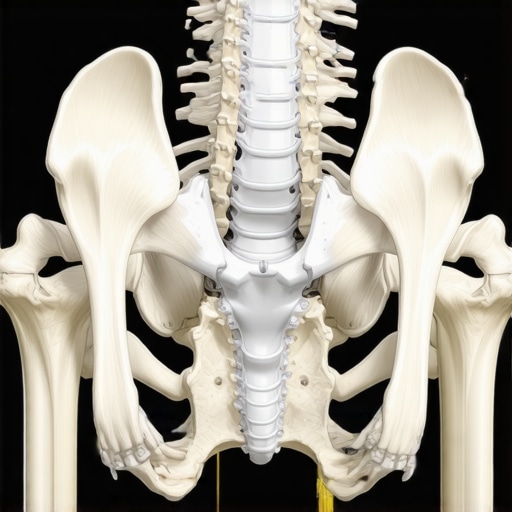
Here is the ‘oops’ factor that keeps most athletes in a cycle of chronic tightness. You feel a pull in your hamstrings, so you spend twenty minutes a day on a stretching strap. But what if those hamstrings aren’t actually ‘short’? In many cases of anterior pelvic tilt, your hamstrings are already pulled taut like a bowstring because of your pelvic position. Stretching them further just irritates the nerve and makes the muscle guard even harder. This is exactly why your morning stretching routine is making you stiffer by noon. You’re trying to lengthen a tissue that is already at its limit, rather than addressing the hip flexors or the core stability that would allow the pelvis to level out.
Why does my pain return the second I get back to the gym?
This is the question I get from high-performers who have ‘done all the exercises.’ Usually, it’s because they’ve focused on the muscle but ignored the neurological ‘software’ that runs the movement. If your brain doesn’t trust your joint because of a past trauma, it will keep the ’emergency brake’ on. By understanding the science behind chiropractic adjustments for back pain relief, we see that the adjustment isn’t just about ‘cracking a bone’; it’s about refreshing the sensory input to the brain. Once the brain gets a clear signal that the joint is aligned and moving, it releases the protective tension. This is how you transition into enhancing athletic performance with targeted chiropractic care—you stop fighting your own nervous system. You might find that the hip hinge error causing your sharp lower back stabs isn’t a lack of strength, but a lack of neurological coordination that only specific, targeted movement can fix. Have you ever fallen into this trap of resting too long only to feel stiffer? Let me know in the comments.
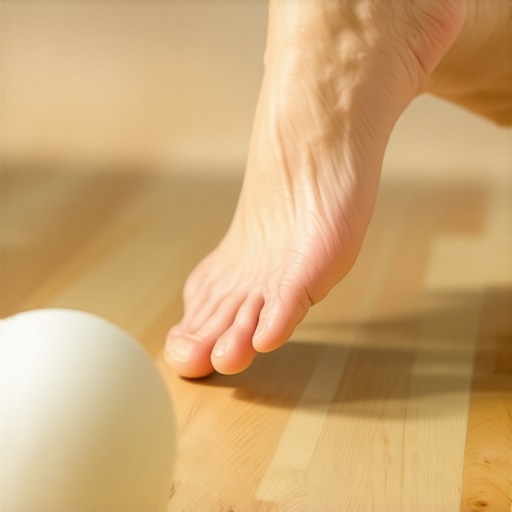
Moving from the frustration of ‘stiff and resting’ to a life of active maintenance requires more than just willpower; it requires a specific set of tools and a long-term plan. I don’t believe in hoarding expensive recovery gadgets. Most ‘massage guns’ end up as glorified paperweights in a closet after the novelty wears off. However, there is one $5 tool I carry in my laptop bag everywhere: a standard, high-density lacrosse ball. I don’t use it to ‘smash’ my lower back—that’s often a recipe for more inflammation—but I use it specifically for the soles of my feet. The plantar fascia is the literal foundation of your entire posterior chain. By performing the 30-second foot massage for instant lower back relief, I am sending a ‘relax’ signal through the entire fascial line that runs up to the neck. It is the most efficient way I’ve found to reset neurological tension after a long flight or a heavy leg day.
Tools That Actually Earn Their Spot in My Gym Bag
Scaling your health also means knowing when to progress your movements. Once you have cleared the initial hurdles of pain, your focus should shift toward building ‘anti-fragility.’ This isn’t just about being pain-free; it’s about being capable. When you boost your sports rehab journey with proven chiropractic strategies, you are building a body that can handle the unexpected—like a missed step on a curb or a sudden, heavy lift. This long-term perspective is what separates elite performers from those who are constantly sidelined by minor tweaks. This isn’t about gadgetry; it’s about giving your body the right stimulus to maintain the alignment your chiropractor worked hard to achieve. When you stop looking for the ‘magic pill’ and start looking at your mechanical environment, everything changes.
How Do I Keep My Back From Tightening Up Again?
The secret to staying ‘in tune’ isn’t about doing more work; it’s about making smarter choices in the gaps between your gym sessions. Maintenance is a rhythm, not a chore. I tell my patients that five minutes of focused ‘spine hygiene’ daily is worth significantly more than a two-hour deep-tissue session once a month. This approach integrates essential tips for managing back pain through healthy lifestyle choices into your existing routine. As Dr. Stuart McGill, a titan in the world of spinal biomechanics and author of Back Mechanic, teaches, managing the ‘cumulative load’ is the only way to ensure structural longevity. If you are constantly micro-traumatizing your discs with poor posture at your desk, no adjustment will stick forever. You have to stop picking the scab if you want the wound to heal.
Wearable Tech Will Soon Predict Your Next Injury
Looking toward the horizon, I see a massive shift toward ‘intelligent recovery.’ We are moving past the era of generic foam rolling and into the era of bio-specific data. I predict that within the next few years, we will see wearable sensors that don’t just track your steps, but track the symmetry of your gait and pelvic tilt in real-time. This technology will alert you when your left hip is starting to hike, allowing you to seek strategic chiropractic solutions for long-term back health before a single spark of pain occurs. This proactive loop will transform how we view enhancing athletic performance with targeted chiropractic care, moving it from a ‘fix-it’ service to a genuine ‘fine-tune’ service.
If you really want to see how much of your ‘tightness’ is actually just a stubborn nervous system, I challenge you to try that lacrosse ball trick tonight before bed. Spend 30 seconds on each foot. You might find that unlocking back pain relief expert chiropractic adjustments that work becomes much easier when your foundation isn’t locked in a state of high tension. Don’t wait for the next ‘tweak’ to pay attention to your mechanics; start managing the load today.
The Hardest Lesson I Learned While Stuck on the Sidelines
I used to think that pain was a signal to shut everything down, but I quickly realized that complete rest is often just a recipe for atrophy and fear-avoidance. The most profound shift in my recovery came when I stopped asking ‘How do I stop the pain?’ and started asking ‘How do I help the tissue heal?’ I learned that the one muscle you arent strengthening for better posture is often the missing link that keeps your back vulnerable, even when you think you’re resting properly. Movement acts as a conversation between your brain and your joints; when you stop moving, that conversation turns into a game of telephone where the only message getting through is ‘danger.’ By staying mobile, you keep the signals clear and the healing process active.
The Minimalist Recovery Gear I Actually Use
You don’t need a garage full of electronics to get back on your feet. My toolkit is remarkably simple because consistency beats complexity every single time. First, I always recommend Back Mechanic by Dr. Stuart McGill; it is the definitive guide for understanding the mechanical triggers of your discomfort and avoiding the movements that keep you injured. Next, that simple lacrosse ball is non-negotiable for performing the 30-second foot massage for instant lower back relief, which I find far more effective than most expensive high-tech massagers. Finally, finding a trusted practitioner who understands the role of chiropractic care in effective sports injury recovery is the ultimate shortcut to ensuring your alignment supports your activity level rather than fighting against it.
#IMAGE_PLACEHOLDER_E#
A New Rhythm for Your Resilient Body
True recovery isn’t about getting back to where you were; it’s about becoming more adaptable than you were before the injury occurred. When you embrace enhancing athletic performance with targeted chiropractic care, you are investing in a version of yourself that handles physical stress with ease. Your body is remarkably resilient when you provide it with the right environment—consistent movement, proper alignment, and a healthy dose of patience. Stop treating your injuries like emergencies to be frozen and start treating them like opportunities to refine your mechanics. Have you noticed your recovery stalls when you stay too still? Let me know your experience in the comments below.