
I was three hours into a marathon spreadsheet session when it happened. A sharp, localized throb right at the base of my spine that made me want to jump out of my skin. I’d spent years in sports rehab and thought I knew it all, but there I was, humbled by a standard office chair. For a long time, I made the classic rookie mistake: I thought I could just ‘muscle through’ the discomfort by bracing my core and sitting like a statue. Spoiler alert—that’s exactly why your back hurts more when you try to sit perfectly straight. My sacroiliac joint wasn’t just ‘stiff’; it was locked up because I was ignoring the mechanics of how we actually sit. I remember trying to stand up to grab a coffee and nearly buckling because my right hip felt like it wasn’t even attached to my body. It’s a terrifying sensation, feeling like your internal hardware is failing you while you’re just doing your job.
Your Office Chair is Secretly Sabotaging Your Hips
I used to think that buying a thousand-dollar ergonomic throne would solve everything. It didn’t. In fact, it often made me lazier, letting my muscles turn into mush while the joint took all the pressure. If you’ve been feeling that deep, annoying ache that feels like it’s ‘under’ your glute or a weird pressure in your tailbone, you aren’t alone. We are going to solve that today. I’m going to share a specific, subtle movement that resets the pelvis without you having to leave your desk or roll around on a foam roller in front of your coworkers. We need to address why your glutes turn off when you sit too long and how that lack of support leaves your SI joint flapping in the breeze. When those big stabilizers go to sleep, the tiny ligaments around your SI joint have to do a job they weren’t designed for, leading to that ‘out of place’ feeling.
Is it really possible to fix this without a chiropractor?
It’s a fair question. You might think that if a professional isn’t clicking your bones back into place, nothing is happening. But here is the neighborly truth: an adjustment opens the door, but movement keeps you from walking back through it. A study published in the Journal of Physical Therapy Science highlights that prolonged sedentary behavior significantly alters pelvic tilt, which is a primary catalyst for chronic sacroiliac dysfunction. If you don’t address the positional stress, the ‘stuck’ feeling will always return, no matter how many times you get adjusted. I learned this the hard way after months of weekly visits that only gave me relief for about an hour. It wasn’t until I started using the ‘Seated Pelvic Reset’ that I actually stayed pain-free for more than a day. This isn’t just about ‘stretching’; it’s about neurological re-education. Have you ever felt that sharp ‘catch’ in your hip when you finally stand up after a long meeting? That’s your SI joint screaming for a change. It’s time to stop the cycle of the real reason your si joint keeps shifting out of place. By the end of this, you’ll have a tool you can use every 45 minutes to keep your spine happy. You should also check out how to sit without compressing your l5-s1 disc to round out your desk setup. Let’s get into the mechanics of why your hip feels like it’s out of socket and how we’re going to fix it without even standing up.
Stop Bracing and Start Moving Your Pelvis
Think of your pelvis like a heavy gate hinge that hasn’t been oiled in a decade. When you sit perfectly still, that ‘rust’—or in biological terms, stagnant synovial fluid and tight connective tissue—starts to set in. Most people try to fix this by stretching their hamstrings, but why stretching your hamstrings wont fix your chronic tightness is because the problem is the hinge, not the cables. To break that ‘stuck’ sensation, you need to perform what I call the Seated Pelvic Reset. This isn’t a big, flashy stretch; it’s a neurological handshake between your brain and your deep stabilizers. If you’ve ever wondered why your lower back pops when you straighten up, it’s often because your SI joint was slightly subluxed and finally snapped back into its track. We want to guide it back gently before that pop becomes a painful necessity.
Finding Your Sit Bones is Step One
To start, you need to actually feel where your weight is. Slide your hands under your glutes until you feel those two hard knobs of bone—your ischial tuberosities. Now, remove your hands and try to roll your weight to the front of those bones, then to the back. This is the foundation of the pelvic tilt fix for chronic tight hamstrings that actually works. Most of us slump so far back that we’re sitting on our tailbones, which jams the SI joint upward. By finding that ‘front-of-the-bone’ position, you’re creating a mechanical advantage that allows the joint to breathe. 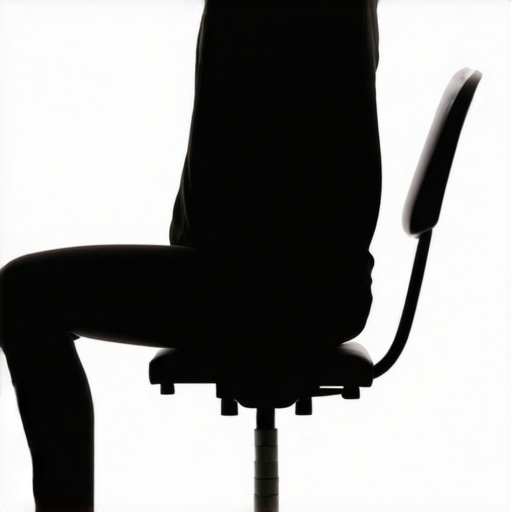
The Hidden Reset Button for Your Glutes
Once you’re balanced on your sit bones, we have to wake up the muscles that have gone dormant. I remember a specific Tuesday when I was trapped in a two-hour board meeting. My right hip was screaming, feeling like a hot poker was buried in my glute. I couldn’t stand up, so I used an isometric contraction: I gently pressed my knees outward against my own hands while simultaneously squeezing my glutes for five seconds. The result was an immediate ‘thunk’—not a painful one, but a satisfying release of pressure. This works because it mimics the stability provided by expert chiropractic adjustments that work, but you’re using your own muscle tension to pull the joint back into alignment. It’s like tightening the lug nuts on a tire; if one side is loose, the whole ride wobbles. You can also incorporate the simple desk stretch to stop mid-back burning to ensure the relief travels up your entire spine. When you combine this pelvic reset with proper glute engagement, you stop the SI joint from shearing every time you shift your weight. This isn’t just about comfort; it’s about strategic chiropractic solutions for long-term back health that you can manage yourself between visits.
Stop Squeezing Your Abs Like a Bodybuilder
I see it in every gym and office: people walking around with their cores permanently braced as if they’re about to take a punch. They think they’re protecting their spine, but they’re actually creating a rigid, brittle system that can’t adapt to movement. In my years of coaching and recovery work, I’ve found that essential tips for managing back pain through healthy lifestyle choices must prioritize dynamic stability over raw tension. When you over-brace, you increase intra-abdominal pressure to the point that your SI joint is essentially jammed into a fixed position. It stops gliding. And a joint that doesn’t glide is a joint that eventually grinds.
Why does your hip feel unstable even after months of glute work?
This is the question that drives most desk warriors crazy. You’ve done the bridges, the clamshells, and the bands, yet you still feel that loose or clunking sensation. The nuance lies in the difference between form closure—the shape of your bones—and force closure, which is how your muscles and fascia compress the joint. A study in the Archives of Physical Medicine and Rehabilitation indicates that it’s not the strength of the glutes that matters most, but the timing of their activation. If your brain is slightly late in telling your glutes to fire because of chronic sitting, the real reason your si joint feels loose after running or even walking is a neurological lag, not a muscular weakness.
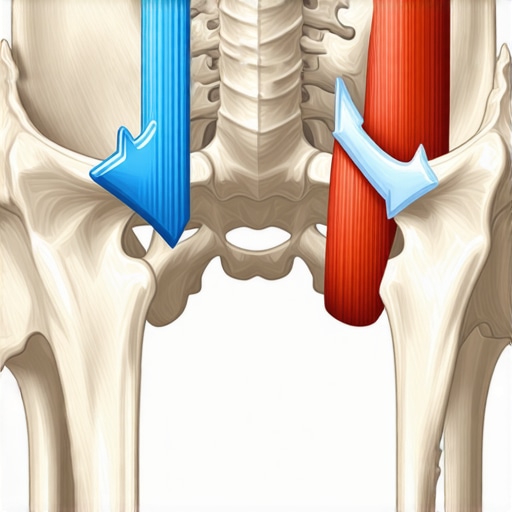
To fix this, we need to revolutionize your rehab chiropractic techniques for faster recovery by focusing on proprioception. Instead of just doing heavy lifts, you need movements that challenge your balance and force your brain to map the pelvis accurately. This is why I often steer people away from machines and back toward functional, multi-planar movements. If you’re only moving in one direction, your SI joint only learns to be stable in one direction.
The Recovery Trap That Keeps You Stiff
One of the biggest mistakes I see—and I made this myself for a long time—is relying on ice and passive rest for every tweak. We’ve been conditioned to grab the ice pack the second we feel a sharp pain. However, why icing your sprained ankle might be a huge mistake also applies to your lower back. Ice restricts blood flow and can actually delay the removal of cellular waste from the area. For a deep, mechanical issue like SI joint dysfunction, you often need controlled heat and movement to flush the joint. Relying on passive fixes is why so many people get stuck in a cycle of temporary relief. You have to understand the role of chiropractic care in effective sports injury recovery as a way to clear the path, but the actual healing happens when you re-introduce movement carefully. Have you ever fallen into this trap of over-icing or over-bracing your core only to feel more stuck later? Let me know in the comments.
Grab These Tools to Guard Your Spine
I’ve spent a fortune on gadgets over the years, and most of them are now gathering dust in my closet. However, there are a few non-negotiables that actually changed my daily comfort levels. If you want to stop the cycle of pain, you have to look at your environment. For me, the game-changer was a split-seat saddle chair. It sounds strange, but it mimics the pelvic alignment of standing while you’re seated, preventing that ‘locked-up’ feeling at the base of your spine. When you integrate strategic chiropractic solutions for long-term back health into your daily setup, you stop fighting against your own furniture. I also recommend keeping a lacrosse ball nearby—not to roll your lower back, which can actually cause more inflammation, but to release your lateral glutes and psoas while you take calls.
How do I keep my SI joint stable for the long haul?
Consistency is the only thing that beats chronic stiffness. You don’t need a grueling hour-long gym session every morning; you need the 5-minute decompression routine after a 10-hour shift to reset the day’s mechanical stress. Think of your spine like a high-performance engine—you wouldn’t wait for it to explode before changing the oil. A fascinating study in the Journal of Electromyography and Kinesiology suggests that ‘postural sway’—those tiny, unconscious movements we make—is actually a protective mechanism for our joints. This is why I advocate for ‘active sitting.’ If you stay perfectly still, you lose that protection. By staying mobile, you support the work done during the science behind chiropractic adjustments for back pain relief, ensuring the joint remains lubricated and functional.
The Next Big Shift in Recovery Tech
I truly believe we are entering an era of ‘smart’ biomechanics. In the very near future, I predict we’ll see wearable biofeedback sensors that are thin enough to be built into our clothing. These sensors will vibrate gently when your pelvic tilt reaches a threshold of high stress, allowing you to adjust your position before the ‘catch’ in your hip even begins. This technology will boost your sports rehab journey with proven chiropractic strategies by giving you real-time data on how you move. We’re moving away from generic advice toward highly personalized, data-driven recovery. My advanced tip for you today: tomorrow, set a timer for every 45 minutes. When it goes off, perform just three reps of the Seated Pelvic Reset we discussed earlier. This one small habit is the highest-leverage move you can make for your long-term mobility and is one of the most essential tips for managing back pain through healthy lifestyle choices that actually yields results.
What Experts Won’t Tell You About SI Joint Stability
After years of trial and error in my own sports rehab journey, I realized that the standard advice often misses the mark. First, ‘perfect posture’ is a myth that keeps you stiff; the best posture is your next posture. Constant movement is what keeps the joint lubricated. Second, I learned that the science behind chiropractic adjustments for back pain relief isn’t just about bones clicking—it’s about rebooting your nervous system so your muscles actually protect you. Third, don’t mistake ‘soreness’ for ‘damage.’ Sometimes that deep ache is just your body learning to move again after being locked in a seated prison for hours on end.
Tools and Tactics I Trust for Daily Maintenance
I don’t believe in miracle cures, but I do believe in smart equipment. I’ve integrated strategic chiropractic solutions for long-term back health by switching to a dynamic workstation. My essential toolkit includes a firm seat that encourages ‘active sitting’ rather than slumping into soft foam. I also swear by a simple lacrosse ball for hip release, which helps to revolutionize your rehab chiropractic techniques for faster recovery by targeting tissue density that stretches alone can’t reach. Finally, the most important tool is your own awareness; if you feel that ‘catch’ in your hip, it is your body’s signal to perform a reset immediately.
#IMAGE_PLACE_HOLDER_E#
Your Path to a Pain-Free Workday Starts Now
You don’t have to be a victim of your desk chair. By understanding the role of chiropractic care in effective sports injury recovery, you can apply those same principles to your daily life. It’s about small, consistent wins rather than one-time fixes. Take these essential tips for managing back pain through healthy lifestyle choices and put them into practice today. Your spine is designed for movement, resilience, and strength. Don’t let it rust in place. Have you ever noticed your hip pain gets worse after a specific type of chair or a long commute? Let me know in the comments below!