
I was standing in line for a morning latte when I caught a glimpse of my reflection in the shop’s side window. I didn’t recognize the person looking back. My chin was leading the charge like a hood ornament, my shoulders were rounded like a question mark, and my neck looked completely strained. It was a visceral shock. For months, I’d been complaining about why your head feels heavy after a long day at the computer, but I hadn’t realized how far my physical posture had actually drifted into ‘human turtle’ territory. I’ve spent my life obsessed with sports rehab and chiropractic care, and yet, here I was, looking like a total amateur. My neck was screaming. My eyes were tired. I was over it. I tried to pull my head back immediately, but it felt forced and unnatural. That was the moment I realized that ‘trying harder’ to sit up straight was a losing game. My muscles had literally forgotten how to hold me up.
Stop Carrying Your Head Like a Bowling Ball
The problem isn’t just about how you look in a t-shirt; it’s a physics nightmare for your spine. According to a study published in the Journal of Physical Therapy Science, forward head posture doesn’t just look bad; it significantly decreases respiratory function by compressing the upper thorax and can reduce lung capacity by up to 30 percent. Think about that for a second. Every inch your head drifts forward, it effectively adds ten pounds of pressure on the structures of your neck. If you are two or three inches forward, your neck is trying to support a 40-pound head all day. No wonder you’re looking for the cervical move that stops tension headaches without pills. I made a huge mistake early on by thinking I could buy my way out of this. I spent hundreds on high-end gadgets and ergonomic pillows, but I quickly learned why your laptop stand isnt fixing your tech neck—it’s because hardware can’t fix a software problem in your nervous system. You can have the best desk in the world, but if the one specific muscle you arent strengthening for better posture stays dormant, you’ll just keep slumping.
Won’t my head just drift forward again anyway?
It’s the most common concern I hear from people who have tried ‘posture fixes’ before. They think that even if they do the drills, their habits will just drag them back to the slump. I felt the same way. I was skeptical that a few minutes of movement could undo eight hours of typing. But here’s the neighborly truth: we aren’t trying to achieve ‘perfection’ or look like a robot. We’re trying to build a body that’s resilient enough to handle the modern world. Today, I want to walk you through the three tactical moves that finally worked for me. These aren’t your typical ‘pull your shoulders back’ cues that only last five minutes. We’re going to target the hidden link between your jaw pain and neck stiffness and wake up the stabilizers that have gone to sleep. Have you ever caught your own side profile in a mirror and felt a sudden urge to stand up straighter? I know that feeling well, and I promise you, there is a better way to live than constant tension.
Wake Up the Guy-Wires in Your Throat
Think of your neck like a tent pole. If the guy-wires in the front are loose, the pole tips backward or collapses. Most of us have completely ‘turned off’ our deep neck flexors—the tiny muscles responsible for stabilizing the cervical spine. When these go dormant, the big, beefy muscles like the traps and SCM try to do the job, resulting in that heavy-headed feeling. To fix this, you need the chin tuck. But don’t just jam your chin down. Imagine a string pulling the crown of your head toward the ceiling while you gently retract your nose straight back. It should feel like you’re making a double chin for a photo you definitely don’t want to post. I remember sitting at a red light on 4th Street, trying my first real set of these. I felt a weird ‘zing’ at the base of my skull—it wasn’t pain, but more like a dusty circuit breaker finally clicking into the ‘on’ position. Within seconds, the fuzzy vision I usually got after a long day started to clear because I was finally targeting the one muscle you arent strengthening for better posture. 
Open the Locked Door in Your Mid-Back
You cannot fix a neck problem if your mid-back is as stiff as a frozen steak. If your thoracic spine is stuck in a rounded ‘C’ shape, your neck has no choice but to crane forward so you can see the world. This is where the thoracic extension move that saves your shoulders comes into play. Use the back of your office chair or a foam roller. Lean back over the pivot point, keeping your ribcage tucked down so you aren’t just arching your lower back. You want the movement to come strictly from the area between your shoulder blades. If you feel a satisfying ‘pop,’ that’s often just a gas release in the facet joints, similar to the science behind chiropractic adjustments for back pain relief. This mechanical reset creates the platform your neck needs to actually stay upright without constant effort. For a more active version, you can learn how to use a wall slide to fix rounded shoulders, which forces your nervous system to coordinate the mid-back and neck simultaneously.
Release the Tension at the Skull Base
Once you’ve turned on the stabilizers and opened the foundation, you have to address the ‘hot spots.’ The suboccipital muscles—the tiny ones right where your skull meets your neck—are often in a state of permanent spasm. This is a primary driver for why your headaches start at the computer. To release them, take two tennis balls in a sock and lie down, placing them right on those two bumps at the base of your skull. Let the weight of your head do the work. It’s a passive way to achieve the cervical move that stops tension headaches without pills. While you’re there, gently open and close your mouth. This helps address the hidden link between your jaw pain and neck stiffness, as the jaw and upper neck share a neurological pathway. If you’ve never felt this area release, it can feel like a wave of heat spreading across your scalp—that’s blood flow returning to tissues that have been starved for months. If you find the self-stretch isn’t enough, you might want to look into what to expect during your first thoracic adjustment to get the joints moving before you start your daily drills. For those dealing with a burning sensation between the blades, the simple desk stretch to stop mid-back burning can be a lifesaver during 2:00 PM slumps.
Most people treat their bodies like a collection of separate parts—a neck, a back, a hip. But your nervous system doesn’t care about parts; it cares about patterns. I used to think that if a muscle felt tight, I just needed to pull on it until it yielded. However, there is a fundamental nuance most patients miss: your muscles aren’t like rubber bands; they’re more like smart thermostats controlled by your brain. You might feel a constant pull in your legs, but why stretching your hamstrings wont fix your chronic tightness usually comes down to protective tension, not physical length. Your brain is intentionally keeping that muscle ‘on’ because it doesn’t trust your joints to be stable. If we just stretch without addressing the underlying instability, the brain will simply hit the ‘tightness’ button again the moment you walk out the door. This is a massive factor when you revolutionize your rehab chiropractic techniques for faster recovery.
Why does your adjustment only last for two days?
It’s the advanced question that separates a casual patient from someone who truly understands human mechanics. If you get a reset but don’t change the input, you are just ‘clearing the cache’ on a computer that is still running the same buggy software. A study published in the Journal of Bodywork and Movement Therapies suggests that static stretching and passive manipulation often fail long-term because they don’t account for the ‘stretch reflex’—a neurological safety mechanism. To make a change stick, you have to follow up the science behind chiropractic adjustments for back pain relief with active loading. You have to show your brain that the new range of motion is safe to inhabit by using it under tension.
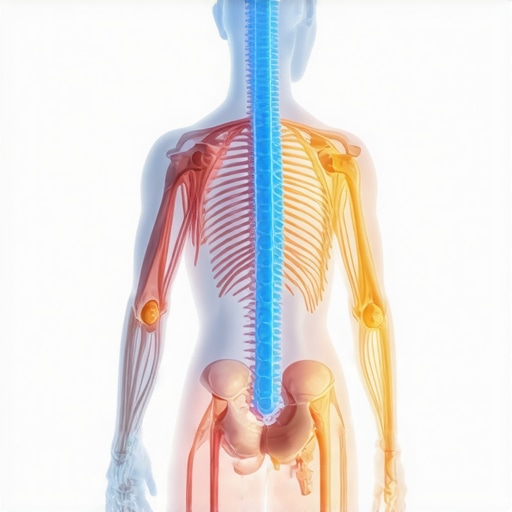
Here is the ‘oops’ factor I see constantly: the trap of over-bracing. When people feel weak or unstable, they reach for external support. But you need to understand the truth about back braces and muscle atrophy. When you outsource your stability to a piece of Velcro, your deep core muscles—the ones actually responsible for protecting your spine—essentially go on vacation. The goal isn’t to find a better crutch; the goal is to rebuild the internal Guy-wires that have gone slack. Have you ever fallen into this trap of stretching a muscle for years without it ever actually ‘loosening’ up? Let me know in the comments, and let’s dig into why your brain might be holding onto that tension.
The Simple Tools That Earned a Spot on My Desk
I used to have a drawer full of foam rollers and vibrating gadgets that promised to fix my spine, but most of them ended up collecting dust. What I’ve learned is that the most effective tools are often the simplest ones that you actually use. For me, that’s a standard lacrosse ball and a dedicated awareness of my workspace. Learning how to use a lacrosse ball to melt away mid-back knots was a total game-changer because it allowed me to pinpoint the exact ‘sticky’ spots that my foam roller was too bulky to reach. This isn’t just about rolling around; it’s about providing a specific mechanical stimulus to the mechanoreceptors in your fascia. When you apply that localized pressure, you’re signaling the nervous system to let go of the protective guarding that keeps your shoulders glued to your ears.

How do I keep my spine happy without a daily struggle?
Maintenance isn’t a chore if it’s integrated into your environment. I stopped trying to ‘remember’ to sit up and instead focused on how to sit without compressing your l5-s1 disc by adjusting my monitor height and using a small lumbar roll. Dr. Stuart McGill, a leading expert in spine biomechanics and author of Back Mechanic, emphasizes the concept of ‘spinal hygiene’—the idea that small, repeated movements throughout the day matter more than a single hour-long workout. If you are constantly irritating the disc with poor mechanics, no amount of rehab will stick. You need strategic chiropractic solutions for long-term back health that prioritize movement quality over sheer intensity. It’s about building a library of movement that your brain can access when you get tired.
Wearable tech will soon be your posture coach
I predict that within the next five years, we’ll move away from passive chairs and toward biofeedback wearables that gently vibrate when your deep neck flexors go slack. Until then, you are your own coach. Integrating essential tips for managing back pain through healthy lifestyle choices like walking every 30 minutes is your best defense against the ‘human turtle’ effect. If you’re serious about staying mobile, you must boost your sports rehab journey with proven chiropractic strategies that bridge the gap between the clinic and your living room. My challenge to you: set a timer for 25 minutes on your phone right now. When it goes off, do exactly five chin tucks and one thoracic extension. Don’t wait for the pain to remind you; teach your brain to value the movement before the tension takes over again.
What the Pro Athletes Taught Me About Persistent Stiffness
After years of working with high-level movers, I realized that the people who recover the fastest aren’t the ones doing the most stretching; they’re the ones who master the art of the ‘micro-break.’ I learned the hard way that you can’t out-train eight hours of poor sitting habits with one twenty-minute gym session. The real ‘lightbulb moment’ for me was discovering that stiffness is often a request for stability, not a need for more flexibility. If you want to revolutionize your rehab chiropractic techniques for faster recovery, you have to stop fighting your body and start listening to the signals it’s sending. Another big lesson? Consistency beats intensity every single time. A single chin-tuck every hour is more powerful than an hour of yoga once a week for fixing a forward head posture.
The Minimalist Gear That Kept Me Out of the Slump
I’ve tested every gadget under the sun, but my daily toolkit has shrunk down to just three things. First is a firm lacrosse ball. I recommend learning how to use a lacrosse ball to melt away mid-back knots because it’s the only way to reach those deep suboccipital triggers at home. Second, I swear by the ‘Back Mechanic’ by Dr. Stuart McGill; it’s a gold standard for anyone who wants to understand how to move without irritation. Finally, don’t overlook your bed setup. Finding the simple way to sleep without waking up with a stiff neck was the final piece of my puzzle. If you spend eight hours in a bad position while unconscious, you’re starting every day at a deficit. These tools work because they address the environment, not just the symptoms.
Reclaiming the Way You Move
You aren’t destined to be a ‘human turtle’ forever. Your body is incredibly plastic, meaning it can change and adapt at any age. The tension you feel right now is just a habit that your nervous system has picked up to keep you ‘safe’ in a sedentary world. By using strategic chiropractic solutions for long-term back health and incorporating small, frequent movement snacks into your day, you can rewrite that software. It starts with one conscious breath and one tall posture check. I want you to feel as good in your body as you did before the desk job took over. This isn’t just about sports rehab; it’s about your quality of life for the next thirty years. Essential tips for managing back pain through healthy lifestyle choices only work if you actually apply them, so start with the timer I mentioned earlier.
Have you found that your neck tension usually flares up during a specific time of day or after a certain task? Let me know in the comments below!