
I was hunched over my laptop for six hours when the ‘ghost’ returned—that sharp, burning knot right under my left scapula that felt like someone was poking me with a hot needle. I’d spent hundreds of dollars on fancy gadgets and even tried stretches for mid-back burning, but the relief was always fleeting. It wasn’t until a friend tossed me a hard, orange lacrosse ball and told me to ‘get on the floor’ that I finally found the key to long-term comfort. Today, I am going to share exactly how you can use this simple tool to regain your mobility and stop the cycle of chronic tension.
Why Your Mid-Back Is Screaming for Relief
Most of us live in a state of ‘thoracic lockdown.’ We’re constantly reaching forward at desks or over steering wheels, which overstretches the muscles between our shoulder blades until they develop those literal knots in the wood. While a professional thoracic adjustment is incredible for restoring proper alignment, the day-to-day maintenance falls squarely on our own shoulders. I’ll be honest: I made the classic rookie mistake of thinking more pain meant more gain. I used to jam the ball directly onto my vertebrae and roll with my full body weight, which is a great way to cause inflammation rather than fixing it. I ended up more bruised than relaxed. We are going to avoid that by focusing on the soft tissue, not the bone.
Is a Cheap Rubber Ball Actually Better Than a Professional Massage?
It sounds too simple to be true, doesn’t it? You might wonder if such a low-tech solution can actually compete with a therapist’s hands. But here’s the secret: a massage therapist can’t go home with you. A lacrosse ball provides ‘targeted ischemic compression,’ which is just a fancy way of saying it pins the knot down to temporarily restrict blood flow so that when you release, fresh, oxygenated blood floods the area. A study published in the Journal of Bodywork and Movement Therapies supports this, suggesting that self-myofascial release can effectively reduce trigger point sensitivity and improve range of motion. It’s the ultimate tool for those of us who need relief right now, not when there’s an opening in the clinic schedule next week. Have you ever caught yourself trying to discreetly rub your back against a doorframe at work like a bear against a pine tree? If so, you already know the instinct is right, you just need a better tool. Before we dive into the floor work, make sure you aren’t making things harder on yourself by having rounded shoulders from poor posture, which just pulls those mid-back muscles even tighter.
Start with the Wall Before You Hit the Floor
I see people jump straight onto the floor with a lacrosse ball all the time, and usually, they end up grimacing in a way that suggests more trauma than therapy. Think of your back muscles like a piece of cold steak; you can’t just hammer away at them and expect them to become tender. You need to control the pressure. By standing against a wall, you use your legs as a volume knob for the intensity. If it’s too much, you just lean back a bit. This is a crucial part of any effective sports injury recovery because it respects the inflammatory process. I remember my first attempt; I went full-weight on a hardwood floor and woke up the next morning feeling like I’d been kicked by a mule. Start at the wall to let your nervous system realize the ball isn’t a threat.
Hunt for the Trigger Point Without Overdoing It
Place the ball between your spine and your shoulder blade—never directly on the bone. Move slowly up and down, side to side, until you find that one spot that makes your breath catch. That’s your target. This technique helps you alleviate chronic back pain by breaking up adhesions in the fascia. Once you find a knot, don’t just roll over it like a steamroller. Stay there. Imagine the ball is sinking into the muscle like a hot stone into snow. If you find yourself tensing your jaw or holding your breath, you’re pressing too hard. Lighten up until you can maintain a steady, deep inhale. 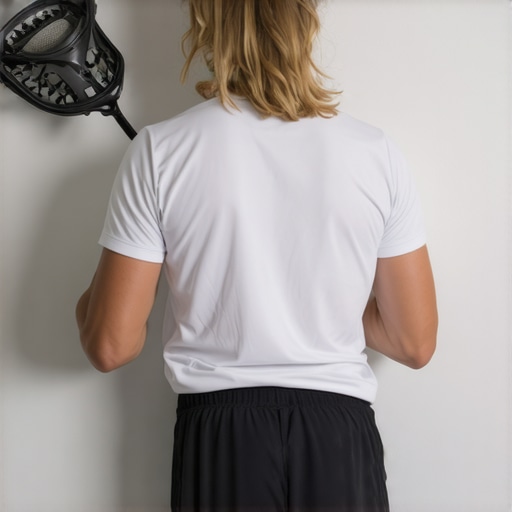
Use the Pin and Stretch Method for Faster Results
Static pressure is good, but adding movement is what really changes the game. This is the ‘secret sauce’ of sports rehab. While the ball is pinned against that stubborn knot, slowly raise your arm on that same side forward and overhead. You are essentially lengthening the muscle while it’s pinned down, which forces the fibers to slide against each other. It’s similar to the thoracic extension move that saves your shoulders because it addresses the lack of mobility in the rib cage area. I used this exact method after a week of heavy deadlifts when my mid-back felt like a solid sheet of plywood. It was uncomfortable for about ninety seconds, but then I felt a warm release that no amount of static stretching could ever provide.
The Breathing Drill That Softens the Tissue
If you aren’t breathing into the ball, you’re wasting your time. When you find a particularly nasty spot, try to send your breath into that exact point of contact. This isn’t just hippy-dippy advice; it’s about using your internal pressure to push back against the ball. Using the lung drill that instantly lowers your stress and back tension while you have the lacrosse ball in place creates a pincer effect on the knot. I once got so aggressive with this that I actually felt a rib shift. I panicked, thinking I’d done real damage, but it turned out to be a minor displacement that I had to learn how to spot a rib subluxation fast to fix it. The lesson? Direct, focused pressure is better than raw force. Keep your movements micro—no more than an inch or two of travel at a time.Let’s dig deeper into why that ‘knot’ keeps coming back even after you have rolled it out for twenty minutes. One of the most pervasive myths in the fitness world is the idea that if a little pressure is good, a lot of pressure must be better. I have seen people treat their muscles like a piece of tough leather they need to beat into submission. If you have been doing this, you might find that why your morning stretching routine is making you stiffer by noon is actually a result of your nervous system going into a protective lock. When you apply too much force, your brain perceives it as a threat and signals the muscle to tighten even further to protect your spine. A study in the Journal of Strength and Conditioning Research indicates that while myofascial release is highly effective, excessive intensity can actually lead to increased muscle guarding and delayed recovery times.
Stop Hammering Your Knots if You Want Them to Actually Melt
In my experience, the ‘oops’ factor usually comes from a lack of patience. People try to ‘kill’ the pain in one session. Real chiropractic techniques for faster recovery focus on desensitization, not destruction. If you are using a lacrosse ball and your face is turning red from the effort, you are doing it wrong. You are likely making a similar mistake to the foam roller mistake that worsens shoulder impingement by compressing tissues that are already irritated. Instead of raw power, focus on ‘melting’ into the ball. The goal is to signal to your parasympathetic nervous system that it is safe to let go.
The Dangerous Lure of Rolling Your Lumbar Spine
The single biggest mistake I see is when people take their lacrosse ball and wander down into the lower back. You absolutely must understand why you should stop rolling your lower back on a tennis ball or any hard object. Unlike your mid-back, which has the sturdy rib cage to protect your internal organs and offer a solid base for the ball to press against, your lumbar spine is relatively exposed. Pressing a hard rubber ball into your lower back can cause significant inflammation in the spinal joints and may even irritate your kidneys or the psoas muscle. 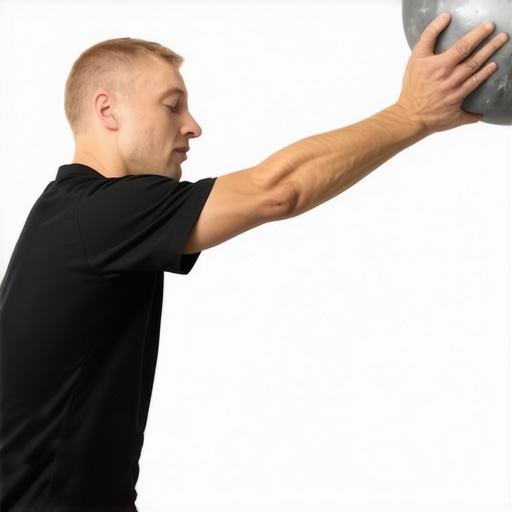
Does Using a Harder Ball Actually Speed Up Your Recovery?
The short answer is no. While a lacrosse ball is great for the dense tissue between your shoulder blades, it is often too aggressive for other areas. Using a ball that is too hard can actually lead to ‘bruising’ of the fascia, which creates more adhesions in the long run. If you find the lacrosse ball too intense, try a tennis ball or a slightly softer rubber ball to achieve strategic chiropractic solutions for long-term back health. Another nuance people miss is that mid-back pain is rarely a localized problem; it is often the ‘victim’ of immobility elsewhere. If your hips are locked up, your mid-back has to overcompensate for every step you take. Incorporating a 5-minute mobility routine for desk workers with stiff hips can take the load off your thoracic spine more effectively than any amount of rolling ever could. Have you ever fallen into this trap of thinking more pain equals more progress? Let me know in the comments.
Why a Peanut Roller Beats a Single Lacrosse Ball
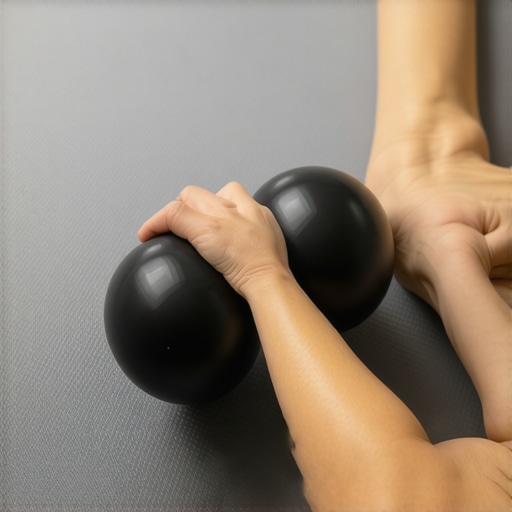
Once you’ve mastered the basic wall roll, you’ll likely find that a single ball can feel a bit ‘skittish.’ It slips and slides, and you spend half your time chasing it across the floor. This is why I transitioned to using a ‘peanut’—essentially two lacrosse balls taped together or a molded rubber version of the same shape. The groove in the center protects your spinous processes (the bony bits of your spine) while allowing the balls to dig deep into the paraspinal muscles on both sides simultaneously. I’ve found this tool is the cornerstone of strategic chiropractic solutions for long-term back health because it encourages symmetrical release. If you find your thoracic spine feels like a rusted hinge after a long flight or a day at the office, the peanut is your best friend. For those deeper, harder-to-reach spots around the upper traps, I personally swear by the Thera Cane. It’s a hook-shaped tool that provides mechanical leverage, allowing you to apply pinpoint pressure without tiring out your hands or shoulders.
How do I maintain these spinal gains over the long haul?
Consistency isn’t about spending an hour a day on a foam roller; it’s about micro-interventions. You need to integrate essential tips for managing back pain through healthy lifestyle choices into your existing routine. For example, I’ve made it a non-negotiable habit to perform the 5-minute decompression routine after a 10-hour shift. This isn’t just about the physical stretch; it’s about resetting the neurological patterns of tension we develop while staring at screens. Clinical biomechanist Dr. Stuart McGill, in his extensive research on spinal stability, emphasizes the concept of ‘spinal hygiene.’ He argues that it is the repetitive micro-movements and static postures of our daily lives that dictate our long-term pain levels more than any single rehab session. By keeping a lacrosse ball or peanut in your desk drawer and using it for just two minutes every time you take a water break, you are practicing the kind of maintenance that prevents the ‘ghost’ from returning in the first place.
Prepare for the Era of Biofeedback Wearables
Looking ahead, I believe we are moving away from manual tools and toward proactive technology. We are already seeing the rise of smart apparel—shirts embedded with haptic sensors that gently vibrate when your shoulders slump forward. This real-time feedback will boost your sports rehab journey with proven chiropractic strategies by making you consciously aware of your posture before the pain even starts. Until that tech becomes a household staple, focus on your environment. Even your sleep habits play a role; learning the simple way to sleep without waking up with a stiff neck can prevent your mid-back from being pulled into a compensatory strain overnight. If you want to truly revolutionize your rehab chiropractic techniques for faster recovery, you have to stop viewing recovery as a ‘session’ and start viewing it as a lifestyle. I want you to try this: Tonight, instead of scrolling on your phone for that last ten minutes before bed, spend just two minutes on a ‘peanut’ roller and see if you breathe easier tomorrow morning.
Hard Truths I Discovered While Chasing Spinal Relief
After years of battling that ‘ghost’ in my shoulder blade, I realized that the ball is just a messenger. One of the most vital lightbulb moments was the 90-second rule: if a knot doesn’t release after a minute and a half of focused pressure, stop. Forcing it only leads to bruising. I also learned that rolling the ‘good’ side is just as important as the painful one; our bodies are interconnected webs of fascia, and tension often hides where you least expect it. Most importantly, I discovered that self-care works best when paired with the science behind chiropractic adjustments for back pain relief to ensure the underlying structure is sound.
My Personal Toolkit for a Pain-Free Thoracic Spine
I don’t just use any random gear; I’ve narrowed it down to a few essentials that actually move the needle. First, a standard lacrosse ball for pinpoint work, but I always keep a ‘peanut’—two balls taped together—for symmetrical work along the spine. I also recommend keeping a firm yoga block nearby to rest your head on when you’re working on the floor; it prevents neck strain while you focus on your mid-back. Integrating essential tips for managing back pain through healthy lifestyle choices like these into your daily life makes the biggest difference. Finally, I highly suggest checking out resources that focus on strategic chiropractic solutions for long-term back health to build a foundation of strength.
#IMAGE_PLACEHOLDER_E#
Reclaiming Your Freedom One Knot at a Time
You don’t have to live in a state of constant ‘thoracic lockdown.’ By taking these small, consistent steps with a simple lacrosse ball, you are training your body to relax rather than react. While these tools are incredible for daily maintenance, remember that they work best alongside unlocking back pain relief expert chiropractic adjustments that work to address the root alignment issues. Don’t be afraid to start slow and listen to your body’s signals. Have you tried using a peanut roller yet, or are you still chasing a single ball around the room? Let me know your favorite relief hack in the comments!