
I remember standing at the starting line of my third marathon, my left hip screaming before I had even taken a single step. I had done everything ‘right.’ I bought the top-tier shoes, followed a rigorous training block, and even cut out my beloved Sunday pancakes. Yet, every stride felt like I was fighting against my own skeleton. It was a visceral, grinding frustration. It wasn’t until a friend practically dragged me to a chiropractor that I realized my pelvis was tilted like a lopsided seesaw, forcing my entire right side to overcompensate until it eventually just gave up. That realization changed everything about how I view my training. We often think of athletic prowess as a matter of lung capacity or muscle mass, but the truth is much more structural. If your frame is crooked, the engine can’t run at full tilt.
Your Spine is the Literal Master Controller of Every Movement
When we talk about enhancing athletic performance with targeted chiropractic care, we aren’t just talking about getting rid of a nagging ache. We are talking about neurological efficiency. Your spine houses the nervous system, which is the electrical grid for your muscles. If there is a ‘short’ in the circuit because a vertebra is out of alignment, your brain cannot send clear signals to your legs. I made the mistake early on of trying to power through the pain, thinking I could out-train a structural imbalance. Spoiler: you can’t. You just end up with a more expensive injury later. This is exactly why the hip mobility secret for better sprinting starts with the position of your lower back, not just stretching your hip flexors for hours on end.
Is this kind of maintenance actually worth the hype?
I get it. You are busy, and the idea of adding one more ‘wellness’ appointment feels like a chore. You might even wonder if a few millimeters of spinal shift really matters when you are under a 300-pound barbell. But consider this: according to a study published in the Journal of Physical Therapy Science, even minor spinal misalignments can significantly decrease muscle recruitment and balance. When your spine is stacked correctly, your body stops wasting energy on ‘bracing’ for instability and starts pouring that power into your performance. Have you ever felt like one leg was shorter than the other during a squat, or noticed that your glutes turn off during long distance runs? That is your body screaming for a reset. If you have ever felt like you are hitting a physical ceiling despite training harder than ever, drop a comment or reach out—I would love to hear if you have tried adjusting your alignment to break through that plateau. Today, I am going to show you why fixing your pelvic tilt can instantly boost your squat depth and how to keep your spine in the game for the long haul.
Fix the Pelvic Tilt That’s Killing Your Power
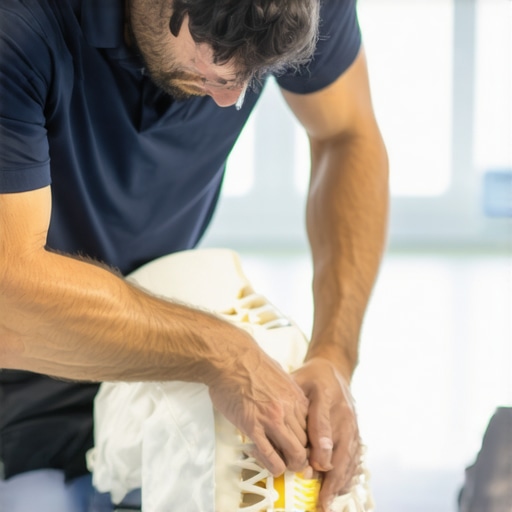
If you have ever felt like your hamstrings are perpetually tight no matter how much you stretch, you are likely dealing with a neurological protective mechanism, not a length issue. Think of your pelvis as a bowl of water. If that bowl tilts too far forward, the water spills out the front, and the muscles in the back of your legs have to strain just to keep the bowl from tipping further. This is where the pelvic tilt fix for chronic tight hamstrings comes into play. Instead of aggressively pulling on the muscle, we have to reset the position of the bowl itself. When I was training for a personal best in the deadlift, I spent weeks rolling my hamstrings with zero progress. It wasn’t until my chiropractor adjusted my sacroiliac joint that my ‘tightness’ vanished instantly. My brain finally felt safe enough to let the muscles relax because the structure was stable.
Look at Your Foundation Before Fixing the Roof
We often blame our knees or hips for our lifting woes, but the problem frequently starts at the floor. If your ankles are locked up, your body will find that missing range of motion elsewhere—usually in your lower back. This is why why your ankle sprain from high school still affects your gait decades later. Your nervous system has a long memory. It creates ‘workarounds’ to avoid pain, and those workarounds eventually become your new, inefficient movement patterns. To fix this, you need to combine the science behind chiropractic adjustments for back pain relief with active mobility. I started using a simple 30-second big toe stretch before my sessions, and suddenly my squats felt deeper and more balanced. It turns out that the 30-second big toe stretch for better squat depth is more effective than any fancy lifting belt because it engages the entire posterior chain from the ground up.
The Thoracic Reset for Heavy Lifters
If you spend your day hunched over a laptop and then try to transition straight to the overhead press, you are asking for a shoulder impingement. Your thoracic spine (mid-back) needs to be able to extend for your shoulder blades to move correctly. When that mid-back is stuck, your lower back arches excessively to compensate, which is why your overhead press hurts your lower back. It’s a classic case of the wrong muscle doing the right job. I remember a specific session where every rep of my bench press felt like a knife was digging into my shoulder blade. I thought I’d torn something. My chiropractor didn’t even touch my shoulder; he performed a high-velocity adjustment on my T4 vertebra. I heard a muffled ‘pop,’ and the pressure vanished. By integrating the thoracic extension move that saves your shoulders into your daily routine, you provide the necessary clearance for your joints to glide without friction. This isn’t just about comfort; it’s about making sure the simple drill to stop your ribs from flaring during deadlifts actually has a stable base to work from. When your ribs stay down and your spine stays neutral, the power transfer is seamless.
We need to stop treating ‘tightness’ as a simple lack of muscle length. This is one of the most persistent myths in the gym today. You feel stiff, so you stretch. It feels better for ten minutes, then the tension returns. If this sounds like your daily routine, you aren’t actually fixing anything; you’re just pulling on a rope that’s already taut because the anchor point is unstable. This is why stretching your hamstrings wont fix your chronic tightness if your pelvis is stuck in a protective tilt. Your brain is keeping those muscles ‘on’ to protect your spine. If you force them to relax without fixing the underlying stability, you’re essentially removing the safety net from your lower back.
Stop Stretching Your Way into More Pain
One massive ‘oops’ I see even experienced lifters make is trying to mobilize the wrong areas. Specifically, why you should never roll your lower back on a foam roller. The lumbar spine is designed for stability, not massive mobility. When you mash those tissues into a hard plastic tube, you risk triggering more muscle spasms rather than relieving them. Similarly, reaching for the heating pad can backfire during a flare-up. While it feels good in the moment, why heat is often the wrong choice for a sudden back spasm comes down to inflammation. Heat increases blood flow to an area that might already be congested with inflammatory markers, potentially making the ‘lockdown’ worse by the next morning.
Does your brain prioritize stability over raw range of motion?
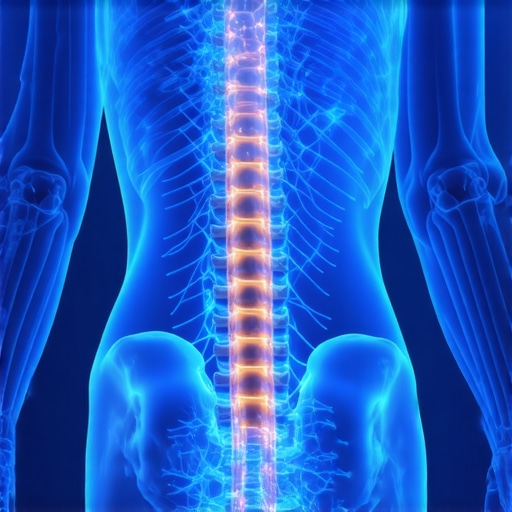
Absolutely. Research published in the British Journal of Sports Medicine suggests that many musculoskeletal complaints are actually motor control issues rather than structural failures. Your nervous system is constantly scanning for threats. If it perceives instability in your sacroiliac joint, it will ‘brake’ your entire movement chain to prevent injury. This is why the role of chiropractic care in effective sports injury recovery is so vital; it’s about signaling to the brain that the structure is secure so the ‘brakes’ can be released. If you rely solely on the truth about back braces, you are just masking the instability rather than retraining the neural pathways. To truly boost your sports rehab journey with proven chiropractic strategies, you must combine adjustments with active stabilization work.
If you are stuck in a cycle of injury, you have to look at the timeline of healing. Most people rush back too fast, skipping the neurological reintegration phase. By using revolutionize your rehab chiropractic techniques for faster recovery, you can ensure that your body isn’t just ‘healing’ the tissue, but also updating the software. Stop icing new injuries and try this instead: focus on controlled, pain-free movement to maintain the brain-to-muscle connection. Have you ever fallen into the trap of thinking a muscle was ‘weak’ when it was actually just inhibited by a joint misalignment? Let me know in the comments.
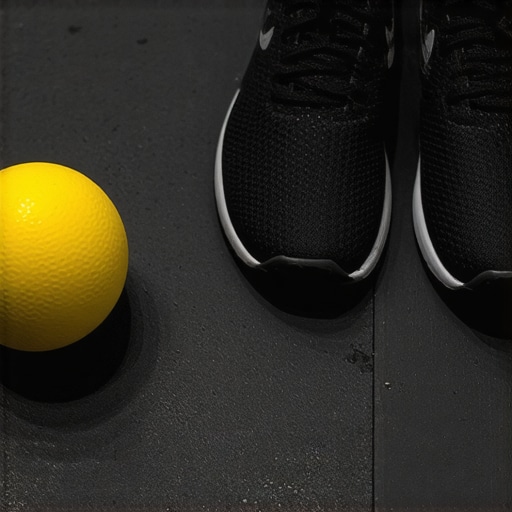
When you finally realize that your ‘weakness’ was actually a neurological roadblock, the focus shifts from survival to sustainability. It’s about keeping that internal software updated so your hardware doesn’t crash during a heavy set. Maintenance isn’t about doing more; it’s about doing the right things when you aren’t under a heavy load. For me, that meant ditching the generic foam roller for specific tools that address my unique hang-ups. I stopped trying to massage my way out of every problem and started using how to use a lacrosse ball to melt away mid-back knots because it allowed me to pin down specific tissues that a large roller simply couldn’t reach. It’s about precision, not just pressure.
The specific gear that saved my lifting career
I also had to take a hard look at my foundation—my feet. I used to think ‘more support is better,’ but the truth was much more nuanced. I discovered that heavy arch support was actually making my intrinsic foot muscles lazy, which led to a cascade of issues up my kinetic chain. This is exactly why your arch support might be weakening your ankle stability and why I switched to a more minimalist approach for my warm-ups. By letting my feet actually ‘feel’ the ground, my balance improved, and my knee pain vanished. As Dr. Stuart McGill, a world-renowned expert in spine biomechanics, famously notes in his research, ‘true mobility is earned through stability.’ This means you can’t just wiggle your way to health; you have to build the structural integrity to support that movement. I now prioritize strategic chiropractic solutions for long-term back health rather than waiting for a flare-up to remind me I have a spine.
How do I keep my spine in alignment between sessions?
Consistency is the only real ‘secret.’ You can’t undo 40 hours of sitting at a desk with one 20-minute gym session. I’ve integrated essential tips for managing back pain through healthy lifestyle choices into my daily routine, like using a standing desk and changing my sitting posture every 30 minutes. It’s also about knowing when to back off. If I feel that familiar twinge in my shin, I know that 3 signs your ankle stiffness is the real cause of your knee pain are likely flaring up, and I head straight to my chiropractor for a tune-up before it becomes a full-blown injury. This proactive approach is what allows me to keep hitting PRs in my 30s that I couldn’t touch in my 20s.
Real-time biomechanics will be the next big breakthrough
I honestly believe that within the next five years, we won’t just be guessing at our alignment. We are heading toward a future where computer-vision apps on our phones will flag a pelvic tilt or a scapular winging in real-time during a set of squats. This ‘digital chiropractor’ won’t replace the hands-on adjustment, but it will provide the data we need to stay adjusted longer. Until then, we have to rely on our own proprioception and the expertise of professionals who understand the nervous system. I want you to try this: before your next push session, perform the scapular reset that stops shoulder clicking during bench press and notice how much more ‘locked in’ your upper back feels. It’s a game-changer that takes less than a minute but protects your shoulders for the entire workout.
Hard Truths About Staying Injury-Free Under the Barbell
Over the years, I’ve learned that pain is almost always a lagging indicator. By the time you feel that sharp twinge in your lower back, the structural dysfunction has likely been brewing for weeks. I used to ignore the subtle signals, but now I understand the science behind chiropractic adjustments for back pain relief as a way to clear the noise before it becomes a scream. Another hard truth: mobility without stability is just a recipe for a new injury. You can have the loosest hips in the world, but if your core can’t stabilize your spine, that range of motion is useless. This is why strategic chiropractic solutions for long-term back health must be paired with active strength training. Finally, remember that your body is a closed system; a restriction in your big toe will eventually change the way your shoulder moves. Small, targeted tweaks often lead to the biggest breakthroughs in the role of chiropractic care in effective sports injury recovery.
#IMAGE_PLACEHOLDER_E#
The Gear and Knowledge That Keeps My Spine Happy
I don’t believe in buying every gadget on the market, but a few specific tools have fundamentally changed my recovery. I personally trust a simple lacrosse ball over a $500 massage chair any day. Knowing how to use a lacrosse ball to melt away mid-back knots allows for a level of precision that general foam rolling just can’t match. I also swear by transitioning to wider toe-box shoes; understanding why your arch support might be weakening your ankle stability was a lightbulb moment for my balance. For those who want to dive deeper into the ‘why’ behind their movement, I highly recommend Dr. Stuart McGill’s work on spine biomechanics—it’s the gold standard for anyone serious about lifting heavy for a lifetime.
Take the Brakes Off Your Performance Today
You don’t have to live in a cycle of ‘train, hurt, rest, repeat.’ There is a different way to approach your fitness that prioritizes the health of your nervous system and the alignment of your frame. When you stop fighting your own skeleton, you’ll be amazed at how much power is actually available to you. By enhancing athletic performance with targeted chiropractic care, you aren’t just fixing a problem; you are opening the door to your true physical potential. Don’t wait for the next injury to start caring for your foundation. Have you ever felt like one side of your body was working twice as hard as the other during a heavy set of squats? Let me know in the comments below!