
I remember lying on my living room floor, staring at the ceiling, wondering why a simple core day felt like I had been folded in half by a professional wrestler. I was doing everything right—or so the magazines told me. Planks, crunches, leg raises. Yet, there I was, unable to tie my shoes the next morning. It was a visceral realization that my pursuit of stability was actually the very thing stealing it from me. Many of us are taught that a strong core is a suit of armor, but if you’re building that armor with the wrong tools, you’re just adding weight to a collapsing structure.
Stop Crushing Your Discs in the Name of Fitness
The harsh reality is that many traditional exercises are designed for aesthetics, not for the delicate mechanics of a human spine. When you force your lower back into a rounded position under tension, you are basically playing Russian Roulette with your vertebrae. I learned this the hard way after years of thinking my glute bridge isn’t fixing your lower back pain because I simply wasn’t doing enough crunches. In reality, my hip flexors were so tight they were yanking on my spine, and my abdominal work was just reinforcing that dysfunction. If you have ever felt that sharp lower back stab during a hip hinge, you know exactly the kind of structural betrayal I am talking about.
Are these exercises actually worth the hype?
Skepticism is healthy here. We have been told for decades that strong abs equal a healthy back, but a study published by Harvard Health suggests that traditional crunches can actually increase the risk of injury by placing excessive load on the spine’s natural curves. I used to be the person doing 100 sit-ups every single morning. It was my biggest mistake. I thought I was building a foundation, but I was actually just grinding my vertebrae together like a mortar and pestle. We are going to flip the script today. I am going to show you how to stop the cycle of workout, flare-up, and repeat. Have you ever noticed that your back feels tighter after you finish your core routine than it did before you started? If so, it is time to listen to that warning signal.
Why Your Pelvis is the Real Boss of Back Health
Most of us focus on the six-pack muscles, but the real magic happens deeper down where the spine meets the hips. If your pelvis is tilted the wrong way, no amount of planks will save you. Getting the pelvic tilt fix right is often the first step toward reclaiming your mobility. When I finally stopped obsessing over feeling the burn and started looking at lifestyle choices for managing back pain, everything changed. We are going to dive into the specific moves that actually protect you, rather than just making you look good in a mirror while you are secretly in agony.To fix the structural betrayal of chronic pain, we have to treat your torso like a pressurized soda can. If the can is sealed and under pressure, you can stand on it without it buckling. If you pop the tab or dent the side, it collapses under the slightest weight. Your diaphragm is the top of the can, and your pelvic floor is the bottom.
Build a Pressure Shield Around Your Spine
Most people brace by sucking their belly button in toward their spine. This is a massive tactical error; it’s like trying to protect your house by removing the insulation. Instead, you need to push out laterally. Imagine someone is about to punch you in the gut—you don’t pull in; you create a solid wall of tension that expands into your sides and lower back. This internal pressure is the foundational secret to managing a bulging disc without using opioids or surgery. I remember the first time I applied this during a heavy set of squats; I felt like my lower back was suddenly welded into place. The usual ‘clicking’ sensations in my lumbar vanished because the pressure was doing the work, not my joints. 
Kill the Rib Flare Before It Kills Your Back
One of the biggest mistakes I made for years was letting my ribs ‘pop’ up toward the ceiling during overhead movements or even simple planks. Every time my ribs flared, my lower back would arch aggressively, putting all the shear force directly onto my L5-S1 disc. To fix this, you need to think about knitting your front ribs down toward your hip bones. This isn’t about doing a crunch; it’s about maintaining a stacked alignment between your ribcage and your pelvis. If you struggle with this, you likely need to practice the simple drill to stop your ribs from flaring during deadlifts. When I finally mastered this, my chronic mid-back tightness disappeared almost overnight because I was finally using my core instead of my spinal extensors.
Can You Breathe While Bracing?
Here is the ultimate test for your core stability: Can you maintain that rigid, pressurized core while taking a deep, calm breath? Most people can’t. They hold their breath, their blood pressure spikes, and they turn purple. That’s not stability; that’s a temporary panic response. You must learn the lung drill that instantly lowers your stress and back tension while keeping the ‘can’ pressurized. If you can’t breathe while your core is engaged, you are just one awkward move away from a flare-up.
The Missing Piece in Most Rehab Programs
Sometimes, no matter how much you practice these drills, something still feels mechanically ‘stuck.’ This is where professional intervention becomes a tool rather than a crutch. You can have the best bracing in the world, but if your vertebrae are restricted or your sacrum is out of alignment, your muscles will stay in a protective, hyper-toned state. Learning how to revolutionize your rehab with chiropractic techniques can clear the neurological path so these bracing exercises actually stick. I spent months doing dead bugs with zero progress until a thoracic adjustment finally allowed my ribcage to sit properly. It was like someone finally flipped the circuit breaker back on, allowing spinal alignment to impact my athletic performance the moment I stepped back into the gym.
The biggest lie I ever believed in my fitness journey was that flexibility equals freedom from pain. We are conditioned to think that if something feels tight, we must pull on it until it yields. But here is the hard truth: your brain is often making your muscles feel ‘tight’ as a protective mechanism because it doesn’t trust your joints to stay stable. If you force a stretch on a muscle that is guarding a vulnerable spine, you are essentially trying to rip the locks off a door that your nervous system is desperately trying to keep shut. This is precisely why stretching your hamstrings won’t fix your chronic tightness; the issue isn’t the length of the muscle, but the lack of stability in your pelvis.
Stop Trying to Stretch Your Way Out of a Stability Problem
In my experience, the more people focus on traditional ‘yoga-style’ flexibility for back pain, the more they struggle with long-term relapses. When you have a history of injury, your body creates neurological ‘brakes.’ If you ignore those brakes and force a stretch, you often create micro-tears or increase joint laxity in places that actually need more tension, not less. This is why I often tell my clients to stop their 20-minute morning floor routine. It sounds counterintuitive, but why your morning stretching routine is making you stiffer by noon is a phenomenon of your body’s survival response kicking back in to tighten everything up after you’ve over-stretched it.
Why does that ‘good’ stretch feel so bad an hour later?
It is called the ‘stretch-reflex’ and it’s a trap. When you stretch, you temporarily dampen the pain signals, which feels like relief. But you aren’t fixing the mechanical driver of the pain. Research published in the British Journal of Sports Medicine indicates that static stretching provides little to no benefit for injury prevention compared to eccentric strengthening. If you aren’t building strength at the end of your range of motion, you are just making yourself ‘floppy’ and vulnerable. This is a common nuance missed in standard rehab; we need to move away from passive pulling and toward active control. 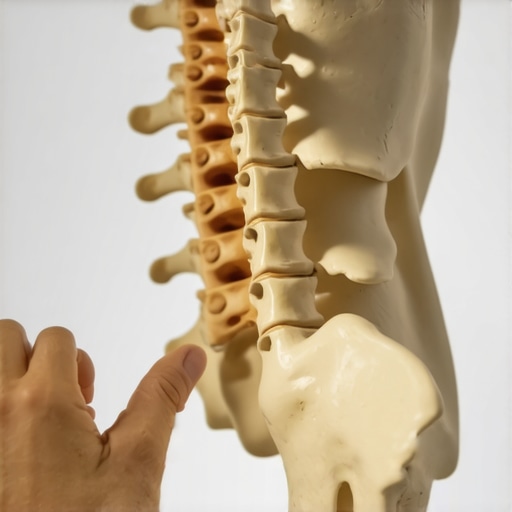
The Dangerous Trap of ‘Stretching’ Your Sciatica
Here is a massive ‘oops’ factor that sends people straight to the emergency room: trying to stretch out nerve pain. If you have a zinging sensation down your leg, that is a nerve, not a muscle. Nerves do not like to be stretched; they like to be ‘glided’ or ‘flossed.’ If you keep doing deep pigeon stretches or forward folds while your nerve is already irritated by a disc, you are just sanding it down against your vertebrae. You need to learn how to tell if your sciatica is actually a muscle knot in your glute before you start any aggressive mobility work. If you guess wrong, you’re just pouring gasoline on a fire.
Don’t Let Your Gear Do Your Body’s Job
Another nuance people overlook is the over-reliance on external supports. I see so many lifters and desk workers wearing lumbar belts all day. While they provide a temporary sense of security, the truth about back braces and muscle atrophy is that your deep stabilizers eventually stop firing because they think the belt has it covered. True, strategic chiropractic solutions for long-term back health involve restoring the movement of the joint so your muscles *can* fire, rather than just bracing them into submission. Have you ever fallen into the trap of stretching the same spot for months with zero permanent change? Let me know in the comments below—I’d love to hear what finally worked for you.
Once you move past the acute ‘everything hurts’ phase, you enter the most dangerous part of the journey: the plateau of feeling just fine. This is where most people abandon their drills and end up back on the floor six months later. I started viewing my recovery not as a destination, but as a maintenance schedule. Think of it like a high-performance engine; you don’t wait for the pistons to weld themselves together before you change the oil. Integrating strategic chiropractic solutions for long-term back health is about keeping the joints moving so the muscles don’t have to stay in a permanent state of high alert.
Maintenance is Cheaper Than a Total Rebuild
When I shifted my mindset, I realized that the science behind chiropractic adjustments for back pain relief isn’t just about ‘cracking’ bones—it is about restoring the neurological communication between your brain and your glutes. If that signal is fuzzy, your back will always try to take over the work. This is why the role of chiropractic care in effective sports injury recovery is so vital; it clears the path so your strength work actually targets the right tissues. I now schedule a ‘tune-up’ every few months, even when I feel great, just to ensure my spinal alignment directly impacts my athletic performance without any hidden mechanical friction.
The Two Specific Tools I Never Travel Without
I don’t buy into expensive, vibrating gadgets that cost hundreds of dollars. Instead, I rely on two low-tech items that have saved my spine more times than I can count. First is a simple lacrosse ball. Knowing how to use a lacrosse ball to melt away mid-back knots is a foundational skill. I use it to target the muscles right between my shoulder blades that get ‘locked’ after a long day at the computer. Second is kinesiology tape. It doesn’t physically hold your spine in place, but it acts as a constant biofeedback loop. Learning how to use kinesiology tape for lower back support provides a tactile ‘reminder’ to my brain to stay pressurized when I’m getting tired during a long hike or a heavy session. 
How can I maintain these spinal gains for years?
The secret to long-term success is consistency over intensity. You are better off doing two minutes of bracing drills every single day than doing an hour-long ‘rehab session’ once a week. According to a long-term study published in the Journal of Manipulative and Physiological Therapeutics (JMPT), patients who engaged in maintenance chiropractic care experienced significantly fewer days of self-reported ‘bothersome’ pain compared to those who only sought symptomatic care. It is about staying ahead of the curve. I predict that in the next few years, we will see a massive shift toward wearable technology that tracks pelvic tilt and spinal shear in real-time, giving us a ‘check engine light’ for our posture. Until then, you have to be your own sensor. I highly recommend you boost your sports rehab journey with proven chiropractic strategies that focus on joint mobility, then layer your strength on top. If you want to see a real change, try the ‘rib-knitting’ drill I mentioned earlier during every single one of your warm-ups this week. You will feel a level of stability you didn’t know was possible.
Lessons From the Training Room Floor
Reflecting on my own journey through chronic injury, I have realized that the most important progress happens in the moments when you choose to listen to your body instead of forcing it to perform. First, remember that pain is a protective signal, not a sign of weakness. If a movement feels ‘wrong’ in your spine, it usually is. Second, I learned that what your chiropractor wishes you knew about heavy lifting is that it is not about the weight on the bar, but the integrity of the brace. Finally, do not ignore the small things; a localized ‘knot’ is often your body’s way of trying to stabilize a joint that it perceives as loose. Addressing these early on is the key to longevity.
Tools That Actually Support Your Recovery
I do not believe in cluttering your gym bag with unnecessary gadgets, but there are a few things that have made a massive difference in my ability to stay mobile. One is a simple lacrosse ball for myofascial release, but more importantly, it is about the knowledge of how to use it correctly. Another game-changer for me was understanding the secret to staying adjusted while sleeping on your side, because all the rehab in the world will not help if you are trashing your alignment for eight hours every night. I also recommend keeping a journal of your flare-ups; patterns often reveal more than a single scan ever could. When you are ready for professional help, unlocking back pain relief expert chiropractic adjustments that work can provide the mechanical reset your nervous system needs to thrive.
#IMAGE_PLACEHOLDER_E#
Reclaiming the Life You Deserve
The journey back from chronic back pain is not always a straight line, and that is okay. There will be days when you feel invincible and days when you feel fragile. The goal is not to be perfect; it is to be better today than you were yesterday. By combining core pressure, rib alignment, and regular maintenance, you are building a body that can handle whatever life throws at it. Don’t be afraid to ask for help or to pivot your strategy if something isn’t working. You have the power to discover how chiropractic adjustments can alleviate chronic back pain and get you back to the activities you love. Your future self will thank you for the work you are doing right now. What is the one core exercise you have always done that you are now questioning? Let me know below!