
I remember the exact moment I realized I had no idea what I was doing with my own body. I was three weeks into a training block, and I woke up with a sensation that felt like a lightning bolt had been hard-wired into my left hip. Naturally, I did what most of us do: I grabbed a lacrosse ball and tried to mash the pain into submission. I thought I just had a nasty knot. Instead of feeling better, the pain started screaming louder, turning into a tingly, buzzing mess that kept me up until 3 AM. I was treatng a nerve like a muscle, and let me tell you, nerves do not appreciate being bullied. That mistake cost me a month of progress because I didn’t know how to listen to the specific type of pain my body was broadcasting. Today, I want to help you avoid that frustration by breaking down the signals so you can stop guessing and start healing. Whether you are dealing with a sudden back spasm or a chronic ache, knowing the source changes everything about your recovery strategy.
Stop Rolling Your Back Until You Read This
My biggest failure early on was assuming that if it hurt in the meat of the muscle, it had to be a muscle problem. I spent a fortune on massage guns and foam rollers, only to find out that my ‘tight’ hamstrings were actually a protective response from a grumpy sciatic nerve. If you have ever wondered how to tell if your sciatica is actually a muscle knot in your glute, you are already ahead of where I was. Muscular pain usually feels like a dull, heavy ache—the kind you get after a heavy squat day. Nerve pain is different; it is electric, sharp, or even numb. According to the Mayo Clinic, nerve-related symptoms often include paresthesia, which is that ‘pins and needles’ sensation that feels more like an electrical glitch than a physical bruise.
Is it really possible to tell the difference at home?
You might be skeptical that a simple self-check can replace a professional opinion, and while nothing beats a hands-on exam, your symptoms leave a breadcrumb trail. For instance, if your pain changes when you move your neck or your lower back, but doesn’t care if you poke the muscle itself, you are likely looking at a disc or nerve issue. Understanding the difference between a disc bulge and a disc herniation is a great place to start if you suspect the ‘wiring’ is the culprit rather than the ‘engine.’ Have you ever spent weeks stretching a ‘tight’ spot only for it to feel exactly the same the next morning?
How Your Body Spells Out the Problem
When a muscle is the culprit, the pain is usually localized. You can point to it with one finger and say, ‘It hurts right there.’ Nerve pain, however, loves to travel. It is a wanderer. If you feel a ‘zip’ going down toward your calf when you bend over, that is a classic nerve signal. I’ve seen so many people try to fix this by stretching more, but if the nerve is caught, stretching can actually create more tension. Instead, you might need to look at strategic chiropractic solutions for long-term back health to get the pressure off the root cause. Learning to distinguish these sensations saved my sanity and my gym PRs.
Run This Simple Diagnostic on Your Nervous System
To stop the guesswork, you need a reliable way to stress the ‘wiring’ without overloading the ‘engine.’ The most effective tool I use is a modified slump test. Sit on the edge of a chair, slump your shoulders forward, and tuck your chin to your chest. Now, slowly straighten your pained leg. If that familiar ‘zing’ or sharp pull travels down your leg, you are dealing with neural tension, not a tight muscle. This is a game-changer because if it is a nerve, traditional stretching will only make it angrier. Instead of forcing a stretch, you need to learn how to stop nerve pain in your foot by reducing the mechanical friction on the nerve path. Think of a nerve like a silk thread inside a straw; if the straw is bent or clogged, the thread can’t slide. Your goal is to clear the straw, not pull the thread harder.
Why Your Foam Roller is Making the Problem Worse
I learned this the hard way during a marathon prep when my calf felt like a literal lead pipe. In my infinite wisdom, I took a kettlebell handle and mashed it into the back of my knee, thinking I was breaking up a knot. Within ten minutes, my foot went cold and tingly. I wasn’t releasing a muscle; I was strangling my tibial nerve. If you are struggling with lower back issues, why you should stop rolling your lower back on a tennis ball becomes incredibly clear once you realize that localized pressure often exacerbates disc-related nerve inflammation. 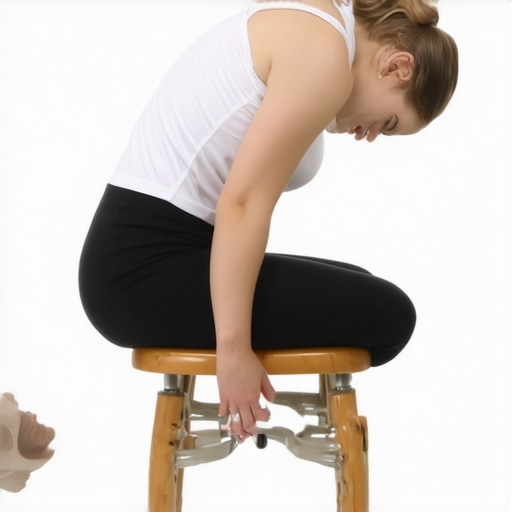
Realign the Frame to Lower the Static
When the structural alignment of your spine is off, it’s like having a kink in a garden hose. No matter how much you massage the end of the hose, the pressure won’t normalize until you straighten the kink. This is where the science behind chiropractic adjustments for back pain relief comes into play. By restoring proper joint mechanics, you take the physical ‘pinch’ off the nerve roots. I’ve found that combining these adjustments with specific movements, like the correct way to stretch your psoas without hurting your spine, creates a window of opportunity where the nervous system finally feels safe enough to let the muscles relax.
The Three-Step Recovery Framework
First, identify the sensation: Is it a dull ache (muscle) or an electric shock (nerve)? Second, test the tension using the slump method. Third, choose the right intervention. If it’s a nerve, stop stretching and focus on decompression. If it’s a muscle, proceed with light load and blood flow. You can significantly boost your sports rehab journey with proven chiropractic strategies by simply respecting this hierarchy. Most people fail because they try to treat a Level 10 nerve flare-up with a Level 10 muscle stretch, which is the biological equivalent of pouring gasoline on a fire.
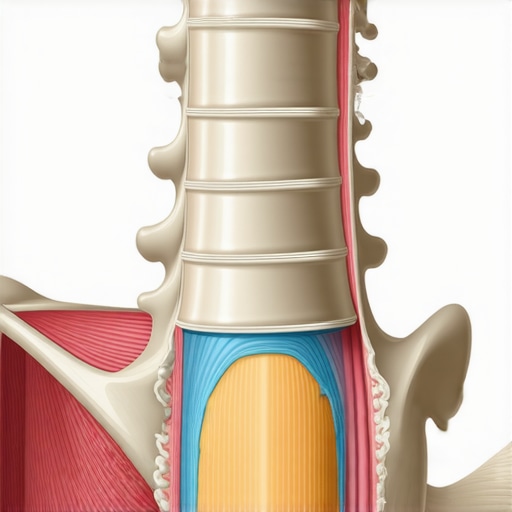
Let’s dig deeper. We have been conditioned to believe that ‘bracing your core’ is the silver bullet for spine protection. If you’ve ever been told to ‘suck your belly button to your spine’ while lifting, you’ve been given outdated advice that might be doing more harm than good. When you over-stiffen your midsection, you create massive intra-abdominal pressure that has nowhere to go but against your spinal discs. In many cases, why most core exercises actually make lower back pain worse is due to this exact lack of ‘compliance’ in the trunk. Your spine needs to function like a suspension bridge, not a concrete pillar. If you lose the ability to breathe and move while maintaining tension, you aren’t protecting your back; you are just compressing it.
Why does your back still hurt even though you are ‘stronger’ than ever?
It is because you are likely confusing rigidity with stability. True stability is the ability to control motion, not to eliminate it entirely. I see this often with athletes who have ‘textbook’ strength but cannot move their pelvis independently of their ribcage. This loss of articulation leads to a situation where the real reason your si joint keeps shifting out of place is not a lack of muscle mass, but a lack of nuanced motor control. You are effectively driving a high-performance car with the parking brake permanently engaged. This ‘over-bracing’ trap creates a cycle of chronic tightness that no amount of traditional stretching can solve.
Then there is the ‘Oops’ factor—the trap of the RICE protocol. For decades, the standard advice was to rest, ice, compress, and elevate. However, modern sports science is moving away from this. A landmark publication in the British Journal of Sports Medicine introduced the ‘PEACE & LOVE’ protocol, highlighting that ice can actually hinder the natural inflammatory process required for proper tissue repair. This is a hard pill to swallow for those of us raised on ice packs, but understanding why icing your sprained ankle might be a huge mistake is critical if you want to avoid long-term scar tissue buildup. By suppressing inflammation, you are essentially delaying your body’s internal construction crew from fixing the site.
Instead of freezing the injury, you need to revolutionize your rehab chiropractic techniques for faster recovery by focusing on early mobilization and neurological resetting. Professional adjustments are not just about the ‘crack’; they are about restoring the sensory input to your brain so your muscles stop over-reacting to perceived threats. When you combine this with essential tips for managing back pain through healthy lifestyle choices, like varied movement and proper hydration, you stop fighting your biology and start working with it. Have you ever fallen into this trap of over-stretching or over-icing? Let me know in the comments.
I used to think that once the ‘zing’ went away, I was in the clear. I’d go back to my old habits, sitting in my car like a collapsed lawn chair, wondering why the pain returned every time I upped my deadlift volume. The reality is that rehab isn’t a destination; it’s a maintenance schedule. If you want to keep the gains you’ve made, you have to treat your spine with the same respect you give your car’s engine. One of the biggest shifts I made was realizing how spinal alignment directly impacts your athletic performance. It is not just about being ‘out of pain’; it is about ensuring the mechanical load is distributed correctly so no single disc takes the brunt of your training.
The Three Gadgets That Actually Stayed in My Gym Bag
I am often asked what I actually use every day, and my answer isn’t a fancy six-hundred-dollar machine. It is a simple slant board and a heavy-duty resistance band. I use the board to restore ankle dorsiflexion because I have learned that enhancing athletic performance with targeted chiropractic care works best when your joints have the room to move. If your ankles are locked, your lower back will always be the first responder. I also live by the ‘Short Foot’ drill. By rooting your big toe into the ground, you create a stable arch that sends a ‘safety’ signal all the way up to your hips. If you haven’t tried it, the 30-second big toe stretch for better squat depth is the entry point to this kind of chain-reaction stability. 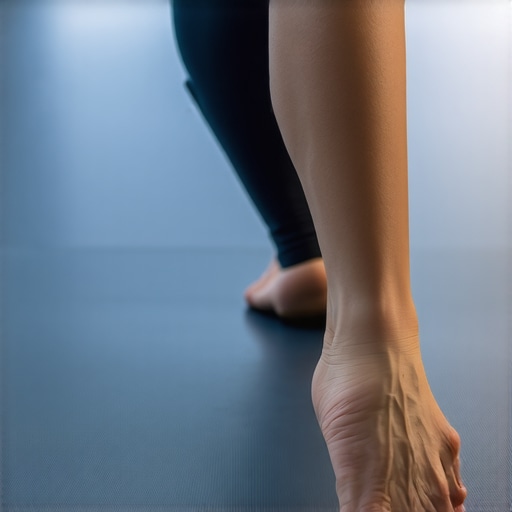
How to Stop Your Back From Backsliding Every Six Months
Dr. Stuart McGill, a titan in spinal biomechanics, emphasizes the concept of ‘spinal hygiene’ in his foundational research. In his book Back Mechanic, he explains that even the way you brush your teeth or put on your socks can either ‘pick the scab’ of a disc injury or allow it to heal. It is the micro-movements, not just the gym sessions, that dictate your long-term success. I predict that in the next five years, we will move away from wearable watches and toward ‘smart fabrics’ that provide bio-feedback when your pelvic tilt shifts out of alignment. We are moving toward a future where we don’t just react to pain; we tune our posture in real-time to prevent the friction before it starts.
How do I maintain these results once the pain is gone?
The secret isn’t doing more work; it is doing smarter work. I focus on the one muscle you arent strengthening for better posture—the multifidus. These tiny muscles along your spine act like guy-wires on a ship’s mast. When they are ‘offline,’ your big prime movers overwork and cramp up. My daily ‘maintenance’ is less than five minutes of targeted activation. It is about keeping the ‘static’ low so you don’t need a major overhaul every time you hit a new PR. Try adding one set of ‘Bird-Dogs’ to your morning routine tomorrow and see if your back feels more ‘glued’ together.
The Hard-Won Lessons From My Rehab Trenches
The biggest epiphany I had was realizing that ‘intensity’ is often the enemy of recovery. I spent years trying to ‘attack’ my back pain, when I really should have been coaxing it into submission. Here is what I know now: your nervous system is a high-security vault; you can’t kick the door down, you need the right combination. Sometimes that combination is as simple as how to safely adjust your own posture throughout the day instead of waiting for a weekly session. Another lightbulb moment? Realizing that the role of chiropractic care in effective sports injury recovery isn’t just about the joints—it’s about recalibrating the signal between your brain and your limbs. If that signal is fuzzy, your performance will always be capped because your body is essentially operating in ‘safe mode.’
My Go-To Stack for a Bulletproof Spine
If you are serious about moving past the ‘flare-up’ cycle, you need a reliable toolkit that extends beyond the gym floor. First, grab a copy of Back Mechanic by Dr. Stuart McGill; it is the absolute gold standard for anyone trying to understand their own spinal mechanics. Second, I never travel without a set of heavy-duty resistance bands to keep my glutes ‘awake,’ especially since I know the pelvic tilt fix for chronic tight hamstrings is a daily requirement to keep my lower back from taking the load. Third, don’t overlook your foundation—check how to tell if your orthotics are actually doing anything because a bad foot position can ruin a perfectly adjusted spine. Finally, find a provider who specializes in unlocking back pain relief expert chiropractic adjustments that work specifically for your athletic goals rather than a one-size-fits-all approach.
Take the First Step Toward Pain-Free Performance
Recovery isn’t about finding a magic pill; it is about building a better relationship with your body’s feedback loops. When you stop bullying your nerves and start respecting your biology, the results are incredible. You can boost your sports rehab journey with proven chiropractic strategies that actually last, but it starts with that first decision to listen to the ‘zing’ instead of ignoring it. Your future self—the one hitting PRs without a week of bed rest afterward—is counting on you to make the smart move today. Have you ever felt that ‘lightning bolt’ sensation in your hip or back and tried to roll it out with a foam roller? Let me know in the comments what happened!