
I’ll never forget the morning a single, stray gym sock nearly ended my walking career. I reached down to grab it, there was a muffled *thud* somewhere in my lower back, and suddenly, the room was spinning. I spent the next three days glued to my living room floor, staring at the underside of the coffee table, convinced my spine had essentially exploded. My doctor used big, clinical words like ‘annular tear’ and ‘protrusion,’ but all I heard was ‘you’ll never lift a heavy grocery bag again.’ I made the massive mistake of treating my back like a fragile glass sculpture, avoiding all movement until I became so stiff I could barely tie my own shoes. I even tried to ‘stretch it out’ by touching my toes, which I later learned was one of those morning stretching routines making me stiffer by noon. This fear-based immobilization is exactly what we need to tackle today. We are going to demystify the difference between a bulge and a herniation so you can stop doom-scrolling through surgery forums and start moving again. Have you ever felt that sharp, electric zap and immediately assumed your athletic days were over?
Stop treating your spine like a broken toy
When I first saw my MRI, I saw a ‘bulge’ and immediately pictured a tire about to blow out on the highway. I was dead wrong. A disc bulge is more like a tire that is slightly under-inflated; the tough outer layer is still intact, but it is pushing out where it shouldn’t. A herniation, however, is when that outer layer actually cracks and the ‘jelly’ inside leaks out. It sounds terrifying, right? But here is the kicker: a landmark study in the New England Journal of Medicine revealed that 64% of people with no back pain at all have disc abnormalities on their scans. The ‘damage’ on the paper isn’t always the ’cause’ of your pain. Early on, I wasted months doing exercises that were actually hurting my herniated disc because I didn’t understand that my body needed stability, not more flexibility. If you learn how to sit without compressing your L5-S1 disc, you are already halfway to winning the battle against the ‘desk-job slump’ that ruins our spines.
Does a herniation actually mean you are destined for surgery?
This is the skepticism I see every time someone gets their results back from the imaging center. People think once the ‘jelly’ is out of the donut, it is game over. I thought so too. I assumed my career as an active person was done. But the truth is, your immune system often treats that leaked material as a foreign invader and actually ‘eats’ it over time. It is a natural process called resorption. You don’t always need a knife; sometimes you just need strategic chiropractic solutions for long-term back health and a lot of patience. Many people successfully manage a bulging disc without using opioids or ever stepping into an operating room. The secret is knowing which one you actually have and how to stop aggravating the nerve while it heals.
Find your movement green light before you do anything else
Most people with a disc bulge make the catastrophic mistake of assuming all movement is good movement. I remember one afternoon trying to ‘stretch out’ my tight legs by touching my toes—the classic gym-class move. My leg instantly lit up like a Christmas tree, with a searing heat traveling from my hip to my heel. I wasn’t stretching a muscle; I was tensioning a nerve that was already screaming because it was being pinched by that disc. This is exactly why stretching your hamstrings wont fix your chronic tightness when the issue is actually neural. You need to identify your ‘directional preference.’ Does leaning backward feel slightly better? Does standing up straight reduce the leg pain? If so, that is your green light. If bending forward or slouching makes the pain travel further down your leg, that is your red light. Stop crossing it. 
Stop chasing flexibility when your spine actually needs a cage
We have been conditioned to believe that ‘stiff’ is always ‘bad’ and ‘flexible’ is always ‘good.’ When you have a disc herniation, your body uses muscle spasms as a protective mechanism to stop you from moving that segment further into the danger zone. I used to fight those spasms with a foam roller, but you should never roll your lower back on a foam roller because it creates excessive extension in an already unstable joint. Instead of trying to loosen up, you need to build a ‘muscular corset.’ Think of it as creating a natural back brace out of your obliques and transverse abdominis. This is often where people fail with the basics; for example, why your glute bridge isnt fixing your lower back pain is usually because you are arching through your spine rather than driving through your hips. Stability is the foundation of recovery.
Why a targeted adjustment beats a general pop every time
You might be tempted to have a friend ‘crack’ your back or try to twist yourself on the floor to get a release. This is a recipe for disaster. When a disc is compromised, the last thing you want is random, high-velocity shearing forces. Professionals look for the ‘stuck’ segments above and below the injury site. If your mid-back is locked up, your lower back has to move twice as much to compensate, which grinds the disc down further. Understanding the science behind chiropractic adjustments for back pain relief helps you realize that we are trying to restore normal motion to the joints that aren’t doing their job, so the injured disc can finally rest. This is a surgical-level precision applied to movement. You are essentially offloading the pressure. When I finally stopped self-adjusting and leaned into expert chiropractic adjustments that work, my recovery speed tripled. It wasn’t about the ‘pop’; it was about clearing the path for my nervous system to stop sending ‘danger’ signals to my brain.
If you are still trying to lift like you did in your 20s while your disc is healing, you are fighting a losing battle. You have to clean up your mechanics. One of the most common mistakes is the hip hinge error causing your sharp lower back stabs, which usually happens because you are rounding your lumbar spine instead of moving through your ball-and-socket hip joints. Listen to what your chiropractor wishes you knew about heavy lifting: your spine is a transmitter of force, not a generator of it. Let your legs do the work.
Ditch the ice pack for better blood flow
We have been told for decades that the moment your back ‘goes out,’ you should reach for a bag of frozen peas. This is a massive trap. While ice might numb the surface, it also constricts blood vessels and potentially stalls the very inflammatory response your body uses to repair damaged tissue. Dr. Gabe Mirkin, the physician who coined the RICE (Rest, Ice, Compression, Elevation) acronym in 1978, has actually recanted the ‘Ice’ and ‘Rest’ portions of his own advice. He now notes that icing may delay healing by preventing the arrival of cells that promote tissue regeneration. Instead of freezing the area, we need to promote blood flow. When you stop icing new injuries and try this instead, you allow the natural ‘cleanup crew’ of your immune system to do its job. If you are stuck in a cycle of numbing the pain rather than fueling the repair, you are just kicking the can down the road. 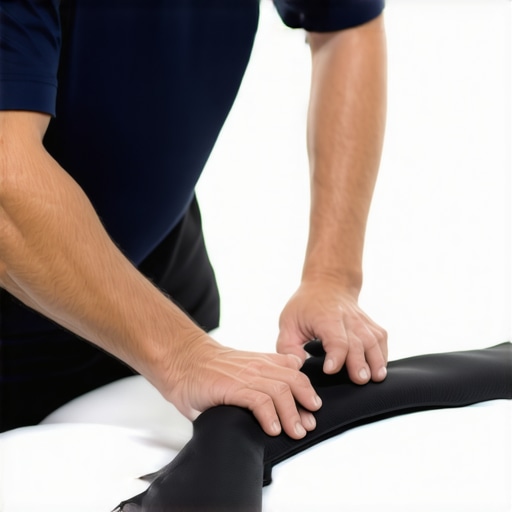
What if your MRI doesn’t tell the whole story?
I see patients every week who are terrified because their imaging report looks like a horror novel. But here is the advanced nuance: your scan is a static picture of a dynamic system. A seminal study published in the American Journal of Neuroradiology (Brinjikji et al., 2015) found that 50% of 30-year-olds with NO pain had disc degeneration, and 40% had disc bulges. By age 50, those numbers jump to 80% and 60%, respectively. This means you cannot treat an image; you have to treat the person. You can find how chiropractic adjustments can alleviate chronic back pain by addressing the functional movements that the MRI misses entirely. Have you ever fallen into the trap of letting a piece of paper dictate what your body is capable of? Let me know in the comments.
Stop the stretch-and-scream cycle
One of the most common mistakes in advanced sports rehab is confusing ‘neurological tension’ with ‘mechanical tightness.’ If your hamstrings feel like steel cables despite daily stretching, you aren’t dealing with short muscles; you are dealing with a nervous system that is ‘battening down the hatches.’ When a disc is irritated, the nerves that travel down your leg become sensitized. Stretching them is like pulling on a live electrical wire. This is why your morning stretching routine is making you stiffer by noon. You are essentially poking a bear with a stick and wondering why it’s growling. We need to shift the focus toward strategic chiropractic solutions for long-term back health that prioritize stability over mindless flexibility.
Why ‘perfect’ posture is a myth designed to sell chairs
The ‘sit up straight’ advice has probably caused more back pain than it has fixed. Staying in any one position—even a ‘perfect’ one—for too long creates static loading on your tissues. The best posture is your *next* posture. True enhancing athletic performance with targeted chiropractic care involves teaching the body to be resilient in various positions, not just one rigid, upright line. When we look at the role of chiropractic care in effective sports injury recovery, the goal is to restore the reflexive stability of your core. You shouldn’t have to think about ‘holding your core’ while you live your life; it should happen automatically. If you are constantly bracing, you are just creating a different kind of tension.I have spent thousands on fancy ergonomic chairs over the years, but I have found that nothing beats the simplicity of a fifteen-dollar lacrosse ball. When those mid-back knots start to burn after a long day at the computer, a foam roller often feels like using a sledgehammer for a thumbtack—it is just too broad to be effective. I much prefer the surgical precision of a firm ball to target the trigger points that actually drive my pain. You can learn exactly how to use a lacrosse ball to melt away mid-back knots by pinning it between your shoulder blades and a sturdy wall, then slowly moving through small ranges of motion. This isn’t just about chasing a good feeling; it is about mechanical release of the fascia that holds your spine in a vice grip.
Switch from blunt foam rollers to precision tools
If you are still rolling your lower back on a foam roller, you are likely just irritating the very discs we’ve been trying to protect. Most people use tools that are far too aggressive for the wrong areas. Dr. Stuart McGill, a world-renowned spine biomechanist and author of Back Mechanic, often emphasizes the concept of the ‘virtual belt.’ This is the idea that our deep core muscles should provide natural stability without us having to consciously suck our stomachs in or brace until we’re blue in the face. To achieve this reflexive stability, you need strategic chiropractic solutions for long-term back health that focus on joint function rather than just temporary relief. It is about recalibrating the nervous system so your internal ‘belt’ stays on automatically, protecting your discs during everyday movements.
How can I keep my spine healthy during a 10-hour drive?
The ‘car seat slump’ is a silent killer for anyone with a history of disc issues. I used to get out of my vehicle after a long trip feeling like a human question mark. Now, I use a specific lumbar roll—or even a tightly rolled-up bath towel—placed slightly higher than the small of the back to maintain that natural curve. Finding the best way to support your lumbar spine while driving long distances can be the absolute difference between arriving at your destination ready for a hike or arriving ready for a three-hour nap and a handful of anti-inflammatories. The key is to avoid the ‘C-shape’ posture that puts maximal pressure on the L5-S1 disc.
The future of back health is predictive rather than reactive
Looking ahead, I predict that within the next five years, we will see a surge in ‘smart’ apparel with embedded textile sensors that monitor spinal shear force in real-time. We won’t have to guess if our deadlift form is slipping or if our posture at the desk has turned toxic; our shirts will likely give us a gentle haptic vibration to correct us before the pain even starts. Until that technology is mainstream, we have to rely on proven chiropractic strategies to keep our internal proprioception sharp. This means training your brain to know where your spine is in space at all times. 
Why maintenance beats a fix-it-when-it-breaks mindset
Scaling your health means moving beyond the ’emergency’ phase where you only call for help when you can’t walk. You wouldn’t wait for your car’s engine to seize before you finally decide to change the oil, right? Yet we do this with our spinal discs every single day. By incorporating essential tips for managing back pain through healthy lifestyle choices, you stop living in fear of the next minor ‘tweak.’ You start building a body that is resilient enough to handle a heavy grocery bag or a sudden movement without a total systemic meltdown. If you really want to revolutionize your rehab, try this one advanced tip: for every thirty minutes you spend sitting, perform three reps of ‘Bruegger’s Relief.’ Sit at the edge of your chair, spread your knees, turn your palms out, and tuck your chin while taking a deep belly breath. It is a ten-second reset that actively fights the ‘desk-job decay’ that ruins so many spines.
The Hard Truths I Learned While Staring at My Own Spinal MRI
After years of trial and error, I realized that my MRI was just a snapshot, not a life sentence. The biggest shift occurred when I stopped trying to ‘fix’ a picture and started to revolutionize my rehab by focusing on how I actually moved. Here are a few things that changed everything for me:
- Pain is a signal, not a measurement of damage: Just because it hurts doesn’t mean you are tearing something further; often, it is just your nervous system being overprotective.
- Movement is the only way out: Resting for more than two days usually makes things worse by letting the muscles that support your spine go dormant.
- Professional guidance beats Google: Finding strategic chiropractic solutions for long-term back health saved me from months of unnecessary ‘wait and see’ suffering.
The Exact Tools I Carry to Keep My Back in Check
I do not leave my health to chance anymore, especially when I am traveling or working long hours. These are the few items I personally vouch for because they target the root of the issue rather than just masking the symptoms. First, I never go on a road trip without knowing how to support my lumbar spine while driving; a simple roll can prevent a week of stiffness. Second, a firm lacrosse ball is my secret weapon for hitting the deep tissue that a foam roller simply misses. Finally, I highly recommend Dr. Stuart McGill’s book, Back Mechanic—it is the gold standard for understanding spinal hygiene.
Your Spine Is Not as Fragile as You Think
It is easy to feel like you are broken when every movement causes a wince, but your body is incredibly resilient. By implementing these essential tips for managing back pain, you are giving your discs the environment they need to heal. You aren’t just managing a condition; you are rebuilding your foundation. The road to recovery isn’t always a straight line, but with the right mechanics and a little patience, you can get back to the activities you love without the constant fear of a ‘flare-up.’ Which part of your recovery feels like the biggest hurdle right now? Let me know below.