
I remember sitting at my desk three years ago, gasping for air like I had just finished a sprint, even though I hadn’t moved for hours. My chest felt like it was encased in a lead vest. I tried to take a deep inhale, but I hit a hard wall halfway through. For months, I blamed stress, caffeine, and even my dusty office. I made the classic mistake of focusing only on my lungs, completely ignoring the fact that my lungs are housed inside a mechanical cage of bone and muscle. That lightbulb moment happened when a colleague pointed out how restricted my mid-back was. Today, I am going to show you how a stiff spine is actually the silent thief of your oxygen and how we can unlock that cage together.
Your Ribcage Needs to Move Like an Accordion
If your mid-back—what we call the thoracic spine—is locked up, your ribs can’t pivot. Think of your ribcage like a series of bucket handles. When you breathe in, those handles need to lift up and out. If the joints where your ribs meet your spine are jammed, those handles stay stuck down. I used to think that how to breathe through your belly for instant lower back relief was the only fix I needed, but you cannot belly breathe effectively if your upper structure is rigid. When a chiropractor performs a thoracic adjustment, they are essentially greasing the hinges of that accordion. According to research published in the Journal of Manipulative and Physiological Therapeutics, spinal manipulative therapy has been shown to provide immediate improvements in respiratory function and lung volume by reducing chest wall restriction. This isn’t just about ‘feeling loose’; it is about the physics of airflow. Have you ever felt that weird, sharp ‘catch’ in your mid-back that makes you stop halfway through a deep breath?
Wait, can a chiropractor actually help me breathe better?
I get the skepticism. Most people think of chiropractors for a kinked neck or a thrown-out lower back. But your nervous system controls your diaphragm, and your ribs provide the room for your lungs to expand. If you are dealing with a rib subluxation, no amount of ‘just relaxing’ will fix the mechanical blockage. I spent way too much time trying the lung drill that instantly lowers your stress without addressing the underlying spinal stiffness, which was like trying to fill a balloon inside a glass jar. Once the joints are moving, the muscles around them can finally stop guarding, allowing for that full, satisfying inhale you’ve been missing. Setting the stage for better breathing starts with realizing that your posture and your breath are two sides of the same coin.
Melt the Knots Holding Your Ribs Hostage
Before you can even think about fixing your spinal alignment, you have to address the soft tissue that is acting like a straightjacket. When you are stiff, the muscles between your shoulder blades—the rhomboids and middle trapezius—get locked in a stretched, weak position. They are constantly under tension, trying to pull your shoulders back against the gravity of your desk posture. To break this cycle, I recommend my patients learn how to use a lacrosse ball to melt away mid-back knots. Place the ball between your shoulder blade and your spine, lean against a wall, and find that one spot that makes you wince. Don’t just roll; hold it there and take a slow breath. You are signaling to your nervous system that it is safe to let go. This isn’t just about comfort; it is about prepping the area so a chiropractic adjustment can actually ‘take.’ 
Stop Chasing the Click
I’ve seen so many people try to self-adjust by twisting violently in their office chair. You might hear a pop, but you are likely just moving the segments that are already hyper-mobile. This is precisely why your upper back feels like it needs to pop constantly. You are temporarily relieving pressure in the wrong places while the truly stuck joints remain jammed. I remember a specific patient, Dave, who came to me after a month of ‘self-cracking’ his back every twenty minutes. He was frustrated because his breathing felt shorter every day. When we looked at his thoracic spine, his T6 and T7 vertebrae were essentially fused in place by muscle guarding. Once we performed a specific, targeted adjustment, he didn’t just hear a sound; he felt his lungs drop into his belly for the first time in weeks. That is the power of unlocking back pain relief expert chiropractic adjustments that work specifically on the mechanical restriction, not just chasing a noise.
Train Your Body to Keep the Space Open
Once the ‘hinges’ are greased, you have to keep them moving, or your brain will default back to the old, restricted pattern. I focus on two movements that act as insurance for your breath. First, you need to master the thoracic extension move that saves your shoulders. It involves using a foam roller or even the back of a sturdy chair to pivot your mid-back into extension. This reverses the ‘C-shape’ we all fall into. Second, you must integrate how to use a wall slide to fix rounded shoulders. By sliding your arms up the wall while keeping your ribs tucked, you force the muscles in your upper back to work in a shortened position, stabilizing the mobility you just gained.
Switch to Diaphragmatic Breathing for Long-Term Ease
After you’ve addressed the mechanical blockages, you have to retrain the ‘software.’ Most of us are chest breathers, using our neck and shoulder muscles to pull air in. This is inefficient and keeps your body in a state of high alert. Learning how to use diaphragmatic breathing to calm your nervous system is the final piece of the puzzle. When your ribs can move and your spine is aligned, your diaphragm can finally descend properly, massaging your internal organs and providing the deep, oxygen-rich breaths that fuel recovery and focus. If you find your breath is still shallow, look at your workspace setup; small changes like knowing how to set up your laptop for better neck alignment can prevent you from slumping back into that ‘oxygen-starved’ posture by the end of the day.In the world of sports rehab, there is a dangerous obsession with flexibility. We’ve been conditioned to believe that if a muscle feels tight, we must pull it apart like a rubber band. But here is the nuance most people miss: tightness is frequently a protective strategy by your nervous system, not a structural length issue. If your brain senses instability in your spine, it will ‘clamp down’ on the surrounding muscles to prevent injury. If you just keep stretching, you are essentially trying to disable your body’s own safety brakes. This is why stretching your hamstrings won’t fix your chronic tightness if the root cause is actually coming from a pelvic tilt or spinal instability.
Stop stretching your tightest muscles
The ‘Oops’ factor I see most often is ‘chasing the symptom.’ You feel pain in your mid-back, so you roll it out for an hour. But have you considered that your mid-back is working overtime because your lower back is unstable? According to a study in the Journal of Bodywork and Movement Therapies, addressing global movement patterns—rather than just isolated joints—is significantly more effective for long-term resolution of musculoskeletal pain. You need strategic chiropractic solutions for long-term back health that look at your body as an integrated machine, not a collection of parts. 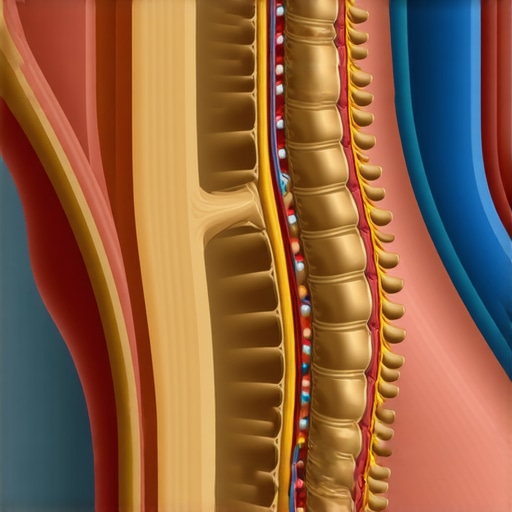
Why does my back feel tight again just two days after an adjustment?
This is a question I get from my most dedicated athletes. The truth is, an adjustment clears the path, but it doesn’t rewrite the muscle memory on its own. This is the truth about why your adjustments don’t seem to last: if you don’t reinforce the new range of motion with stability exercises, your brain will revert to its ‘safe’ (stiff) pattern within 48 hours. To truly boost your sports rehab journey with proven chiropractic strategies, you must pair the manual work with active drills. Have you ever fallen into this trap of over-stretching only to feel tighter the next day? Let me know in the comments.
Maintaining the space we’ve created in your ribcage and spine isn’t about being a gym rat; it’s about being a mechanic for your own body. I tell my patients that an adjustment is like a software update, but your daily habits are the hardware that needs to support it. To really revolutionize your rehab chiropractic techniques for faster recovery, you need a few non-negotiable tools. Personally, I never travel without a high-density lacrosse ball and a set of mobility bands. Why? Because the lacrosse ball allows for ‘tack and stretch’—a method popularized by Dr. Kelly Starrett in ‘The Supple Leopard’—which shears the fascia away from the muscle fibers. This isn’t just a massage; it’s a manual reset of the sliding surfaces in your mid-back. When those surfaces slide, your ribs can expand, and your enhancing athletic performance with targeted chiropractic care becomes much easier because you aren’t fighting your own connective tissue.

Build a fortress around your spine
The most advanced tool I’ve integrated lately is monitoring my Heart Rate Variability (HRV). It sounds high-tech, but your nervous system’s state is the ultimate indicator of whether your spine is under too much load. In fact, clinical observations suggest how regular adjustments can lower your resting heart rate by shifting you out of a sympathetic ‘fight or flight’ state. If my HRV is low, I know my thoracic spine is likely tightening up as a stress response. Instead of pushing through a heavy lift that might lead to a rib ‘pop,’ I’ll pivot to a decompressing session. You can’t out-train a nervous system that thinks it’s being chased by a bear. Incorporating strategic chiropractic solutions for long-term back health means listening to these digital signals before they become physical pain.
How do I keep my spine in check long-term?
Consistency beats intensity every single time. You don’t need an hour of stretching; you need thirty seconds of the right movement every few hours. I predict that in the next few years, we will see AI-powered wearable sensors that vibrate the moment your thoracic spine loses its neutral curve, effectively acting as a digital coach in your pocket. Until then, you have to be your own sensor. This is where essential tips for managing back pain through healthy lifestyle choices come into play—like auditing your workstation or varying your sitting positions. If you want to see an immediate difference, I want you to try one thing today: set a timer for every 60 minutes and perform the 10-second posture reset you can do at your desk. It forces your brain to re-map where your shoulders should actually sit. Stop waiting for the pain to return before you take action; treat your mobility like you treat your dental hygiene.
The Breakthrough Moments I Had While Learning to Breathe Again
Reflecting on my journey and the hundreds of patients I’ve worked with, a few truths stand out that you won’t find in a standard medical textbook. First, your body is incredibly smart; that feeling of “tightness” is often a protective guard, not a structural flaw. I realized that the truth about why your adjustments don’t seem to last is usually because we forget to tell our brain that the new range of motion is safe through movement.
Second, I stopped chasing the “pop” and started chasing the function. A loud crack might feel good for five minutes, but if your breathing doesn’t improve, the adjustment didn’t hit the mark. I also learned that how spinal alignment directly impacts your athletic performance isn’t just about strength—it’s about the metabolic efficiency of every single breath you take during a workout.
#IMAGE_PLACEHOLDER_E#
My Personal Survival Kit for Spine Health
I don’t believe in cluttering your life with expensive gadgets, but a few specific tools make all the difference in maintaining the space we’ve created. I always recommend a firm lacrosse ball to my patients—knowing how to use a lacrosse ball to melt away mid-back knots is like having a therapist in your gym bag. Additionally, I suggest tracking your recovery with an HRV monitor. It’s fascinating to see how regular adjustments can lower your resting heart rate by calming the nervous system. Finally, invest in a quality foam roller to perform the thoracic extension move that saves your shoulders every evening before bed.
Take Your First Full Inhale Today
You don’t have to live with a chest that feels like it’s in a vice. By combining manual care with consistent daily habits, you can reclaim the oxygen that a stiff spine has been stealing from you. Implementing essential tips for managing back pain through healthy lifestyle choices will ensure that your results aren’t just temporary fixes, but permanent changes. Remember, your ribcage was designed to expand; don’t let a desk job or old injuries keep it locked in a cage. Experience the difference that targeted chiropractic adjustments can make for your vitality. Have you ever felt that sharp ‘catch’ in your back when trying to take a deep breath? Let me know in the comments below!