
It happened on a breezy Tuesday afternoon. I was feeling great, took a sharp turn on the trail, and then it felt like a heavy rubber band snapped against the back of my thigh. I literally looked around to see who had hit me with a rock. No one was there. It was just my own body giving up on me because I was too stubborn to prep correctly. That “pop” is a sound you never forget, and it usually means weeks of hobbling around. I spent far too much time learning the hard way that traditional advice often misses the mark. Today, I’m going to share the exact routine that took me from a guy who pulled a muscle every spring to someone who can sprint for the bus without a second thought. Have you ever felt that sudden, terrifying sharp tightness halfway through a workout and wondered if your playing days were over?
Stop Thinking Like a 1980s Track Coach
For years, I made a massive mistake: I’d stand there and reach for my toes for thirty seconds before I even broke a sweat. I thought I was “loosening up,” but science actually tells us a different story. According to a study published in the Journal of Strength and Conditioning Research, static stretching before explosive activity can actually reduce muscle strength by over 5%, making you more prone to injury, not less. I learned that why stretching your hamstrings won’t fix your chronic tightness is often because the muscle is already over-lengthened and stressed. Instead of pulling on a cold rubber band, we need to get the blood flowing and the nervous system awake. I’ve found that focusing on the pelvic tilt fix for chronic tight hamstrings changed everything for my lower back and leg health. It’s not just about the muscle itself; it’s about how your hips are positioned before you even take your first stride. If you’ve been struggling with a nagging ache, understanding the role of chiropractic care in effective sports injury recovery can help realign the system so your warm-up actually sticks.
Is a five-minute routine actually enough to save my season?
Look, I’m a neighbor, not a drill sergeant. I know you want to get to the fun part of your workout. But those five minutes are the difference between a great afternoon and a month of physical therapy. When I finally started using the hip mobility secret for better sprinting, my legs felt light and springy rather than heavy and brittle. We aren’t just moving for the sake of moving; we are telling the brain that it is safe to let the muscles fire at full capacity. If you’ve already felt a twinge, don’t panic, but do look into how to recover faster from a hamstring strain using active release to break up that scar tissue. In the following sections, I’ll break down the three movements that replaced my old, useless stretches and kept me on the field for the last three years straight.
Wake Up Your Glutes Before They Leave You Hanging
Imagine your hamstrings as the support cables on a bridge. They can handle a massive amount of tension, but if the bridge’s main pillars—your glutes—aren’t doing their job, those cables are going to fray and eventually snap. Most of us spend our days sitting, which effectively puts our glutes into a deep sleep. When we suddenly decide to sprint or lift, our hamstrings have to do double duty, which is a recipe for disaster. I’ve found that understanding why your glutes won’t fire during your workout is the first step toward actual safety. If the brain can’t find the glutes, it will demand everything from the hamstrings, leading to that dreaded ‘tight’ feeling that no amount of stretching will ever fix.
The specific move that saved my touch football season
I remember a game of touch football about six months after my first major strain. I was tentative, almost afraid to move. My chiropractor had just started me on a specific routine, and I decided to test it out. I spent three minutes doing the glute medius drill for faster lateral cuts before the first whistle. It felt clunky at first, like my brain was trying to find a lost radio signal. But by the second quarter, for the first time in a year, that ‘ghost’ pain in the back of my leg was gone. I wasn’t just faster; I felt stable. I realized then that my hamstring wasn’t the problem—it was just a victim of my lazy hips.

Get Your Spine in Line to Protect Your Limbs
Think of a chiropractic adjustment as a master reset for your body’s electrical panel. If you have a blown fuse in your lower back, the lights in your legs aren’t going to shine very bright. This isn’t just about ‘cracking’ your back for relief; it’s about neural drive. We’ve seen time and again how spinal alignment directly impacts your athletic performance by ensuring that the signals from your brain to your hamstrings are clear and powerful. When the vertebrae are misaligned, it creates a subtle but constant state of stress in the surrounding muscles. By enhancing athletic performance with targeted chiropractic care, you are essentially cleaning the rust off the gears so they can turn without grinding.
Ditch the ice and start moving the right way
If you do feel a slight twinge, the old-school advice was to reach for the ice pack and sit on the couch. That’s a mistake that delayed my recovery by weeks. Modern sports rehab tells us to stop icing new injuries and try this instead: gentle, controlled movement that promotes blood flow without adding stress. Ice can actually shut down the healing process by constricting the very vessels needed to clear out damage. Instead, focus on light mobility work that keeps the joints moving and the nervous system calm. This approach signals to your body that it is safe to begin the repair phase rather than staying stuck in a cycle of inflammation and stiffness.
Let’s get one thing straight: your spine isn’t a stack of Jenga blocks. For the longest time, I fell into the trap of believing my back was just ‘out of place’ and needed to be ‘shoved back in.’ This is perhaps the biggest myth in the world of sports recovery. In reality, a chiropractic adjustment isn’t a mechanical sledgehammer; it is a precision input to your nervous system. When you’re dealing with a chronic injury, you need to understand how to identify if your back pain is muscular or nerve related before you can even begin the right treatment. Chasing the symptoms of a tight hamstring while ignoring the neurological drive behind it is like trying to fix a flickering lightbulb by painting the walls.
The bone-out-of-place myth is slowing down your recovery
The contrarian view I’ve come to embrace—and one backed by clinical experience—is that the ‘crack’ or ‘pop’ you hear is often the least important part of the session. That sound is just gas being released from the joint capsule. The real magic happens when the adjustment resets the communication between your brain and your muscles. According to a study in the Journal of Manipulative and Physiological Therapeutics, spinal manipulation can significantly decrease muscle inhibition, which is the brain’s way of ‘turning off’ a muscle it thinks is injured. This is why the science behind chiropractic adjustments for back pain relief is so much more complex than simple bone movement. If you’ve been stuck in a cycle of injury, you might just be dealing with a ‘software’ glitch in your nervous system rather than a ‘hardware’ problem in your muscles.
Why does that amazing relief vanish by the time you reach your car?
This is the question that separates the beginners from the pros. If you get adjusted, feel like a superhero for twenty minutes, and then tighten right back up, you’ve hit the most common ‘trap’ in sports rehab. The adjustment opened the window of opportunity, but you failed to walk through it. I learned the hard way that the truth about why your adjustments don’t seem to last usually comes down to what you do in the 24 hours following the session. You have to ‘lock in’ that new range of motion with specific movement patterns. If you just go back to sitting in a slumped chair or wearing the same worn-out sneakers, your brain will revert to its old, protective patterns of tightness.
Look below the surface to find the real culprit
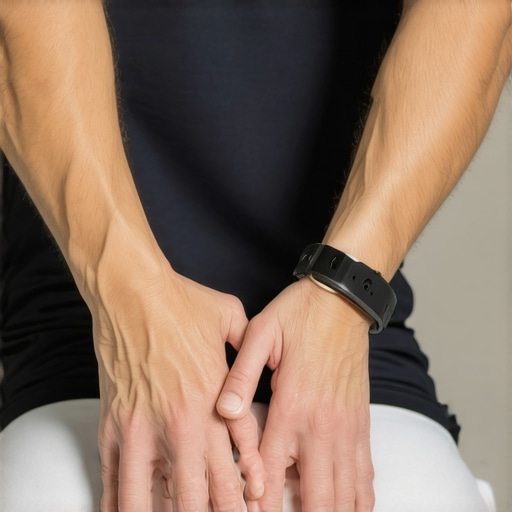
I once worked with a runner who had ‘hamstring’ issues for three years. We adjusted his low back, we did the glute work, and he’d still flare up. It wasn’t until we looked at his footwear that we realized why your running shoes might be the cause of your shin splints and, by extension, his entire posterior chain tension. The feet are the foundation. If they are sending ‘instability’ signals up the leg, your hamstrings will tighten as a secondary defense mechanism. By unlocking back pain relief expert chiropractic adjustments that work in tandem with looking at your biomechanics from the ground up, you stop playing whack-a-mole with your pain. Have you ever fallen into this trap of treating the site of the pain rather than the source? Let me know in the comments below.
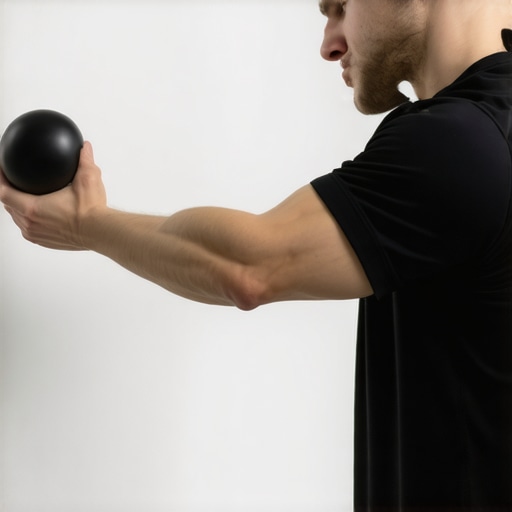
I spent years treating my body like a car that I only took to the mechanic when the engine started smoking. That is the maintenance trap that most of us fall into. We wait for the pain to become unbearable before we seek help, but real longevity in sports rehab comes from active ownership of your movement. One tool I swear by isn’t a thousand-dollar pair of recovery boots; it is a simple, hard rubber lacrosse ball. I use it because it is dense enough to provide targeted pressure that a soft foam roller simply cannot reach. However, you have to be smart about your applications. For instance, understanding why you should never roll your lower back on a foam roller is a lesson I learned the hard way after accidentally making my own muscular spasms worse. Instead, I use the ball to hunt for trigger points in my glutes and upper back to keep the system fluid.
The Two-Dollar Tool That Beats Expensive Gadgets
If you are struggling with those deep, nagging knots, learning how to use a lacrosse ball to melt away mid-back knots will save you hours of discomfort and hundreds of dollars in temporary fixes. I personally keep one in my gym bag and one in my car. The goal isn’t to bruise the tissue but to create a neurological release. Dr. Stuart McGill, a world-renowned expert in spine biomechanics and author of Back Mechanic, emphasizes that spine hygiene—the way we move during daily tasks—is often more important than any single exercise we do in the gym. This means you need to look at how to sit without compressing your l5-s1 disc during your nine-to-five, or all the adjustments in the world won’t stick.
How do I keep my spine happy without visiting the clinic every week?
It really comes down to the cumulative effect of small, daily habits. I have found that strategic chiropractic solutions for long-term back health aren’t just about the time you spend on the table; they are about the integration of that alignment into your lifestyle. For example, I have completely overhauled my driving posture because why your lumbar spine hates your car seat is a primary driver of chronic lower back tightness. Even something as small as mastering the secret to staying adjusted while sleeping on your side can make a massive difference over months of training and recovery.
Looking ahead, I predict we are moving toward a world where real-time biofeedback—think sensors embedded in your training gear that vibrate when your scapula loses its setting—will become the gold standard. We will be able to boost your sports rehab journey with proven chiropractic strategies that are backed by 24/7 data on your movement quality. Until that technology is in every home, you have to rely on your internal awareness and professional guidance to stay ahead of the curve. Go try the 10-second posture reset you can do at your desk right now. It sounds too simple to be effective, but doing it consistently is the key to breaking the cycle of stiffness.
It happened on a breezy Tuesday afternoon. I was feeling great, took a sharp turn on the trail, and then it felt like a heavy rubber band snapped against the back of my thigh. I literally looked around to see who had hit me with a rock. No one was there. It was just my own body giving up on me because I was too stubborn to prep correctly. That “pop” is a sound you never forget, and it usually means weeks of hobbling around. I spent far too much time learning the hard way that traditional advice often misses the mark. Today, I’m going to share the exact routine that took me from a guy who pulled a muscle every spring to someone who can sprint for the bus without a second thought. Have you ever felt that sudden, terrifying sharp tightness halfway through a workout and wondered if your playing days were over?
Stop Thinking Like a 1980s Track Coach
For years, I made a massive mistake: I’d stand there and reach for my toes for thirty seconds before I even broke a sweat. I thought I was “loosening up,” but science actually tells us a different story. According to a study published in the Journal of Strength and Conditioning Research, static stretching before explosive activity can actually reduce muscle strength by over 5%, making you more prone to injury, not less. I learned that why stretching your hamstrings won’t fix your chronic tightness is often because the muscle is already over-lengthened and stressed. Instead of pulling on a cold rubber band, we need to get the blood flowing and the nervous system awake. I’ve found that focusing on the pelvic tilt fix for chronic tight hamstrings changed everything for my lower back and leg health. It’s not just about the muscle itself; it’s about how your hips are positioned before you even take your first stride. If you’ve been struggling with a nagging ache, understanding the role of chiropractic care in effective sports injury recovery can help realign the system so your warm-up actually sticks.
Is a five-minute routine actually enough to save my season?
Look, I’m a neighbor, not a drill sergeant. I know you want to get to the fun part of your workout. But those five minutes are the difference between a great afternoon and a month of physical therapy. When I finally started using the hip mobility secret for better sprinting, my legs felt light and springy rather than heavy and brittle. We aren’t just moving for the sake of moving; we are telling the brain that it is safe to let the muscles fire at full capacity. If you’ve already felt a twinge, don’t panic, but do look into how to recover faster from a hamstring strain using active release to break up that scar tissue. In the following sections, I’ll break down the three movements that replaced my old, useless stretches and kept me on the field for the last three years straight.
Wake Up Your Glutes Before They Leave You Hanging
Imagine your hamstrings as the support cables on a bridge. They can handle a massive amount of tension, but if the bridge’s main pillars—your glutes—aren’t doing their job, those cables are going to fray and eventually snap. Most of us spend our days sitting, which effectively puts our glutes into a deep sleep. When we suddenly decide to sprint or lift, our hamstrings have to do double duty, which is a recipe for disaster. I’ve found that understanding why your glutes won’t fire during your workout is the first step toward actual safety. If the brain can’t find the glutes, it will demand everything from the hamstrings, leading to that dreaded ‘tight’ feeling that no amount of stretching will ever fix.
The specific move that saved my touch football season
I remember a game of touch football about six months after my first major strain. I was tentative, almost afraid to move. My chiropractor had just started me on a specific routine, and I decided to test it out. I spent three minutes doing the glute medius drill for faster lateral cuts before the first whistle. It felt clunky at first, like my brain was trying to find a lost radio signal. But by the second quarter, for the first time in a year, that ‘ghost’ pain in the back of my leg was gone. I wasn’t just faster; I felt stable. I realized then that my hamstring wasn’t the problem—it was just a victim of my lazy hips.
Get Your Spine in Line to Protect Your Limbs
Think of a chiropractic adjustment as a master reset for your body’s electrical panel. If you have a blown fuse in your lower back, the lights in your legs aren’t going to shine very bright. This isn’t just about ‘cracking’ your back for relief; it’s about neural drive. We’ve seen time and again how spinal alignment directly impacts your athletic performance by ensuring that the signals from your brain to your hamstrings are clear and powerful. When the vertebrae are misaligned, it creates a subtle but constant state of stress in the surrounding muscles. By enhancing athletic performance with targeted chiropractic care, you are essentially cleaning the rust off the gears so they can turn without grinding.
Ditch the ice and start moving the right way
If you do feel a slight twinge, the old-school advice was to reach for the ice pack and sit on the couch. That’s a mistake that delayed my recovery by weeks. Modern sports rehab tells us to stop icing new injuries and try this instead: gentle, controlled movement that promotes blood flow without adding stress. Ice can actually shut down the healing process by constricting the very vessels needed to clear out damage. Instead, focus on light mobility work that keeps the joints moving and the nervous system calm. This approach signals to your body that it is safe to begin the repair phase rather than staying stuck in a cycle of inflammation and stiffness.
Let’s get one thing straight: your spine isn’t a stack of Jenga blocks. For the longest time, I fell into the trap of believing my back was just ‘out of place’ and needed to be ‘shoved back in.’ This is perhaps the biggest myth in the world of sports recovery. In reality, a chiropractic adjustment isn’t a mechanical sledgehammer; it is a precision input to your nervous system. When you’re dealing with a chronic injury, you need to understand how to identify if your back pain is muscular or nerve related before you can even begin the right treatment. Chasing the symptoms of a tight hamstring while ignoring the neurological drive behind it is like trying to fix a flickering lightbulb by painting the walls.
The bone-out-of-place myth is slowing down your recovery
The contrarian view I’ve come to embrace—and one backed by clinical experience—is that the ‘crack’ or ‘pop’ you hear is often the least important part of the session. That sound is just gas being released from the joint capsule. The real magic happens when the adjustment resets the communication between your brain and your muscles. According to a study in the Journal of Manipulative and Physiological Therapeutics, spinal manipulation can significantly decrease muscle inhibition, which is the brain’s way of ‘turning off’ a muscle it thinks is injured. This is why the science behind chiropractic adjustments for back pain relief is so much more complex than simple bone movement. If you’ve been stuck in a cycle of injury, you might just be dealing with a ‘software’ glitch in your nervous system rather than a ‘hardware’ problem in your muscles.
Why does that amazing relief vanish by the time you reach your car?
This is the question that separates the beginners from the pros. If you get adjusted, feel like a superhero for twenty minutes, and then tighten right back up, you’ve hit the most common ‘trap’ in sports rehab. The adjustment opened the window of opportunity, but you failed to walk through it. I learned the hard way that the truth about why your adjustments don’t seem to last usually comes down to what you do in the 24 hours following the session. You have to ‘lock in’ that new range of motion with specific movement patterns. If you just go back to sitting in a slumped chair or wearing the same worn-out sneakers, your brain will revert to its old, protective patterns of tightness.
Look below the surface to find the real culprit
I once worked with a runner who had ‘hamstring’ issues for three years. We adjusted his low back, we did the glute work, and he’d still flare up. It wasn’t until we looked at his footwear that we realized why your running shoes might be the cause of your shin splints and, by extension, his entire posterior chain tension. The feet are the foundation. If they are sending ‘instability’ signals up the leg, your hamstrings will tighten as a secondary defense mechanism. By unlocking back pain relief expert chiropractic adjustments that work in tandem with looking at your biomechanics from the ground up, you stop playing whack-a-mole with your pain. Have you ever fallen into this trap of treating the site of the pain rather than the source? Let me know in the comments below.
I spent years treating my body like a car that I only took to the mechanic when the engine started smoking. That is the maintenance trap that most of us fall into. We wait for the pain to become unbearable before we seek help, but real longevity in sports rehab comes from active ownership of your movement. One tool I swear by isn’t a thousand-dollar pair of recovery boots; it is a simple, hard rubber lacrosse ball. I use it because it is dense enough to provide targeted pressure that a soft foam roller simply cannot reach. However, you have to be smart about your applications. For instance, understanding why you should never roll your lower back on a foam roller is a lesson I learned the hard way after accidentally making my own muscular spasms worse. Instead, I use the ball to hunt for trigger points in my glutes and upper back to keep the system fluid.
The Two-Dollar Tool That Beats Expensive Gadgets
If you are struggling with those deep, nagging knots, learning how to use a lacrosse ball to melt away mid-back knots will save you hours of discomfort and hundreds of dollars in temporary fixes. I personally keep one in my gym bag and one in my car. The goal isn’t to bruise the tissue but to create a neurological release. Dr. Stuart McGill, a world-renowned expert in spine biomechanics and author of Back Mechanic, emphasizes that spine hygiene—the way we move during daily tasks—is often more important than any single exercise we do in the gym. This means you need to look at how to sit without compressing your l5-s1 disc during your nine-to-five, or all the adjustments in the world won’t stick.
How do I keep my spine happy without visiting the clinic every week?
It really comes down to the cumulative effect of small, daily habits. I have found that strategic chiropractic solutions for long-term back health aren’t just about the time you spend on the table; they are about the integration of that alignment into your lifestyle. For example, I have completely overhauled my driving posture because why your lumbar spine hates your car seat is a primary driver of chronic lower back tightness. Even something as small as mastering the secret to staying adjusted while sleeping on your side can make a massive difference over months of training and recovery.
Looking ahead, I predict we are moving toward a world where real-time biofeedback—think sensors embedded in your training gear that vibrate when your scapula loses its setting—will become the gold standard. We will be able to boost your sports rehab journey with proven chiropractic strategies that are backed by 24/7 data on your movement quality. Until that technology is in every home, you have to rely on your internal awareness and professional guidance to stay ahead of the curve. Go try the 10-second posture reset you can do at your desk right now. It sounds too simple to be effective, but doing it consistently is the key to breaking the cycle of stiffness.
Why Most Athletes Get Trapped in a Cycle of Temporary Relief
The hardest lesson I ever learned wasn’t about a specific stretch; it was realizing that my brain was smarter than my muscles. When I felt tight, I assumed the muscle was physically too short. In reality, my nervous system was simply applying the brakes because it didn’t feel stable. If you are constantly seeking ways to discover how chiropractic adjustments can alleviate chronic back pain without changing your movement patterns, you’re only fixing half the equation. I stopped asking ‘why is this muscle tight?’ and started asking ‘why is my brain afraid to let this muscle go?’ This shift in perspective is what finally allowed me to revolutionize your rehab chiropractic techniques for faster recovery and stop the endless loop of pulls and strains.
#IMAGE_PLACEHOLDER_E#
My Go-To Tools for Staying Supple Between Sessions
You don’t need a professional training room to see professional results. My daily toolkit is remarkably simple. First, I never travel without a dense lacrosse ball for targeted release work—it fits in a carry-on and saves me from post-flight stiffness. Second, I’ve become a student of spine hygiene, ensuring that my daily posture isn’t undoing my progress. I also recommend checking out essential tips for managing back pain through healthy lifestyle choices to see how sleep and hydration play a massive role in tissue quality. These aren’t just ‘extras’; they are the foundation that makes your clinical visits three times more effective.
Take Ownership of Your Athletic Longevity Today
It is incredibly easy to feel like your body is a ticking time bomb after a major injury. I’ve been there—scared to jump and hesitant to sprint. But once you realize that you have the tools to boost your sports rehab journey with proven chiropractic strategies, that fear begins to fade. You aren’t just managing pain; you are optimizing a high-performance machine. The road to recovery isn’t a straight line, but with the right alignment and daily discipline, you can get back to doing what you love. Have you ever felt like your ‘tightness’ was actually your body trying to protect you from a different underlying issue? Let me know in the comments below.