
I was standing on a thirty-inch box, feeling like an absolute beast, until the twelfth rep of my third set changed everything. I landed with a thud that felt like it echoed all the way up to my teeth, followed immediately by a searing, white-hot sting right under my kneecap. It wasn’t a dramatic pop, but a slow, burning realization that every “explosive” workout I had done for months was actually just a countdown to chronic injury. If you have ever felt that sharp, nagging ache below your kneecap after a game of pickup basketball or a heavy leg day, you are not alone. I spent years thinking I was building elite athleticism, only to find out I was making one fundamental error that almost ended my time on the court. Today, I am going to show you exactly how to stop that damage before it becomes a permanent fixture in your life.
Stop Obsessing Over the Jump and Start Fixing the Landing
The biggest mistake I made early on—and I see this in almost every gym I walk into—is being obsessed with the ‘up’ while completely ignoring the ‘down.’ We celebrate the vertical leap, but we forget that the patellar tendon acts like a massive, high-tension shock absorber. When you land stiff-legged or let your knees cave inward, you are essentially hammer-drilling your connective tissue into the floor. Research published in the Journal of Orthopaedic & Sports Physical Therapy indicates that the patellar tendon can experience loads up to 6 to 8 times your body weight during landing tasks. That is a staggering amount of force for a small strip of tissue to handle if your mechanics are off. Oftentimes, ankle stiffness is the real cause of your knee pain because your body has to find that missing range of motion somewhere else, usually by overtaxing the knee joint. Have you ever noticed your knees feeling “hot” or incredibly stiff the morning after a jump-heavy session? I would love to hear if you have faced that specific struggle, because that is the first red flag your body waves at you.
Is high-impact training actually worth the risk to your joints?
It is a fair question to ask when you are icing your knees for the third time this week. You might wonder if you should just stick to the elliptical and call it a day. But the truth is, plyometrics are vital for enhancing athletic performance with targeted chiropractic care and proper strength training. The issue isn’t the jumping itself; it is the lack of “brake” power in your nervous system. I used to think my knee clicking every time I squatted was just a sign of getting older, but it was actually a sign of poor patellar tracking caused by weak glutes and terrible landing habits. When your mechanics are dialed in, plyometrics actually strengthen your tendons over time. When they aren’t, you are just accelerating wear and tear. If you have struggled with this, you might even find that proven chiropractic strategies can help reset your alignment so your muscles actually fire when they are supposed to. Now, let’s look at the specific mechanical shift that saved my knees.
Landing Like a Ninja to Save Your Cartilage
Imagine your body is a high-end mountain bike. If the shocks are locked out, every rock you hit sends a jarring shudder through the frame. Your knees are those shocks. To stop the ‘white-hot sting’ I mentioned earlier, you have to master the eccentric load—the lowering phase of the jump. I remember training in a thin-floored attic once where I had to land so quietly the person downstairs wouldn’t hear a peep. That constraint forced me to sit back into my hips rather than catching all the weight on my toes. It turns out, that ‘stealth mode’ was exactly what my patellar tendons needed. When you land, your hips should move back first. This is the same hip hinge secret for people with chronic lumbar issues that protects your spine; it creates a massive lever for your glutes to absorb energy instead of your kneecaps. 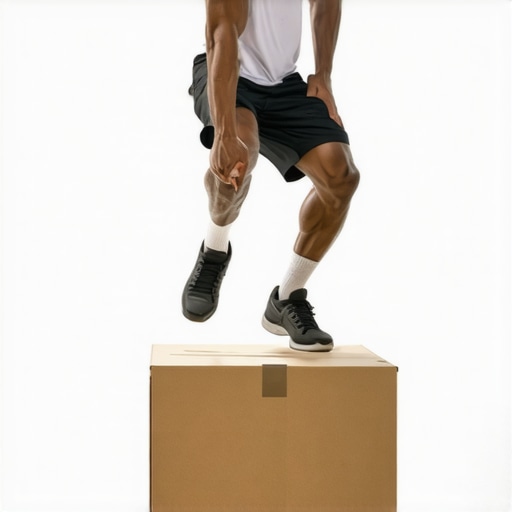
Wake Up the Glutes Before You Load the Joints
A major reason people feel that sharp pinch is that their quads are doing 100% of the work while their glutes are effectively on vacation. If you have ever wondered why your glutes won’t fire during your workout, it is usually because your nervous system has found a path of least resistance—which happens to be right through your knee joint. Before you even think about an explosive box jump, you need to ‘prime’ the posterior chain. Use a light resistance band around your knees for some monster walks or glute bridges. This forces the femur into a better position, preventing the ‘valgus collapse’ or knees caving in that shreds the meniscus. If you notice your knee clicks during lunges, it is a clear signal that your tracking is off and your glutes are not providing the necessary stability to keep the patella in its groove.
Address the Ankle Obstacle Course
You can have the strongest glutes in the world, but if your ankles are as stiff as a pair of ski boots, your knees will pay the price. Think of your ankle as the first door in a hallway. If that door does not open wide enough, you are going to run into the wall—the ‘wall’ being your knee joint. When your shin cannot tilt forward because of tight calves or a jammed talus bone, your heel lifts early or your foot flattens out, both of which put immense torque on the patellar tendon. I spent months stretching my quads to no avail, but the real breakthrough came when I started using the 45-second drill to improve your ankle dorsiflexion. By freeing up the ankle, I allowed the force of the jump to distribute across three joints instead of dumping it all into one.
Utilize Advanced Rehab Tools for Faster Adaptation
Sometimes the tissue is so sensitized that exercise alone feels like poking a bruise. This is where you might need to revolutionize your rehab with chiropractic techniques for faster recovery. Targeted adjustments can ‘reset’ the mechanoreceptors in your joints. Think of it like rebooting a computer that is glitching; once the hardware is aligned, the software—your nervous system—can finally run the movement patterns correctly. This does not just mask the pain; it changes how your brain perceives the load, allowing you to train harder without the subsequent flare-up that usually ruins your week.
Why Resting Your Way Out of Pain is a Slow Trap
The biggest trap I fell into early in my journey—and one I see athletes repeat daily—is the belief that total rest is the ultimate healer. We are taught that if it hurts, stop moving. But in the world of high-level performance, complete rest is often a recipe for atrophy and the cementing of poor movement patterns. When you stop moving, your brain actually lowers the ‘threshold’ for pain, making you more sensitive to the very activities you are trying to return to. Instead of passive rest, we need neurological modulation. This is where the role of chiropractic care in effective sports injury recovery becomes vital. It isn’t just about ‘cracking’ a joint; it’s about sending a high-velocity signal to the nervous system that it is safe to move again. Have you ever fallen into this trap? Let me know in the comments, because I spent six months on a couch only to find out my first day back was more painful than the injury itself.
Does an adjustment actually move your bones back into place?
This is the sophisticated question that separates the beginners from the experts. The common myth is that a bone is ‘out’ and we are ‘putting it back.’ In reality, it is much more nuanced. A study published in the Journal of Manipulative and Physiological Therapeutics (JMPT) demonstrated that spinal manipulation can lead to an immediate increase in muscle strength by reducing what clinicians call ‘arthrogenic muscle inhibition.’ Essentially, your brain ‘turns off’ muscles around a joint it perceives as unstable. The adjustment doesn’t just move bone; it re-boots the software. This is why the science behind chiropractic adjustments for back pain relief focuses on neurological input rather than just mechanical leverage. When you understand this, you stop looking for a ‘pop’ and start looking for improved motor control. 
Stop Stretching Your Hamstrings If Your Back Hurts
If I could go back in time, I’d scream this at my younger self. We have this obsessive ‘oops’ factor where we feel tightness and immediately try to stretch it out. If your hamstrings feel like steel cables every morning, your first instinct is a toe touch. But if your lower back is unstable, those hamstrings are firing at 110% just to keep your pelvis from tilting too far. Stretching them is like cutting the guy-wires on a radio tower—it feels good for a second, then everything collapses. You need to understand why stretching your hamstrings won’t fix your chronic tightness and instead look at the stability of the spine. Oftentimes, unlocking back pain relief with expert chiropractic adjustments provides the stability the body is craving, allowing those hamstrings to finally relax on their own. We often see the same thing with runners who think they have a hamstring tear when the real reason your SI joint feels loose after running is actually the root cause. To find a permanent fix, you must move beyond the symptom and address the structural ‘why.’ By utilizing strategic chiropractic solutions for long-term back health, you stop chasing the pain and start building a resilient foundation that can actually handle the loads of your sport. This is how you discover how chiropractic adjustments can alleviate chronic back pain without becoming dependent on a foam roller every thirty minutes.
Build a Resilience Shield That Lasts
Once you have moved past the initial fire-fighting phase of an injury, the real work begins. I have found that the difference between the athlete who stays on the court for a decade and the one who retires early is their commitment to maintenance when they actually feel good. I personally use a three-pillar system: neurological resets, mechanical feedback, and blood flow management. It is easy to skip a session when nothing hurts, but that is exactly when you should be doubling down on strategic chiropractic solutions for long-term back health. By keeping the communication lines open between your brain and your joints, you prevent the micro-compensations that eventually lead to a full-blown relapse. I also suggest incorporating essential tips for managing back pain through healthy lifestyle choices, such as prioritizing sleep and hydration, which are the silent partners in tissue repair.
How do I maintain my joint health over time?
Consistency beats intensity every single time. Maintenance is not about a two-hour gym session; it is about the five-minute habits you do every morning. I recommend the ‘Joint-by-Joint’ approach popularized by strength coach Mike Boyle and physical therapist Gray Cook. This philosophy suggests that the body is a stack of joints that alternate between needing stability and mobility. If your ankles lose mobility, your knees lose stability. If your hips get tight, your lower back pays the price. To keep this system in check, I swear by how regular adjustments can lower your resting heart rate and improve your recovery windows. When your nervous system is in a parasympathetic state, your body can actually heal rather than just surviving the next workout.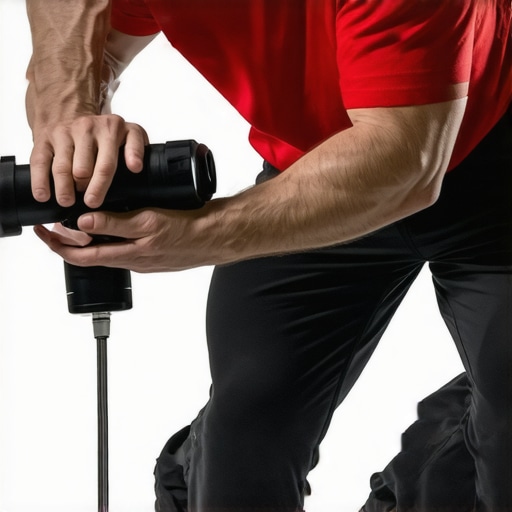
The One Tool That Actually Flushes Your Quads
I see people at the gym using massage guns like they are trying to drill for oil, but there is a specific method to use if you want to save your knees. Stop hitting the bone and start working the lateral quad. I have documented the proper way to use a massage gun on your quads to specifically offload the tension that pulls on the patellar tendon. If you find that your adjustments don’t seem to last, it is often because the surrounding soft tissue is so tight it is pulling the joint right back out of alignment. For extra support during high-impact weeks, I learned how to use kinesiology tape for lower back support which provides a constant tactile reminder to my brain to maintain a neutral spine. Looking forward, I predict we will soon see bio-integrated sensors in our training gear that alert us to these mechanical failures before we even feel a twinge of pain. For now, take one advanced step today: try the lateral quad release I mentioned. It is the single best way to ensure your next jump doesn’t end in a ‘thud.’
The Brutal Truth About Why Your Recovery Has Hit a Plateau
I learned the hard way that you cannot out-train a nervous system that feels threatened. After my injury, I tried to force my way back to the box jumps, but my body kept hitting the brakes. Here is the insider wisdom that finally shifted the needle for me: Pain is often a protective output, not just a tissue issue. Just because your knee aches doesn’t mean the tendon is tearing further; it often means your brain doesn’t trust your landing mechanics. Secondly, the ‘no pain, no gain’ mantra is a fast track to a permanent limp. In the world of high-performance athletics, the goal is to find the ‘edge’ of your capacity without jumping over the cliff. Lastly, I realized that boost your sports rehab journey with proven chiropractic strategies is not a luxury—it is a requirement for anyone trying to maintain structural integrity under heavy loads. If your joints aren’t stacked correctly, you’re essentially putting a turbocharger on a car with a bent frame.
My Daily Toolkit for Keeping a Bulletproof Lower Back
I don’t leave my health to chance anymore, and neither should you. Here are the three specific resources that changed the way I move. First, the book ‘Supple Leopard’ by Kelly Starrett taught me that movement is a skill that must be practiced, not just an activity. I also swear by a set of high-tension mini-bands; they are the best tool for waking up the glutes before any session. Finally, I never skip my monthly structural check-up because I’ve seen firsthand how spinal alignment directly impacts your athletic performance. When my spine is aligned, my power output increases because my nerves aren’t fighting through a ‘noisy’ signal. These aren’t just ‘tips’; they are the foundation of a career that lasts decades instead of seasons.
#IMAGE_PLACEHOLDER_E#
Your Road Back to the Court Starts Today
You don’t have to accept chronic pain as the price of being an athlete. Whether you are recovering from a ‘white-hot sting’ or just trying to prevent the next one, the steps remain the same: fix your mechanics, prime your stabilizers, and keep your nervous system in check. By integrating essential tips for managing back pain through healthy lifestyle choices and staying consistent with your movement drills, you are building a version of yourself that is harder to break. Your journey through sports rehab is a marathon, not a sprint, but the view from the finish line—standing tall and moving without fear—is worth every single rep. If you have questions or need a specific plan to get back to 100%, do not hesitate to contact us today. What is the one exercise you have been too afraid to try since your last flare-up? Let me know in the comments below.