
I remember standing in my garage gym, sweat stinging my eyes, as I prepared for what should have been a routine set of three at 315 pounds. I took a deep breath, braced my core, and descended. Halfway up, it happened. My knees didn’t just wobble; they dove toward each other like two long-lost friends reuniting at an airport. It was a visceral, unstable sensation that left me terrified for my ACLs. I spent months convinced that my quads were just pathetic. I bought every compression sleeve on the market, thinking I could just squeeze my joints into submission. I was wrong. I was looking at the symptom, not the source. If you have ever felt that sickening inward collapse, you aren’t alone, and it’s likely not a lack of leg strength holding you back. [IMAGE_PLACEHOLDER]
Your Knees Are Just the Middleman
For a long time, I assumed the knee was the boss of its own movement. I thought if it buckled, it meant the knee itself was weak. It took a frustrated deep-dive into sports rehab for me to realize the knee is really just the messenger caught in a cross-fire between your hips and your ankles. When you feel that cave—formally known as knee valgus—it is usually because your body is desperately searching for stability that isn’t being provided elsewhere. For instance, maybe your glutes won’t fire during your workout, which forces the femur to rotate internally just to keep you from falling over. This is a tactical error I made for years, trying to isolate my quads while my actual stabilizers were taking a nap. Today, I want to show you exactly how to diagnose whether the issue is coming from your feet or your glutes so you can finally move heavy weight without the fear of a snap. Have you ever felt that terrifying inward ‘zip’ during a heavy set? It’s a common hurdle, but it’s one we can definitely overcome.
Is this just a permanent flaw in my anatomy?
It’s easy to get discouraged and think you just have ‘bad knees’ or ‘weird hips.’ I used to tell myself that my femur was just too long or my sockets were too shallow. However, the science suggests otherwise. According to research published in the Journal of Athletic Training, hip abductor weakness and poor neuromuscular control are significantly more likely to cause knee collapse than any innate skeletal structure. This is actually great news because it means we can fix it with the right drills. If you have noticed that your knee clicks every time you squat, it might be a sign that this misalignment is already wearing on your joints. I spent far too long ignoring these signals, but once I focused on my ankle dorsiflexion and hip stability, the pain vanished. Understanding how spinal alignment directly impacts your athletic performance is also a piece of the puzzle we can’t ignore if we want a truly bulletproof squat.To stop the cave, we have to start at the bottom of the chain. Your foot is the only part of you touching the ground, and if it is collapsing, the knee has no choice but to follow.
Grab the floor with a tripod grip
The first thing I tell anyone with wobbling knees is to stop thinking about their knees and start thinking about their feet. Most people let their weight roll onto the inside of their arches. Instead, imagine your foot is a claw. You want to root the heel, the big toe knuckle, and the pinky toe knuckle into the floor simultaneously. This ‘tripod foot’ creates an immediate arch, which provides a rigid lever for the rest of your leg. If your ankle is too stiff to allow this, you will find yourself compensating by turning your toes out excessively or letting the heel lift. 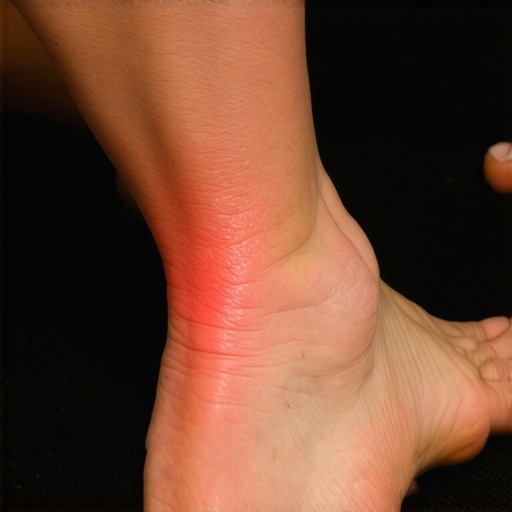
Why your pinky toe matters more than you think
The pinky toe is actually the secret key to external rotation. When you drive that outer edge of the foot down, it sends a neurological signal up the lateral chain of your leg directly to the glute medius. This is exactly what we need to keep the femur from rotating inward. I once spent an entire leg day focusing on nothing but ‘grabbing’ the floor with my toes, and while my feet felt like they were going to cramp into permanent knots, that sickening zip in my knee completely disappeared. If you find your feet ‘pancaking’ the moment you hit the bottom of a squat, you might need to re-evaluate how 3 signs your ankle stiffness is the real cause of your knee pain is affecting your setup.
Force your glutes to stay awake
Once the feet are set, we have to address the engine. The glute medius is essentially the ‘steering wheel’ for your thigh bone. If it is weak or just not engaging, the wheel spins freely, and the knee crashes. I remember a specific Tuesday at the gym where I finally hit a wall. I had 335 on the bar, and every time I descended, my left knee would ‘blip’ inward. I stripped the weight down and spent 20 minutes doing a banded warm-up. The first time I tried this, I was shocked. The band was trying to pull my knees together, and my glutes had to fight like hell just to stay neutral. It was messy, and I probably looked ridiculous shimmying across the gym floor, but it forced my brain to find those muscles. To get a similar effect, you should try the glute medius drill for faster lateral cuts even if you aren’t an athlete; the stabilization benefits for a heavy squat are identical.
Stop the rib flare from killing your tension
We cannot talk about leg stability without talking about the trunk. If your ribs are flaring toward the ceiling, you lose the internal pressure needed to keep the pelvis level. When the pelvis tilts, the hip sockets shift, and the knees usually pay the ultimate price. You need to learn the simple drill to stop your ribs from flaring during deadlifts and apply it to your squat. This creates a canister of pressure that keeps the entire system aligned. Many people fail here because your breathing mechanics are sabotaging your core strength, making it nearly impossible to maintain that ‘tripod’ stability under a heavy bar. If you can lock the ribs down while grabbing the floor with your feet, your knees are forced into a position of strength rather than a position of survival.Many people assume that if their knees are caving, they just need to spend more time on a yoga mat. But here is a contrarian view: for a significant number of lifters, more stretching is actually the last thing you need. In fact, if you have naturally mobile joints, stretching into those end-ranges might be stripping away the very passive tension your body uses to stay stable. I see it constantly—people spend twenty minutes mashing their legs with a roller, only to find their knees wobbling more than ever under a heavy load. This is often because why stretching your hamstrings wont fix your chronic tightness if the issue is actually a protective neurological response. Your brain is tightening those muscles because it doesn’t trust your joints. If you go in and forcefully ‘release’ them, you’re essentially taking the brakes off a car with no steering.
Stop stretching your way into instability
Instead of searching for more ‘looseness,’ we should be searching for ‘stiffness’—the good kind. True stability in the squat comes from creating a rigid, pressurized system. I used to be a ‘mobility addict,’ thinking I could foam roll my way to a perfect squat. I would spend hours on my lateral leg, but I didn’t realize that the correct way to use a foam roller on your IT band involves very different goals than most people think. If you are just aimlessly crushing tissue, you might be desensitizing the sensory receptors your brain needs to feel where your knee is in space.
Why does my knee still cave even though my glutes are strong?
This is the advanced question that stumps most lifters. You can have a 500-pound deadlift and still have knees that zip inward on a 225-pound squat. Why? Because raw strength and motor control are two different things. A study published in the British Journal of Sports Medicine found that it is the timing and coordination of the hip abductors, not just their peak force output, that prevents valgus collapse. It’s about how the brain communicates with the muscle at the exact moment of the ‘turnaround’ in the bottom of the squat. This is why strategic chiropractic solutions for long term back health focus so heavily on the nervous system; if the signal from your spine to your hips is muffled, all the glute bridges in the world won’t save your knees. 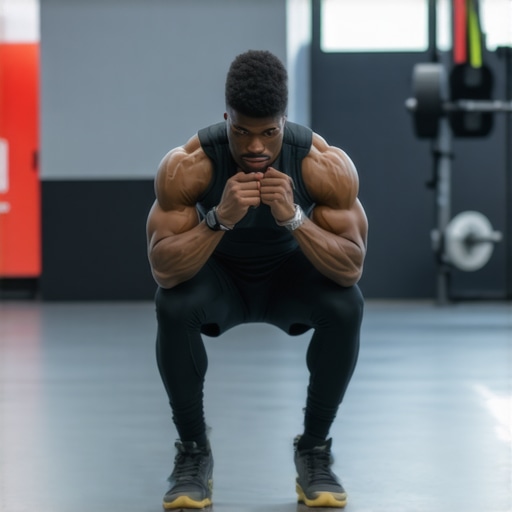
The dangerous trap of external crutches
One of the biggest ‘oops’ factors I see is people relying on heavy knee sleeves or ‘lifting hacks’ to hide the problem. While a sleeve can provide warmth and proprioception, it can also act as a physical ‘band-aid’ that allows you to ignore a major stability deficit. If you can only keep your knees out when you’re wearing seven-millimeter neoprene, you haven’t fixed the problem; you’ve just outsourced it. This is similar to how many people approach back issues, failing to realize how to identify if your back pain is muscular or nerve related, and instead just wearing a weight belt for everything. This leads to what I call ‘the truth about why your adjustments dont seem to last’—if you don’t reinforce the structural change with proper movement patterns, your body will revert to its old, collapsed habits the moment you take the gear off. We have to train the brain to maintain that external rotation torque autonomously. Have you ever fallen into the trap of buying more gear instead of fixing your movement? Let me know in the comments.
It is tempting to look for a magic bullet—a special shoe or a thicker sleeve—but the reality of high-performance lifting is that maintenance is a boring, daily requirement. For me, this meant moving away from the ‘smash and stretch’ philosophy and moving toward targeted recruitment. I narrowed my toolkit down to just two items: a high-tension mini-band and a standard lacrosse ball. I don’t use the ball to aimlessly roll around; I use it specifically for trigger point therapy. Learning how to use a lacrosse ball to melt away mid-back knots was a game-changer for my squat because it allowed my thoracic spine to extend properly, which stopped my lower back from compensating and tilting my pelvis into a ‘knee-cave’ position. If you can’t stay upright at the top, you won’t stay stable at the bottom.
The only two tools that actually live in my gym bag
The second tool, the mini-band, is my ‘neurological wake-up call.’ I see people using massage guns for twenty minutes before a set, but I’ve found that the proper way to use a massage gun on your quads is actually to use it sparingly for blood flow, not as a replacement for activation. My routine is simple: two minutes of banded side-steps to ensure my glute medius is ‘awake’ and ready to fight that inward knee pull. I also incorporate the 60-second move to open up your tight chest muscles because, believe it or not, shoulder mobility dictates how well you can ‘shelf’ a barbell. If your shelf is shaky, your entire pillar—including those knees—will feel the instability. #IMAGE_PLACE_HOLDER_D#
Why I still visit my chiropractor even when I am pain-free
I used to think chiropractic care was just for when I threw my back out. I was wrong. I started viewing adjustments as ‘system reboots’ for my nervous system. If my SI joint is slightly restricted, my brain might ‘turn down the volume’ on my right glute to protect the area. No amount of gym-bro coaching can fix a glute that isn’t receiving a clear signal from the spine. This is why I advocate for strategic chiropractic solutions for long-term back health as a preventative measure. You want to discover how chiropractic adjustments can alleviate chronic back pain before it starts, rather than waiting for a catastrophic ‘pop’ in the middle of a heavy triple. Regular maintenance ensures that when I tell my hips to rotate, they actually listen.
How do I keep my knees from caving as the weights get even heavier?
Maintenance is about progressive technical proficiency. As you add plates to the bar, your ‘error margin’ shrinks. Dr. Stuart McGill, a world-renowned expert in spine biomechanics and author of Low Back Disorders, explains that ‘stiffness’ is not a lack of mobility, but the ability to create a rigid cylinder through the core to protect the spine and direct force to the hips. To maintain this as you scale up, you must constantly revisit the fundamentals of expert chiropractic adjustments that work in tandem with your training. If you stop the ‘maintenance’ drills the moment the pain goes away, the cave will return the next time you test a personal record. Consistency in your tripod foot grip and rib-cage positioning is the only way to ensure the gains you make today are still there next year.
The future of lifting will be measured in millivolts
Looking ahead, I predict we are moving toward an era of ‘smart rehab.’ We are already seeing the rise of wearable EMG (electromyography) sensors that can tell a lifter in real-time if their glute medius is actually firing during a squat or if they are just masking the movement with their adductors. This kind of biofeedback will revolutionize how we handle sports rehab, making it much harder to lie to ourselves about our form. For now, the most advanced thing you can do is perform a ‘torque check’ during your warm-up: try to ‘screw’ your feet into the floor so hard that your arches lift and your knees naturally rotate outward without moving your actual feet. If you can’t feel your glutes ignite during that simple standing drill, you aren’t ready for the heavy bar yet.
Hard Lessons Learned Under a Heavy Barbell
Reflecting on my own journey, the biggest lightbulb moment came when I stopped treating my body like a collection of isolated parts. I realized that my knee cave wasn’t a quad problem; it was a sensory-motor mismatch. My brain literally didn’t know where my knees were in space once the weight got heavy. Understanding the science behind chiropractic adjustments for back pain relief helped me see that if my spinal signals were muffled, my glutes would never fire on time. I also learned that pain is a lagging indicator; by the time your knee actually hurts, the mechanical error has likely been happening for weeks. Lastly, I discovered that ‘trying harder’ is rarely the answer—moving smarter is. #IMAGE_PLACE_HOLDER_E#
What Stays in My Gym Bag for Every Leg Session
I have trimmed my routine down to the essentials that provide the highest return on investment. First is the high-tension mini-band; it is non-negotiable for waking up the lateral chain. Second, I never skip my regular check-ins to boost your sports rehab journey with proven chiropractic strategies because keeping my pelvis aligned is the only way to ensure my tripod foot stays rooted. Third, I keep a firm lacrosse ball for those stubborn knots that can pull on the IT band. Finally, I rely on a simple notebook to track not just weight, but ‘form feel.’ I trust these tools because they focus on the root causes—stability and neurological clarity—rather than just masking symptoms.
Your Best Squat is Still Ahead of You
Fixing a knee cave is not about overnight success; it is about the disciplined application of better mechanics. When you commit to a comprehensive sports rehab approach, you are not just protecting your joints; you are unlocking power you did not know you had. If you are struggling to find that perfect alignment, do not hesitate to get in touch with experts who can help map out your recovery. You have the tools and the knowledge now—it is time to get back under the bar with confidence. Have you ever tried using a band to fix your knee cave, or do you prefer a different drill? Let me know below.