
I remember the exact moment my rib cage decided to go on strike. I was halfway through a morning run, pushing for a personal best, when I tried to take a deep, satisfying gulp of air. Instead of a full inhale, I hit a hard, painful wall. It felt like a jagged piece of metal was lodged between my shoulder blades, preventing my chest from expanding. I panicked, thinking my lungs were failing, but the reality was much more mechanical—and much more common than I realized. For years, I ignored the subtle signs that my thoracic spine was locking up, leading to that terrifying sensation of being unable to breathe fully. I made the classic mistake of thinking I just needed more cardio, when in reality, my rib cage was simply stuck. Today, we are going to dive into why this happens and, more importantly, how you can restore that effortless glide to your breathing.
That Sharp Catch in Your Chest Isn’t Just in Your Head
The sensation of a ‘stuck’ rib is visceral and often leads people straight to the emergency room, only to be told their heart and lungs are perfectly fine. While that’s a relief, it doesn’t solve the problem. If you’ve ever felt like you need to forcefully ‘pop’ your back to get air in, you are likely dealing with a restriction in the costovertebral joints—the places where your ribs attach to your spine. I spent months struggling with why your upper back feels like it needs to pop constantly before I realized my breathing mechanics were the culprit. When these joints lose their ability to pivot, your entire respiratory system has to work twice as hard. This isn’t just about discomfort; it’s a performance killer. Whether it’s why your ribs feel like they are stuck after heavy overhead pressing or just a dull ache while sitting at your desk, the root cause is often a lack of joint play. Research published in the Journal of Physical Therapy Science indicates that rib cage mobility is directly linked to respiratory function, and restrictions in the thoracic spine can significantly decrease vital capacity. By restoring this motion, you aren’t just relieving pain—you’re actually fueling your body more efficiently.
Is This Actually a Mechanical Issue or Am I Just Out of Shape?
It is easy to blame a lack of fitness when you feel winded, but if the ‘stuck’ feeling is localized to one side or feels like a sharp pinch, it’s a structural hurdle, not a lack of stamina. I used to beat myself up for getting tired during simple tasks, but once I learned how chiropractic adjustments can help your breathing, the ‘out of shape’ feeling vanished overnight. We often forget that the rib cage is a dynamic cage, not a static one.
Stop Treating Your Lungs When Your Ribs Are the Problem
Early in my journey, I tried every breathing exercise in the book without success. I was trying to force air into a container that wouldn’t open. The breakthrough came when I shifted my focus from the lungs to the framework holding them. Integrating a 60-second move to open up your tight chest muscles and learning to breathe through your belly for instant lower back relief changed everything. You have to address the physical blockage before the breath can follow. Have you ever experienced that sharp, localized pain that makes you hold your breath instead of taking a deep one? It’s a frustrating cycle, but it is one you can break. Let’s look at the specific steps to unlock those ribs and get you back to breathing without boundaries.
Identify the Source of Your Breathing Block
Before you start poking and prodding, you have to know if the issue is actually mechanical. If the pain is localized—meaning you can point to the exact spot with one finger—and it gets worse when you take a deep breath or rotate your torso, you are likely dealing with a joint restriction. I have seen athletes mistake this for a pulled muscle for weeks, but a muscle strain usually feels like a dull, broad ache, whereas a rib restriction is like a sharp needle. Learning how to spot a rib subluxation fast is the first step toward getting your air back.
The Thirty-Second Rib Check
Stand against a flat wall with your heels, glutes, and head touching. Try to raise your arms overhead slowly without letting your rib cage flare out or your back arch away from the wall. If you feel a sharp pinch in the mid-back or if one side stops significantly earlier than the other, you have found your restriction. This mechanical block is a sign that the joint is no longer pivoting correctly.
Release the Muscles Holding Your Ribs Hostage
Once you have identified the ‘stuck’ area, you need to calm down the intercostal and rhomboid muscles that are guarding the joint. I remember a particularly bad flare-up after a weekend of moving heavy furniture. Every time I reached for a glass of water, my mid-back screamed and my breath felt shallow. I tried stretching, but it felt like I was pulling on a steel cable that would not budge. The only thing that worked was direct pressure. You can learn how to use a lacrosse ball to melt away mid-back knots to target those specific trigger points that keep the rib locked in place.
Direct Pressure Beats Static Stretching
Do not just roll aimlessly on the floor. Find the tender spot, sink your body weight into the ball, and perform ‘arm sweeps’—slowly moving your arm from your side to over your head. This forces the rib to move under the pressure, breaking up the adhesions in the connective tissue. This is a foundational part of the role of chiropractic care in effective sports injury recovery because it addresses the soft tissue and the joint simultaneously.
When Self-Care Is Not Enough
If you have tried the lacrosse ball and the breathing drills and you still feel like you are breathing through a straw, it is time for a manual reset. A chiropractor can provide a high-velocity, low-amplitude thrust to the specific costovertebral joint that is restricted. If you have never had one, knowing what to expect during your first thoracic adjustment can take the anxiety out of the process. That ‘crack’ you hear is the release of gas bubbles from the joint fluid, allowing the joint to finally pivot as it should. This mechanical reset is why how spinal alignment directly impacts your athletic performance becomes so obvious; suddenly, your lungs can actually expand because the cage around them is no longer locked shut. Before you jump back into heavy lifting, make sure you are using the simple drill to stop your ribs from flaring during deadlifts to maintain that new range of motion and prevent the joint from slipping back into its old, defensive pattern.
The biggest mistake I see people make is chasing the ‘pop’ like it is a hit of dopamine. We have been conditioned to think that if we do not hear a loud crack, the rib is still stuck. In reality, that sound is just a pressure change in the joint, not a measurement of success. If you are constantly trying to self-adjust, you might actually be creating hypermobility in the joints above and below the restriction, which makes your body tighten up even more to protect itself. This is the truth about why your adjustments dont seem to last for more than a few hours. You are treating the symptom of tension, but you are not addressing the neurological guarding that keeps the rib from moving through its full excursion.
Your Body Is Guarding for a Reason
Here is a contrarian take: your ribs might feel stuck not because they lack mobility, but because they lack stability. When your brain senses that your core cannot support your spine during a heavy lift, it sends a signal to the small muscles between your ribs to ‘clamp down.’ This is a protective mechanism. If you just keep hammering that area with a foam roller, you are essentially trying to tear down a safety fence that your body built for a reason. I spent years falling into the ‘more mobility’ trap, only to realize that how your breathing mechanics are sabotaging your core strength was the actual issue. Once I stabilized my pelvis and diaphragm, the ribs stopped locking up as a defense mechanism.
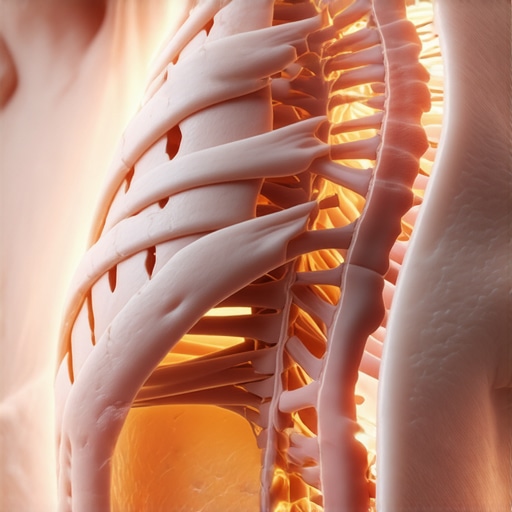
Why does the same rib keep locking up every single month?
If you find yourself back in the same painful position every few weeks, you are likely dealing with a ‘facilitated segment.’ Research published in the Journal of Manipulative and Physiological Therapeutics suggests that chronic joint dysfunction can lead to a heightened state of the nervous system where even minor stress causes the surrounding muscles to spasm. This is where strategic chiropractic solutions for long term back health come into play. It is not just about moving the bone; it is about ‘quieting’ the nerves that are overreacting to daily movement. You have to move past the ‘crack’ and start looking at the neurological patterns. The ‘oops’ factor for most lifters is ignoring the lateral line of the body—if your lats or obliques are glued shut, your ribs have no choice but to stay restricted. Have you ever fallen into this trap of over-stretching a painful spot only to have it feel tighter the next day? Let me know in the comments. Instead of aggressive stretching, try focusing on how to use diaphragmatic breathing to calm your nervous system to signal to your brain that it is finally safe to let go of that ‘stuck’ sensation.
How can I keep my ribs moving for the long haul?
Maintenance is where most people fail. They wait for the ‘sharp catch’ to return before they even think about their thoracic spine. Personally, I have found that consistency beats intensity every single time. You do not need an hour of mobility; you need five minutes of the right moves every morning. Integrating strategic chiropractic solutions for long term back health is about creating a lifestyle where your joints are checked before they seize up. This proactive approach is the difference between a high-performance athlete and someone who is constantly sidelined by minor flare-ups. I always tell my clients that their spine is like a high-end sports car; you do not wait for the engine to smoke before you change the oil.
The Tools I Actually Use Every Morning
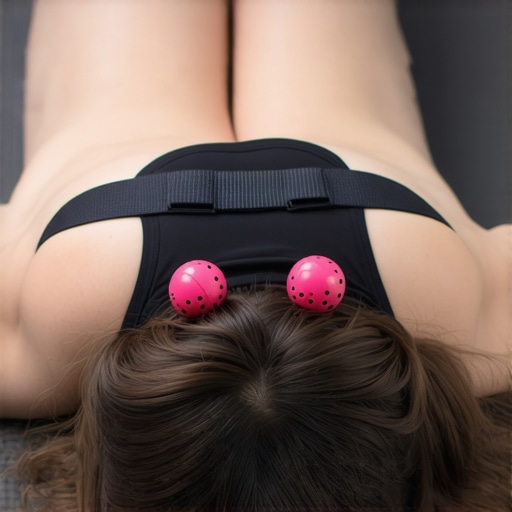
I have a bin full of gadgets, but only three actually make the cut for my daily routine. First is the ‘peanut’—two lacrosse balls taped together. Unlike a standard foam roller, the peanut creates a groove for your spinous processes, allowing you to apply direct pressure to the costovertebral joints without bruising the bone. I use this to boost your sports rehab journey with proven chiropractic strategies by spending exactly two minutes tacking down the tissue while I focus on deep, expansive breaths. Second is a simple physical therapy balloon. It sounds silly, but blowing into a balloon while keeping your lower ribs tucked forces your diaphragm to work against resistance, which is the gold standard for stabilizing the core from the inside out. Research from the Postural Restoration Institute shows that this specific type of resisted exhalation can reposition the rib cage and instantly reduce tension in the neck and back.
Precision Beats Power Every Time
If you are still trying to ‘muscle’ your way through a rib restriction, you are losing the battle. I spent years thinking I could just stretch the pain away, but the role of chiropractic care in effective sports injury recovery taught me that precision is the only way to win. You have to identify exactly where the hinge has stopped hinging. This is why I focus so much on how to fix the forward shoulder slump from cell-phone use, because that slumped position is the primary driver of rib cage compression. If you don’t fix your environment—your desk setup, your driving position, and your phone habits—you are just pouring water into a leaky bucket.
The Future of Breathing and Biofeedback
We are entering an era where we no longer have to guess why our ribs feel tight. I predict that within the next five years, we will see a surge in wearable haptic sensors that track your rib excursion in real-time. These devices will sync with your phone to alert you when your breathing becomes shallow or when your thoracic spine has been static for too long. Imagine getting a subtle vibration on your wrist that tells you to take three deep breaths before your ribs have a chance to lock up. This level of biofeedback, combined with essential tips for managing back pain through healthy lifestyle choices, will make chronic ‘stuck’ ribs a thing of the past. For now, your best tool is your own awareness. My advanced tip for you today? Try the ‘balloon reset’: Lie on your back with your feet on a wall, exhale all your air into a balloon until your ribs drop toward the floor, and hold that position for five seconds. Do this five times tonight. You will be amazed at how much ‘room’ you feel in your chest tomorrow morning.
Lessons from a Decade of Chasing Rib Mobility
I have spent years navigating the frustration of a restricted chest, and these are the lightbulb moments that finally made the difference. First, the ‘stuck’ sensation is often a signal from your nervous system, not just a mechanical failure. Your brain is trying to protect you. Second, chasing a loud crack can actually be counterproductive; true relief comes from restoring the sliding motion between the tissues. Third, your environment—the chair you sit in and the way you hold your phone—is a constant ‘input’ that determines your rib health. If you are constantly looking for unlocking back pain relief expert chiropractic adjustments that work, remember that the adjustment is the reset, but your movement habits are the maintenance. Finally, do not ignore the emotional component; stress and shallow breathing go hand-in-hand, creating a cycle of tension that physical work alone cannot always break.
The Gear and Wisdom I Trust for Deep Breathing
When I am not in the clinic or working on my own mobility, these are the resources I turn to. I highly recommend ‘The Oxygen Advantage’ by Patrick McKeown for anyone wanting to understand the chemistry of breath. For physical tools, a standard 4-inch PVC pipe wrapped in a yoga mat serves as an excellent ‘spine roller’ that provides firmer feedback than a soft foam roller. I also frequently revisit the essential tips for managing back pain through healthy lifestyle choices to ensure my sleep and hydration are not working against my physical progress. Lastly, the Postural Restoration Institute (PRI) offers incredible insights into how asymmetry affects our rib cage, which completely changed how I approach my morning routine.
Reclaim the Fullness of Your Natural Breath
Living with restricted ribs is exhausting, but it does not have to be your permanent reality. By combining strategic chiropractic solutions for long term back health with consistent, mindful movement, you can break the cycle of tension. You deserve to take a breath that feels effortless and deep. It is time to stop fighting your body and start working with its natural mechanics to ensure your sports rehab journey leads to lasting performance. Have you ever felt that sharp ‘catch’ in your chest during a workout or a simple yawn? Let me know your experience in the comments below.