
I’ll never forget that first attempted dunk after my ACL reconstruction. I had the clearance from my surgeon, the PT had signed off, and I’d done enough leg presses to power a small village. I took a hard step, planted, and… nothing. My leg didn’t give out, but the “pop” in my movement was gone. It felt like I was moving through knee-deep honey. That moment of realization—that being “healed” is a world away from being “explosive”—is where the real rehab begins. To get back to 100%, I had to stop treating my knee like an isolated part and start looking at how my entire body generates force. I eventually discovered that my sports rehab journey with proven chiropractic strategies was the missing link in getting my nervous system to fire correctly again.
Your Brain is Sandbagging Your Recovery
After an ACL injury, your nervous system essentially “rewires” how it talks to your quadriceps to protect the joint. This is a survival mechanism, but it’s a nightmare for athletes. According to research published in the Journal of Orthopaedic & Sports Physical Therapy, athletes often show a significant deficit in the Rate of Force Development (RFD) for up to two years post-surgery, even when their absolute strength looks “normal” on paper. Basically, you have the engine, but the transmission is slipping. Early in my own recovery, I made the massive mistake of thinking that as long as my squat numbers went up, my vertical jump would follow. I was wrong. I was building “slow strength” while my brain was still terrified of fast movements. If you’ve ever felt like why your glutes won’t fire during your workout, you understand the struggle of a body that refuses to cooperate despite your best efforts. Today, we’re going to talk about how to stop being a “strong patient” and start being an athlete again by enhancing athletic performance with targeted chiropractic care and smart plyometric progressions. We’ll also look at how spinal alignment directly impacts your athletic performance so your power doesn’t get “leaked” through a crooked foundation.
Will the “Pop” in Your Step Ever Return?
I get this question all the time from people who are six months out and still feel heavy. There’s a pervasive fear that you’ve permanently lost that “twitch” that made you a threat on the field. The truth is, it doesn’t come back on its own; you have to demand it through specific, progressive stress. If you keep training like someone who is broken, your nervous system will believe you are broken. You need to move beyond simple leg raises and start addressing the plyometric mistake destroying your patellar tendon to ensure you aren’t just trading one injury for another. Tell me, have you ever felt like your “good” leg is doing 90% of the work while your surgical leg is just along for the ride? That’s the gap we are closing today. We’ll utilize tools like the glute medius drill for faster lateral cuts to wake up the stabilizers that actually permit your brain to “let go” and allow for maximum power output. It’s time to stop wondering if you’ll ever be fast again and start doing the work that makes speed inevitable.
Clear the Signal Path to Your Muscles
I remember standing in front of a 24-inch box about seven months post-op. Before the injury, I could clear that height in my sleep. That day, I jumped and felt like my brain sent the ‘go’ command, but the signal got lost in the mail. My leg simply didn’t fire. This wasn’t a lack of muscle; it was a lack of communication. Think of your nervous system as a high-speed fiber-optic cable. After an injury, that cable gets kinked. If your spine is out of alignment, the neural drive to your lower extremities is throttled like a bad Wi-Fi connection. You can squat 400 pounds, but if the signal is weak, you won’t be explosive. This is why you must revolutionize your rehab with chiropractic techniques for faster recovery. By addressing spinal subluxations, we ensure the ‘hardware’ is actually receptive to the ‘software’ commands you’re sending it.
Why You Must Master the Landing Before the Launch
The biggest error I see athletes make—and one I made myself—is focusing entirely on the height of the jump rather than the quality of the deceleration. If your body doesn’t trust that it can safely absorb force, it will never allow you to produce maximum force. Your brain has a built-in ‘governor’ that limits your speed if it senses instability. To fix this, you have to spend time in the eccentric phase. I started with ‘altitude landings,’ simply stepping off a small curb and sticking the landing with a perfectly stable knee. If you skip this, you’re making the plyometric mistake destroying your patellar tendon. This phase isn’t flashy, but it’s the foundation of the role of chiropractic care in effective sports injury recovery because it aligns the joint under stress.
Stop Losing Power to a Misaligned Pelvis
If your pelvis is tilted or rotated, your glutes are essentially ‘muted.’ I spent weeks doing heavy lunges wondering why my surgical leg felt so much weaker, only to find out my SI joint was locked up from favoring the other side. This mechanical ‘leak’ meant that every time I tried to explode, my power was being dissipated through a crooked foundation instead of being driven into the ground. Utilizing expert chiropractic adjustments that work can reset that pelvic position. Once my alignment was corrected, the glute medius drill for faster lateral cuts finally started to work. Suddenly, the ‘heavy’ feeling in my quad vanished because the stabilizers were finally doing their job.
Train Your Brain to Trust Your Body Again
Rehab isn’t just physical; it’s a series of successful ‘negotiations’ with your subconscious. You have to prove to your brain that the joint is safe. We do this through isometric holds in vulnerable positions—like the bottom of a split squat—and then progressing to rapid-fire movements. This is how spinal alignment directly impacts your athletic performance: it provides the structural integrity that gives your brain the ‘green light’ to be aggressive. If you’ve struggled with why your glutes won’t fire during your workout, stop blaming the muscle and start looking at the joint mechanics and the nerve supply. When the structure is sound, the speed follows naturally.
Stability Wins Over Flexibility Every Time
Let’s dig deeper into a mistake I see almost every veteran athlete make: chasing flexibility when they actually lack stability. We’ve been conditioned to believe that if a muscle feels ‘tight,’ we need to stretch it. But in the world of high-level performance, chronic tightness is often your brain’s way of creating a ‘manual brake’ because it doesn’t trust the joint’s integrity. If you keep pulling on that muscle, you’re just fighting your own survival instincts. For example, why stretching your hamstrings won’t fix your chronic tightness is a lesson usually learned the hard way through a pulled muscle or worsening back pain. When you feel that nagging pull, it’s often a sign that you need strategic chiropractic solutions for long-term back health to reset the neural tension rather than another yoga session. In fact, doing the wrong movements can lead to the 3 stretching mistakes that make sciatica worse, effectively lengthening a nerve that is already under distress. Have you ever fallen into this trap of stretching a ‘tight’ spot only for it to feel even worse the next day? Let me know in the comments.
The Cold Truth About the Icing Myth
One of the hardest ‘oops’ factors to correct is the obsession with icing. For decades, the RICE protocol (Rest, Ice, Compression, Elevation) was the gold standard. However, the very doctor who coined the term, Dr. Gabe Mirkin, recanted his stance in 2015, noting that ice actually delays the healing process by preventing the necessary inflammatory cells from reaching the injured tissue. According to a study published in the British Journal of Sports Medicine, the new ‘PEACE & LOVE’ protocol emphasizes active recovery and blood flow over cryotherapy. This is why you should stop icing new injuries and try this instead to keep the lymphatic system moving. If you’re dealing with a lingering issue, why you should stop icing old injuries and use heat instead is the nuance that separates those who stay in rehab for months from those who return to the field in weeks. By using heat and revolutionize your rehab with chiropractic techniques for faster recovery, you’re encouraging the body to complete its natural repair cycle rather than hitting the pause button with an ice pack.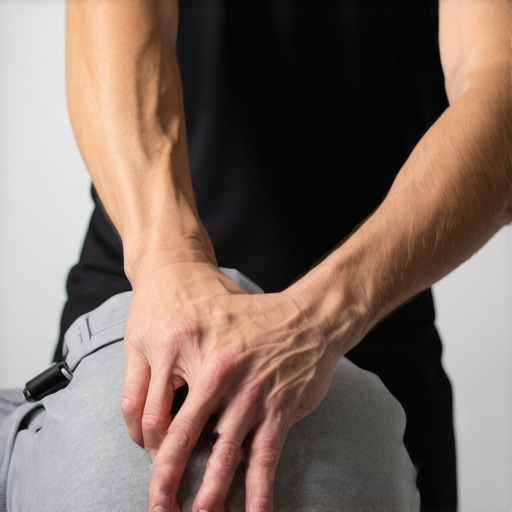
Why Does Your Progress Stall When the Gym Work Looks Perfect?
You’re hitting your numbers, your form is crisp, and you’re eating right, yet that ‘explosive’ feeling is still missing. This is the hidden nuance of the ‘neural bottleneck.’ Your muscles can only perform at the level your nervous system permits. If there is a slight misalignment in your thoracic or lumbar spine, the signal intensity reaching your primary movers is dampened. Think of it like trying to run a high-def 4K video over a dial-up connection. You might get the picture, but it’s going to lag. This is where the science behind chiropractic adjustments for back pain relief becomes relevant even for athletes who aren’t in pain. We aren’t just ‘cracking backs’; we are removing the interference in that fiber-optic cable. When you combine enhancing athletic performance with targeted chiropractic care with your strength training, you aren’t just building a bigger engine—you’re upgrading the entire electrical system. This ensures that every ounce of effort you put into your role of chiropractic care in effective sports injury recovery translates into real-world speed and power.
Equip Your Home Gym Like a Pro
I don’t believe in buying every shiny gadget on the market, but there are three things that never leave my gym bag because they bridge the gap between ‘working out’ and ‘performing.’ First is a standard lacrosse ball. I use it daily because it is firm enough to penetrate the fascia in a way a foam roller cannot. Knowing how to use a lacrosse ball to melt away mid-back knots changed how I felt during heavy squats. Second is my massage gun, but I’m picky about it. Most people just vibrate their skin; you need to learn the proper way to use a massage gun on your quads to actually influence muscle tone. Finally, I rely on a simple wedge for ankle work. If your ankles are locked up, your knees and back will pay the price. I’ve found that the 45-second drill to improve your ankle dorsiflexion is the single most effective way to keep your squat depth honest and your back safe. 
How can I stay pain-free for the long haul?
The mistake most athletes make is stopping their rehab once the pain is gone. Maintenance isn’t a chore; it’s an insurance policy. I personally schedule strategic chiropractic solutions for long-term back health once a month, regardless of how I feel. This proactive approach catches minor pelvic rotations before they turn into major hamstring strains. You also have to look at your environment. I realized my recovery was stalling because my bed was sagging; checking the 3 signs your mattress is destroying your spinal alignment helped me fix my sleep, which is when the actual tissue repair happens. Combine this with essential tips for managing back pain through healthy lifestyle choices like hydration and anti-inflammatory nutrition, and you become much harder to break.
The Future of High-Performance Recovery
We are moving into an era of ‘Data-Driven Bio-Mechanical Feedback.’ In the next five years, I predict we will all be using wearable sensors that notify us when our spinal alignment shifts during a lift. We already see this in professional settings with Velocity-Based Training (VBT). Dr. Bryan Mann, a leading researcher in the Journal of Strength and Conditioning Research, has shown that monitoring the speed of your lifts can prevent the overtraining that leads to CNS fatigue and subsequent injury. By respecting the speed of the bar, you respect the limits of your nervous system. To keep your own ‘internal computer’ running smoothly today, I highly recommend you start practicing how to use diaphragmatic breathing to calm your nervous system after every session. It’s the fastest way to flip the switch from ‘fight or flight’ to ‘rest and digest.’ My challenge to you: before your next workout, try that 45-second ankle drill I mentioned—you’ll be shocked at how much better your entire chain feels.
Lessons from the Sidelines that Changed Everything
One of the most profound realizations I had during my own recovery was that healing isn’t a linear path; it’s a series of plateaus followed by breakthroughs. I used to think that if I wasn’t hurting, I was healthy, but I quickly learned that ‘lack of pain’ is a dangerously low bar for an athlete. You should always aim for optimal function, not just the absence of symptoms. I also discovered that to revolutionize your rehab with chiropractic techniques for faster recovery, you must look at the entire kinetic chain rather than just the injury site. My final ‘lightbulb moment’ was realizing that the nervous system is the ultimate gatekeeper of performance. If your brain feels unsafe because of a slight spinal misalignment, it will pull the plug on your power output every single time to protect you from what it perceives as a threat.
My Go-To Resources for Injury-Proofing Your Body
When other athletes ask me how I stay durable today, I point to a specific set of tools. First, I never skip my monthly check-ins because strategic chiropractic solutions for long-term back health are far more effective than trying to fix a crisis after it happens. Second, I rely on the principles found in Dr. Kelly Starrett’s movement guides to maintain joint mechanics. Third, I consistently apply essential tips for managing back pain through healthy lifestyle choices, particularly focusing on hydration and restorative sleep where the real tissue repair occurs. Finally, I use chiropractic adjustments to alleviate chronic back pain before it can alter my gait and lead to secondary injuries. #IMAGE_PLACEHOLDER_E#
The Version of You That Returns Will Be Stronger
Injuries have a way of stripping us down to our foundation, but that provides a rare opportunity to build back better than before. You aren’t just returning to the athlete you were; you are evolving into a more resilient, more body-aware version of yourself. By fully embracing the role of chiropractic care in effective sports injury recovery, you have given your body the mechanical and neurological advantage it needs to thrive under pressure. Trust the process, stay disciplined with your drills, and most importantly, give yourself permission to be aggressive again. Your best days on the court or the field are not behind you—they are currently being built through every smart decision you make today. What’s the biggest mental hurdle you’ve faced while getting back to your sport? Let me know in the comments below.