
I’ll never forget the sound—a muffled pop followed by a lightning bolt of pain that dropped me to my knees right in the middle of my kitchen. I had just reached for a heavy cast-iron skillet, nothing crazy, but my lower back decided it was finished for the day. My immediate instinct, and probably yours too, was to crawl to the nearest mattress and stay there until the year 2030. I spent the next 48 hours horizontal, terrified that even a sneeze would break me in half. But here is the kicker: the longer I stayed still, the more my muscles locked into a concrete-like grip. I was making a classic mistake that actually prolongs the agony.
The Dangerous Myth of the Healing Mattress
We grew up being told that when your back goes out, you should take it easy. We think of our spine like a broken chair that needs to be left alone to glue itself back together. That logic is fundamentally flawed. When you experience acute spasms, your muscles are essentially overreacting to protect the area. By staying completely still, you’re telling your nervous system that movement is dangerous, which only tightens the protective grip. In fact, Harvard Health Publishing notes that excessive bed rest can lead to muscle atrophy and even blood clots, actually delaying your return to normal life. Early in my journey, I made the huge mistake of thinking that icing my lower back and staying in bed was the gold standard for recovery. I ended up more stiff on day three than I was on day one. I want to save you from that cycle of stagnation. Today, I’m going to show you how to safely introduce movement so you can stop the cycle of spasms and get back to your life without the fear of another pop.
Is moving around actually going to make the spasm worse?
This is the big fear, right? You feel like a fragile tower of Jenga blocks. You’re worried that a single step will trigger another wave of those breath-stealing cramps. I get it. The irony is that gentle, controlled motion is exactly what flushes out the inflammatory byproducts sitting in your tissues. If you’ve been stuck on the sofa, you might even find that your favorite lounging spot is secretly ruining your spine while you think you’re resting. Have you ever noticed that your back feels ten times stiffer after a long nap than it did when you first laid down? Drop a comment and tell me if you’ve been caught in that rest-and-stiffen trap before. It’s a frustrating cycle, but breaking it starts with changing your mindset about what recovery looks like. It isn’t about doing nothing; it’s about doing the right things to keep your blood flowing and your joints lubricated. Getting through the first 24 hours is the hardest part, especially when you’re trying to figure out if your pain is muscular or nerve-related. Once we establish that we aren’t dealing with a medical emergency, we can start using lifestyle choices that support healing rather than hindering it. Let’s look at why your body actually needs you to get off the floor.
Turn Off the Alarm with Better Breathing
The first thing you have to understand is that a back spasm is your body’s ‘panic mode.’ Your brain has decided your spine is in danger, so it has clamped every muscle shut to create a human cast. To break this, you have to convince your nervous system that the threat is gone. This starts with your diaphragm. When we are in pain, we take shallow, chest-heavy breaths which keeps us in a state of ‘fight or flight.’ Instead, you need to learn how to use diaphragmatic breathing to calm your nervous system. By expanding your belly as you inhale, you gently massage the psoas and lumbar muscles from the inside out. It’s like a soft reset for your internal alarm. I’ve seen patients who couldn’t even stand straight finally find relief just by lying on the floor and focusing on breathing through the belly for instant lower back relief. It sounds too simple to work, but it changes the chemical signal being sent to your brain.
Master the Micro-Movement of Pelvic Tilts
Once your breath is steady, you need to introduce motion without load. This is where most people fail—they try to stand up and walk normally too soon. I remember a few years back when I tried to ‘tough it out’ after a lifting mishap. I skipped the gentle stuff and went straight to a full stretch. My back locked up so hard I couldn’t drive for a week. The lesson? Start with pelvic tilts. Lie on your back with your knees bent and feet flat. Slowly flatten your lower back against the floor, then gently arch it. We are talking about an inch of movement. This lubricates the facet joints and flushes out inflammation. This is often more effective than standard stretching, especially since the pelvic tilt fix can also address underlying tension that contributes to the problem. 
Protect Your Spine While You Recover
As you start to get on your feet, your biggest enemy is the ‘bend.’ We naturally want to reach down to pick things up, but your lumbar spine is currently too unstable for that. You have to switch to a hinge. Think of your hips like a door hinge and your spine like a solid beam. This is the hip hinge secret for people with chronic lumbar issues—you move through the glutes, not the vertebrae. If you don’t make this switch, you’ll just keep re-triggering the spasm every time you brush your teeth or put on socks.
Why Most Stretching Actually Hurts You
In the middle of a flare-up, your instinct is to pull on the tight muscle. This is a trap. If your back is spasming because of a disc issue, certain movements like pulling your knees to your chest can actually increase the pressure. I’ve seen countless people make their condition worse by following stretching mistakes that make sciatica worse. You aren’t trying to gain flexibility right now; you are trying to restore basic function. Avoid ‘toe touches’ at all costs. Instead, focus on keeping your spine neutral and letting the inflammation subside through light walking on flat surfaces.
The Role of Professional Alignment
Sometimes, the muscles won’t let go because the bones they are attached to are genuinely restricted. This is where the science behind chiropractic adjustments becomes a game-changer. A targeted adjustment can provide a high-velocity, low-amplitude thrust that ‘interrupts’ the spasm cycle. It’s like flicking a light switch in a room where the wiring is stuck. When I finally went in for an adjustment after my kitchen incident, the immediate release was incredible. It didn’t fix everything instantly, but it opened a window of movement that allowed me to actually do my rehab exercises. If you’re struggling to make progress at home, expert chiropractic adjustments that work can often provide the breakthrough needed to stop the pain from becoming chronic. Just remember that most core exercises actually make lower back pain worse if your alignment is off, so getting a professional eye on your movement patterns is essential during this phase.
Stop Thinking of Your Spine as a Pile of Bricks
One of the biggest hurdles in recovery is the outdated “bone out of place” theory. Many patients believe their vertebrae literally slip out like a Lego block, and the chiropractor simply shoves it back. This is fundamentally incorrect. Modern rehab focuses on joint dysfunction as a neurological event. When a joint becomes restricted, it stops sending the correct proprioceptive signals to your brain. According to a study published in the Journal of Manipulative and Physiological Therapeutics, chiropractic adjustments do more than move bone; they actually influence neuroplasticity, changing how the brain processes pain and movement. If you’re only focused on the “mechanical” fix, you’re missing the fact that how spinal alignment directly impacts your athletic performance is largely a brain-body communication issue.
Why Does Your Adjustment Seem to Wear Off After Three Days?
This is the most common frustration I hear. You feel great for 48 hours, then the old tension creeps back in. Have you ever fallen into this trap? Let me know in the comments if you’ve felt like you’re on a “crack-and-repeat” cycle. The “Oops” factor here is ignoring the soft tissue and the kinetic chain. Your muscles have “memory”—if they have been guarding a restricted joint for months, they will pull that joint right back into its old, dysfunctional position as soon as you leave the office. This is why the truth about why your adjustments don’t seem to last usually boils down to a lack of corrective exercise to “seal” the new alignment. Without training the nervous system to accept the new range of motion, you’re just renting relief instead of owning it.
The Kinetic Chain Trap You Aren’t Watching
If you have chronic lower back pain and no one has looked at your feet, you’re only getting half the story. Your body is a closed kinetic loop. If your ankles are stiff or your arches collapse, your knees rotate inward, which then forces your pelvis to tilt, creating a massive shear force on your L5-S1 disc. I often see people obsessing over their lumbar spine while ignoring the hidden link between your ankles and lower back health. If the foundation is slanted, the roof will always leak. 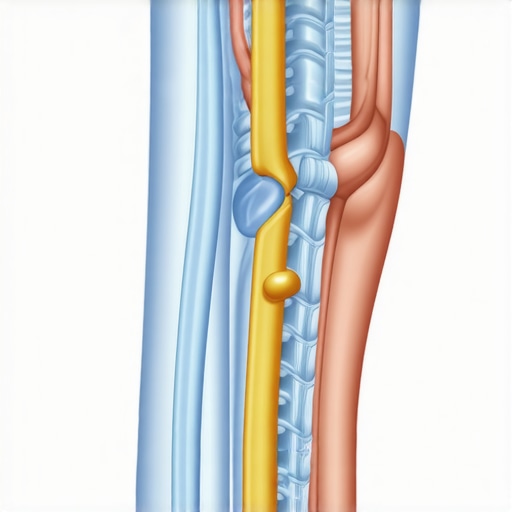
Is the Loudest Pop Always the Best Adjustment?
Absolutely not. The sound you hear is just gas bubbles popping in the joint fluid, a phenomenon called cavitation. It feels satisfying because it releases endorphins, but the “pop” isn’t the cure—it’s a byproduct. I’ve had patients walk in demanding a “heavy” adjustment because they think more force equals more healing. That’s a dangerous mistake. Sometimes, a high-force thrust on an already inflamed joint can trigger more muscle guarding. True strategic chiropractic solutions for long-term back health involve precise, low-force inputs that allow the body to downregulate its own tension. If you’re waking up and wondering why your lower back hurts only after you wake up, it’s rarely because a bone “popped out” in your sleep; it’s because your system is failing to stabilize through the night. Focus on the quality of movement, not the volume of the noise.
Once you’ve moved past the acute ’emergency’ phase of a spasm, the real work begins. I’m a huge advocate for self-care tools that empower you, because if you’re only healthy when you’re on my adjustment table, I haven’t done my job. One of my non-negotiable items is a high-density foam roller, but not for the reasons you think. Most people roll their lumbar spine and wonder why it hurts more; that is why you should know why you should never roll your lower back on a foam roller. Instead, I use it to open up the thoracic spine to take the pressure off the lumbar. If you need something more targeted, the humble lacrosse ball is a game-changer. It’s firmer than a tennis ball and provides the pinpoint pressure needed for trigger point release in the glutes and mid-back. You can learn how to use a lacrosse ball to melt away mid-back knots to keep your spine moving between visits. For my athletes, I also swear by how to use kinesiology tape for lower back support. It’s not just about ‘holding things in place’; it’s about the sensory feedback it provides to your brain, reminding you to maintain a neutral spine during heavy lifts.
How can I maintain my results without seeing a chiropractor every week?
The secret to long-term results isn’t more adjustments—it’s more consistency in your daily environment. This means looking at your workspace and your sleep setup. I’ve seen patients undo an entire month of progress by sleeping on a worn-out mattress or hunching over a laptop for ten hours a day. Start with the 10-second posture reset you can do at your desk to interrupt the static loading on your discs. Dr. Stuart McGill, a world-renowned expert in spine biomechanics at the University of Waterloo, emphasizes that ‘proximal stiffness leads to distal mobility.’ This means that your long-term success depends on building a ‘core’ that doesn’t just look good, but functions as a stabilizer. By incorporating essential tips for managing back pain through healthy lifestyle choices, you stop the wear-and-tear before it leads to a flare-up.
The Future of Personalized Back Health
We are moving toward an era of ‘smart’ rehab. In the next few years, I predict we will see a massive shift toward wearable biofeedback sensors that provide real-time data on your spinal shear forces. Imagine a sensor that vibrates when your lumbar curve starts to flatten during a long drive or a heavy set of squats. This level of precision is the logical next step in strategic chiropractic solutions for long-term back health. Until those tools are in every gym bag, we rely on the fundamentals of enhancing athletic performance with targeted chiropractic care. I want you to try this today: Grab a lacrosse ball or even a firm tennis ball and spend exactly two minutes on each side of your upper back. Notice how much easier it is to take a deep breath afterward—that is the feeling of a system that isn’t fighting itself.
What I Learned After Watching Thousands of Spasms Heal
Looking back at years of clinical practice, the biggest shift for most of my patients isn’t the physical adjustment itself, but the psychological realization that pain does not always equal damage. Here are the three ‘lightbulb moments’ that usually mark the turning point from chronic sufferer to resilient mover:
- Pain is a protective signal, not a structural failure. Your back isn’t ‘broken’ during a spasm; it is just overly loud. You have to convince your brain that movement is safe.
- The ‘painless’ gap is the most dangerous time. People stop their rehab exercises the moment the pain hits zero, which is exactly the truth about why your adjustments don’t seem to last. Stability takes longer to build than pain takes to fade.
- Micro-consistency wins the long game. A quick check-in like the 10-second posture reset done ten times a day is infinitely more effective than a two-hour gym session once a week.
The Three Essentials in My Personal Spine Toolkit
If I had to strip my recovery down to the bare essentials, these are the resources and tools I would never go without. First, I highly recommend the book Back Mechanic by Dr. Stuart McGill; it is the gold standard for anyone trying to understand their own mechanical triggers. Second, a standard lacrosse ball—it is the most portable and effective way to manage trigger points without needing a professional massage every day. Finally, I am a firm believer in using strategic chiropractic solutions for long-term back health rather than just ’emergency’ visits. Having a clinician who focuses on enhancing athletic performance with targeted chiropractic care ensures you are moving toward a functional goal, not just running away from discomfort.
Reclaiming Your Life One Movement at a Time
You are more resilient than you feel right now. That muffled pop in your kitchen or that sharp twinge at the gym does not have to define your next six months. By combining the right mindset with expert chiropractic adjustments that work and the specific movement patterns we have discussed, you can shift from feeling fragile to feeling capable again. Don’t let the fear of a flare-up keep you on the sidelines. Start small, breathe deep, and trust the process of natural healing. Have you ever felt like your back was ‘out of place’ only to realize it was actually a muscular or neurological issue? Let me know your experience in the comments below!