
I used to be that guy in the office. You know the one—every forty-five minutes, I’d twist my torso in my chair until my spine let out a series of rapid-fire cracks that sounded like bubble wrap in a blender. My coworkers would cringe, and my wife would swear I was grinding my bones into dust. I’ll be honest, I was a bit worried too. I remember one specific afternoon when I tried a particularly aggressive self-adjustment at my desk and ended up with a sharp pinch that lasted three days. It was a wake-up call. I realized that while cracking your own neck at your desk might feel like a temporary release, I didn’t actually understand what was happening inside my body. I spent years chasing that ‘pop’ like it was a magic pill for my stiffness, but I was doing it all wrong.
The Secret Life of Gas Bubbles in Your Joints
For a long time, I thought that sound was bones rubbing together or tendons snapping over a ridge. It turns out, the reality is much more ‘fizzy’ than that. When a joint is stretched or moved through its range of motion, the volume inside the joint capsule increases. This creates a drop in pressure, causing dissolved gases—mostly carbon dioxide, nitrogen, and oxygen—to form tiny bubbles. This process is called cavitation. When those bubbles collapse or form rapidly, you get that satisfying ‘crack.’ It’s the same basic physics that explains why a vacuum seal makes a noise when you break it. I learned the hard way that the sound itself isn’t the goal; it’s just a byproduct of movement. In fact, the science behind chiropractic adjustments shows that the therapeutic benefit comes from the restoration of joint mechanics, not just the volume of the pop. Have you ever felt like you had to crack your back just to get through a meeting?
Will this habit give me arthritis in ten years?
This is the big one. Everyone’s grandmother told them that cracking their knuckles would lead to gnarled, arthritic hands. I believed it for years! But the research tells a different story. One of the most famous (and slightly obsessive) examples is Dr. Donald Unger, who cracked the knuckles of his left hand for sixty years while leaving his right hand alone. According to Harvard Health Publishing, he found no difference in arthritis between the two hands after six decades. However, my early mistake was thinking that since it wasn’t harmful, I should do it constantly. I was treating the symptom rather than the cause. I finally realized that why your adjustments don’t seem to last often comes down to underlying muscle imbalances rather than a lack of ‘popping.’ If you are constantly feeling the need to self-adjust, your body is likely screaming for stability, not more cavitation.
Why We Crave That Sound
There is a real neurological reason why we feel like addicts for that joint release. When a joint cavitates, it triggers a temporary stretch of the joint capsule, which stimulates mechanoreceptors and sends a ‘feel-good’ signal to the brain. It can even cause a small release of endorphins. It’s a natural pain-relief mechanism. But here’s the kicker: if you’re just cracking the same loose joint over and over, you’re likely ignoring the ‘stuck’ joints above or below it that actually need the help. I spent far too long focusing on the noise and not enough on the actual alignment and movement patterns that keep the spine healthy without the constant need for a ‘reset.’
Stop chasing the pop and start looking for the stuck spots
Think of your spine like a rusty bicycle chain. When you twist and crack your own back, you aren’t actually moving the rusty, seized links. Instead, you’re repeatedly over-stretching the links that are already loose. This creates a cycle of hypermobility—where the loose joints get looser and the stiff joints stay stuck. To break this, you need to target the surrounding musculature rather than the joint itself. I learned this the hard way when I tried to ‘self-adjust’ during a cross-country flight to London. I was crammed into an economy seat, and my mid-back felt like it was in a vice. Normally, I would have twisted my torso until I heard a loud crack, but instead, I tried a simple decompression move: I planted my feet, pushed my hips back into the seat, and elongated my neck toward the ceiling. The relief wasn’t a ‘pop,’ but a slow, melting release of tension that actually lasted through the descent. You have to realize why your upper back feels like it needs to pop constantly before you can fix the underlying stiffness.
Reset your alignment without the violent twist
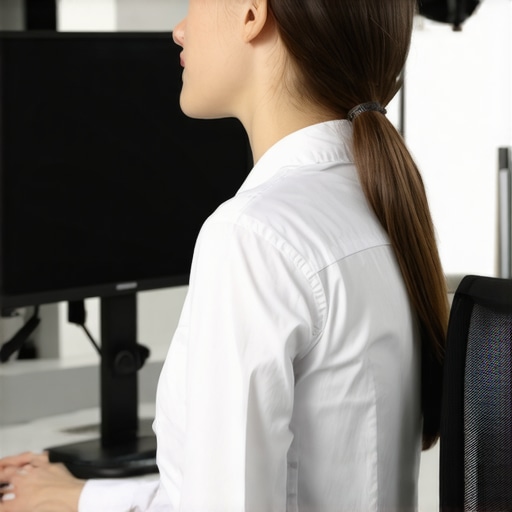
If you’re at your desk and the urge to crack hits, it’s usually because your nervous system is bored and your muscles are tired of holding a static position. Your body is asking for movement, not a high-velocity thrust. One of the most effective tools I’ve found is the 10-second posture reset you can do at your desk. It involves a subtle retraction of the shoulder blades and a slight chin tuck to realign the cervical spine. If that doesn’t do the trick, you might need to look at your environment. Often, the urge to self-adjust is a direct result of poor ergonomics. Knowing how to adjust your monitor to stop mid-back burning can eliminate the mechanical stress that builds up during a nine-to-five. For those with more stubborn tightness, I recommend learning how to use a wall slide to fix rounded-shoulders, which helps activate the serratus anterior and lower trapezius—muscles that actually support your spine so it doesn’t feel ‘heavy’ or ‘jammed.’
Breathe your way to a calmer spine
It sounds too simple to be true, but the way you breathe determines how much tension your back holds. Think of your diaphragm like a hydraulic pump for your spine. When you take shallow, chest-based breaths, you’re overworking the small muscles in your neck and upper back. This constant ‘on’ signal leads to that feeling of needing a crack. I started practicing how to use diaphragmatic breathing to calm your nervous system every time I felt the urge to twist my neck. By expanding the rib cage laterally and breathing into my belly, I was able to decompress the spine from the inside out. This isn’t just ‘relaxing’; it’s a mechanical shift that creates space between the vertebrae and signals to your brain that the ’emergency’ of stiffness is over.
Let’s dig deeper into why that ‘reset’ button you’re pushing every morning isn’t quite the fix it feels like. Most people believe that if a joint is tight, the solution is to stretch it or crack it until it moves. But here is the contrarian truth I’ve learned through years of rehab and clinical observation: stiffness is often your body’s way of protecting you. If a joint feels ‘stuck,’ your nervous system might be intentionally locking it down because the surrounding muscles aren’t strong enough to support it. When you force a crack in that area, you’re essentially overriding your body’s internal safety brakes. I see this constantly in people who have mastered the role of chiropractic care in effective sports injury recovery but still struggle with daily desk tension. They are treating the protection, not the problem.
The dangerous cycle of over-stretching loose joints
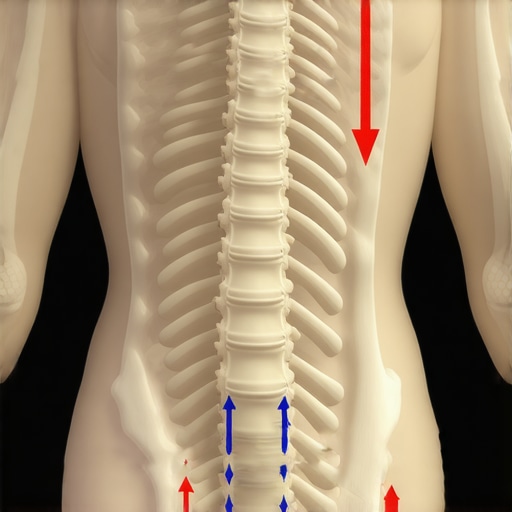
The biggest ‘oops’ factor I see with DIY adjustments is the hypermobility trap. Most people don’t realize that your spine is a mix of segments—some move too much, and some move too little. When you twist your own back, you are almost always cracking the segments that are already moving *too much*. You are stretching the loose links in the chain while the truly stuck ones—the ones causing the problem—remain completely immobile. This is exactly the truth about why your adjustments don’t seem to last. You’re effectively making your loose joints even more unstable, which forces your muscles to tighten up even more to compensate. It’s a vicious cycle that can lead to chronic ligament laxity and long-term instability if you aren’t careful.
Why does that satisfying pop sometimes leave you feeling worse an hour later?
If you feel a brief moment of bliss followed by a sharp return of tension, your nervous system is likely reacting to a perceived threat. A study published in the Journal of Manipulative and Physiological Therapeutics highlights that while high-velocity thrusts can provide immediate neurophysiological relief, without proper motor control and stability training, the body will quickly return to its default state of guarded tension. This is why I often tell people that why most core exercises actually make lower back pain worse—because they focus on movement rather than the bracing and stability required to keep the spine safe. If your ‘pop’ isn’t followed by a stabilization drill, you’re just spinning your wheels.
Stop blaming your hamstrings for your lumbar issues
Another advanced mistake is the obsession with stretching the hamstrings to fix lower back pain. In my experience, if your hamstrings feel perpetually tight no matter how much you stretch them, they probably aren’t short—they are overactive because your pelvis is out of alignment. If you keep pulling on them, you might actually be aggravating your sciatic nerve. I’ve found that why stretching your hamstrings won’t fix your chronic tightness is often due to a lack of pelvic stability. Instead of forcing a stretch, you need to learn the 3 stretching mistakes that make sciatica worse to ensure you aren’t actually damaging the nerve tissue while trying to ‘loosen up’ your back.
Your core is the real culprit behind your neck pain
It sounds counterintuitive, but your neck tension is often a direct result of what’s happening in your midsection. When your deep core stabilizers aren’t firing, your body recruits the small muscles in your neck and shoulders to help keep you upright. This is how a weak core actually causes chronic neck tension. No amount of neck cracking will fix this because the root cause is six inches lower. You have to stop looking at your spine as a series of isolated parts and start seeing it as a single, integrated system. Have you ever fallen into this trap of chasing the pain instead of the cause? Let me know in the comments. By shifting your focus from ‘releasing’ to ‘stabilizing,’ you can finally break the habit of constant self-adjustment and find lasting relief.
I realized that the tools I kept in my gym bag were just as important as the person I saw for adjustments. If you want to stop the cycle of constant stiffness, you need to transition from fixing to maintaining. For me, the game-changer wasn’t a five-hundred-dollar massage gun; it was a five-dollar lacrosse ball. While guns provide a global vibration that feels good, knowing how to use a lacrosse ball to melt away mid-back knots allows for pinpoint pressure on the rhomboids and levator scapulae—the real culprits behind that stuck feeling. I use it against a wall for ninety seconds every evening, not to crack anything, but to desensitize the high-tension zones that pull my vertebrae out of alignment. This small habit has done more for my long-term comfort than any high-velocity thrust ever could.
Why a simple lacrosse ball beats expensive massagers
The beauty of a high-density rubber ball is its ability to reach deep into the paraspinal muscles without the risk of damaging the bony processes. When you use a vibrating tool, the nervous system often goes into a protective mode because of the sheer intensity. By contrast, manual pressure allows you to breathe into the discomfort and signal to your brain that it’s safe to let go. I’ve found that this specific type of self-care is a cornerstone of strategic chiropractic solutions for long-term back health. It empowers you to manage minor flares before they become debilitating spasms that ruin your week.
How do I maintain my spinal health over the long haul?
The secret isn’t more intense stretching; it’s consistency with low-intensity inputs. Research from the American College of Sports Medicine suggests that frequent, short bursts of movement—what they call activity snacks—are more effective for metabolic and musculoskeletal health than one hour of intense exercise followed by eight hours of sitting. This is where building a lifestyle that supports your structure becomes vital. I’ve started using a simple desk timer that forces me to perform a 10-second posture reset every thirty minutes. This prevents the creep phenomenon where your ligaments slowly stretch and lose their ability to support your weight, leading to that deep, gnawing ache by the end of the day. Consistently applying how to safely adjust your own posture throughout the day is the only way to make your clinical results permanent.

Your phone will soon tell you when your back is about to blow out
Looking ahead, I see a massive shift toward wearable biofeedback. We already track our steps and heart rate, but the next frontier is real-time spinal load monitoring. Imagine an app that vibrates your watch the moment your lumbar spine begins to round during a deadlift or when your head drifts too far forward during a Zoom call. This kind of tech will bridge the gap between your monthly visit and your daily habits. For those of us focused on enhancing athletic performance with targeted chiropractic care, this means less time on the rehab table and more time in the game. The future isn’t about better adjustments; it’s about better awareness.
Stop rolling your IT band and start fixing your hip mechanics
One specific tool that everyone misuses is the foam roller. I used to spend twenty minutes screaming in pain while rolling my IT band, only to find the tightness came back the next morning. Then I learned the correct way to use a foam roller on your IT band, which involves focusing on the vastus lateralis and TFL rather than the band itself. The IT band is a thick piece of connective tissue; you can’t roll it out like pizza dough. By targeting the muscles that pull on the band, you actually release the tension. Combine this with essential tips for managing back pain through healthy lifestyle choices, like staying hydrated to keep those tissues sliding smoothly, and you have a bulletproof maintenance plan. If you’re feeling stuck right now, I challenge you: grab a lacrosse ball and spend two minutes on that knot between your shoulder blades. Don’t look for a pop—just look for the muscle to let go.
The Hard Truth About My Addiction to the ‘Pop’
I spent a decade thinking I was ‘fixing’ my own spine, but I was actually just chasing a ghost. One of the biggest lightbulb moments I had was realizing that if I needed to crack my back every hour, the movement wasn’t therapeutic—it was a repetitive strain. Your joints aren’t supposed to feel like they need a constant ‘reset’ just to exist in a chair. Another realization? You can’t actually adjust yourself with precision. When you twist, the force follows the path of least resistance, meaning you’re only moving the joints that are already loose. This is exactly the truth about why your adjustments don’t seem to last. Finally, I learned that stiffness is often a protective mechanism. If your brain thinks your spine is unstable, it will lock your muscles down. Forcing a ‘pop’ just overrides those safety brakes without solving the underlying weakness.
The Gear That Actually Saved My Spine
I stopped buying expensive gadgets and went back to the basics that provide real mechanical feedback. My first recommendation is a standard high-density lacrosse ball. Knowing how to use a lacrosse ball to melt away mid-back knots is a superpower for anyone with a desk job. Second, I stopped rolling my lower back and started focusing on the hips. Understanding the correct way to use a foam roller on your it band and glutes does more for your lumbar spine than a thousand twists ever could. Lastly, ditch the gimmicks. I found that the truth about posture braces and muscle atrophy is that they make you weaker, not better. Real support comes from your own muscles, not a strap-on harness.
Take Control of Your Movement Today
Your journey away from the ‘pop’ habit isn’t about being perfectly still; it’s about moving with intention. You don’t have to live with that constant, gnawing urge to twist and crack. By prioritizing stability and ergonomic awareness, you can find a level of comfort that doesn’t rely on a temporary sound. Focus on the long game and invest in strategic chiropractic solutions for long-term back health that actually address the root cause. You deserve a spine that feels solid, supported, and pain-free without the violent resets. How many times a day do you find yourself twisting for a ‘crack’ just to feel normal? Let me know in the comments below.