
I remember the crisp October morning vividly. I laced up my favorite running shoes, stepped out onto the damp pavement, and set off for what was supposed to be an invigorating five-mile run. Instead, by mile two, my lower back felt like it was gripping for dear life, and my knees were aching with every stride. My glutes? Completely silent. They felt like two numb blocks of ice. I made the classic mistake of thinking I just needed to run harder to warm them up, but that only made the compensation patterns worse. If you are tired of finishing your morning sessions feeling beaten up rather than energized, you are not alone. Today, we are going to dive into exactly why your backside goes on strike when you run and how you can easily wake those muscles up before your feet even hit the pavement. Have you ever felt like your legs are doing all the heavy lifting while your glutes take a permanent vacation?
Many runners suffer from what is colloquially known as glute amnesia. When these powerful muscles shut down, your lower back, hamstrings, and knees have to pick up the slack. This structural compensation is a fast track to injury, but it does not have to be your reality. By understanding the mechanics of how your brain communicates with your muscles, you can reverse this pattern. If you are already dealing with the fallout of this issue, learning why your running form is destroying your lower back is a great place to start rewriting your movement patterns.
The Real Reason Your Backside Goes to Sleep on the Pavement
Our modern lifestyle is the ultimate enemy of active glutes. Most of us spend hours sitting at a desk before we even attempt to go for a run. This prolonged sitting keeps our hip flexors in a constantly shortened, tight state. Thanks to a neurological phenomenon called reciprocal inhibition, when your hip flexors are hyperactive and tight, your brain automatically sends a signal to relax and shut down the opposing muscles—your glutes. When you transition directly from your office chair or bed straight to the road, your glutes literally cannot fire efficiently because they are neurologically turned off. To make matters worse, starting a run with cold joints forces your body to rely on bony momentum rather than muscular control. Incorporating the best way to warm up for a morning run is crucial to breaking this neurological freeze and signaling to your brain that it is time to move.
Are my glutes actually weak, or are they just lazy?
This is the question I get asked more than any other. Runners often assume they need to do endless heavy squats to build stronger glutes. However, the issue is rarely a lack of structural muscle strength; rather, it is a coordination and communication breakdown between your central nervous system and the muscle fibers. According to a study published in the Journal of Athletic Training, altered gluteal activation patterns are highly correlated with lower extremity injuries, proving that timing and activation matter far more than sheer lifting power. If your brain cannot find the pathway to activate the muscle during a dynamic movement like running, extra strength won’t help you. If you suspect your hips are locked up from hours of sitting, you might also want to look into why your desk chair is making your hip flexors tight so you can address the root cause of this inhibition.
Wake Up the Pathway Before Your Feet Hit the Pavement
To get your glutes firing, we have to bypass the neurological traffic jam caused by hours of sitting. Think of your nervous system as a household electrical grid. If a breaker is tripped, flipping the wall switch won’t turn on the light. In the same way, trying to run with a shut-down neuromuscular pathway just forces other tissues to overload. I learned this the hard way during a training block a few years ago. I was experiencing a frustrating plateau where why your legs feel heavy after a short run became my daily reality. Instead of pushing through the fatigue, I began utilizing targeted, low-load activation drills right next to my bed. The change was instant; the deep hip ache vanished, and my stride immediately felt lighter and more fluid.
The Glute Bridge with a Tactical Band Distraction
Lie flat on your back with your knees bent at ninety degrees and your feet flat on the floor. Loop a light resistance band just above your knees. Before you lift your hips, actively push your knees outward against the band. This lateral tension immediately recruits the gluteus medius, which acts as the primary stabilizer for your pelvis. As you drive your heels into the floor to lift your hips, focus on keeping your ribcage tucked down toward your belt line. If you arch your lower back at the top, you are simply substituting spinal extension for hip extension, which defeats the entire purpose and can lead to acute irritation. When runners overlook these stabilizing patterns, they often find themselves seeking unlocking back pain relief expert chiropractic adjustments that work to undo the structural stress of repetitive spinal compensation.
The Single-Leg Iso-Hold to Build Real-World Stability
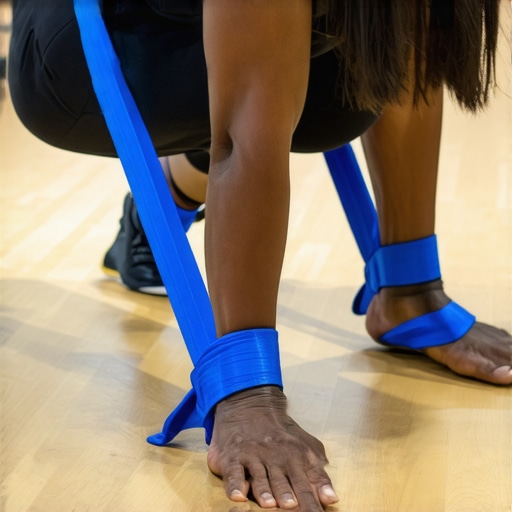
Running is entirely a single-leg sport; you are never on both feet at the same time. To bridge the gap between lying on the floor and running down the street, stand on one leg with your knee slightly bent. Lift your opposite knee toward your chest and hold it there. Now, squeeze the glute of your standing leg as hard as you can while keeping your pelvis perfectly level. If your hip drops to the side, your lateral stabilizers are failing. Hold this position for thirty seconds on each side. If you feel a deep burn in the side of your hip rather than your lower back, you have successfully isolated the correct stabilizers. Building this foundation is a core component of enhancing athletic performance with targeted chiropractic care, as it trains your joints to handle dynamic impact without buckling under pressure.
The Hip Extension Sweep for Pure Mechanics
Get down on your hands and knees in a tabletop position. Keep your spine completely neutral. Without letting your lower back sag, extend one leg straight back behind you, keeping your toe pointed toward the floor. Raise the leg until it is parallel to the ground, squeezing the glute at the top of the movement for two seconds. The key here is isolation. If your lower back arches, you are compensating with your lumbar erectors. This specific compensation is a primary driver for runner’s fatigue. Understanding these micro-movements can save you months of frustration, much like learning the role of chiropractic care in effective sports injury recovery helps athletes target the precise source of physical dysfunction instead of just treating superficial symptoms.
When you are trying to overcome athletic injuries or recurring joint tightness, the mainstream advice always points toward strengthening and isolated muscle activation. Everyone says you just need to clamp a resistance band around your knees or perform endless glute bridges to fix your mechanics, but in my experience, focusing solely on muscular output without addressing underlying joint restrictions is a recipe for frustration. If your pelvic joints are locked or your spine is misaligned, your nervous system will actively limit muscle output as a protective mechanism. No amount of mental focus or band work can override this hardwired neurological defense.
The Joint Mechanics Trap Most Athletes Fall Into
This is where the “Oops” factor catches most runners and athletes off guard. The classic trap is trying to force a muscle to fire across a joint that does not have the physical space to move. For example, if your hip joint is restricted anteriorly, performing a glute bridge forces the femur to pinch against the front of the hip socket. This joint compression triggers protective tension in your hip flexors, which immediately shuts down your glutes. It is a vicious, self-defeating cycle. Understanding the deep connection between joint freedom and muscular performance is a cornerstone of boost your sports rehab journey with proven chiropractic strategies, as true movement efficiency requires both structural space and neuromuscular drive.
Why does my muscle tightness return immediately after stretching?
Many active individuals complain that their hamstrings or hip flexors tighten right back up within minutes of a deep stretch. This happens because the tightness is not a structural muscle length issue; it is a neurological splinting reaction. If your brain senses instability or a misalignment in your pelvis or lower back, it commands the surrounding muscles to lock down to protect the spinal cord. To break this loop, you must first restore proper joint articulation. Incorporating targeted physical care can disrupt this cycle, which is why exploring discover how chiropractic adjustments can alleviate chronic back pain is so eye-opening—it addresses the structural trigger of the spasm rather than just chasing the superficial symptoms.
The Neurological Priority of Joint Alignment
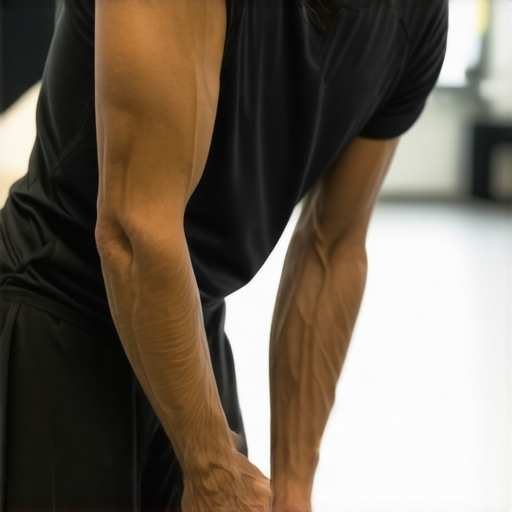
Our brains prioritize joint safety above all else. A seminal study published in the Archives of Physical Medicine and Rehabilitation demonstrated that spinal manipulation can instantly increase muscle strength and activation in the lower extremities by reducing central motor inhibition. In simple terms, when a qualified professional restores movement to a stuck joint, the brain suddenly feels safe enough to turn the surrounding muscles back on. This is the real secret behind why athletes utilize revolutionize your rehab chiropractic techniques for faster recovery; it is not about cracking bones, but about clearing the neurological static so your body can perform the way it was designed to. Have you ever fallen into this trap of stretching a muscle that was actually just trying to protect a stuck joint? Let me know in the comments below.
Once you clear that neurological block and restore proper joint play, your primary task transitions from acute therapy to ongoing preservation. I have spent years refining my own maintenance routine because, let’s be honest, nobody wants to be locked in a endless cycle of rehab. My personal breakthrough came when I stopped treating mobility work as a chore and started viewing it as a daily biological tax. To keep your joints gliding smoothly and your muscles firing predictably, you need to rely on high-yield, specific tools rather than generic gym accessories.
The Non-Negotiable Tools I Personally Rely On
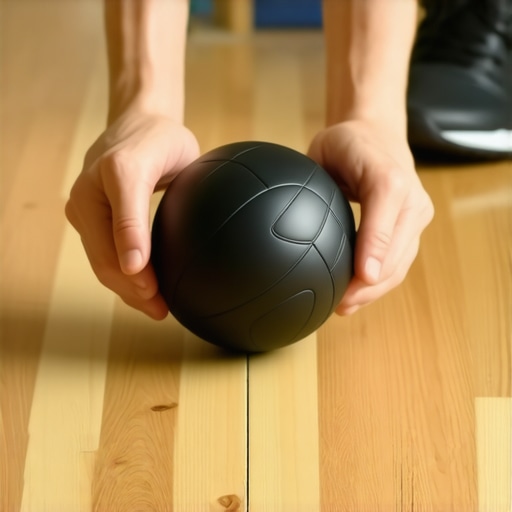
Forget the massive, ultra-soft foam rollers that take up half your living room. When it comes to maintaining precise pelvic and spinal health, I only use two highly targeted instruments: a standard lacrosse ball and a heavy-duty, short-loop resistance band. I keep the lacrosse ball under my desk to roll out the bottom of my feet, specifically targeting the plantar fascia. This acts as the starting point of your superficial back line, a fascial chain that runs all the way up to your forehead. Mobilizing this tissue directly influences how much tension resides in your hamstrings and calves. If you are struggling with stubborn lower body tightness, learning why your hamstrings always feel tight even though you stretch them will show you how these fascial lines dictate your overall flexibility.
For structural spine maintenance, I use a specialized thoracic peanut—which is simply two lacrosse balls taped together. Placing this directly under your mid-back while performing gentle overhead reaches restores vital extension to your thoracic spine, taking the mechanical burden off your lumbar joints. This specific mechanical upkeep is what allows you to continue running high mileage without triggering protective muscle spasms. If you want to dive deeper into this process, reading about strategic chiropractic solutions for long-term back health offers a great roadmap for structuring your long-term maintenance habits.
How do I maintain my joint alignment and muscle firing patterns over time?
The secret to long-term maintenance is consistency over intensity. You do not need an hour of stretching; you need five minutes of high-quality, daily motor control drills. I recommend executing three sets of the single-leg iso-holds we discussed earlier, combined with a daily passive hip opener like the couch stretch. According to physical therapist and mobility pioneer Dr. Kelly Starrett, author of Becoming a Supple Leopard, your joint capsules require daily mobilization through their full, natural ranges of motion to prevent the buildup of restrictive scar tissue. If you fail to maintain this base level of mobility, your body will slowly default back to its old compensation patterns, eventually requiring more intensive interventions like the science behind chiropractic adjustments for back pain relief to reset your biomechanics.
The Future of Running Biomechanics and Neuro-Tracking
Looking ahead, the future of athletic maintenance is moving rapidly toward real-time neurological feedback. We are already seeing the emergence of smart insoles and wearable electromyography (EMG) shorts that monitor muscle activation imbalances while you run. Within the next few years, your running watch will likely alert you the exact moment your left gluteus medius drops below a certain activation threshold, allowing you to stop and perform a quick activation drill before a compensation pattern causes an injury. Until that tech is fully mainstream, your best defense is an active connection with your body and a solid relationship with a sports chiropractor who understands how to optimize your joint pathways. To get ahead of these mechanical issues before they sideline your training, consider visiting our team to experience boost your sports rehab journey with proven chiropractic strategies first-hand.
I challenge you to try this right now: grab a firm lacrosse ball or tennis ball, spend exactly two minutes rolling out the arch of each foot, and then perform five slow glute bridges. Pay close attention to how much lighter your hips feel afterward. If you are tired of playing guessing games with your running injuries and want a personalized, hands-on assessment to unlock your true athletic potential, take the next step and visit our contact us page to schedule a comprehensive movement analysis today.
When you are trying to overcome athletic injuries or recurring joint tightness, the mainstream advice always points toward strengthening and isolated muscle activation. Everyone says you just need to clamp a resistance band around your knees or perform endless glute bridges to fix your mechanics, but in my experience, focusing solely on muscular output without addressing underlying joint restrictions is a recipe for frustration. If your pelvic joints are locked or your spine is misaligned, your nervous system will actively limit muscle output as a protective mechanism. No amount of mental focus or band work can override this hardwired neurological defense.
The Joint Mechanics Trap Most Athletes Fall Into
This is where the “Oops” factor catches most runners and athletes off guard. The classic trap is trying to force a muscle to fire across a joint that does not have the physical space to move. For example, if your hip joint is restricted anteriorly, performing a glute bridge forces the femur to pinch against the front of the hip socket. This joint compression triggers protective tension in your hip flexors, which immediately shuts down your glutes. It is a vicious, self-defeating cycle. Understanding the deep connection between joint freedom and muscular performance is a cornerstone of boost your sports rehab journey with proven chiropractic strategies, as true movement efficiency requires both structural space and neuromuscular drive.
Why does my muscle tightness return immediately after stretching?
Many active individuals complain that their hamstrings or hip flexors tighten right back up within minutes of a deep stretch. This happens because the tightness is not a structural muscle length issue; it is a neurological splinting reaction. If your brain senses instability or a misalignment in your pelvis or lower back, it commands the surrounding muscles to lock down to protect the spinal cord. To break this loop, you must first restore proper joint articulation. Incorporating targeted physical care can disrupt this cycle, which is why exploring discover how chiropractic adjustments can alleviate chronic back pain is so eye-opening—it addresses the structural trigger of the spasm rather than just chasing the superficial symptoms.
The Neurological Priority of Joint Alignment
Our brains prioritize joint safety above all else. A seminal study published in the Archives of Physical Medicine and Rehabilitation demonstrated that spinal manipulation can instantly increase muscle strength and activation in the lower extremities by reducing central motor inhibition. In simple terms, when a qualified professional restores movement to a stuck joint, the brain suddenly feels safe enough to turn the surrounding muscles back on. This is the real secret behind why athletes utilize revolutionize your rehab chiropractic techniques for faster recovery; it is not about cracking bones, but about clearing the neurological static so your body can perform the way it was designed to. Have you ever fallen into this trap of stretching a muscle that was actually just trying to protect a stuck joint? Let me know in the comments below.
Once you clear that neurological block and restore proper joint play, your primary task transitions from acute therapy to ongoing preservation. I have spent years refining my own maintenance routine because, let’s be honest, nobody wants to be locked in a endless cycle of rehab. My personal breakthrough came when I stopped treating mobility work as a chore and started viewing it as a daily biological tax. To keep your joints gliding smoothly and your muscles firing predictably, you need to rely on high-yield, specific tools rather than generic gym accessories.
The Non-Negotiable Tools I Personally Rely On
Forget the massive, ultra-soft foam rollers that take up half your living room. When it comes to maintaining precise pelvic and spinal health, I only use two highly targeted instruments: a standard lacrosse ball and a heavy-duty, short-loop resistance band. I keep the lacrosse ball under my desk to roll out the bottom of my feet, specifically targeting the plantar fascia. This acts as the starting point of your superficial back line, a fascial chain that runs all the way up to your forehead. Mobilizing this tissue directly influences how much tension resides in your hamstrings and calves. If you are struggling with stubborn lower body tightness, learning why your hamstrings always feel tight even though you stretch them will show you how these fascial lines dictate your overall flexibility.
For structural spine maintenance, I use a specialized thoracic peanut—which is simply two lacrosse balls taped together. Placing this directly under your mid-back while performing gentle overhead reaches restores vital extension to your thoracic spine, taking the mechanical burden off your lumbar joints. This specific mechanical upkeep is what allows you to continue running high mileage without triggering protective muscle spasms. If you want to dive deeper into this process, reading about strategic chiropractic solutions for long-term back health offers a great roadmap for structuring your long-term maintenance habits.
How do I maintain my joint alignment and muscle firing patterns over time?
The secret to long-term maintenance is consistency over intensity. You do not need an hour of stretching; you need five minutes of high-quality, daily motor control drills. I recommend executing three sets of the single-leg iso-holds we discussed earlier, combined with a daily passive hip opener like the couch stretch. According to physical therapist and mobility pioneer Dr. Kelly Starrett, author of Becoming a Supple Leopard, your joint capsules require daily mobilization through their full, natural ranges of motion to prevent the buildup of restrictive scar tissue. If you fail to maintain this base level of mobility, your body will slowly default back to its old compensation patterns, eventually requiring more intensive interventions like the science behind chiropractic adjustments for back pain relief to reset your biomechanics.
The Future of Running Biomechanics and Neuro-Tracking
Looking ahead, the future of athletic maintenance is moving rapidly toward real-time neurological feedback. We are already seeing the emergence of smart insoles and wearable electromyography (EMG) shorts that monitor muscle activation imbalances while you run. Within the next few years, your running watch will likely alert you the exact moment your left gluteus medius drops below a certain activation threshold, allowing you to stop and perform a quick activation drill before a compensation pattern causes an injury. Until that tech is fully mainstream, your best defense is an active connection with your body and a solid relationship with a sports chiropractor who understands how to optimize your joint pathways. To get ahead of these mechanical issues before they sideline your training, consider visiting our team to experience boost your sports rehab journey with proven chiropractic strategies first-hand.I challenge you to try this right now: grab a firm lacrosse ball or tennis ball, spend exactly two minutes rolling out the arch of each foot, and then perform five slow glute bridges. Pay close attention to how much lighter your hips feel afterward. If you are tired of playing guessing games with your running injuries and want a personalized, hands-on assessment to unlock your true athletic potential, take the next step and visit our contact us page to schedule a comprehensive movement analysis today.
What My Toughest Running Injuries Taught Me About Muscle Compensation
For years, I believed that if a muscle was tight, it needed stretching, and if it was weak, it needed isolating. It was only after a grueling bout of stubborn knee pain that I realized how backward that logic was. Your nervous system is constantly running calculations to keep you safe; when your pelvis is out of alignment, your body deliberately dials down your glute strength to prevent further structural damage. Realizing that “weakness” is often just neurological inhibition completely shifted my approach to training. Once I prioritized restoring proper joint movement and alignment, those stubborn, non-responsive muscles started firing effortlessly without extra resistance bands or isolated drills.
The Simple Tools I Trust to Keep My Strides Fluid
You do not need a gym full of complex machines to keep your biomechanics in top shape. I personally rely on a highly focused toolkit to preserve my pelvic alignment: a standard lacrosse ball for deep myofascial release, a heavy-duty loop band to trigger lateral hip stabilizers, and a trusted alignment block for pelvic resets. When structural issues go beyond what I can manage at home, I prioritize targeted clinical support. If you want to understand how targeted adjustments restore these communication pathways, reading about the role of chiropractic care in effective sports injury recovery will show you exactly how structural space allows your muscles to heal and perform.
Take Control of Your Stride Today
The road to pain-free, efficient running does not require hours of complex rehabilitation. By spending just five minutes before your run to clear joint restrictions and wake up your nervous system, you can protect your spine and reclaim your natural power. Do not let silent glutes force your lower back to pay the price. Have you ever noticed your lower back seizing up during a long run while your glutes feel like they are doing absolutely nothing? Let me know in the comments below!