
I still remember the exact moment my golf ball took a sharp, violent left turn and disappeared into a dense thicket of oaks on the 14th hole. It was my third hook of the afternoon, and my hands were actually vibrating from the frustration. For months, I blamed my driver, my grip, and even my golf shoes. I spent hundreds of dollars on swing coaches who kept telling me to ‘keep my hands quiet’ through impact, but nothing worked. The hook always came back, usually followed by a dull, aching soreness in my lower back that ruined my evening. I was completely stuck.
The Real Culprit Behind Your Ugly Miss
That frustrating afternoon forced me to look at my body rather than my gear. As a self-proclaimed golf addict who also happens to spend way too much time hunching over a laptop, I made a massive mistake early on: I assumed my golf swing issues required golf swing fixes. In reality, my body was structurally locked up. Because my mid-back was as stiff as a board, my lower back and my shoulders had to overcompensate. When you cannot rotate your chest, your arms flip early through the ball, causing that dreaded, uncontrollable snap hook. If you have ever felt your body seizing up mid-round, you might also want to learn how to stop your trail hip from locking up during an indoor golf simulator session to keep your pelvis moving freely.
Is a stiff mid-back really causing my terrible golf hook?
It sounds too simple to be true, doesn’t it? We are conditioned to think we need to buy a $600 driver or completely rebuild our swing plane from scratch to fix a hook. But biomechanical research shows that physical limitations dictate your swing mechanics far more than your technical intent. In fact, a landmark study by the Titleist Performance Institute reveals that over 80% of amateur golfers suffer from a severe lack of thoracic spine (T-Spine) mobility, which directly leads to swing compensations like early extension and a flipped release. When your mid-back cannot turn, your hands take over. It is a biological law. To get my body primed, I had to stop stretching my lower back—which actually made things worse—and start focusing entirely on mobilizing my thoracic cage. If you are struggling with similar stiffness, you might be making the same mistakes I did; check out why your morning stretches might be making your back more sensitive before your next tee time.
The One-Minute Movement That Saved My Swing
Once I unlocked my thoracic spine, my hands naturally quieted down, and that ball flight straightened right out. But I want to hear from you first: Have you ever felt that sharp, tight pull in your mid-back right at the top of your backswing, only to watch your ball hook violently into the trees? Let me know in the comments below. Let’s dive into the exact physical move that will get your chest rotating and keep your ball in the fairway.
Unlocking the Thoracic Cage: A Step-by-Step Fix
To stop your hands from flipping early, you have to create a reliable rotation pivot in your mid-back. Think of your spine as a rusty hinge on a door; if the middle hinge doesn’t budge, you end up wrenching the handle and bending the frame just to force it open. In golf, your shoulders and lower back are that door frame, taking a beating every time you force a rotation. The secret to freeing up this area isn’t a complex gymnastic routine. It starts with simple, targeted tissue mobilization that you can perform right on your living room floor.
The first time I tried to mobilize my thoracic spine, I went at it with a hard foam roller and ended up bruised and incredibly sore the next day. My movement actually felt more restricted because my muscles braced against the aggression. That is when I switched to a highly targeted approach using a denser, smaller tool. If you want to avoid my mistake and get immediate relief, you can learn how to use a lacrosse ball for better thoracic mobility without bruising your ribs.
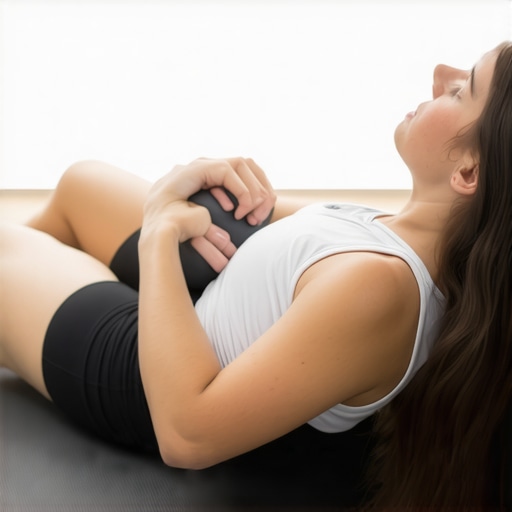
Step One: Pin and Stretch the Tight Tissues
Lie on your back with your knees bent and place two taped-together lacrosse balls (or a peanut roller) directly under your mid-back, keeping them clear of your actual spine. Hug your arms tightly across your chest to pull your shoulder blades out of the way. Take a deep breath in, and as you exhale, slowly let your head and shoulders melt down toward the floor. Do not arch your lower back to cheat the movement. Keep your core gently engaged so the pivot happens entirely in your upper chest. Perform five slow breaths at one spot, then roll the ball up or down an inch and repeat.
Step Two: Active Rotation with Rib Locking
Once you have released the tight fascia, you need to teach your nervous system how to use this newly acquired range of motion. Lie on your side in a fetal position, keeping both knees bent at 90 degrees to lock your lower back in place. Rest your top knee on a foam roller or a yoga block—if this knee lifts during the stretch, you are cheating the movement by twisting your pelvis. Reach your top arm forward, then sweep it up and over your body in a wide arc, attempting to touch the back of your shoulder to the floor. Follow your hand with your eyes to get your neck involved in the rotation.
This active movement helps rebuild the neuropathways needed for a smooth transition at the top of your backswing. This kind of functional restoration is exactly why elite athletes rely on physical therapists and chiropractors; understanding boost your sports rehab journey with proven chiropractic strategies can completely change how your joints respond to high-velocity movements like a golf swing. When your mid-back rotates freely, your trailing hip and shoulders can align naturally, preventing the desperate hand flip at impact.
How Often Should I Do This?
Consistency beats intensity every single time. Doing this simple routine for just four minutes every morning will yield far better results than a grueling 30-minute session once a week. If you sit at a desk all day, your mid-back naturally resets to a stiff, rounded posture, which is why a daily reset is mandatory. I personally keep a lacrosse ball right next to my golf bag so I can roll out my T-spine for sixty seconds before I even start my warm-up swings. This simple habit keeps my chest rotating and keeps my tee shots flying straight down the middle of the fairway.
When most athletes try to fix a stiff spine or a nagging ache, they immediately default to long, static holds. They bend forward to touch their toes, twist their lower back until it pops, or pull their knees to their chest. If you have been doing this to solve your golf hook, you are actually feeding the beast. In my years of working through structural issues, I discovered a hard truth: trying to stretch away your stiffness often makes your joints hyper-sensitive and completely unstable.
The Core Muscle Myth Most Active People Fall For
Everyone tells you that a stronger core is the ultimate shield against injury. But the standard advice to strengthen your core by doing hundreds of crunches actually compresses your lumbar discs and tightens your hip flexors. In my experience, focusing solely on strength without functional mobility creates a rigid torso that cannot rotate. When your mid-back is locked up and you force a rotation anyway, your body will sacrifice your lower back to complete the swing. This is where you end up with micro-tears and chronic inflammation.
Instead of stretching a painful lower back, you should be stabilizing it while mobilizing the joints above and below. If you want to dive deeper into this relationship, you can discover how chiropractic adjustments can alleviate chronic back pain by restoring proper joint mechanics rather than just temporarily masking the tightness with static stretching.
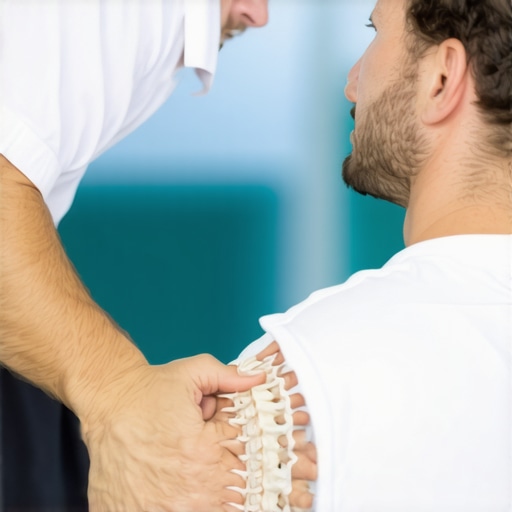
Are you over-stretching the wrong parts of your spine?
This is the exact question that changed my entire approach to recovery. A landmark study published in the Journal of Orthopaedic & Sports Physical Therapy highlighted that regional interdependence—how one joint affects another—is the key to resolving chronic movement dysfunction. If your thoracic spine lacks mobility, your lumbar spine is forced to become mobile to compensate. But your lower back is built for stability, not rotation. When you perform aggressive twisting stretches to ‘loosen up’ your lower back, you are actually destabilizing the very foundation of your golf swing.
This dangerous trap is why so many amateur athletes experience a vicious cycle of temporary relief followed by worse spasms. To truly break this loop, you must focus on targeted joint manipulation and active rehab. Learning how to properly mobilize your joints is why understanding the science behind chiropractic adjustments for back pain relief is so critical for longevity on the golf course. It is about restoring motion where you need it (the mid-back) so your lower back can do its actual job: staying stable and strong.
The Traps of Self-Adjusting and How to Avoid Them
Another massive mistake is trying to self-adjust. We have all done it—twisting our torso quickly in an office chair to get that satisfying pop. While it feels good for a few seconds due to a temporary release of endorphins, you are actually hyper-mobilizing the segments of your spine that are already moving too much. You are completely ignoring the stiff, frozen segments that actually need the help. If you find yourself constantly trying to crack your own bones for relief, you need to understand why you should never crack your own neck or back without professional guidance.
Have you ever fallen into this trap of constantly stretching or popping your joints only to find the tightness returns an hour later? Let me know in the comments below. True recovery requires a strategic plan that combines targeted, professional adjustments with active movement patterns. If you are ready to stop guessing and start moving efficiently, explore how strategic chiropractic solutions for long-term back health can keep you playing pain-free for years to come.
When you constantly fight your body with aggressive stretching, you are playing a losing game. Over the years, I have learned that long-term physical maintenance requires precise, professional assessment combined with specific daily habits. If you want to keep your body moving fluidly without constantly regressing into spasms, you must build a bulletproof structural routine. Let us look at the exact tools and long-term habits that will actually keep you on the field, the court, or the course.
The Diagnostic Tools That Actually Matter for Athletic Longevity
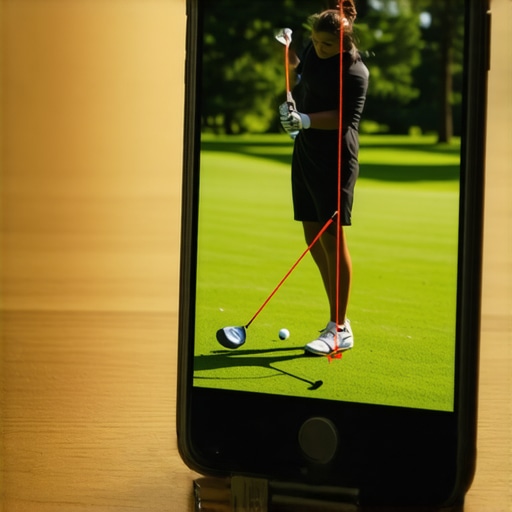
I wasted thousands of dollars on expensive vibrating massage guns and recovery boots before realizing they only provide temporary sensory distraction. Real recovery is built on precise structural feedback. The single best tool I ever invested in is a simple, high-resolution video analysis app like OnForm. By filming my movement from the side and behind, I could clearly see exactly when my hips stopped rotating and my lower back began to excessively arch. This objective visual feedback is far more valuable than trying to guess how your spine feels mid-movement.
For structural adjustments, professional assessment is irreplaceable. Chiropractors utilize advanced biomechanical evaluations to identify exactly which segments of your spine are locked up. When you combine high-quality clinical care with smart daily habits, your recovery window shrinks dramatically. If you want to accelerate this process, you can learn how how chiropractic care can shorten your injury recovery time through targeted, joint-specific adjustments.
How do I maintain my spinal mobility over time?
The secret to maintaining spinal mobility is integrating short, active movement blocks directly into your daily routine. Do not wait for your scheduled workout to move. For every 50 minutes you spend sitting at a desk, stand up and perform three slow, controlled thoracic rotations or a deep hip flexor stretch. This consistent stimulus prevents your nervous system from locking down your joints in a protective spasm. Additionally, adjusting your daily environment is crucial; simple tasks like managing back pain through healthy lifestyle choices, such as monitoring your sitting posture and staying hydrated, pay massive dividends over time.
Where the Future of Sports Rehab Is Heading
The sports rehabilitation industry is moving rapidly away from passive treatments like ice and rest. The future is active, neurologically driven rehab. According to athletic performance expert Dr. Kelly Starrett of The Ready State, true movement longevity is built on real-time joint stabilization during active load. We are starting to see wearable sensors that track joint angles during your golf swing or run, alerting you when your posture begins to break down. This real-time feedback allows you to correct your movement before micro-trauma accumulates in your lower back. By combining these advanced technologies with enhancing athletic performance with targeted chiropractic care, active individuals can maintain optimal joint centration even under extreme athletic loads.
My challenge for you today is simple: stop the random static stretches. For the next seven days, replace your morning hamstring and back stretches with the two-step thoracic routine we discussed. Film your movement, track how your lower back feels, and observe how much more naturally your body rotates.
My Hardest Lessons Learned From Treating Golf Swing Compensation as a Mechanical Issue
For years, I approached my golf hook as a failure of my hands and arms, completely ignoring how my sedentary lifestyle locked up my thoracic spine. If you sit at a desk for hours and then expect your body to rotate 90 degrees at high velocity, you are begging for a physical disaster. First, stretching a painful area often backfires; you cannot stretch away joint instability. Second, forcing a range of motion your joints do not possess will only result in micro-tears and chronic pain elsewhere. Finally, structural corrections take time, but the role of chiropractic care in effective sports injury recovery proved to me that targeted clinical support beats blindly struggling with swing aids every single time.
The Core Kit for Unlocking Your Athletic Rotation
To break the cycle of back pain and erratic ball flights, you do not need expensive exercise machines. Over the years, I have narrowed down my recovery kit to just three highly effective, budget-friendly tools. First is a simple, firm lacrosse ball peanut roller to target the tight fascia around the shoulder blades. Second is a standard 36-inch high-density foam roller, which I use to block my hips and isolate thoracic rotation during side-lying drills. Lastly, I highly recommend using a video analysis app to visually track how your spine behaves during your swing. If you are struggling with daily aches outside of your golf game, check out how unlocking back pain relief expert chiropractic adjustments that work can serve as the ultimate diagnostic starting point for your athletic performance.
How Will You Reclaim Your Swing and Save Your Lower Back?
You do not have to accept chronic stiffness or a wild, unpredictable hook as a permanent part of your golf game. When you choose to address the structural restrictions in your mid-back, you are not just saving your scorecard—you are protecting your lumbar spine from years of wear and tear. Commit to a dedicated mobilization routine, get your body assessed by professionals who understand athletic movement, and watch how effortlessly your swing aligns itself. Have you ever noticed your hook gets worse as your back gets tighter during a long round? Let me know in the comments below, and let’s get you moving pain-free again.