
I’ll never forget the morning I finally “did it.” I was thirty-one, feeling that familiar, crusty stiffness in my lower back that we all dread. Like a good little health enthusiast, I flopped onto the floor for some deep hamstring stretches and a vigorous spinal twist. *Pop.* That wasn’t the good kind of pop. Within twenty minutes, I couldn’t even stand up straight to brush my teeth. I had fallen into the classic trap of thinking my body was a piece of cold taffy that needed to be pulled apart to function. I was trying to be proactive, but I was actually sabotaging my own recovery.
Stop Yanking Your Spine Before Breakfast
We’ve been told for decades that “stretching is life.” But here is the cold, hard truth I learned the hard way: your spine is actually most vulnerable right after you wake up. During the night, your spinal discs soak up fluid like sponges, making them slightly larger and under more internal pressure than they are in the afternoon. When you jump straight into aggressive stretches, you’re basically trying to fold a fully inflated balloon. If you’ve noticed that your lower back hurts only after you wake up, you aren’t alone. I spent years making this exact mistake, wondering why my “healthy” routine was actually leaving me more sensitive to every sneeze or sudden movement. Today, I want to show you why your current routine might be the culprit behind your sensitivity and how we can flip the script to actually protect your back and achieve long-term back health.
Is stretching actually worth the hype if it hurts?
It’s a fair question. You see athletes doing it, your yoga teacher swears by it, and your neighbor probably mentions it every time they see you. But if your goal is long-term relief, the “no pain, no gain” mentality is a recipe for disaster. I used to think if I just pushed through the tightness, I’d eventually “release” the knot. Instead, I was just triggering my nervous system to tighten up even more to protect the joint. If you’ve been struggling, you might even be making the stretching mistakes that make sciatica worse without even realizing it.
The Reason Your Back Feels Like a Rusty Hinge
When we feel stiff, our instinct is to pull. But often, that stiffness isn’t a muscle length issue; it’s a stability issue. Your brain keeps those muscles tight because it doesn’t trust your spine to stay stable. According to research by Dr. Stuart McGill, a world-renowned expert in spine biomechanics, spinal discs are under significantly more stress during forward bending in the early morning hours. Pulling on those tissues first thing can actually increase the risk of a disc injury or worsen the difference between a disc bulge and a disc herniation that you might not even know you have. I’ve seen this countless times in sports rehab—people who are incredibly flexible but can’t sit for twenty minutes without pain. They are often surprised to find that most core exercises actually make lower back pain worse because they involve too much spinal flexion too early in the day. Have you ever felt like your morning routine was actually making you feel “fragile” for the rest of the day? Let me know in the comments—I’d love to know if your “good” habits are secretly causing your flares.Instead of pulling your knees to your chest and hoping for a miracle, we need to create internal pressure. Think of your core like a soda can. If the can is empty and you step on it, it crushes instantly. If it’s full and sealed, it can support a huge amount of weight without buckling. Most people are moving through their day with an ’empty’ torso, leaving their discs to take the full hit of every step and bend. To fix this, you have to learn how to use diaphragmatic breathing to calm your nervous system and create that internal ‘shield’ for your lower back before you even get out of bed.
Build a Fortress Around Your Spine
I remember a Saturday morning about two years ago. I was trying to move a heavy ceramic planter in my backyard. My ego said, ‘just grab it,’ but my back was already giving me that familiar, dull warning hum. In the past, I would have reached down, rounded my back, and felt that sickening ‘zap’ that ruins a whole weekend. Instead, I stopped. I took a deep belly breath, packed my shoulders down, and used a proper hip hinge. No zap. No three-day recovery on the couch. This is the lifting technique for parents with chronic back issues that changes the game, whether you are picking up a toddler or a grocery bag.
Breathe into your belly first
The foundation of a stable back isn’t a six-pack; it’s the diaphragm. Most of us are chest breathers, which keeps our bodies in a ‘fight or flight’ state and leaves the lower spine unsupported. By breathing deep into your abdomen, you increase intra-abdominal pressure. This pressure acts like an internal airbag, pushing back against the spine from the inside out. If you aren’t sure where the pain is coming from, learning how to identify if your back pain is muscular or nerve related starts with seeing how your body responds to this stabilization.
Master the hinge to save your discs
The most common mistake I see is using the lumbar spine as a hinge point. Your lower back is designed for stability; your hips are built for mobility. When you bend over to tie your shoes or pick up a pen by rounding your spine, you are putting massive shear force on your discs. You must learn the hip hinge secret for people with chronic lumbar issues to keep your spine neutral. This shift alone can stop the micro-trauma that keeps you in a perpetual state of inflammation. 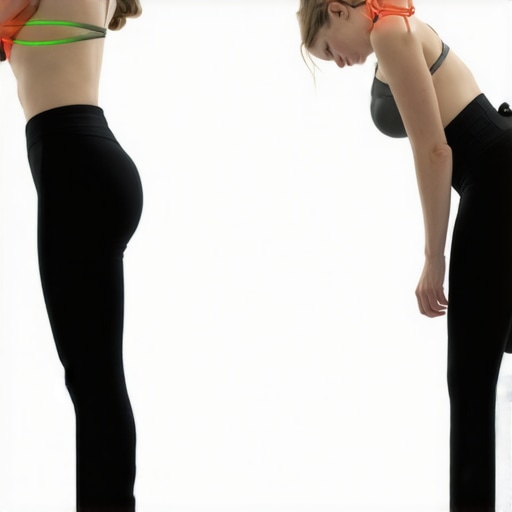
Why your adjustments need a stable foundation
You might find that you get a great adjustment, feel amazing for three hours, and then the stiffness crawls back in. This happens because the adjustment is only half the battle. While the science behind chiropractic adjustments for back pain relief shows us that we are effectively ‘rebooting’ the nervous system, that new alignment won’t stick if your muscles are still programmed to protect a weak core. This is the truth about why your adjustments dont seem to last—it’s rarely the chiropractor’s fault and usually a result of old movement patterns. If your hips are ‘locked’ because of your desk job, your lower back will always be the victim. This is often why your hip flexors are still tight after a year of stretching; they aren’t actually short, they are just terrified because your spine isn’t stable.
You’ve probably been told your core is weak. It’s the standard line delivered by well-meaning trainers and even some doctors. But here is the nuance most people miss: most patients I see with chronic back pain don’t actually have ‘weak’ muscles; they have ‘confused’ ones. Your brain is essentially putting the parking brake on your movement because it doesn’t trust your spinal stability. If you keep trying to power through with heavy planks while your ribs are flared, you’re just reinforcing the dysfunction. This is why the simple test for rib flare and why it matters for your core is a much more effective starting point than just doing more crunches. Have you ever fallen into the trap of thinking you just needed to ‘get stronger’ only to find the pain got worse? Let me know in the comments.
Your Core Isn’t Weak—It’s Just Confused
The contrarian truth is that building a bigger ‘six-pack’ often makes back pain worse, not better. As noted in research published in the Journal of Bodywork and Movement Therapies, chronic pain is frequently a result of poor ‘motor control’—meaning the muscles aren’t firing in the right sequence. I’ve worked with high-level athletes who can deadlift four hundred pounds but can’t stabilize their spine while standing on one leg. If your glutes are ‘sleeping’ because of neural inhibition, your lower back has to work triple time to compensate. You need to understand why your glutes wont fire during your workout before you ever think about adding more weight to the bar. When we focus on enhancing athletic performance with targeted chiropractic care, we aren’t just looking at strength; we are looking at the communication between the brain and the muscle.
Does more flexibility actually prevent future injuries?
In the advanced world of sports rehab, the answer is often a surprising ‘no.’ In fact, hyper-mobility without stability is a recipe for a disc herniation. I see many people who pride themselves on being ‘flexible’ but suffer from constant micro-instability. They try to fix this by ‘self-cracking’ their own back or neck to find relief. This is a massive ‘oops’ factor. When you do this, you’re likely just over-stretching the joints that are already moving too much, while the actual ‘stuck’ segment remains immobile. This habit is exactly the truth about cracking your own neck at your desk—you’re creating a cycle of instability. Real the role of chiropractic care in effective sports injury recovery involves specific, targeted adjustments to the segments that *aren’t* moving, allowing the hyper-mobile ones to finally rest.
Stop Chasing the Sound and Start Chasing Stability
Another common mistake is the ‘ice trap.’ We’ve been taught for decades to ice every ache, but why icing your lower back might be slowing down recovery is a nuance that even some professionals miss. While cold can numb pain, it also constricts blood flow and can shut down the very inflammatory process required for tissue remodeling and healing. To truly boost your sports rehab journey with proven chiropractic strategies, we have to respect the body’s natural healing timeline rather than just trying to freeze the pain away. The goal of strategic chiropractic solutions for long-term back health is to create a system that can handle the unexpected—the slip on the ice, the heavy grocery bag, or the long flight—without collapsing into a spasm. It’s about building a body that is resilient, not just one that is ‘stretched out’ or ‘numb.’
I stopped looking for a ‘quick fix’ when I realized that my back wasn’t a problem to be solved, but a system to be maintained. If you treat your body like a vintage car, you don’t wait for the engine to smoke before you check the oil. I’ve spent the last decade testing every gadget and methodology under the sun, and I can tell you that the fancy, expensive vibration plates aren’t nearly as effective as the simple, boring stuff done with surgical precision. To truly revolutionize your rehab chiropractic techniques for faster recovery, you have to move beyond the clinic and into your living room.
Stop Rolling Your Lower Back Right Now
One of the most common ‘maintenance’ tools people use is the foam roller, but most are using it as a weapon against their own spine. I see people arching over a hard plastic tube, trying to ‘pop’ their lumbar vertebrae. This is a massive mistake. Your lower back needs stability, not more mobility. If you want to know the mechanics of it, you need to understand why you should never roll your lower back on a foam roller. I personally only use a roller for my mid-back (thoracic spine) and my quads. For the actual ‘knots’ in the low back, I switch to a soft lacrosse ball specifically on the glutes and QL muscles, never the bone. It’s about being a sniper, not a sledgehammer.
How do I stay pain-free for the long haul?
Maintenance isn’t a thirty-minute session on Sundays; it’s a series of essential tips for managing back pain through healthy lifestyle choices that you weave into your day. For me, that means a standing desk transition every forty-five minutes. If you’re stuck at a screen, you must learn how to set up your laptop for better neck alignment. I’ve found that even a two-inch adjustment in screen height can be the difference between a clear head and a tension headache by 3:00 PM. We are also seeing a massive shift toward ‘pre-hab’ technology. I predict that in the next five years, wearable sensors will give us real-time feedback on our spinal shear force during a workout, allowing us to adjust our form before a disc even gets irritated.
The Gear That Actually Makes a Difference
I’m a huge fan of ‘active’ furniture. I swapped my traditional office chair for a stool that requires me to engage my core to stay upright. This small change helps ensure that how spinal alignment directly impacts your athletic performance isn’t just something I think about at the gym, but something my body practices while I answer emails. In the world of elite performance, experts like Dr. Kelly Starrett emphasize ‘joint centration’—the idea that the joint must be centered in its socket to function without wear and tear. If you’re constantly slumping, you’re ‘de-centering’ your shoulders and hips. This is why you need to actively work to how to fix the forward shoulder slump from cell phone use throughout the day. My advanced tip for you today? Spend five minutes tonight lying on your back with your legs 90 degrees on a chair (the ’90/90′ position). It’s the ultimate ‘reset’ button for your psoas and lower back. Give it a shot—your spine will thank you tomorrow morning.
The Brutal Realities of a Sensitive Spine
Looking back at my own journey, I realized that the biggest hurdle wasn’t my physical injury; it was my ego. I wanted to be the guy who could stretch his way out of a problem. Here are a few lightbulb moments that changed everything for me: Stability is the quiet hero. You don’t feel stability when it’s there, but you certainly feel the lack of it when your back gives out. Building that internal pressure is a 24/7 job, not a 10-minute workout. Movement is a skill. Just like playing an instrument, you have to practice moving correctly. If you are unlocking back pain relief expert chiropractic adjustments that work, you must pair them with better mechanics or the relief will be temporary. Rest can be a trap. I used to think I needed to stay in bed when things got bad, but I soon learned why bed rest is the worst thing for acute back spasms. Your discs and muscles need gentle movement to circulate the fluids that promote healing.
The Kit I Use to Stay Out of the Treatment Room
I don’t believe in expensive gadgets, but there are three things I won’t travel without to maintain my progress. First, a soft lacrosse ball—it is the perfect density for working into the glutes without causing the defensive guarding a hard ball might trigger. Second, I recommend everyone read ‘Back Mechanic’ by Dr. Stuart McGill; it is the gold standard for understanding how to move without pain. Finally, a standing desk converter has been a game-changer. By avoiding the seated slouch, I keep my hips open and my spine neutral throughout the workday. These essential tips for managing back pain through healthy lifestyle choices are what actually sustain the work done in the clinic.
Your New Chapter Starts with One Better Breath
The road to recovery isn’t a straight line, but it is a journey worth taking. You don’t have to live in fear of the next zap or spend your life avoiding the sports you love. By combining smarter movement patterns with strategic chiropractic solutions for long-term back health, you can build a body that feels resilient rather than fragile. It starts with one deep belly breath and one mindful hip hinge at a time. #IMAGE_PLACEHOLDER_E#
Have you ever had a lightbulb moment where you realized a healthy habit was actually hurting your back? Let me know in the comments below—I’d love to hear your story.