
I’ll never forget the morning I couldn’t even grip my coffee mug without a sharp, electric zing shooting through my thumb. I was convinced I had carpal tunnel or maybe I’d finally paid the price for years of heavy lifting and endless texting. I spent weeks wearing those clumsy thumb braces and slathering on ibuprofen gel, but the weakness just got worse. It felt like my hand was slowly ‘unplugging’ from my body. It wasn’t until a friend pointed out that my neck felt like a stack of frozen bricks that the lightbulb finally flickered on. I had been treating the smoke for months while the fire was raging in my spine. [image_placeholder]
Stop Rubbing Your Thumb and Look at Your Neck
The truth is, your body is a master of deception. What feels like a localized hand injury is often a classic case of referred pain. When the nerves in your lower neck—specifically the C6 nerve root—get compressed or irritated, the signals get scrambled. Your brain receives a ‘help!’ signal from your thumb, even though the actual pinch is happening inches away near your vertebrae. Early on, I made the massive mistake of focusing entirely on my wrist and hand, wasting months on physical therapy that couldn’t possibly work because the source was untouched. We are going to fix that today. I want to show you how a weak core actually causes chronic neck tension, which often cascades down into these radiating pains. We’re going to dive into the mechanics of your cervical spine and why that ‘unplugged’ feeling in your grip is a major red flag for your overall health. I wish someone had told me sooner that my hand was just the messenger for a bigger spinal conversation.
Is this just a fancy excuse for more adjustments?
You might be skeptical. It sounds a bit far-fetched to suggest that your neck is the reason you can’t open a jar of pickles or hold a tennis racket. But the anatomy doesn’t lie. According to the Mayo Clinic, cervical radiculopathy occurs when a nerve root in the cervical spine is compressed, often leading to pain that travels far down the arm to the extremities. If you’ve been struggling with this, have you noticed that your pain gets worse when you look down at your phone for too long? This is where the nerve gliding routine that helps relieve arm numbness becomes a total game-changer. We often think of injuries as simple ‘breaks,’ but nerve issues are more like a kink in a garden hose. We need to unkink the hose at the faucet—your neck—before we can expect water to flow out of the nozzle at your thumb. I even spent time experimenting with the truth about heat versus ice for neck stiffness only to realize I was applying the ice to the wrong end of the nerve! Before we move on, I have to ask: have you spent way too much money on wrist braces only to find they do absolutely nothing for your grip strength? If so, you’re in the right place to finally find some real answers. I remember the specific moment I failed to turn my car key. It wasn’t even a heavy lift; it was a simple twist, and my thumb felt like it was made of cooked spaghetti. I felt defeated, like I was aging decades in a single afternoon. I had tried every ‘ergonomic’ mouse and every ‘stress-relieving’ squeeze ball on the market. Total waste of time. What we are doing today is looking at the ‘why’ behind the ‘ow.’ We’re going to walk through the exact steps to identify if your neck is the culprit and how to start the recovery process without more useless gadgets.
Test Your Neck Range to See if the Thumb Responds
Before you buy another wrist wrap, try this simple test. Sit up tall and slowly tilt your ear toward your shoulder, then rotate your chin toward the opposite side. If you feel that familiar ‘zing’ or a sudden weakness in your thumb while your neck is in a specific position, you’ve found your culprit. This is how you start to identify if your back pain is muscular or nerve related. I remember doing this for the first time in my kitchen. I tilted my head back and to the right, and my thumb literally dropped the orange I was holding. It was terrifying but also a relief—I finally knew exactly where the ‘kink’ in the hose was located. 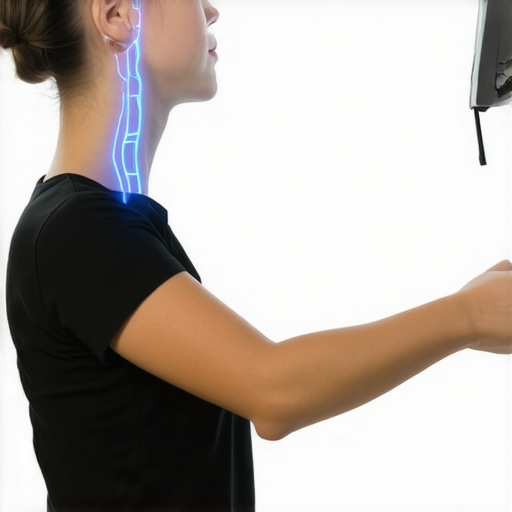
Gently Floss the C6 Nerve to Clear the Path
Once you know the neck is involved, you have to stop ‘stretching’ the nerve and start ‘gliding’ it. Think of your nerve as a delicate thread inside a straw. If the straw is pinched, pulling on the thread only creates more friction and damage. Using the nerve flossing technique for carpal tunnel relief (which works beautifully for C6 issues too) allows the nerve to slide through the soft tissue without increasing inflammation. My first attempt at this was a total mess; I pulled so hard I couldn’t use my hand properly for an hour. The key is subtlety. You want a gentle ‘on-off’ tension, never a deep, burning stretch that leaves you throbbing.
Reset Your Daily Posture Every Hour
The best adjustments in the world won’t stick if you spend eight hours a day in a ‘C-shape’ over your laptop or phone. Every time your head leans forward just an inch, the pressure on those lower cervical vertebrae triples. This constant compression is why I swear by the 10-second posture reset you can do at your desk. It is not about sitting like a statue; it is about frequently reminding your spine where ‘home’ is. When I started doing this, the frequency of my ‘spaghetti thumb’ episodes dropped by half in just a single week.
Align the Spine to Restore Lost Grip Strength
While movement is medicine, sometimes the mechanical blockage requires a professional shift. If the bone is physically encroaching on the nerve exit, you need a precise intervention. This is where how spinal alignment directly impacts your athletic performance becomes incredibly clear. A chiropractor can perform a targeted adjustment to create space for that C6 nerve root to breathe. You might hear the science behind that popping sound in your joints and worry, but that gas release is simply pressure leaving the system. When I finally got my first cervical adjustment, the ‘unplugged’ feeling in my thumb didn’t vanish instantly, but the ‘electric’ quality of the pain died down almost immediately.
Stop Stretching Your Way Into More Nerve Damage
One of the biggest mistakes I see—and I’m guilty of this too—is the obsession with stretching. We’ve been conditioned to believe that ‘tight’ equals ‘needs stretching.’ But if your C6 nerve is already screaming, pulling on the surrounding muscles is like yanking on a tangled fishing line. You aren’t loosening the knot; you’re tightening it. This is why many people find that the truth about why your adjustments dont seem to last is often because they go home and immediately aggravate the nerve with aggressive ‘mobility’ work. We often mistake protective tension for structural stiffness. When your brain senses a threat to the spinal cord—like a bulging disc or a misaligned vertebra—it sends a ‘lockdown’ signal to the surrounding musculature. This isn’t a mistake by your body; it’s a survival mechanism. In fact, a study published in the Journal of Orthopaedic & Sports Physical Therapy suggests that ‘neural tension’ requires specific mobilization, not traditional muscle stretching. If you treat a nerve like a muscle, you’ll lose every time. I spent months trying to ‘stretch out’ my neck tension, only to realize I was just poking the bear.
Why does my adjustment feel like it disappears after two days?
This is the million-dollar question. You leave the clinic feeling like a new person, but by Tuesday afternoon, the thumb zing is back. This happens because your brain has a ‘movement map’ that is currently programmed for pain. Even after a successful adjustment, your nervous system might still be stuck in a defensive loop. This is where understanding the real difference between a chiropractor and a pt becomes vital. While the adjustment clears the mechanical path, you need specific motor-control drills to ‘save’ that new range of motion in your brain’s hard drive. Without that neurological update, your body will eventually revert to its ‘safe’ (but painful) posture as a default setting.
The Core Strength Trap That Keeps You Stiff
Lastly, don’t fall for the ‘stronger is always better’ myth. I used to do a hundred crunches a day thinking it would protect my spine. The reality? Why most core exercises actually make lower back pain worse is usually down to excessive spinal flexion that further irritates the discs and nerves. We need stability, not just raw strength. There is also an ‘Oops’ factor that nearly sidelined me for good: the foam roller. I see so many people trying to ‘roll out’ their spine to fix their neck. Please, why you should never roll your lower back on a foam roller is a topic I wish was common knowledge. Rolling over the lumbar spine—or even the delicate cervical area—without proper support can create micro-instability that makes nerve compression even worse. The temporary ‘relief’ you feel is often just your sensory nerves being overwhelmed by the pressure, not a structural fix. 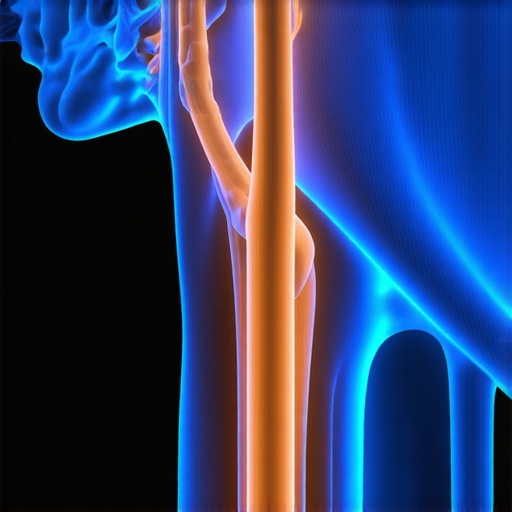 Real recovery happens when you signal safety to the nervous system, not just when you ‘bash’ the muscle into submission. Have you ever fallen into this trap of over-stretching or over-training a painful area? Let me know in the comments below, I’d love to hear what actually worked (or didn’t) for you.If you’re anything like me, you’ve realized that the ‘fix’ isn’t just about what happens on the chiropractor’s table—it’s about what happens in the 23 hours of the day when you aren’t there. I used to think I could ‘out-adjust’ a bad desk setup. Spoiler alert: you can’t. One of the most transformative changes I made was finally learning how to adjust your monitor to stop mid-back burning. It sounds small, but if your eyes are constantly tracking even slightly downward, you are inviting that C6 nerve compression back into your life. I also became obsessed with the exact height your armrests should be for neck health because when your shoulders don’t have support, your neck muscles have to work overtime to hold up your arms. It is a recipe for a recurring thumb ‘zing’ that no amount of ibuprofen can touch.
How can I stay pain-free without a weekly appointment?
The secret lies in what Dr. Stuart McGill, a world-renowned expert in spine biomechanics from the University of Waterloo, calls ‘spine hygiene.’ It’s the idea that your daily movements—how you brush your teeth, how you put on your shoes, and how you sit—are either depositing money into your health bank or withdrawing it. For me, this meant looking at strategic chiropractic solutions for long term back health as a lifestyle choice, not just an emergency reactive measure. I started using a laptop stand religiously. If you’re a digital nomad or just a hybrid worker, you need to know how to set up your laptop for better neck alignment. I personally use a portable aluminum riser, but even a stack of heavy textbooks works in a pinch. The goal is to keep your chin tucked and your ears over your shoulders. [image_placeholder]
Wearable sensors represent the future of spinal health
As we look toward the future, I see a massive shift toward biofeedback technology. We are already seeing wearable sensors that vibrate when your posture slips, but the real game-changer will be AI-driven movement analysis that integrates with enhancing athletic performance with targeted chiropractic care. This tech will tell you exactly when your ‘movement map’ is glitching before you even feel the first drop in your grip strength. To keep things moving forward, I’ve also had to prioritize essential tips for managing back pain through healthy lifestyle choices, specifically hydration and sleep quality. If your discs are dehydrated, they lose their height, which narrows the space for your nerves to exit the spine. My favorite advanced tip: for the next 48 hours, ensure your phone is held at eye level—never look down at it. It sounds exhausting, but it’s the fastest way to signal to your nervous system that the ‘threat’ is gone. Have you ever noticed how much better your grip feels after a weekend away from your computer? That is your body giving you a massive clue about your environmental triggers. Try the eye-level phone challenge for two days and see if that thumb weakness starts to fade.
The Hardest Lesson I Learned While Losing My Grip
I spent months thinking I was just getting older when I was actually just misaligned. The most profound shift happened when I realized that back pain—specifically in the cervical spine—is often a quiet thief that steals function before it causes agony. I also discovered that how to fix rounded shoulders from years of desk work is just as important as the chiropractic interventions themselves. You can’t heal a nerve if you are constantly crushing it with poor posture. My ‘lightbulb moment’ was understanding that the body is a single, interconnected chain, and a kink in the neck eventually shows up in the hand.
My Essential Spine Toolkit
If you are ready to stop guessing and start healing, I recommend three specific starting points. First, pick up Dr. Stuart McGill’s book ‘Back Mechanic’; it is the gold standard for understanding spinal hygiene. Second, I cannot overstate the value of essential tips for managing back pain through healthy lifestyle choices, like maintaining a neutral spine while you sleep. Third, if the nerve is physically blocked, you need to discover how chiropractic adjustments can alleviate chronic back pain by restoring mechanical space. These aren’t just ‘fixes’; they are investments in your future sports rehab and long-term mobility. [image_placeholder]
Your Journey Back to Full Strength
Living with that electric zing in your thumb is frustrating, but it does not have to be your permanent reality. By embracing strategic chiropractic solutions for long term back health and staying consistent with your posture, you can reclaim the strength you thought was gone forever. You deserve to move through the world without feeling like your hand is ‘unplugged.’ Have you ever noticed your thumb weakness gets worse after a long day of driving or typing? Let me know in the comments below, I would love to hear your story.