
I remember the exact moment my L5-S1 disc decided to stage a violent protest. I wasn’t deadlifting a PR or jumping out of a plane; I was literally bending over to pick up a stray sock. *Pop.* Suddenly, I was paralyzed on the bedroom floor, staring at the dust bunnies under my bed. My first thought wasn’t a logical medical inquiry—it was a desperate plea for anyone to just ‘fix me’ immediately. I spent the next six months bouncing between a chiropractor’s table and a physical therapist’s resistance bands, feeling like a confused pinball. I was wasting time and money because I didn’t understand the fundamental philosophy of either practice. I just wanted the pain to stop, but I was treating my body like a car with a broken engine while only asking the guy who fixes the bodywork for help.
The expensive mistake I made by not knowing the difference
I used to think a chiropractor was just for ‘cracking’ and a PT was just for ‘stretching.’ I walked into a PT clinic expecting a quick structural reset for a joint that felt mechanically locked, only to be told I needed six weeks of glute bridges. Then, I’d limp into a chiropractor for a legitimate muscle tear, hoping an adjustment would magically knit the fibers back together. It was a classic ‘square peg, round hole’ scenario. The reality is that while both professionals want you out of pain, their starting points are on opposite sides of the map. One focuses heavily on the relationship between the spine and the nervous system, while the other is obsessed with movement patterns and muscular imbalances. If you’ve ever struggled to identify if your back pain is muscular or nerve-related, you know exactly how frustrating that guessing game can be.
Is one of these just a glorified massage or a temporary fix?
The skepticism in the waiting room is often thick enough to cut with a knife. I used to be the biggest skeptic of all, thinking it was all a turf war for my co-pay. However, the science suggests we should be looking at them as teammates rather than rivals. A study published in the *Journal of the American Medical Association (JAMA)* found that for patients with acute low back pain, spinal manipulative therapy (common in chiropractic) led to significant improvements in function and a reduction in pain. But if you don’t follow that up with the functional stability a PT provides, you’re just waiting for the next ‘sock incident’ to happen. Whether you are dealing with sciatica that flares up when you sit or trying to boost your sports rehab journey, the choice depends on whether your ‘house’ has a shifted foundation or weak supporting beams. Have you ever felt like you were just throwing darts at a map of local clinics while your back was literally screaming at you? I want to help you stop guessing and start healing by breaking down the actual mechanics of their work.
Stop guessing between joint mechanics and muscle function
To stop the cycle of pain, you have to look at your body like a high-performance vehicle. If your car’s wheels are physically pointing in different directions, no amount of driving practice will fix the wear on the tires. That is a structural alignment issue. Conversely, if your alignment is perfect but your engine lacks the power to turn the wheels, you aren’t going anywhere. When I was stuck on that bedroom floor, I didn’t realize I had both. I had a structural ‘misalignment’ that needed a reset, followed by a total lack of muscular support. To fix this, you must first determine if your pain is a ‘hardware’ or ‘software’ problem. If you feel a sharp, lightning-bolt sensation or a joint that feels physically ‘stuck,’ you’re likely looking at a hardware issue. If the pain is a dull ache that worsens with movement or fatigue, your software—the way your muscles fire—is probably the culprit. The role of chiropractic care in effective sports injury recovery often starts with clearing those hardware blocks so the software can actually run.
Get the structural reset your spine actually needs
Think of a chiropractic adjustment as a system reboot. When a joint isn’t moving through its full range of motion, it creates a cascade of compensation. My chiropractor explained it to me using a door hinge analogy: if the hinge is bent, the door won’t close, and eventually, the wood frame starts to splinter. The adjustment ‘straightens the hinge.’ This is why revolutionize your rehab chiropractic techniques for faster recovery focus so heavily on the nervous system. By restoring motion to the vertebrae, we reduce the ‘noise’ in the nervous system, which allows the brain to communicate more clearly with the muscles. However, I learned the hard way that an adjustment is only half the battle. If you don’t strengthen the muscles around that newly mobile joint, your body will revert to its old, painful patterns within 48 hours. This is the truth about why your adjustments dont seem to last; you’re getting the reset but skipping the save button. 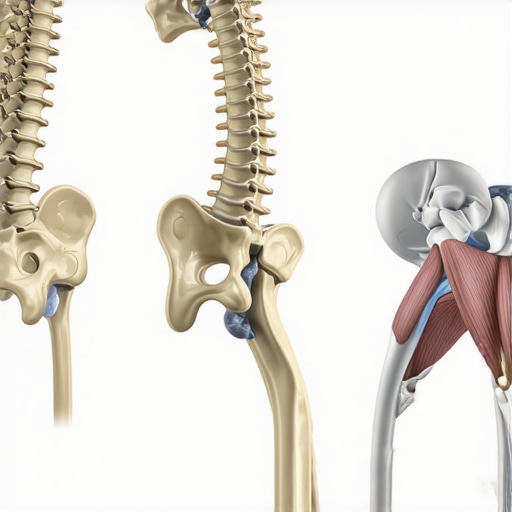
Why your glutes are ghosting you during your workout
Once the joint is moving, you have to teach your body how to use it. This is where Physical Therapy (PT) takes the lead. In my case, my L5-S1 wasn’t just ‘out’; it was being pulled out because my glutes had essentially gone on vacation. When a muscle stops doing its job, other muscles—usually the small ones in your lower back—try to do the work for them. This leads to that familiar, exhausting tightness. You might find that why your glutes wont fire during your workout is actually a protective mechanism from your brain. I remember trying to perform a single-leg RDL during a PT session. I was wobbling like a leaf in the wind. My PT didn’t just tell me to ‘try harder’; she identified that my brain had literally forgotten how to recruit my hip stabilizers because it was so focused on protecting my injured spine. The PT process is about ‘re-wiring’ those connections through specific, often boring, but highly effective movements like bird-dogs and dead bugs. It’s not about lifting heavy; it’s about making sure the right muscles are ‘on’ at the right time.Let’s get one thing straight: your body isn’t a collection of Lego bricks that just ‘pop’ out of place. This is the biggest myth in the world of adjustments. We often hear people say their ‘hip is out’ or their ‘atlas is rotated,’ but modern biomechanics tells a more nuanced story. In fact, research published in *The Lancet* emphasizes that over-medicalizing back pain with scary anatomical terms can actually lead to worse outcomes. When we focus purely on the ‘structural’ defect, we ignore the ‘functional’ reality. For instance, why stretching your hamstrings won’t fix your chronic tightness is a concept that blows most people’s minds. Usually, those hamstrings are tight because they are desperately trying to stabilize a pelvis that the core has abandoned. Stretching them is like trying to loosen a knot by pulling on the ends—it just gets tighter.
Could your brain be ‘braking’ your performance to protect your spine?
This is the ‘hidden nuance’ most people miss. Your nervous system is the ultimate governor. If it senses even a micro-millimeter of instability in your spine, it will literally ‘shut down’ your power output in your legs or shoulders to prevent you from snapping something. This is how spinal alignment directly impacts your athletic performance; it’s not just about being ‘straight,’ it’s about signaling to your brain that it is ‘safe’ to go full throttle. 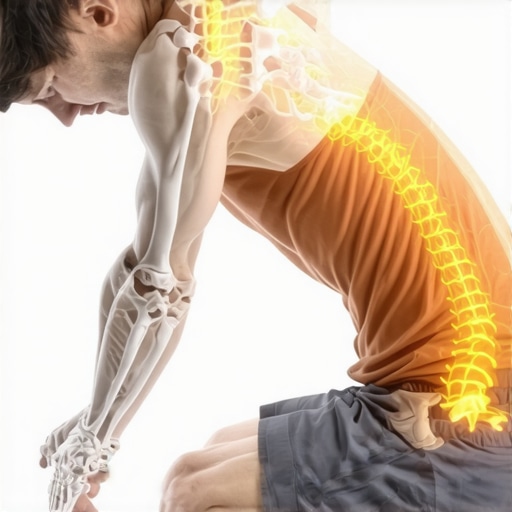 One of the biggest ‘oops’ factors I see—and I was guilty of this too—is the foam roller trap. Why you should never roll your lower back on a foam roller comes down to the lack of protection. Your lower back has no rib cage for support; when you mash it with a roller, you’re essentially jamming the vertebrae together and irritating the very nerves you’re trying to soothe. If you’re feeling that ‘zing’ down your leg, you’re better off using a stretching mistake that makes sciatica worse checklist than blunt force trauma. The reality is that the truth about why your adjustments dont seem to last is often because we treat the symptom (the tight muscle) and the joint (the adjustment) as separate entities. They are two sides of the same coin. Have you ever fallen into the trap of thinking a single ‘crack’ would fix a years-old movement problem? Let me know in the comments below.
Grab these specific tools to stay out of the clinic
Once you move past the acute phase where everything feels like a crisis, you need a personal toolkit. I am not talking about a garage full of expensive gadgets; I am talking about the surgical application of simple items. For me, the undisputed MVP is a standard lacrosse ball. Learning how to use a lacrosse ball to melt away mid-back knots was a revelation because it allowed me to address the ‘trigger points’ that were pulling my vertebrae out of whack between sessions. Another non-negotiable is learning the correct way to stretch your psoas without hurting your spine. Most people just lunge forward and arch their back, which actually irritates the lumbar discs further. If you do it right—tucking the pelvis first—you release the tension that is physically yanking on your L1-L4 vertebrae. This isn’t just about ‘feeling good’ in the moment; it is about building a body that is resilient enough to handle a heavy lifting session or a 10-hour flight without folding. 
How do I maintain my spinal health for the long haul?
Maintenance is where most people fail because they stop doing the work the second the pain hits a level two out of ten. I shifted my mindset from ‘crisis management’ to strategic chiropractic solutions for long-term back health. This means viewing an adjustment as a performance enhancer rather than a band-aid. Interestingly, research from experts like Dr. Stuart McGill, a legendary professor of spine biomechanics at the University of Waterloo, suggests that the key to a pain-free life isn’t more flexibility, but ‘proximal stiffness.’ You want a stiff core so your limbs can move fast. Integrating essential tips for managing back pain through healthy lifestyle choices like his ‘Big Three’ exercises (the bird-dog, side plank, and modified curl-up) creates a natural brace for your spine. I have even found that how regular adjustments can lower your resting heart rate is a real phenomenon; when your nervous system isn’t constantly screaming in ‘protection mode,’ your entire body operates at a more efficient baseline.
The future of your back is in your pocket
I predict that within the next five years, we will see a massive shift toward wearable biofeedback integrated with chiropractic care. Imagine a small sensor on your lower back that vibrates the moment your lumbar spine rounds during a deadlift or a long drive. We are moving away from the era of ‘go see the doctor when it hurts’ and into the era of real-time movement correction. This is why I am so adamant about enhancing athletic performance with targeted chiropractic care now; the more you understand your own mechanics today, the better you will be able to use the tech of tomorrow. If you want to start this journey right now, try one thing today: next time you pick something up, even a sock, hinge at your hips instead of rounding your spine. It sounds small, but that one shift is what separates the people who stay in the game from the people who end up back on the bedroom floor.
What My L5-S1 Injury Taught Me About My Own Ego
I used to think my back was ‘broken’ whenever I felt even a minor twinge. But once I truly understood the difference between a disc bulge and a disc herniation, I realized my body wasn’t failing me; it was signaling for a change in mechanics. The hardest lesson I learned was that pain is a lagging indicator. By the time I felt that pop, the structural issue had been brewing for months. I also discovered that the science behind chiropractic adjustments for back pain relief isn’t just about moving bones—it’s about silencing the neurological ‘alarm bells’ so my rehabilitation exercises could actually take hold. Lastly, I had to accept that ‘rest’ is rarely the cure. True recovery requires active loading and the humility to start with basic movements like bird-dogs before returning to the squat rack.
The Tiny Toolkit That Saved My Spine
To stay out of the clinic and in the gym, I rely on a few specific resources that I trust implicitly. First, the humble lacrosse ball is my daily go-to for addressing trigger points before they pull my alignment out of whack. Second, I highly recommend the work of Dr. Stuart McGill, particularly for unlocking back pain relief through core stiffening rather than just stretching. I also integrate essential tips for managing back pain through healthy lifestyle choices, such as walking every morning to lubricate the spinal discs and using a lumbar support cushion during long drives to maintain my natural curve. These tools aren’t just gadgets; they are the bridge between a temporary fix and permanent health.
#IMAGE_PLACEHOLDER_E#
Your Path to a Life Without Constant Back Fear
You don’t have to live in a state of ‘bracing’ for the next flare-up. Whether you are currently exploring the role of chiropractic care in effective sports injury recovery or you are just tired of feeling stiff at your desk, the solution lies in the synergy of movement and alignment. Your spine is a masterpiece of engineering, but even the most advanced machines require a dedicated maintenance schedule. By combining the immediate relief of an adjustment with the long-term stability of functional movement, you can build a body that is truly resilient. Have you ever noticed that your chronic stiffness feels better after a specific type of movement or a targeted adjustment? Let me know your experience in the comments below.