
I remember the morning I finally snapped—not my hip, thankfully, but my patience. I was halfway through my third aggressive couch stretch of the day, teeth gritted, sweat dripping onto my yoga mat. I had been doing this exact routine for fourteen months. According to every fitness influencer on my feed, I should have had the mobility of a gymnast by now. Instead, I stood up and felt that familiar, sharp tug in my lower back, as if my pelvis were being hauled forward by an invisible winch. I was doing the work, so why did I feel more fragile than when I started? It was a visceral realization that more force wasn’t the answer. If you have been religiously lunging and still feel like a rusted folding chair every time you stand up from your desk, I have some news you might not like: you are probably pulling on a locked door. Today, we are going to stop the mindless tug-of-war and look at why your body is actually fighting your efforts to loosen up.
Stop Pulling on a Locked Door
When I first started my sports rehab journey, I made the classic mistake of thinking my psoas was just a stubborn piece of leather that needed to be yanked into submission. I ignored how spinal alignment directly impacts your athletic performance and instead focused purely on the stretch. My biggest blunder? I was stretching into a massive anterior pelvic tilt, which meant I was actually stressing my hip capsule and lumbar spine rather than the muscle itself. Research published in the Journal of Orthopaedic & Sports Physical Therapy suggests that what we perceive as tightness is often neurological protective tension—a ‘guarding’ reflex—rather than an actual change in muscle length. If your brain doesn’t feel stable, it will keep those hips locked down to protect your spine, no matter how many hours you spend on a yoga mat. You might even find that the couch position that is secretly ruining your lumbar spine is the very thing you thought was helping. Have you ever spent months stretching a muscle only to feel even stiffer the next morning?
Is Constant Stretching Actually a Waste of Your Time?
It feels sacrilegious to ask, but for many of us, the answer is a frustrating ‘maybe.’ We often mistake a weak, overextended muscle for a ‘short’ one. When you relentlessly stretch a muscle that is already overactive because it’s trying to stabilize a weak core, you’re just making the stability problem worse. This is often why most core exercises actually make lower back pain worse; we aren’t addressing the underlying protective tension. Instead of just chasing the ‘burn’ of a stretch, we need to learn the correct way to stretch your psoas without hurting your spine, which involves way more core bracing than you’d expect. Before we dive into the mechanical fixes, let’s look at the three specific reasons your nervous system has your hips on a short leash.
Stop Chasing the Burn and Start Chasing Stability
If you want to open that locked door, you have to stop pulling and start picking the lock. The first step is acknowledging that your hips are probably tight because your spine is unstable. We often treat the psoas like a rubber band that just needs to be pulled longer, but in reality, it often acts more like a structural cable. When your spine isn’t properly supported, the nervous system recruits these deep hip muscles to act as secondary stabilizers. If you just yank on them, you are essentially trying to remove the very thing keeping your structure upright. This is a primary reason the truth about why your adjustments don’t seem to last often comes down to failing to address the underlying muscular guarding.
Reset the Circuitry with Deliberate Alignment
I remember trying to max out my deadlift three years ago. I thought I was ‘locked in,’ but my hips felt like they were filled with concrete. I would stretch for twenty minutes before the set, yet my back would still round under the weight. It wasn’t until I learned the deadlift cue that stops your lower back from rounding that I realized my tightness was actually a cry for help from my spine. My body was refusing to let go of the hips because it knew my lumbar spine couldn’t handle the load. To fix this, you have to understand the science behind chiropractic adjustments for back pain relief. An adjustment doesn’t just ‘move a bone’; it sends a massive amount of sensory input to the brain, effectively saying, ‘The joint is safe, you can let the muscles relax now.’
The One Drill That Finally Broke My Cycle of Stiffness
The most transformative tool in my rehab wasn’t a fancy massage tool or a new stretching strap; it was a simple 90/90 breathing drill. Lie on your back with your feet flat against a wall, hips and knees at ninety-degree angles. Instead of just lying there, focus on how to breathe through your belly for instant lower back relief. You are looking to expand your lower ribs into the floor as you inhale. This pressure creates internal stability, which signals the psoas and hip flexors to ‘stand down.’ If you feel your neck straining or your chest rising, then how your breathing mechanics are sabotaging your core strength becomes very obvious. You cannot have mobile hips without a stable, pressurized core.
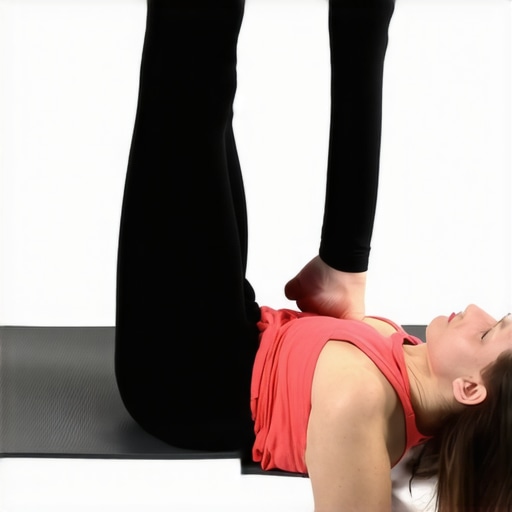
When I first performed this drill, I didn’t feel a ‘stretch’ at all. In fact, I felt a bit bored. But when I stood up two minutes later, the ‘tug’ in my pelvis was gone. My hips moved freely for the first time in months. This is the difference between forcing a change and allowing it. By providing the brain with the stability it craves through breath and alignment, you remove the need for the protective tension. You are not just stretching; you are recalibrating the entire system for better movement.
One of the hardest pills to swallow in my own recovery was realizing that my ‘tightness’ wasn’t always a physical limitation—it was a software glitch. Most people think that if something hurts, it is because something is broken or torn. This is why we default to rest, but in reality, why bed rest is the worst thing for acute back spasms becomes clear when you realize movement is the very thing that desensitizes the nervous system. If you stop moving, your brain stays in a high-alert state, keeping those ‘protective’ muscles locked down indefinitely. A common trap I see athletes fall into is the ‘more is better’ approach with mobility tools. They take a hard foam roller and mash it directly into their lower back, thinking they are breaking up knots. This is a massive mistake. You should know why you should never roll your lower back on a foam roller: you are essentially jamming your lumbar vertebrae into extension without any muscular support, which can irritate the very nerves you are trying to soothe. Instead, focus on revolutionize your rehab chiropractic techniques for faster recovery by targeting the joints that are actually designed to move, like the thoracic spine and hips.
Why Does Your Back Still Ache When the MRI Looks Perfect?
This is the question that keeps people up at night. We have been conditioned to believe that an MRI is the gold standard for diagnosis, but research in the British Journal of Sports Medicine shows that up to 30% of 20-year-olds with no back pain have disc bulges, and by age 50, that number jumps to 60%. The nuance here is that your pain is often a result of ‘load versus capacity’ rather than structural damage. If you have been chasing a ‘fix’ for a disc bulge that isn’t actually the source of your pain, you are fighting a ghost. This is where the real difference between a chiropractor and a PT becomes vital to understand; you need a practitioner who can distinguish between a structural issue and a functional one. Have you ever been told your spine is ‘fine’ despite being in agony? Let me know in the comments—I would love to hear your story. 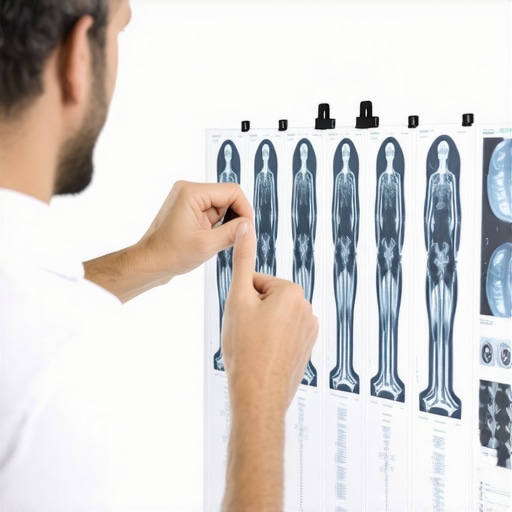 To truly break the cycle, you have to stop viewing your body as a machine with broken parts and start seeing it as a nervous system that needs to feel safe. When I stopped trying to ‘fix’ my psoas and started focusing on strategic chiropractic solutions for long-term back health, my entire perspective shifted. I wasn’t just getting adjusted; I was retraining my brain to allow my joints to move through their full range of motion without triggering a panic response. It is a subtle shift, but it is the difference between temporary relief and a lifetime of high-level performance.Maintaining that level of performance isn’t about doing a grueling hour-long rehab circuit every single morning. It is about the small, high-leverage tools that keep the ‘software’ running smoothly. For me, that means keeping a lacrosse ball and a roll of kinesiology tape in my gym bag at all times. I have found that using a lacrosse ball to melt away mid-back knots is far more effective than a foam roller because it provides the precision needed to target the multifidus and rotatores—the tiny muscles that actually stabilize your vertebrae. When I feel my pelvis starting to drift back into that old, familiar tilt, I rely on how to use kinesiology tape for lower back support. I don’t use it as a brace; I use it as a ‘tactile reminder’ for my brain. Every time I slouch, the tension on the tape sends a signal to my nervous system to engage my core. It is a simple way to boost your sports rehab journey without having to think about your posture every second of the day.
How do I keep my spine in the green zone every day?
The secret to long-term results is ‘spinal hygiene.’ Just as you brush your teeth to prevent cavities, you need daily habits to prevent neurological guarding. For me, this is a non-negotiable ten-minute window every morning. According to Dr. Stuart McGill, author of Back Mechanic and the world’s leading expert on spine biomechanics, the goal isn’t just to be ‘loose’—it is to have ‘stiffness’ in the right places at the right times to protect the underlying structures. This is why strategic chiropractic solutions for long-term back health must be paired with core stability work. If you are just getting adjusted but still sitting like a pretzel for eight hours a day, you are fighting a losing battle. Knowing how to use diaphragmatic breathing to calm your nervous system is the ultimate ‘reset’ button. When your breath is shallow and chest-driven, your brain stays in a state of high alert, which keeps your psoas and hip flexors ‘on’ as a protective mechanism. 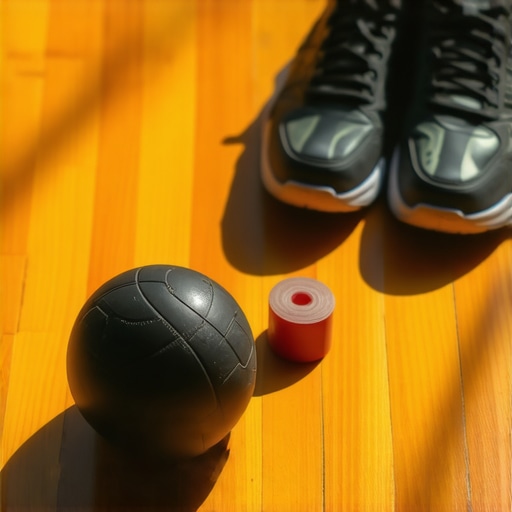
Your Future Gym Shirt Might Fix Your Posture
Looking ahead, I predict we are going to see a massive shift toward haptic feedback garments in the sports rehab world. We are already seeing the early stages of wearable sensors that track muscle activation patterns in real-time. Instead of guessing if your glutes are firing during a squat, your leggings will vibrate when they detect a compensation pattern in your lower back. This kind of immediate, objective data will revolutionize your rehab chiropractic techniques for faster recovery because it closes the feedback loop between what we think we are doing and what we are actually doing. But until that tech becomes mainstream, you are your own best sensor. I challenge you to try the ’90/90′ breathing drill tonight before bed. If you stand up and that sharp ‘tug’ in your pelvis is even 20% better, you have just proven that your tightness is a software issue, not a hardware one. Stop pulling on the locked door and start giving your brain the stability it is begging for.
Looking back on my recovery, I wish I hadn’t spent so much time fighting my own anatomy. The most significant shift happened when I stopped treating my body like a collection of tight ropes and started treating it like a sophisticated communication network. Here is the insider perspective I gained after finally breaking the cycle.
What I Learned When My Hips Finally Released After Two Years of Frustration
First, I had to accept that tightness is often a neurological parking brake rather than a physical limitation of the muscle fiber. If your brain senses instability, it will not let go of that muscle, no matter how hard you stretch. Second, pain is a signal, not a diagnosis. I spent months worrying about structural damage that was actually just a response to poor movement patterns. Third, and perhaps most importantly, the role of chiropractic care in effective sports injury recovery isn’t just about the audible pop; it is about resetting the baseline of your nervous system so your body can actually use the mobility you work so hard for.
Tools That Helped Me Rebuild My Foundation From the Ground Up
I didn’t do this alone, and I certainly didn’t do it with just a foam roller. My journey was shaped by a few high-value resources that I still use today. I highly recommend Back Mechanic by Dr. Stuart McGill; it is the definitive guide to understanding load versus capacity and how to stop picking the scab of your injury. For those wanting to master their movement mechanics, Kelly Starrett’s Becoming a Supple Leopard offers a masterclass in joint positioning. Locally, I found that unlocking back pain relief through expert chiropractic adjustments provided the window of opportunity I needed to implement the core work. I also rely on the hip hinge secret for people with chronic lumbar issues every single time I pick up something heavy, whether it is a kettlebell or a grocery bag.
Your Path to Movement Without the Constant Fear of Pain
You don’t have to live in a state of constant fragility. The transition from avoiding pain to chasing performance starts the moment you stop pulling on that locked door. By prioritizing stability and following essential tips for managing back pain through healthy lifestyle choices, you give your body the safety it needs to move freely again. Remember, sports rehab is not a destination but a practice of listening to the cues your body is giving you. Take that first step today—whether it is a professional adjustment or a simple breathing drill—and trust that your body is capable of more than you think. Have you ever felt like you were doing all the right stretches but still felt stuck? Let me know your experience in the comments below!