
I was three sets into a heavy overhead press session when my lower back gave me that familiar, sickening twinge. I thought I was doing everything right—squeezing my glutes, bracing my midsection, and keeping my eyes forward. But looking at the gym mirror, I saw it: my lower ribs were pointing toward the ceiling like a pair of wings. This ‘rib flare’ wasn’t just a postural quirk; it was the reason I was constantly battling back fatigue. For years, I made the amateur mistake of thinking a ‘proud chest’ was the same as good posture, but I was actually just leaking power and stressing my spine. Today, I want to show you exactly how to identify this in yourself so you can finally stop your lower back from arching during presses and start building real stability. This isn’t just about aesthetics; it’s about making sure your muscles actually do the job they are designed for instead of letting your joints take the beating.
Your Ribs Are More Than Just a Shield for Your Lungs
When your lower ribs jut forward, your diaphragm cannot sit flush over your pelvic floor. This misalignment is exactly how your breathing mechanics are sabotaging your core strength without you even realizing it. I used to wonder why I could do planks for minutes but still felt weak under a barbell. The truth is, if your ribs are flared, you aren’t actually using your abs to their full potential; you are likely hanging on your spinal ligaments for support. According to research published in the Journal of Bodywork and Movement Therapies, a flared rib position significantly reduces the diaphragm’s ability to generate the intra-abdominal pressure needed for spinal protection. This structural leak is often why most core exercises actually make lower back pain worse if you do not fix the rib position first. If the foundation is crooked, adding weight just speeds up the wear and tear.
Does rib flare really ruin your core strength?
You might be skeptical. After all, plenty of people have a little bit of a chest-forward look and seem to function fine. But think about your torso like a canister: if the lid (your ribs) is tilted back and the bottom (your pelvis) is tilted forward, the pressure simply leaks out the front. This lack of internal pressure is often why your rib cage feels stuck when you take a deep breath. It’s a compensatory pattern that locks up your mid-back to create stability where your core should be working. Have you ever noticed your ribs popping out during your workouts or even while just standing in line at the grocery store? If so, you’re not alone, and it’s likely the missing piece in your performance or rehab journey. We’re going to dive into a simple test you can do right now to see if your core is actually engaged or if you’re just faking it with a flared rib cage.
Turn Your Torso Back Into a Pressurized Canister
Think of your midsection as a soda can. If that can is dented or the top is tilted, it loses its structural integrity and collapses under the slightest pressure. When your ribs flare, you are essentially popping the top off that can, letting all the internal stability leak out. To fix this, you have to learn how to breathe through your belly for instant lower back relief by repositioning the diaphragm. I remember a training session last October where I was struggling to lockout a 155-pound press. I felt like a wet noodle. My coach walked over, poked my flared lower ribs, and told me to ‘knit them into my belt.’ The second I pulled my ribs down and back, the weight felt 20 pounds lighter because my spine was finally supported by pressure rather than just bone-on-bone grinding.
Pull Your Ribs Down with a Hard Exhale
The fastest way to find your proper rib position is through a forced exhale. Stand tall and place your hands on your lower ribs. Take a deep breath in, and then blow all the air out through your mouth like you are trying to blow out a hundred birthday candles. You will feel your ribs drop and your side-abs (your obliques) tighten up. This is your ‘stacked’ position. Maintaining this while you inhale is the key to how to stabilize your spine during heavy farm chores or gym sessions. If you lose this tension, your lower back will immediately arch to compensate for the lack of front-side support.
The Wall Slide Drill That Exposes Your Cheat Codes
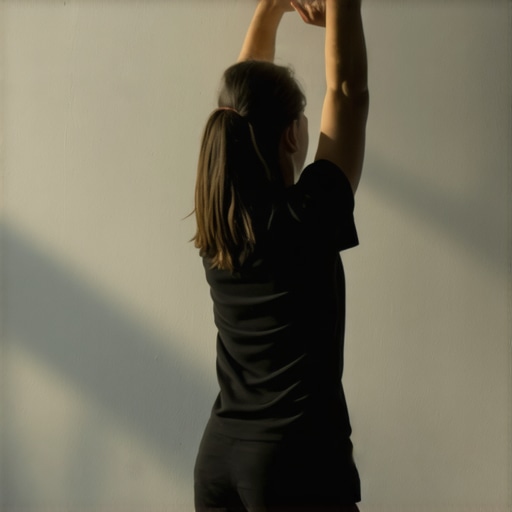
If you want to see if you are truly stable, stand with your back against a wall, heels about six inches away. Your butt, mid-back, and the back of your head should touch the wall. Now, try to flatten your lower back against the wall so there is no space for a hand to slide through. This requires you to pull your ribs down and tuck your pelvis slightly. While holding this, try to raise your arms into an overhead press motion. Most people will find their ribs popping off the wall the moment their hands pass their chin. This is why your shoulder pinches during overhead presses and the fix usually starts with this exact wall drill. It forces you to realize that your ‘overhead’ range of motion is actually coming from your lower back, not your shoulders.
Brace Like You Are About to Take a Punch
Once your ribs are down, you need to create ‘360-degree’ tension. Don’t just suck your stomach in; push your abs out against your waistband. This internal pressure is vital because how a weak core actually causes chronic neck tension is a direct result of the upper traps trying to stabilize a wobbly torso. When I finally mastered the ‘rib-down’ brace, my chronic neck stiffness after shoulder day completely vanished. You are looking for a feeling of being a solid, unmoving pillar from your hips to your collarbones. This foundation allows your shoulders to rotate freely without the rest of your body twisting or arching to finish the movement.
Most people think that if a muscle feels tight, it needs to be elongated. This is a massive trap. If your hip flexors feel like guitar strings, stretching them might actually be the reason why your hip flexors are still tight after a year of stretching. In many cases, that tightness is a protective ‘lock’ the nervous system puts on your body because it doesn’t trust your spine to stay stable. When you have a flared rib cage, your psoas often works overtime to try and pull your spine into some semblance of order. If you keep stretching it without fixing the rib position, you are essentially trying to pick a lock that your brain is desperately trying to keep closed for your own safety.
Stop Stretching Your Way Into More Pain
The contrarian truth that most ‘flexibility gurus’ won’t tell you is that mobility without stability is a recipe for a disc injury. I see athletes all the time who have incredible hamstrings but can’t hold a neutral spine for more than five seconds. This is a dangerous ‘oops’ factor: assuming that more range of motion is always better. In reality, essential tips for managing back pain through healthy lifestyle choices often start with actually limiting certain ranges of motion until your core can control them. Dr. Stuart McGill, a leading expert in spine biomechanics, has noted that ‘stiffness’ in the core—the right kind of tension—is actually a prerequisite for moving heavy loads safely. If you are ‘too loose’ because you spend forty minutes a day on a yoga mat but zero minutes learning to stack your ribs over your pelvis, you are essentially a Ferrari with a chassis made of wet cardboard.
Why Your Adjustments Only Feel Good for Two Days
I often hear people complain that their back ‘goes out’ again just 48 hours after seeing a pro. This is rarely because the adjustment didn’t work; it’s because the patient went right back to a flared-rib, high-threshold strategy the moment they sat in their car. The truth about why your adjustments dont seem to last is that the adjustment resets the joint, but your movement habits reset the dysfunction. To make it stick, you have to pair the passive care of a visit with the active care of repositioning your skeleton. The science behind chiropractic adjustments for back pain relief shows that we can reduce neurological tone and pain, but if you don’t use that ‘window of opportunity’ to practice your rib-down breathing, you’re just spinning your wheels.
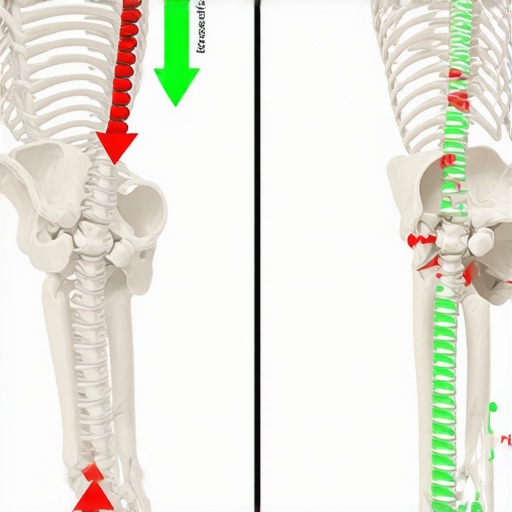
One specific trap to avoid is the ‘sucking in’ maneuver. Many people think bracing means pulling their belly button toward their spine to look thinner. This actually decreases your stability and further encourages the ribs to flare up and out. Instead, you need to think about ‘expanding’ into your sides. This creates a pressurized cylinder that protects the nerves exiting your spine. If you get this wrong, you’re not just wasting your time; you’re actively training your body to be unstable under load.
Can You Actually Strengthen Your Spine While Sitting?
Advanced trainees often ask if they can maintain this ‘canister’ position during their 9-to-5. The answer is yes, but it requires you to learn how to safely adjust your own posture throughout the day without becoming rigid like a statue. It’s about ‘micro-dosing’ that rib-down position every time you reach for your mouse or take a phone call. By consistently checking that your lower ribs aren’t protruding, you turn your mundane workday into a rehab session. Have you ever fallen into this trap of stretching a ‘tight’ muscle only to have it feel worse the next day? Let me know in the comments.
Moving from ‘rehab’ to ‘performance’ is where most people fall off the wagon. They stop the exercises the moment the sharp pain disappears, only to find themselves back at square one three months later. I learned the hard way that maintaining a neutral, stacked spine isn’t a destination; it’s a constant recalibration. To keep my ribs from flaring and my lower back from taking the brunt of my training, I’ve had to integrate specific tools that provide immediate feedback. For me, the most effective tool hasn’t been a high-tech gadget, but a simple, heavy 24kg kettlebell. I use it for goblet squats specifically because the anterior load acts as a counterbalance, forcing my core to find its ‘center’ and keeping my ribs knitted down. This isn’t just about strength; it’s about strategic chiropractic solutions for long-term back health that turn a simple lift into a postural reset.
The Tools That Saved My Spine When Life Got Busy
When I can’t get to the gym, I rely on a ‘breath belt’—a non-elastic strap I wear just above my hip bones. It provides a tactile cue: if I feel the belt tighten only in the front, I know I’m flaring my ribs and losing my brace. I need to feel that 360-degree expansion. This kind of proprioceptive feedback is the secret sauce to boost your sports rehab journey because it prevents you from slipping into old, lazy habits during your 9-to-5. I also swear by using a specific type of high-density foam roller, but not for my lower back. I use it to mobilize my thoracic spine (mid-back). If your mid-back is stiff, your lower back has to arch to give you overhead reach. Maintaining that mid-back mobility is a non-negotiable part of enhancing athletic performance with targeted chiropractic care.

Why I Still Visit My Chiropractor Even When Nothing Hurts
A common misconception is that you only need an adjustment when you’re in agony. In my experience, the most valuable visits are the ones where we find and fix small alignment issues before they become injuries. You might not feel a slightly rotated pelvis or a ‘stuck’ rib, but your nervous system does, and it will compensate by tightening your hamstrings or flaring your ribs. We use these visits to discover how chiropractic adjustments can alleviate chronic back pain by ensuring the ‘canister’ we talked about stays perfectly stacked. According to a study in the Journal of Manipulative and Physiological Therapeutics, regular spinal manipulation can improve joint position sense (proprioception), which is exactly what you need to maintain that elusive rib-down position under heavy loads. I see my chiro once a month not to ‘fix’ a break, but to tune the instrument.
How do I maintain this stacked posture during high-intensity training?
The key is ‘greasing the groove.’ You can’t expect to hold a perfect brace during a personal record attempt if you don’t practice it during your warm-ups. I use the ‘first three’ rule: the first three reps of every single set, regardless of the weight, are dedicated solely to rib position and breathing. I predict that in the next five years, we will see a surge in wearable EMG (electromyography) tech that vibrates the moment your rib-to-pelvis alignment shifts more than a few degrees. Until then, you have to be your own sensor. If you want to take this to the next level, try performing your next set of overhead presses while exhaling through a straw; it forces the deep core stabilizers to fire and keeps those ribs exactly where they belong. Give that ‘straw-breathing’ trick a shot during your next accessory block and feel the difference in your stability.
The Core Myths That Almost Ended My Lifting Career
Looking back at my years of training, I realized that I was chasing the wrong metrics of strength. I thought because I could lift a heavy stone, I was ‘stable.’ Here is the hard-won wisdom I gathered after finally fixing my rib position:
- Tension is not the same as bracing. I used to walk around stiff as a board, thinking I was protecting my spine. In reality, I was just exhausting my nervous system. Real stability is reactive, not rigid.
- Your brain will lock your joints if it feels unsafe. If your ribs are flared, your brain sees your spine as a collapsing bridge and will tighten your hamstrings and hip flexors to act as ‘emergency guy-wires.’ This is exactly why your hip flexors are still tight after a year of stretching.
- Adjustment is only half the battle. A chiropractor can move the bone, but your habits move the skeleton. If you don’t address the ‘canister’ position, you are essentially asking for a temporary fix rather than a long-term cure.
My Daily Toolkit for a Bulletproof Spine
I don’t leave my spinal health to chance anymore. Over the last decade, I have curated a specific set of tools and resources that keep my ribs stacked and my lower back silent. First, I highly recommend the work of Dr. Stuart McGill; his ‘Big 3’ exercises are the gold standard for anyone serious about unlocking back pain relief expert chiropractic adjustments that work to their full potential. Second, I use a simple non-elastic feedback strap during my warm-ups to ensure my ‘belly breathing’ is 360-degree expansion rather than a forward-only push. Finally, I never skip my monthly maintenance visits. These sessions are crucial for the role of chiropractic care in effective sports injury recovery because they catch small compensations before they turn into full-blown rib-flaring catastrophes.
It Is Time to Stop Faking Stability
The journey from a flared-rib, arched-back mess to a pressurized, powerful athlete doesn’t happen overnight. It starts with the conscious choice to stop faking stability with postural tricks and start building it through proper mechanics. By integrating these breathing techniques and seeking strategic chiropractic solutions for long-term back health, you are giving your body the foundation it needs to thrive well into your later years. Remember, a ‘proud chest’ shouldn’t come at the expense of your lumbar spine. Keep your ribs down, your core pressurized, and your eyes on the long game. Have you ever felt that sickening twinge in your lower back during an overhead lift? Let me know in the comments below.