
I was three reps into a heavy set of overhead presses when I felt that familiar, sickening crunch in my lower back. I wasn’t even pushing my max weight. I was just trying to look strong, but instead, I was folding like a cheap lawn chair. For years, I thought a massive arch in the back was just part of the powerlifting look. Boy, was I wrong. I spent more time on a chiropractic table than under the barbell because I could not stop my spine from mimicking a banana every time the weight went north. If you have ever felt that sharp, pinching sensation at the base of your spine during a press, you are not alone, and you are not broken. Today, I am going to share the exact cues and drills that finally clicked for me—taking me from a chronic back-acher to someone who can press with zero pain. We are going to fix your bracing, talk about why your ribcage is lying to you, and get you back to lifting without the fear of a week-long flare-up. Have you ever finished a shoulder workout and felt like you needed to pop your lower back for an hour just to feel normal again? Reach out and let me know if you are stuck in that same cycle. [[IMAGE_PLACEHOLDER]]
Stop Turning Your Overhead Press into a Standing Incline Bench
My biggest mistake early on was following the cue chest up way too literally. I thought chest up meant point your heart to the ceiling, which actually just forced my lower back into a dangerous amount of extension. I was essentially why your overhead press hurts your lower back every single time I uncracked the bar. When you arch like that, you are not using your shoulders anymore; you are trying to turn a vertical press into a chest-dominant lift. This puts an incredible amount of shear force on your lumbar discs. According to the Journal of Biomechanics, even a slight 2-degree deviation from a neutral spine under heavy load can significantly increase the risk of facet joint irritation and long-term disc wear.
Is it actually possible to lift heavy without destroying your spine?
Many lifters fear that if they do not arch, they will lose power. The truth is the exact opposite. When I finally learned how your breathing mechanics are sabotaging your core strength, my numbers actually went up. Your spine is a bridge. If that bridge has a huge kink in the middle, it cannot transfer power from your legs to the bar. By keeping your ribs tucked, you create a rigid cylinder of pressure. Sometimes, the inability to find this position is not just a habit; it is a physical restriction. I often found that why your rib cage feels stuck when you take a deep breath was the missing link in my mobility. If your mid-back is frozen, your low back has to compensate. This is where you might need to discover how chiropractic adjustments can alleviate chronic back pain by restoring that lost rib and thoracic movement. Once that mobility is back, the arching often disappears naturally.
Lock Down Your Rib Cage Before the Bar Leaves the Rack
Think of your torso as a pressurized soda can. If the top and bottom of that can aren’t perfectly aligned, the aluminum walls lose their structural integrity and collapse under pressure. In your body, the top of that can is your rib cage and the bottom is your pelvis. Most lifters flare their ribs because they lack thoracic extension, causing the canister to kink in the middle. I remember a humid Tuesday at an old warehouse gym when I was chasing a 185-pound press. I felt my lower back screaming because my ribs were pointing toward the wall in front of me instead of staying stacked over my hips. I had to consciously pull my belly button toward my spine and drop my ribs as if I were about to take a punch to the gut. It felt like I was losing 20% of my strength initially, but I was actually just forcing my shoulders to do their job instead of relying on a dangerous spinal hinge. If you feel like you can’t physically get into this position without leaning back, you might need to look at why your rib cage feels stuck when you take a deep breath. 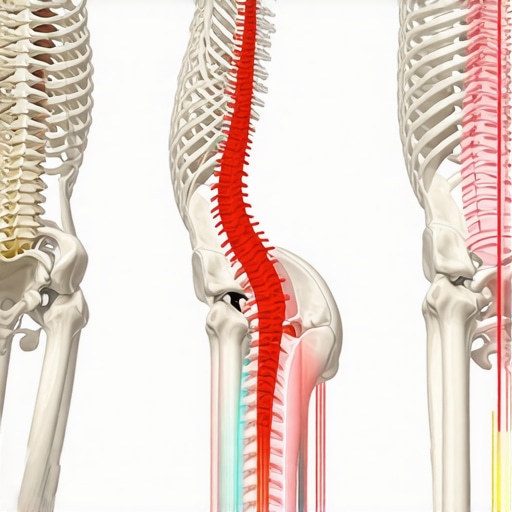
The Breath that Protects Your Discs
Once your ribs are stacked, you need to pressurize the system. Most people chest breathe, which does zero for spinal stability. You need to pull air deep into your stomach, expanding your midsection in every direction. I tell my clients to imagine they are trying to push their lifting belt out 360 degrees. This is exactly how to breathe through your belly for instant lower back relief. When you hold that breath—often called the Valsalva maneuver—you create internal pressure that acts like a structural pillar from the inside out. This isn’t just about tightening your abs; it’s about inflating the balloon inside your gut to support the weight overhead. If you’re struggling to maintain this tension through the full range of motion, it’s a sign that how your breathing mechanics are sabotaging your core strength is becoming a major performance bottleneck.
Stop Your Pelvis from Dumping Forward
Your hips are the foundation of the press. If your pelvis tilts forward—what we call an anterior pelvic tilt—your lower back has no choice but to arch to compensate. I used to stand with duck feet and a soft middle, which left my lumbar spine completely unprotected against the downward force of the bar. The fix is aggressive glute engagement. You need to squeeze your glutes like you’re trying to crack a walnut between them. This forces your pelvis into a neutral position and creates a stable, unshakeable platform for the lift. This is often related to the pelvic tilt fix for chronic tight hamstrings, as tight muscles can pull your skeleton out of alignment before you even touch the barbell.
The Science of Structural Integrity
Lifting heavy isn’t just about muscle mass; it’s about maximizing leverage while minimizing joint stress. When your spine is neutral, the load is distributed across the thickest part of your vertebrae. When you arch, that load shifts to the delicate facet joints and the posterior aspect of your discs. This is why the science behind chiropractic adjustments for back pain relief focuses so heavily on restoring proper joint mechanics. If your joints aren’t moving correctly, no amount of bracing will save you from the eventual wear and tear of a misaligned press. By combining better mechanics with regular maintenance, you ensure that your progress isn’t sidelined by a preventable injury.
Stop Thinking You Just Need More Planks
Most people believe that back pain during a press is a simple case of a weak core. You have probably been told to do more sit-ups or hold longer planks to fix the issue. However, in my years of treating high-level lifters, I have found the opposite is often true: many athletes are actually over-bracing. They create so much rigid tension that their spine cannot move through its natural, subtle range of motion during the lift. This excessive stiffness leads to a lack of force dissipation, causing the load to dump directly into your lumbar vertebrae. This is exactly why most core exercises actually make lower back pain worse if you are already dealing with a structural imbalance. Instead of mindlessly tightening every muscle, you need to learn the nuance of ‘reactive’ stability—where your core responds to the weight rather than acting like a frozen block of concrete. Have you ever fallen into this trap where you brace so hard you can’t even finish the rep? Let me know in the comments.
Why Does My Back Still Hurt Even After the ‘Pop’?
This is the question I get from the most sophisticated lifters in my clinic. They get an adjustment, feel great for an hour, and then the familiar ache returns the moment they touch a barbell. The nuance here is that an adjustment isn’t just about ‘putting a bone back in place.’ It is a neurological reset. According to research by Dr. Heidi Haavik published in the Journal of Manipulative and Physiological Therapeutics, spinal adjustments actually change the way the prefrontal cortex processes information. If you do not follow up that adjustment with proper movement patterns, your brain will revert to its old, painful ‘software.’ This is the truth about why your adjustments dont seem to last—it is usually a motor control issue, not a failure of the manual therapy. You need to marry the science behind chiropractic adjustments for back pain relief with specific drills that ‘re-map’ how your shoulders and hips talk to each other. 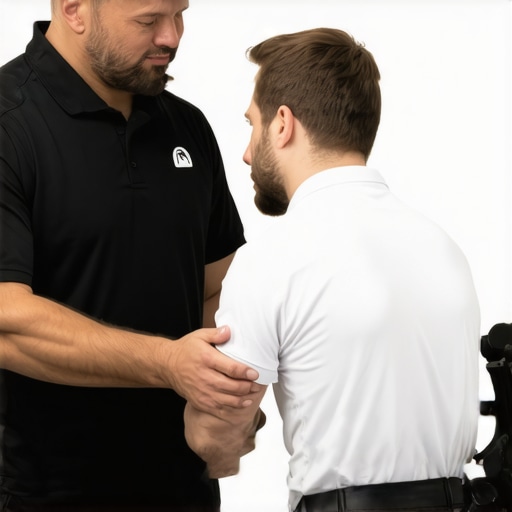
The Dangerous Myth of Stretching Your Way Out of a Disc Injury
One of the biggest ‘oops’ factors I see is the urge to stretch the lower back when it feels tight. When you feel that ‘tightness’ during an overhead press, it is rarely a muscle that needs lengthening; it is usually your nervous system creating protective tension because it senses instability. If you try to ‘stretch’ this out, you are essentially pulling on a protective guardrail. This is particularly dangerous if you have a underlying issue like a bulge. I have seen countless lifters make their situation worse by trying to foam roll their lumbar spine. You should understand why you should never roll your lower back on a foam roller, as it can actually increase the shear force on your discs. Real boost your sports rehab journey with proven chiropractic strategies involves stabilizing the area rather than aggressively stretching it. By focusing on rib cage position and glute activation, you allow that ‘tightness’ to dissipate without ever touching your lower back muscles directly.
The Gear That Actually Saved My Spine
Maintenance isn’t about avoiding the gym; it’s about refining the 1% changes that keep you there. I stopped using those flimsy Velcro belts years ago because they offered zero feedback. Now, I swear by a 10mm leather lever belt. Why? Because the rigidity provides immediate proprioceptive feedback to my obliques. If I lose my ‘canister’ shape during a set, I feel the leather dig into my ribs, which is a visceral cue to reset my alignment. This kind of equipment isn’t a crutch; it’s a sensory enhancer that bridges the gap between your brain and your spine. For those days when I feel that familiar tightness in my upper back, I don’t reach for a foam roller anymore—remember, we already covered why rolling the lower back is a mistake. Instead, I have learned how to use a lacrosse ball to melt away mid-back knots. By pinning the ball between my scapula and the wall, I can specifically release the rhomboids and mid-traps that often seize up when why your ribs feel stuck after heavy overhead pressing becomes an issue. This targeted release ensures my thoracic spine stays mobile, so my lumbar spine doesn’t have to pick up the slack. #IMAGE_PLACE_HOLDER_D#
In his landmark research published in the Journal of Electromyography and Kinesiology, Dr. Stuart McGill explains the concept of the ‘virtual belt’—the way the abdominal wall muscles work in a synergistic ‘hoop’ to stabilize the spine. This is why I focus so much on intra-abdominal pressure rather than just ‘sucking in’ my stomach. When you pull your belly button toward your spine, you actually narrow your base of support. When you push out against a rigid belt, you increase the ‘moment arm’ of your spinal stabilizers, making you a much harder object to bend under load. This is the difference between an athlete who is constantly rehabbing and one who is consistently hitting new personal records. By integrating enhancing athletic performance with targeted chiropractic care, you are addressing both the hardware of your joints and the software of your bracing patterns.
How do I maintain my spinal health over the long haul?
It is a lifestyle, not a 12-week program. I’ve found that strategic chiropractic solutions for long-term back health work best when paired with daily ‘spinal hygiene’ movements. If you’re a serious lifter, you need to understand the truth about why your adjustments dont seem to last—it’s usually because the 23 hours you spend outside the gym are working against the one hour you spend inside it. We need to stop viewing chiropractic care as a ‘fix-it’ shop and start seeing it as a performance-tuning shop. I predict the next five years will see a massive shift toward wearable IMU sensors built directly into lifting belts that provide real-time haptic feedback on spinal extension. We’re moving away from ‘guessing’ if our back is flat toward data-driven lifting that minimizes injury risk before the first rep even starts. This evolution in the science behind chiropractic adjustments for back pain relief will allow us to push harder for longer. My challenge to you: before your next session, spend just 60 seconds with a lacrosse ball on each side of your upper back. Don’t roll aggressively; just find a tender spot and take three deep belly breaths. It is the single most effective way to open up your range of motion instantly and save your lower back from a world of hurt.
Lessons My Spinal Disc Had to Teach Me the Hard Way
After a decade under the bar, I’ve realized that the ‘perfect’ lift is actually a conversation between your nervous system and your joints. One major lightbulb moment was discovering that stiffness is not the same as stability. If you are bracing so hard that you cannot breathe, you are actually increasing your risk of a flare-up. Another hard-earned lesson? Your feet are the first line of defense for your back. If your arches collapse, your pelvis tilts, and your lower back takes the hit. I had to learn that the role of chiropractic care in effective sports injury recovery isn’t just about fixing a crisis; it’s about fine-tuning these subtle movement patterns before they become injuries. Lastly, never ignore the ‘quiet’ pain. That dull ache is your body’s early warning system that your mechanics are slipping.
The Lifter’s Toolkit for a Bulletproof Back
If you’re serious about staying in the game, there are three things I recommend to every athlete. First, invest in a 10mm leather lever belt; the tactile feedback it provides for your intra-abdominal pressure is unmatched. Second, keep a lacrosse ball in your gym bag to tackle those mid-back knots that restrict your overhead range. Third, find a practitioner who understands the demands of heavy lifting. Utilizing revolutionize your rehab chiropractic techniques for faster recovery can make the difference between a three-week layoff and a minor adjustment in your training block. I also highly suggest reading up on essential tips for managing back pain through healthy lifestyle choices to ensure your recovery happens 24/7, not just during your warm-up.
Your Journey Toward a Pain-Free Personal Record
Lifting heavy is a privilege, and protecting your spine is the price of admission. You now have the tools to stop that ‘banana back’ arch and start pressing with a rock-solid foundation. It takes time to rewrite years of bad habits, but the reward is a career of lifting without the fear of ‘throwing your back out.’ By combining proper bracing with expert chiropractic adjustments that work, you are setting yourself up for long-term strength. Don’t be afraid to strip the weight back and master the movement first. Have you ever felt that sharp pinch in your lower back during a heavy set, and what was the first thing you tried to fix it? Let me know in the comments below!