
I sank into the velvet cushions of my sectional, a cold drink in hand and the game on TV. It was supposed to be the ultimate recovery. But when I tried to stand up forty-five minutes later, my lower back felt like it had been fused into a question mark. I had to crawl—literally crawl—to the kitchen counter just to find enough leverage to stand upright. It was embarrassing, especially for someone who prides themselves on knowing the ins and outs of chiropractic techniques for faster recovery. That was my lightbulb moment. I realized that the way we relax is often more taxing on our bodies than the workouts we dread. Today, I am peeling back the upholstery on the common sitting habits that are wrecking your lumbar health and giving you a roadmap to sit without the sting.
Your Sofa is Secretly a Lumbar Trap
The average living room setup is designed for aesthetics and immediate “sink-in” comfort, not for the long-term health of your spine. When you drop into a deep, soft cushion, your pelvis naturally tilts backward. This creates a “C-shape” in your spine that stretches the ligaments beyond their happy limit. I used to think my sectional was my sanctuary, but I was actually inviting tailbone pain and lumbar strain every single night. If you have ever felt like you aged twenty years just by watching a movie, you are not alone. Have you ever felt that sharp catch in your hip the moment you tried to stand up?
Does a softer couch really mean more comfort for your discs?
It sounds counterintuitive, right? We are told that soft equals cozy. However, early in my journey, I made the mistake of equating plushness with support. I would stack pillows behind my head while my lower back was left dangling in a void of foam. This lack of structural integrity is often the real reason your sciatica flares up when you sit. According to a study published in the journal Spine, sitting in a slouched posture can increase the pressure on your intervertebral discs by approximately 40% compared to standing. That is a massive load for your body to handle while you are trying to “rest.” We focus so much on managing back pain through healthy lifestyle choices like exercise, but we ignore the four hours we spend in a spinal vice every evening. Have you ever noticed your back feels “stiff” or “heavy” the second you try to stand up from your favorite chair?
Stop Tucking Your Tailbone into the Cushions
To break the cycle of sofa-induced stiffness, you have to treat your living room like a rehabilitation zone. The first step isn’t buying a new couch; it’s mastering the hip hinge secret for people with chronic lumbar issues to sit down without jarring your spine. Instead of collapsing, guide your sit bones toward the back of the seat. Think of your pelvis as a bowl of water—if you slouch, that water spills out the back, dragging your vertebrae into a painful arc. This “posterior tilt” is the primary culprit behind the nagging ache that makes you feel a hundred years old when you stand up.
Turn a Marshmallow Sofa into a Supportive Throne
Most sofas are too deep for the average human. If your knees aren’t clearing the edge of the cushion or your feet aren’t flat on the floor, your lower back is doing 100% of the work to keep you upright. You need to create a false backrest. Use firm pillows to shorten the depth of the seat so that your back is flush against a surface while your feet remain grounded. This mechanical adjustment is often why patients find the truth about why your adjustments dont seem to last is often linked to their home environment rather than the treatment itself.
How a Simple Beach Towel Saved My Spine in Sedona
I remember a trip to Sedona where the rental house had this massive, overstuffed leather sofa. It looked like a cloud but felt like a torture device for my L5-S1. Within an hour, my legs were tingling. I didn’t have a fancy lumbar roll, so I took a thick beach towel, rolled it into a firm cylinder about four inches thick, and wedged it exactly at the small of my back. It forced my pelvis to stay upright and maintained that natural inward curve. The relief was almost instant. It’s the same logic I use when I show people how to optimize your car seat for lumbar support. You don’t need expensive gear; you just need to fill the gap between your spine and the chair. 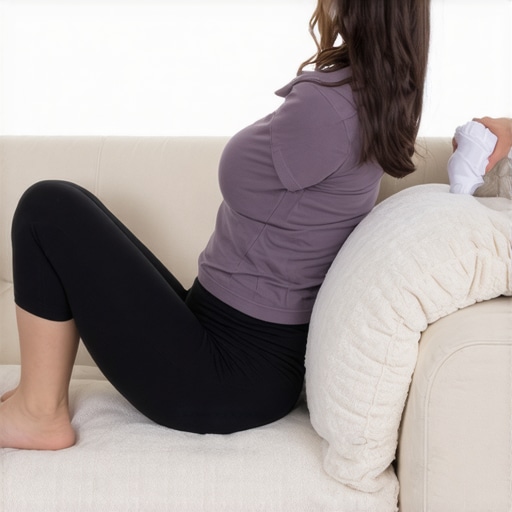
Breathe Your Way Out of a Lumbar Lock
Once the structure is set, you have to address the internal pressure. Most of us hold our breath or breathe shallowly into our chests when we are engrossed in a movie or a game. This effectively turns off your core stabilizers, leaving your spine vulnerable. Learning how to breathe through your belly for instant lower back relief creates an “airbag” effect from the inside out. By expanding your abdomen as you inhale, you create intra-abdominal pressure that supports your discs from the front, taking the load off those overstretched back muscles.
The Twenty-Minute Movement Rule
Even with perfect posture, your body hates being static. Blood flow slows down, and the discs in your back begin to compress. I tell my clients to perform the SI joint exercise you can do while sitting at work even when they are at home watching TV. Every time a commercial comes on or you finish a chapter of your book, shift your weight or perform a few seated pelvic tilts. This keeps the joints lubricated and prevents that “fused” feeling. However, be careful with how you self-treat during these breaks; why you should never roll your lower back on a foam roller is a lesson many learn the hard way when they try to fix sofa-stiffness with aggressive rolling that only increases spinal instability.One of the biggest lies we tell ourselves in the rehab world is that ‘tightness’ always needs a stretch. I see it every day in my practice: someone with a nagging lower back ache spends twenty minutes a day aggressively reaching for their toes, wondering why the relief lasts only seconds. But why stretching your hamstrings wont fix your chronic tightness is a hard lesson to learn when you are in pain. Often, that tightness is actually ‘protective tension.’ Your brain is effectively acting like a governor on a high-performance engine; it is locking those muscles down because it senses instability in your lumbar spine or a structural imbalance in your pelvis. By pulling on those hamstrings, you are essentially trying to rip away the only thing keeping your spine from shearing forward. To see real progress, you need the pelvic tilt fix for chronic tight hamstrings instead of just another long yoga session. 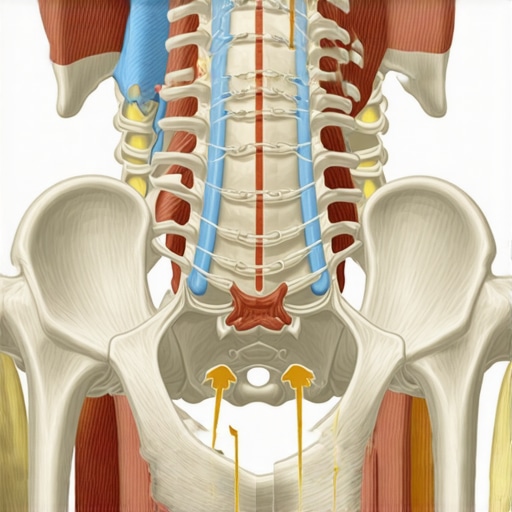
Why does my back still hurt even though I am doing planks and core work?
If you are wondering why your progress has plateaued despite your best efforts in the gym, look at the mechanics of your ‘core’ routine. It is a common trap: people think more sit-ups or aggressive hollow holds will save their spine. In reality, why most core exercises actually make lower back pain worse comes down to the relationship between intra-abdominal pressure and shear force. A landmark study published in the Journal of Orthopaedic & Sports Physical Therapy (JOSPT) highlighted that excessive spinal flexion under load can actually increase the risk of disc herniation rather than resolving it, especially when the deep stabilizers are not firing in the correct sequence. This is the critical nuance that separates basic gym advice from strategic chiropractic solutions for long-term back health. We have to move past the idea that ‘stronger’ always means ‘stiffer’ or ‘tighter.’
The Ice Trap is Slowing Down Your Recovery
Then there is the ‘ice trap,’ perhaps the most pervasive myth in modern sports medicine. We have been conditioned to think inflammation is a villain that needs to be frozen out immediately. However, if you have been dealing with a stiff back for months, why you should stop icing old injuries and use heat instead is crucial for your long-term success. Ice is a vasoconstrictor; it slows down the very processes your body uses to repair damaged tissue. Heat, on the other hand, dilates the blood vessels. When your back is in that ‘fused’ state from a long day at the desk or on the sofa, you need fresh, oxygenated blood to flush out metabolites, not a cold compress that keeps the muscles in a state of rigor mortis. Truly understanding the science behind chiropractic adjustments for back pain relief means recognizing when your body needs mobility and blood flow, not just numbing the symptoms. Real progress happens when you stop fighting your body’s defense mechanisms and start working with them through expert chiropractic adjustments that work to restore true joint function and nervous system balance. Have you ever fallen into this trap of stretching a ‘tight’ muscle only to feel worse the next day? Let me know in the comments.
Why Your Recovery Needs More Than Just a Weekly Appointment
I have learned the hard way that a professional adjustment is only half the battle. If you get your spine aligned on Tuesday but spend the next six days hunched over a laptop or collapsing into a soft sofa, you are essentially erasing the work. I tell my clients that strategic chiropractic solutions for long-term back health require a proactive approach at home. You need to treat your spine like a high-performance engine that requires daily fluid checks, not just a yearly overhaul. This is about building a foundation of resilience so that the next time you trip or lift something heavy, your body is prepared to absorb the force rather than breaking under it.
My Secret Weapon for Breaking Up Those Knots
People often ask me what fancy equipment I have in my home gym. Honestly, the most effective tool I own costs less than five dollars: a standard lacrosse ball. While foam rollers are great for large muscle groups, they are often too blunt for the intricate muscles surrounding the shoulder blades and the lumbar spine. Learning how to use a lacrosse ball to melt away mid-back knots has been a game-changer for my personal mobility. I use it to pin-point trigger points in the rhomboids and traps that build up after a long day of charting. By leaning against a wall and breathing into the pressure, you can physically desensitize the nervous system and release the protective tension we discussed earlier.

On days when I am particularly fatigued or recovering from a heavy lifting session, I turn to proprioceptive support. Understanding how to use kinesiology tape for lower back support provides a constant tactile reminder to my brain to keep the core engaged. It is not a brace; it is a communication tool between the skin and the brain that encourages better posture even when you are too tired to think about it. This kind of active recovery is what separates those who stay pain-free from those who remain stuck in a cycle of flare-ups.
How do I maintain these results for the long haul?
Consistency in your daily ‘spinal hygiene’ is the only way to ensure your progress sticks. Dr. Stuart McGill, a professor emeritus at the University of Waterloo and a titan in the world of spine biomechanics, emphasizes in the Journal of Electromyography and Kinesiology that stabilizing the spine through specific exercises—like his famous ‘Big 3’—is far superior to aggressive stretching. I have integrated these principles into my routine to ensure I am enhancing athletic performance with targeted chiropractic care rather than just chasing symptoms. You have to commit to how to safely adjust your own posture throughout the day, making it a subconscious habit rather than a chore.
Smart Fabrics and the Future of Back Health
The next frontier in back health isn’t just better adjustments; it is real-time biofeedback. I predict that within the next five years, ‘smart fabrics’ with integrated sensors will become the standard for anyone serious about spinal health. These garments will track your thoracic extension and pelvic tilt in real-time, vibrating gently when you begin to slouch. When we combine this technology with internal regulators like how to use diaphragmatic breathing to calm your nervous system, we will finally be able to prevent pain before it even starts. Grab a lacrosse ball and try that mid-back release today—it is the simplest, most effective step you can take to reclaim your mobility right now.
Why I Stopped Viewing Chiropractic as a Quick Fix
For years, I treated my chiropractor like a mechanic—I would go in for a “tune-up” and then immediately return to the same habits that broke me. It was not until I hit a plateau that I realized discover how chiropractic adjustments can alleviate chronic back pain only works if you stop sabotaging the work at home. I had to accept that my pain was not an enemy to be silenced, but a messenger telling me my environment was failing me. I also learned that “strength” without “stability” is a recipe for disaster; you can have the strongest abs in the world, but if your deep stabilizers are not firing correctly, your spine remains vulnerable during every mundane movement.
What I Use Daily to Keep My Spine in Check
You do not need a massive budget to support your recovery. Here is what I keep in my own personal arsenal to maintain the progress I gain in the clinic. First, a firm lumbar roll for the car, which is even more effective than how to fix your posture while driving long distances without a pillow if you have a deep, bucket-style seat. Second, a simple kitchen timer—I set it for 20 minutes whenever I sit to remind myself to stand up and reset my pelvis. Third, I consistently refer back to foundational biomechanics texts that align with the role of chiropractic care in effective sports injury recovery. These tools are not just gadgets; they are psychological triggers to stay conscious of how I inhabit my body.
#IMAGE_PLACEHOLDER_E#
Your Journey to a Pain-Free Life Starts Now
Reclaiming your mobility is not about one perfect day; it is about the cumulative effect of a thousand small, better choices. Whether it is adding a support to your sofa or committing to boost your sports rehab journey with proven chiropractic strategies, every action you take toward spinal hygiene counts. You have the resilience to move past this stiffness and return to the activities you love without the constant fear of a flare-up. Remember, your spine is designed to move, to support, and to thrive—not just to endure the day. Have you ever tried using a rolled-up towel for lumbar support on your couch, and did it change how you felt when you stood up? Let me know your experience below.