
I remember white-knuckling the steering wheel on I-95, not because of the traffic, but because my lower back felt like it was being slowly crushed by a hydraulic press. I’d tried the fancy gel cushions and the rolled-up towels, but nothing stopped that familiar, radiating ache from traveling down my hip. I was a chiropractic enthusiast who couldn’t survive a two-hour commute without needing a massive stretch. It was embarrassing. But that misery led to a lightbulb moment. Today, I’m going to show you exactly how to optimize your car seat so you can arrive at your destination without feeling like you need a week of expert chiropractic adjustments just to stand up straight. [image]
Your Car Seat Is a Secret Back-Killer
The harsh reality is that car manufacturers design seats for a 50th-percentile mannequin, not for a living, breathing human with unique spinal needs. I spent years making the classic mistake of thinking more lumbar ‘push’ was always better. I would crank that dial until it felt like a fist was buried in my spine. It was a disaster because it forced my spine into an unnatural arch. I eventually learned that supporting your lumbar spine isn’t about force; it’s about filling the natural gap without creating new tension. Research published in the Journal of Physical Therapy Science actually shows that vehicle vibrations can accelerate muscle fatigue, which means if your alignment is off by even an inch, the road is literally vibrating that pain into your nerves.
Is my car seat just fundamentally broken?
I hear this all the time from people who feel like they’ve tried every setting and still end up miserable. You might think you need a new vehicle or a surgical intervention, but often the solution is much simpler. Before you give up, we need to look at the ‘bucket’ effect of modern seats that forces your pelvis into a posterior tilt, rounding your lower back into a C-shape. This is exactly why your lumbar spine hates your car seat. By the time we’re done today, you’ll know how to neutralize that tilt and keep your discs happy through a few simple mechanical tweaks. Have you ever had to pull over just to stretch because your back was screaming? I want to hear about your worst road trip horror stories in the comments—let’s see if we can fix those together. Improving your setup is a huge part of managing back pain through healthy lifestyle choices, and it starts the moment you click your seatbelt.
Neutralize the Bucket Seat Dip
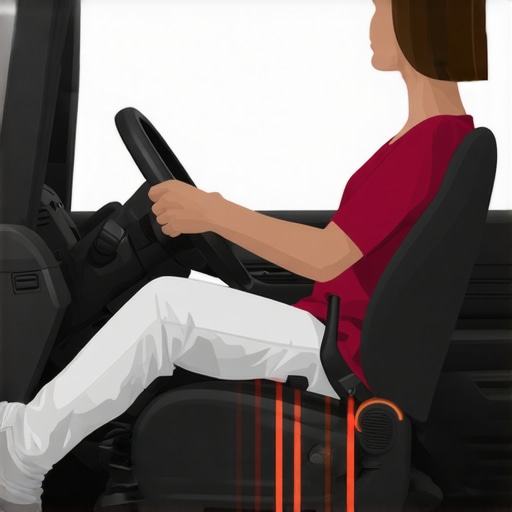
Most modern car seats have a deep pocket where your butt sits lower than your knees. This is a biomechanical nightmare. Think of your pelvis like a bowl of water; the ‘bucket’ effect tips that bowl backward, spilling the water toward your spine and flattening your natural lumbar curve. This forces your lower discs to absorb every pothole and vibration like a direct hammer blow. To fix this, you need to elevate your hips. I’ve found that using a firm wedge cushion or even a folded-up yoga mat can level the playing field. This small elevation is a key part of learning how to sit without compressing your l5-s1 disc because it keeps your weight on your sit-bones rather than your tailbone. When I first tried this on a six-hour trek through the Appalachians, the relief was almost immediate—my hamstrings stopped feeling like tight rubber bands, which is a classic sign of the pelvic tilt fix actually working in real-time.
Find Your Natural Spinal Arch
Once your base is level, you need to address the lumbar support. The mistake many make is using the seat’s dial to push the spine forward into an aggressive curve. Instead, think of it as a gap-filler. Your spine should feel like it is resting against a gentle cloud, not a wooden post. If your car does not have built-in support, a small rolled-up towel placed just above the beltline does wonders for maintaining the lordotic curve. This prevents the slouching that leads to long-term structural issues. For those already dealing with persistent tweaks, understanding how chiropractic adjustments can alleviate chronic back pain is helpful, but these daily ergonomic wins are what keep those adjustments holding for weeks instead of hours. It is much easier to stay in alignment than it is to constantly fight your way back into it after a long commute.
Your Arms Control Your Upper Back Tension
I once drove a rental car across three states and by hour four, my shoulder blades felt like they were being pierced by hot needles. I realized I was reaching too far for the steering wheel, which forced my shoulders into a permanent shrug and rounded my upper back into a defensive posture. This ‘reaching’ causes your thoracic spine to lock up and places immense strain on the nerves exiting your neck. You want your elbows to have a comfortable bend—roughly 20 to 30 degrees. If your car allows it, pull the steering wheel toward you and slightly drop the height. This reduces the load on your traps and is essentially a passive version of the thoracic extension move that saves your shoulders from that burning sensation between the blades. It is about creating a ‘cockpit’ that serves your anatomy, rather than you molding your body to the machine.
The Rearview Mirror Posture Alarm
Here is my favorite ‘secret’ trick for long-haul drives: set your rearview mirror only when you are sitting in perfect, upright posture. This creates an immediate biofeedback loop. Twenty minutes into your drive, when you inevitably start to slouch into a ‘C’ shape, you will notice you can no longer see the traffic behind you clearly. Instead of reaching up to tilt the mirror, use it as a signal to sit back up, engage your core, and reset your spine. This is the most practical way to learn how to safely adjust your own posture throughout the day without needing a constant reminder on your phone. It turns your environment into your coach.
While the mechanical tweaks we discussed will save your spine on the road, the biggest mistake I see people make happens the second they step out of the car. Most drivers, feeling that dull ache in their glutes or lumbar area, immediately try to touch their toes or pull their knees to their chest. This is a massive ‘oops’ factor. In reality, stretching your hamstrings won’t fix your chronic tightness when it is caused by neural tension from driving. In fact, after sitting for hours, your ligaments have undergone something called ’tissue creep’—they have literally stretched out like an old rubber band. Adding an aggressive stretch on top of that can actually destabilize your lumbar spine. I’ve seen patients who were doing great until they ‘stretched out’ after a commute and ended up with a disc bulge. Have you ever fallen into this trap where you thought you were helping your back but made it worse? Let me know in the comments.
Why do some people feel worse even after a professional adjustment?
This is a sophisticated question that gets to the heart of spinal stability. If you find that your adjustments don’t seem to last after a long drive, it is likely because the vibration of the car is constantly ‘resetting’ your nervous system to a defensive state. Research by Dr. Manohar Panjabi, a leading expert in spinal biomechanics, suggests that when the ‘Neutral Zone’ of the spine increases due to ligament laxity, the muscles have to work overtime to protect the cord. This is the science behind chiropractic adjustments: they aren’t just ‘clicking’ bones, they are resetting that neural feedback loop. If you jump straight into a vibration-heavy environment immediately after a session, you are fighting an uphill battle. It is often better to walk for 10 minutes post-adjustment to let those new neurological patterns settle before sitting back down. 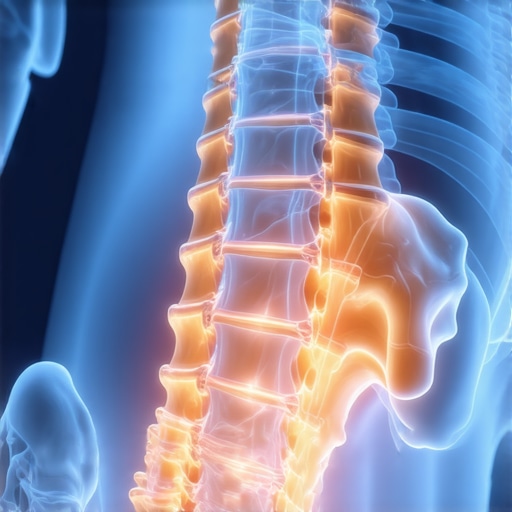
Don’t Reach for the Heating Pad Just Yet
When you finally get home, your instinct might be to blast your back with a heating pad to soothe the ache. However, heat is often the wrong choice for a sudden back spasm or driving-related inflammation. Heat increases blood flow, which sounds beneficial, but if there is micro-swelling from three hours of road vibration, you are just adding fuel to the fire. I recommend using ice or a cold compress for 15 minutes to calm the nerves. Combining this with strategic chiropractic solutions for long-term back health is how you transition from just surviving a commute to actually thriving. If you are ready to stop the cycle of driving-induced pain, contact us today to build a recovery plan that actually sticks.
Beyond the mirror trick and seat adjustments, I’ve found that consistency is the only way to avoid back-sliding into old habits. I personally carry a McKenzie D-Section lumbar roll in my trunk. Why this specific one? Most cheap pillows are too soft; they feel great for five minutes, but after an hour, they flatten out and offer zero support. The D-section is flat on one side, meaning it doesn’t roll around against the seat leather, and it’s made of high-density foam that actually maintains your lordotic curve. This is a core part of the best way to support your lumbar spine while driving. If you’re serious about strategic chiropractic solutions for long-term back health, you have to treat your car like a mobile rehab center. 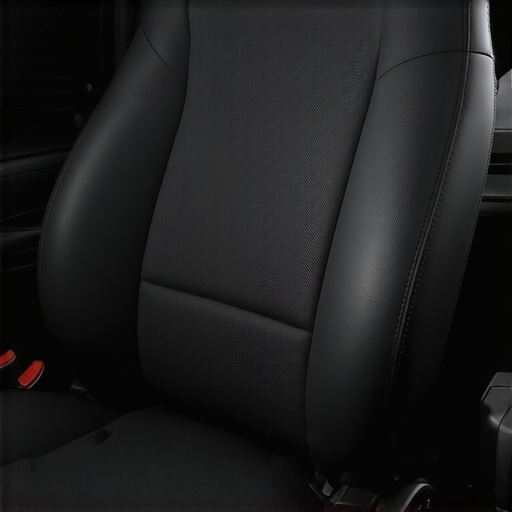
How can I keep my back healthy on long drives forever?
Maintenance isn’t about doing one big thing; it’s about the ‘micro-wins.’ Dr. Stuart McGill, a world-renowned expert in spinal biomechanics, emphasizes the concept of ‘spinal hygiene.’ In his research, particularly studies often cited in the Journal of Occupational Rehabilitation, he demonstrates that frequent, short ‘micro-breaks’ are far more effective than one long stop. Every 45 minutes, I don’t just stretch—I get out and walk for 60 seconds. This allows the ’tissue creep’ I mentioned earlier to reset. I also use a massage gun on my hip flexors and quads when I arrive, but I am very careful about the proper way to use a massage gun on your quads to ensure I’m not over-stimulating the nerves. Remember, why you should never roll your lower back on a foam roller: your lumbar spine needs stability, not more mobility.
The Future of Driving Ergonomics
We are heading toward a world where car seats won’t be static foam blocks. I predict that within the next decade, AI-integrated haptic seats will become standard. Imagine a seat that detects your posture shifting and gently inflates specific air bladders to keep you in alignment without you even thinking about it. Until that tech arrives, you are the pilot of your own spinal health. Following essential tips for managing back pain through healthy lifestyle choices means being proactive before the pain starts. If you’re an athlete, this is even more critical because enhancing athletic performance with targeted chiropractic care is impossible if you’re trashing your nervous system during the drive to the gym. My challenge to you: commit to using a wedge cushion for the next 30 days. You will be shocked at how much better you feel when you finally stand up. If you need a more personalized roadmap for your recovery, contact us and let’s get your alignment back on track.
The Hardest Lesson I Learned Behind the Wheel
For years, I thought I was ‘fixing’ my back by adding more and more layers of padding. The truth I had to face was that stillness is the enemy of the spine. Even the most perfectly adjusted seat becomes a cage after an hour. I realized that micro-adjustments throughout the drive are far more valuable than any static ‘perfect’ setting. This realization changed how I view essential tips for managing back pain through healthy lifestyle choices. It is not a one-and-done setup; it is an active dialogue between your body and your car. I also learned that if you ignore the small signals—like a slight numbness in your foot—you are setting yourself up for a long recovery. Using chiropractic care in effective sports injury recovery taught me that the same principles of alignment apply whether you are on the field or in the driver’s seat.
Gear That Saved My Spine on I-95
If you are tired of DIY fixes that do not hold up, here are the tools I never leave the driveway without. First, a high-density wedge cushion is non-negotiable to neutralize that ‘bucket’ tilt. Second, I always keep a tool for soft tissue work in my center console; learning how to use a lacrosse ball to melt away mid-back knots during rest stops has been a total game-changer for my thoracic mobility. Finally, I rely on a simple interval timer on my phone to remind me to perform a ‘posture reset’ every 30 minutes. These tools are the foundation of my strategic chiropractic solutions for long-term back health, ensuring that I am not just masking the pain, but actively preventing it.
Take Your Life Back From the Commute
You do not have to accept a radiating ache as a mandatory part of your workday. By implementing these small mechanical shifts and staying mindful of your alignment, you can arrive at your destination ready to enjoy your life, rather than looking for the nearest sofa. It is about reclaiming your mobility and ensuring that your car is a tool for freedom, not a source of chronic strain. If you have been struggling to find lasting expert chiropractic adjustments that work, it might be time to look at the hours you spend behind the wheel. We are here to help you bridge that gap. If you are ready to move without limits, contact us today to start your journey toward a pain-free life.
Which part of your commute usually triggers your back pain first—the stop-and-go traffic or those long highway stretches? Let me know in the comments below!