
I remember the exact moment my “healthy” routine backfired. It was a Tuesday morning, and I was performing my usual ritual of aggressive toe-touches on my living room floor. I thought I was being a model patient. I thought the burning sensation meant I was winning. But every time I stood up, the lightning bolt shooting down my left leg felt sharper, more insistent. I was thirty years old, yet I was crawling to the kitchen because my leg had essentially quit on me. It was a visceral, terrifying realization: the very thing I was doing to heal was actually driving the knife deeper. It took years of trial, error, and fine-tuning my sports rehab journey to understand that the sciatic nerve is not a muscle you can simply bully into submission. Today, I’m going to save you the months of agony I endured by exposing the three biggest stretching errors that turn a minor flare-up into a chronic nightmare. We are going to stop guessing and start building strategic solutions for your long-term back health.
Stop Trying to Stretch Your Way Out of Sciatic Pain
The first thing most of us do when we feel “tight” is reach for the floor. It’s an instinctual reaction. But when you are dealing with nerve impingement, that instinct is a trap. I spent months making this exact mistake, treating my body like a piece of stiff leather that just needed some heavy-handed tugging. What I didn’t know then—and what I want you to understand now—is that you cannot stretch a nerve. Nerves are more like fiber-optic cables than rubber bands; they need to glide through their surrounding tissues, not be pulled taut.
Is stretching really going to make this worse?
It sounds counterintuitive, I know. You might be skeptical because every “Top 10 Back Pain Stretches” video on YouTube tells you to pull your knees to your chest. But if your pain is truly neural, you’re just agitating an already inflamed structure. According to research from the Mayo Clinic, nerve tissue is extremely sensitive to tension, and overstretching can actually compromise the blood supply to the nerve itself. This leads to a vicious cycle of more inflammation, more pain, and more “tightness” as the muscles lock down to protect the nerve. [image_placeholder_1]
Your Hamstrings Aren’t the Problem
Early in my recovery, I was obsessed with my hamstrings. I was convinced that if I could just loosen them up, my sciatica would vanish. I’d prop my heel up on anything I could find—chairs, stairs, park benches—and lean in until I saw stars. I didn’t realize that my “tight” hamstrings were actually a symptom, not the cause. When you identify if your back pain is muscular or nerve-related, you’ll see that the brain often creates hamstring tension to prevent you from overextending a vulnerable nerve. By forcing that stretch, you’re overriding your body’s best defense mechanism. This is why stretching your hamstrings won’t fix chronic tightness if the nerve is the one pulling the strings. You have to change how you move. For instance, making a simple change to your walking stride can do more for your nerve health than an hour of aggressive yoga ever could. Have you noticed that your “tightness” actually feels worse after a long session of traditional stretching?
Trade the Tug-of-War for a Gentle Glide
To understand why traditional stretching fails, you have to picture your sciatic nerve as a piece of dental floss running through a narrow straw. If that straw is clogged with inflammation or pinched by a disc, pulling hard on the floss only creates friction and heat. That friction is what you feel as ‘burning.’ Instead of pulling, we need to ‘floss’ the nerve. This movement—known as nerve gliding—allows the nerve to slide back and forth through its pathway without being stretched to its breaking point. It is a fundamental shift in how we approach recovery, moving from aggressive force to precision movement. This is a core part of how we alleviate chronic back pain without causing more trauma to the sensitive neural tissue.
How to Perform a Sciatic Nerve Floss Without Irritating the Nerve
Sit on the edge of a chair with your posture tall but relaxed. To floss the sciatic nerve, you want to create slack at one end of the nerve while pulling from the other. As you slowly straighten your painful leg, look up at the ceiling. Then, as you bend your knee back down, tuck your chin toward your chest. You are essentially shifting the nerve back and forth like a pulley system. When I first tried this, I was incredibly skeptical. I remember sitting on the edge of my bed, terrified to move. I didn’t feel the ‘good’ burn I was used to from yoga. In fact, it felt like I was doing absolutely nothing. I felt like a fraud. But after ten slow repetitions, I stood up and, for the first time in three weeks, I didn’t feel that sharp electric zing shooting into my calf. It was a revelation: relief doesn’t always have to hurt. This technique is especially useful if you are still trying to tell if your sciatica is actually piriformis syndrome, as it helps desensitize the nerve regardless of the pinch point. 
Stop Doing Sit-ups if You Want Your Disc to Heal
Many people try to ‘strengthen their core’ to fix their back, but they choose exercises that crush their spinal discs. If you have a bulge, repetitive crunching is like squeezing a jelly donut—the filling eventually has to go somewhere. I realized that my obsession with old-school abs was exactly why most core exercises actually make lower back pain worse. You need stability, not more movement in the lumbar spine. Learning how to manage a bulging disc without surgery involves bracing your midsection while your hips and shoulders do the work.
Master the Hip Hinge to Save Your Spine
The most actionable change you can make today is replacing the ‘slump’ with a hinge. When you reach for a laundry basket or your shoes, don’t round your back. Instead, imagine there is a horizontal bar at your belt line and you are folding your body over it. This is the hip hinge secret for people with chronic lumbar issues. It keeps the spine in a neutral, safe position while the powerful glute muscles take the load. If you struggle with this, you might need the pelvic tilt fix to regain control over your hip position. Combining this with better ergonomics—specifically learning how to sit without compressing your L5-S1 disc—creates a protective environment where the nerve can finally stop being irritated every time you move.We often treat chiropractic care like a car wash—you go in dirty, get scrubbed, and come out clean. But the human body is a self-correcting biological system, not a chassis. If you find yourself needing an adjustment every single week just to survive, you’re missing the nuance of the science behind chiropractic adjustments. Most patients believe the ‘crack’ is the sound of a bone sliding back into place like a puzzle piece. In reality, that sound is just a pressure change in the joint fluid. The real magic isn’t the sound; it’s the neurological ‘reset’ button the adjustment presses. It creates a temporary window where your brain stops the protective guarding. If you don’t use that window to revolutionize your rehab through specific movement, your brain will simply reinstall the old, painful software by the time you reach your car.
Does the loudness of the ‘pop’ correlate with how well you will heal?
Surprisingly, the answer is no. A loud cavitation doesn’t necessarily mean a better outcome. A study published in the Journal of Manipulative and Physiological Therapeutics highlights that the clinical benefit comes from the ‘neurophysiological response’—essentially calming the nervous system—not just the mechanical movement of a joint. This is a primary reason why your adjustments don’t seem to last if you aren’t addressing the underlying motor patterns. The biggest ‘oops’ factor I see in high-level athletes is treating the adjustment as a passive fix rather than an active opportunity. When you get expert chiropractic adjustments that work, your proprioception—your body’s sense of where it is in space—is momentarily heightened. This is the golden hour for targeted chiropractic care to be paired with stability drills. If you get adjusted and then immediately go sit in a car for two hours, you are essentially wasting the neurological reset. This is exactly what your chiropractor wishes you knew about heavy lifting: the adjustment gives you the range of motion, but you have to ‘own’ that range through conscious movement and healthy lifestyle choices that support spinal integrity.  Have you ever fallen into the trap of thinking the adjustment was the entire cure? Let me know in the comments below.I used to think that the goal of rehab was to get back to ‘zero’—the simple absence of pain. But ‘zero’ is a dangerous place to live because it breeds complacency. Once the lightning bolts in my leg stopped, I threw my rehab exercises in the trash and went back to sitting for eight hours a day. Predictably, the pain returned with a vengeance. Now, I treat my spinal health like a high-performance engine that requires a specific maintenance schedule rather than a one-time fix.
Why Your Car Seat is Stealthily Killing Your Progress
We spend an incredible amount of time in our vehicles, yet most of us treat the driver’s seat like a recliner. I discovered that my specific disc issue was being aggravated every single time I drove to work. Learning how to optimize your car seat for lumbar support was the missing piece of my recovery puzzle. If your seat creates a ‘C’ shape in your spine, you are essentially slow-cooking a disc herniation. I personally started using a small rolled-up towel at the base of my spine to maintain that natural curve. This is the best way to support your lumbar spine while driving long distances, and it prevents that agonizing stiffness when you finally step out of the car.
The One Tool I Actually Keep in My Gym Bag
While I’m wary of ‘gimmicks,’ kinesiology tape changed how I perceived my movement. It didn’t fix my back, but it provided a constant tactile reminder of my posture. When I learned how to use kinesiology tape for lower back support, it acted like a second set of eyes, gently pulling on my skin whenever I started to slump. It’s about building a better brain-body connection. This kind of targeted chiropractic care and self-management allows you to stay active without fear. Dr. Stuart McGill, a world-renowned expert in spine biomechanics at the University of Waterloo, emphasizes that ‘spine hygiene’—the way you move through mundane daily tasks—is more predictive of long-term success than any single hour spent in a clinic. 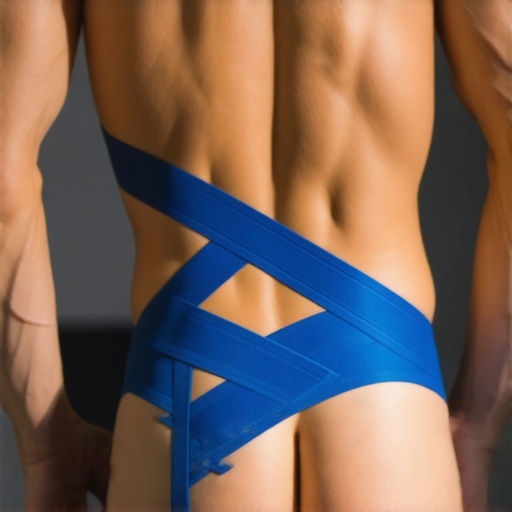
How do I keep my spine healthy for the next decade?
Long-term victory isn’t about avoiding movement; it’s about mastering it. I predict that the future of rehab will move away from clinics and toward real-time biofeedback wearables that alert you the moment your form breaks down during a deadlift or a long walk. Until then, you have to be your own sensor. You need to focus on strategic chiropractic solutions for long-term back health that prioritize stability over mere flexibility. This includes integrating a thoracic extension move that saves your shoulders into your morning routine to counteract the ‘desk-hunch.’
Take Control of Your Internal Pressure
If there is one advanced tip you try today, make it the intra-abdominal brace. Most people suck their stomach in when they want to protect their back, but that actually makes the spine less stable. Instead, you need to learn how to breathe through your belly for instant lower back relief. This creates a 360-degree ‘air brace’ that supports the spine from the inside out. It’s the ultimate secret for managing back pain through healthy lifestyle choices. I want you to try this right now: place your hands on your waist, and try to push your fingers out using only your breath. Can you feel that internal tension? That is your body’s natural weightlifting belt. Mastering this simple shift is how you boost your sports rehab journey from temporary relief to permanent resilience.I remember the exact moment my “healthy” routine backfired. It was a Tuesday morning, and I was performing my usual ritual of aggressive toe-touches on my living floor. I thought I was being a model patient. I thought the burning sensation meant I was winning. But every time I stood up, the lightning bolt shooting down my left leg felt sharper, more insistent. I was thirty years old, yet I was crawling to the kitchen because my leg had essentially quit on me. It was a visceral, terrifying realization: the very thing I was doing to heal was actually driving the knife deeper. It took years of trial, error, and fine-tuning my sports rehab journey to understand that the sciatic nerve is not a muscle you can simply bully into submission. Today, I’m going to save you the months of agony I endured by exposing the three biggest stretching errors that turn a minor flare-up into a chronic nightmare. We are going to stop guessing and start building strategic solutions for your long-term back health.
Stop Trying to Stretch Your Way Out of Sciatic Pain
The first thing most of us do when we feel “tight” is reach for the floor. It’s an instinctual reaction. But when you are dealing with nerve impingement, that instinct is a trap. I spent months making this exact mistake, treating my body like a piece of stiff leather that just needed some heavy-handed tugging. What I didn’t know then—and what I want you to understand now—is that you cannot stretch a nerve. Nerves are more like fiber-optic cables than rubber bands; they need to glide through their surrounding tissues, not be pulled taut.
Is stretching really going to make this worse?
It sounds counterintuitive, I know. You might be skeptical because every “Top 10 Back Pain Stretches” video on YouTube tells you to pull your knees to your chest. But if your pain is truly neural, you’re just agitating an already inflamed structure. According to research from the Mayo Clinic, nerve tissue is extremely sensitive to tension, and overstretching can actually compromise the blood supply to the nerve itself. This leads to a vicious cycle of more inflammation, more pain, and more “tightness” as the muscles lock down to protect the nerve.
Your Hamstrings Aren’t the Problem
Early in my recovery, I was obsessed with my hamstrings. I was convinced that if I could just loosen them up, my sciatica would vanish. I’d prop my heel up on anything I could find—chairs, stairs, park benches—and lean in until I saw stars. I didn’t realize that my “tight” hamstrings were actually a symptom, not the cause. When you identify if your back pain is muscular or nerve-related, you’ll see that the brain often creates hamstring tension to prevent you from overextending a vulnerable nerve. By forcing that stretch, you’re overriding your body’s best defense mechanism. This is why stretching your hamstrings won’t fix chronic tightness if the nerve is the one pulling the strings. You have to change how you move. For instance, making a simple change to your walking stride can do more for your nerve health than an hour of aggressive yoga ever could. Have you noticed that your “tightness” actually feels worse after a long session of traditional stretching?
Trade the Tug-of-War for a Gentle Glide
To understand why traditional stretching fails, you have to picture your sciatic nerve as a piece of dental floss running through a narrow straw. If that straw is clogged with inflammation or pinched by a disc, pulling hard on the floss only creates friction and heat. That friction is what you feel as ‘burning.’ Instead of pulling, we need to ‘floss’ the nerve. This movement—known as nerve gliding—allows the nerve to slide back and forth through its pathway without being stretched to its breaking point. It is a fundamental shift in how we approach recovery, moving from aggressive force to precision movement. This is a core part of how we alleviate chronic back pain without causing more trauma to the sensitive neural tissue.
How to Perform a Sciatic Nerve Floss Without Irritating the Nerve
Sit on the edge of a chair with your posture tall but relaxed. To floss the sciatic nerve, you want to create slack at one end of the nerve while pulling from the other. As you slowly straighten your painful leg, look up at the ceiling. Then, as you bend your knee back down, tuck your chin toward your chest. You are essentially shifting the nerve back and forth like a pulley system. When I first tried this, I was incredibly skeptical. I remember sitting on the edge of my bed, terrified to move. I didn’t feel the ‘good’ burn I was used to from yoga. In fact, it felt like I was doing absolutely nothing. I felt like a fraud. But after ten slow repetitions, I stood up and, for the first time in three weeks, I didn’t feel that sharp electric zing shooting into my calf. It was a revelation: relief doesn’t always have to hurt. This technique is especially useful if you are still trying to tell if your sciatica is actually piriformis syndrome, as it helps desensitize the nerve regardless of the pinch point.
Stop Doing Sit-ups if You Want Your Disc to Heal
Many people try to ‘strengthen their core’ to fix their back, but they choose exercises that crush their spinal discs. If you have a bulge, repetitive crunching is like squeezing a jelly donut—the filling eventually has to go somewhere. I realized that my obsession with old-school abs was exactly why most core exercises actually make lower back pain worse. You need stability, not more movement in the lumbar spine. Learning how to manage a bulging disc without surgery involves bracing your midsection while your hips and shoulders do the work.
Master the Hip Hinge to Save Your Spine
The most actionable change you can make today is replacing the ‘slump’ with a hinge. When you reach for a laundry basket or your shoes, don’t round your back. Instead, imagine there is a horizontal bar at your belt line and you are folding your body over it. This is the hip hinge secret for people with chronic lumbar issues. It keeps the spine in a neutral, safe position while the powerful glute muscles take the load. If you struggle with this, you might need the pelvic tilt fix to regain control over your hip position. Combining this with better ergonomics—specifically learning how to sit without compressing your L5-S1 disc—creates a protective environment where the nerve can finally stop being irritated every time you move. We often treat chiropractic care like a car wash—you go in dirty, get scrubbed, and come out clean. But the human body is a self-correcting biological system, not a chassis. If you find yourself needing an adjustment every single week just to survive, you’re missing the nuance of the science behind chiropractic adjustments. Most patients believe the ‘crack’ is the sound of a bone sliding back into place like a puzzle piece. In reality, that sound is just a pressure change in the joint fluid. The real magic isn’t the sound; it’s the neurological ‘reset’ button the adjustment presses. It creates a temporary window where your brain stops the protective guarding. If you don’t use that window to revolutionize your rehab through specific movement, your brain will simply reinstall the old, painful software by the time you reach your car.
Does the loudness of the ‘pop’ correlate with how well you will heal?
Surprisingly, the answer is no. A loud cavitation doesn’t necessarily mean a better outcome. A study published in the Journal of Manipulative and Physiological Therapeutics highlights that the clinical benefit comes from the ‘neurophysiological response’—essentially calming the nervous system—not just the mechanical movement of a joint. This is a primary reason why your adjustments don’t seem to last if you aren’t addressing the underlying motor patterns. The biggest ‘oops’ factor I see in high-level athletes is treating the adjustment as a passive fix rather than an active opportunity. When you get expert chiropractic adjustments that work, your proprioception—your body’s sense of where it is in space—is momentarily heightened. This is the golden hour for targeted chiropractic care to be paired with stability drills. If you get adjusted and then immediately go sit in a car for two hours, you are essentially wasting the neurological reset. This is exactly what your chiropractor wishes you knew about heavy lifting: the adjustment gives you the range of motion, but you have to ‘own’ that range through conscious movement and healthy lifestyle choices that support spinal integrity. I used to think that the goal of rehab was to get back to ‘zero’—the simple absence of pain. But ‘zero’ is a dangerous place to live because it breeds complacency. Once the lightning bolts in my leg stopped, I threw my rehab exercises in the trash and went back to sitting for eight hours a day. Predictably, the pain returned with a vengeance. Now, I treat my spinal health like a high-performance engine that requires a specific maintenance schedule rather than a one-time fix.
Why Your Car Seat is Stealthily Killing Your Progress
We spend an incredible amount of time in our vehicles, yet most of us treat the driver’s seat like a recliner. I discovered that my specific disc issue was being aggravated every single time I drove to work. Learning how to optimize your car seat for lumbar support was the missing piece of my recovery puzzle. If your seat creates a ‘C’ shape in your spine, you are essentially slow-cooking a disc herniation. I personally started using a small rolled-up towel at the base of my spine to maintain that natural curve. This is the best way to support your lumbar spine while driving long distances, and it prevents that agonizing stiffness when you finally step out of the car.
The One Tool I Actually Keep in My Gym Bag
While I’m wary of ‘gimmicks,’ kinesiology tape changed how I perceived my movement. It didn’t fix my back, but it provided a constant tactile reminder of my posture. When I learned how to use kinesiology tape for lower back support, it acted like a second set of eyes, gently pulling on my skin whenever I started to slump. It’s about building a better brain-body connection. This kind of targeted chiropractic care and self-management allows you to stay active without fear. Dr. Stuart McGill, a world-renowned expert in spine biomechanics at the University of Waterloo, emphasizes that ‘spine hygiene’—the way you move through mundane daily tasks—is more predictive of long-term success than any single hour spent in a clinic.
How do I keep my spine healthy for the next decade?
Long-term victory isn’t about avoiding movement; it’s about mastering it. I predict that the future of rehab will move away from clinics and toward real-time biofeedback wearables that alert you the moment your form breaks down during a deadlift or a long walk. Until then, you have to be your own sensor. You need to focus on strategic chiropractic solutions for long-term back health that prioritize stability over mere flexibility. This includes integrating a thoracic extension move that saves your shoulders into your morning routine to counteract the ‘desk-hunch.’
Take Control of Your Internal Pressure
If there is one advanced tip you try today, make it the intra-abdominal brace. Most people suck their stomach in when they want to protect their back, but that actually makes the spine less stable. Instead, you need to learn how to breathe through your belly for instant lower back relief. This creates a 360-degree ‘air brace’ that supports the spine from the inside out. It’s the ultimate secret for managing back pain through healthy lifestyle choices. I want you to try this right now: place your hands on your waist, and try to push your fingers out using only your breath. Can you feel that internal tension? That is your body’s natural weightlifting belt. Mastering this simple shift is how you boost your sports rehab journey from temporary relief to permanent resilience.
The Hardest Lessons My Sciatica Taught Me
Looking back, I realized that nerve pain isn’t just a physical hurdle; it’s a diagnostic puzzle that requires a change in mindset. Here are the core truths I wish I’d known sooner:
- Stop Bullying the Nerve: You cannot stretch your way out of neural inflammation; nerves require space and gliding, not tension and pulling.
- Movement is the Real Medicine: A weekly adjustment is a great tool, but it is the way you move during the other 167 hours of the week that determines your long-term success.
- Environment Matters: If you spend your day in a car or a chair that collapses your lumbar curve, you are fighting a losing battle against gravity.
The Essential Toolkit for Spinal Resilience
If you are serious about leaving the pain behind, I recommend these three resources that transformed my recovery. First, read Back Mechanic by Dr. Stuart McGill to understand your specific triggers. Second, invest in a quality lumbar roll for your car to maintain proper lumbar support. Third, take a moment to vet your running shoes for proper arch support; what happens at your feet directly dictates the load on your lower back. [image_placeholder_final]
Your Future Without Chronic Pain
The path to recovery isn’t found in a single ‘miracle’ stretch or a magic pill. It is built through small, consistent changes in how you move, sit, and breathe. By prioritizing stability and learning to work with your nervous system rather than against it, you can reclaim the activities you love. Your journey toward long-term back health starts with the very next step you take. Have you ever felt that stretching was actually making your sciatica worse? Let me know in the comments below!”, “image”: {“imagePrompt”: “A man in athletic wear performing a gentle nerve flossing exercise on the edge of a chair, looking up at the ceiling with his leg extended, in a bright and modern living room.”, “imageTitle”: “Nerve Flossing for Sciatica Relief”, “imageAlt”: “A man demonstrating the proper way to perform a sciatic nerve floss without aggravating the nerve.”}, “categoryId”: 0, “postTime”: “”}