
I was standing in front of the gym mirror, ego-lifting a pair of 30-pound dumbbells, trying to get my lateral delts to finally pop. On the fourth rep, it happened. A sharp, hot needle jabbed right into the front of my shoulder. I dropped the weights. They clattered on the rubber floor, and the guy next to me stopped his set to stare. It wasn’t ‘the pump’—it was a warning shot from my rotator cuff. For months, I tried to push through it, thinking I just needed to ‘warm up’ more, but the pinch only got nastier. I felt like a failure because I couldn’t even perform the most basic isolation move without wincing. That ‘lightbulb moment’ finally hit when I realized I wasn’t just lifting weights; I was grinding my tendons into a tiny space they weren’t meant to be in. Today, we are going to stop that stabbing sensation once and for all by fixing your mechanics and creating the joint space your shoulder is begging for.
That Sharp Stabbing Feeling Isn’t Just ‘The Pump’
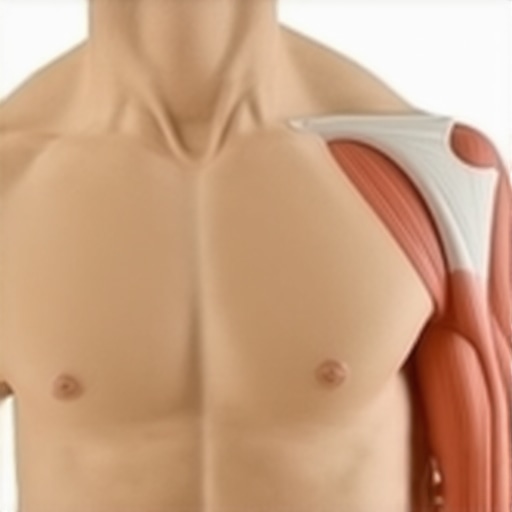
If you have ever felt that zing during a lateral raise, you are likely dealing with subacromial impingement. It is a fancy way of saying your humerus (upper arm bone) is smacking into the acromion (the top of your shoulder blade). I used to make the classic mistake of ‘pouring the pitcher’—rotating my thumbs down as I lifted. I thought it isolated the side delt better, but in reality, I was just jamming my tendons into a vice. This is one of the 3 tactical errors keeping your rotator cuff from healing and why so many lifters end up on the surgery table instead of the stage. According to a study published in the Journal of Orthopaedic & Sports Physical Therapy, subacromial impingement is significantly linked to poor scapular upward rotation, meaning if your shoulder blades aren’t moving right, your arm doesn’t have a chance.
Is my shoulder actually damaged for good?
It is the question that kept me up at night while I was icing my shoulder after every workout. The good news is that most of the time, that pinch is a functional issue, not a structural disaster. You probably haven’t torn anything yet, but you are knocking on the door. By implementing the scapular drill to fix your overhead press immediately, you can retrain your brain and body to keep that joint space open even under load. What I wish I knew back then—and what your chiropractor wishes you knew about heavy lifting—is that your grip and your shoulder blade position dictate everything. Have you ever felt this specific pinch while trying to grow your shoulders?
Your Scapular Rhythm is the Secret to Pain-Free Gains
When I finally stopped focusing on the weight and started focusing on how my shoulder blades were ‘sliding’ along my rib cage, everything changed. If your shoulder blade stays pinned down while you lift your arm out to the side, you’re going to get that pinch every single time. It is very similar to why your shoulder pinches during overhead presses; it’s a lack of room. You need to let those blades rotate up and out. I found that slightly leaning forward and keeping my pinkies higher than my thumbs—the opposite of what I used to do—instantly cleared the impingement. It was like magic, but it was really just physics. We are going to dive into the exact ‘scapular reset’ that will allow you to go back to heavy sets without the fear of that sudden, sharp jab.
Let your shoulder blades breathe
The biggest lie in lifting is that you must keep your shoulder blades ‘pinned back and down’ for every exercise. While that might work for a bench press, it is a recipe for disaster during a lateral raise. Think of your shoulder blade (scapula) like a garage door; if the tracks are jammed or locked, the door—your arm—is never going to go up without a fight. For your humerus to clear the acromion, the scapula must rotate upward. When I first attempted to fix my form, I used the scapular reset that stops shoulder clicking during bench press and applied it to my isolation work. I stopped forcing the squeeze and allowed my blades to slide naturally. The result? That sharp, bone-on-bone grinding vanished because I stopped choking the joint. You want to feel your shoulder blades ‘wrap’ around your rib cage as you reach the top of the movement.
The 30-degree ‘Scaption’ trick
Most lifters perform lateral raises in the ‘frontal plane,’ which is perfectly out to the sides. The problem is that your shoulder joint doesn’t actually sit perfectly flat against your back; it is angled forward. To create maximum space in the joint, you should lift in the ‘scapular plane’—roughly 20 to 30 degrees in front of your body. Imagine you are reaching toward the corners of the room rather than the side walls. I remember grabbing a pair of tiny 5-pound dumbbells and hiding in the corner of the gym to practice this. It felt like I was doing a ‘Y’ raise, and for the first time in three years, I felt my side delt fire without a single ‘zing’ in the joint. It is a very similar mechanical shift to why your shoulder pinches during overhead presses—it is all about finding the path of least resistance for the bone.
Ditch the ‘pouring the pitcher’ cue forever
We have all heard it: ‘Imagine you are pouring out a pitcher of water at the top.’ This internal rotation is the quickest way to jam your supraspinatus tendon into the acromion. Instead, I want you to do the opposite. Keep your thumb slightly higher than your pinky, or at the very least, keep a neutral grip. This external rotation opens up the subacromial space like opening a window. It allows the ‘humps’ of your arm bone to pass under the shoulder blade without catching. If you struggle with this, the thoracic extension move that saves your shoulders can help you stay upright enough to make this grip change feel natural. When I stopped ‘pouring the pitcher,’ my lateral raises felt less like a chore and more like a targeted growth tool.
Why squeezing the weight harder actually saves your joint
There is a neurological trick called ‘irradiation.’ When you squeeze something with maximum force, the tension travels up the chain and signals the surrounding muscles to stabilize. By crushing the dumbbell handle, you are essentially telling your rotator cuff to wake up and pull the head of the humerus tight into the socket. This prevents the ‘upward migration’ that causes the impingement in the first place. This is why why your grip strength predicts your shoulder longevity is such a vital concept for heavy lifters. If your grip is loose, your shoulder is loose. I found that even on my light ‘pump’ sets, a white-knuckle grip made the movement feel significantly more stable. If your shoulders feel ‘shaky’ at the top, you aren’t gripping hard enough. You can also integrate the scapular drill for pain-free dips to further reinforce this stability under tension.
I used to think that if I just fixed my form, the pain would vanish forever. But I often missed the forest for the trees. Most lifters view their body as a collection of isolated parts, but your brain sees it as one continuous map. People often tell me, “I got adjusted, and it felt great for an hour, then the pain came back.” This is the classic trap of treating the symptom instead of the system. We need to talk about the science behind chiropractic adjustments for back pain relief, which isn’t just about “crunching” bones. It is actually about down-regulating an overactive nervous system. A common mistake is thinking the “pop” is the bone moving back into place. It is not. It is a gas bubble releasing, but the real magic is the neurological reset. According to a study in the Journal of Manipulative and Physiological Therapeutics, spinal manipulation actually changes the way your brain processes pain signals and muscle activation patterns. This is why how spinal alignment directly impacts your athletic performance isn’t just marketing—it is neurophysiology. 
Why do my results vanish the moment I leave the clinic?
This is where we hit the nuance wall. If you get an adjustment but go right back to sitting in a bucket-style car seat that rounds your spine, you are undoing the work. I have seen guys spend hundreds on rehab only to ignore why your lumbar spine hates your car seat. The adjustment opens a window of opportunity, but your movement habits keep that window open. Another “oops” factor I see is people trying to “self-crack” their necks or backs to find relief. You aren’t hitting the restricted segment; you are likely just slamming the segments that are already too loose. This leads to hypermobility and chronic instability over time. If you want longevity, you have to understand the truth about why your adjustments don’t seem to last. It is rarely the fault of the technique—it is usually the lack of follow-up stability work. Stop thinking that a single click solves a decade of poor posture. We also have to address the fact that why your morning stretching routine is making you stiffer by noon could be the very thing feeding your instability. Have you ever fallen into this trap? Let me know in the comments.
Stop the revolving door of recurring pain
If you want to stop that ‘revolving door’ cycle of injury and relief, you need a toolkit that bridges the gap between your sessions. I am not talking about a garage full of expensive machines; I am talking about building a body that knows how to hold its own alignment. For those looking for strategic chiropractic solutions for long-term back health, the real secret is what you do during the 167 hours a week you are not on my table. It is about learning how to safely adjust your own posture throughout the day without force, using subtle shifts that keep your nervous system calm and your muscles from guarding.
How do I maintain my structural integrity over time?
This is the million-dollar question. Maintenance is not a 20-minute stretching routine that you will eventually skip. It is about environment and habits. If you are a side sleeper, you are likely undoing your progress every night; checking out the secret to staying adjusted while sleeping on your side was a game-changer for my morning stiffness and shoulder stability. You have to stop the ‘micro-traumas’ from accumulating if you want the big adjustments to stick. Consistency in how you sit, stand, and sleep outweighs a heavy workout once a week.
Tools that actually earn their keep
I used to buy every gadget on the market, but now I stick to the basics. I personally swear by how to use a lacrosse ball to melt away mid-back knots because it allows for pinpoint precision that a foam roller just cannot touch. A foam roller is great for general blood flow, but when a specific rib feels ‘stuck’ or your levator scapulae is screaming, you need something small and dense. Use the ball against a wall to control the pressure.  This kind of targeted work is why I tell people to focus on ‘releasing’ rather than just ‘stretching.’ You are trying to change the tone of the muscle, not just pull on it. I have also found that most people use foam rollers incorrectly when dealing with the lower body. Instead of rolling the sensitive tissue, you should be looking at the correct way to use a foam roller on your it band which involves targeting the muscles that pull on it rather than the band itself. When you combine this with how to use a wall slide to fix rounded shoulders, you are addressing the front and the back of the kinetic chain simultaneously.
Where recovery is heading in 2025
We are moving toward a world of ‘precision movement.’ Dr. Robert Schleip, a leading authority on human biology and fascia research, argues that the architecture of our connective tissue requires ‘varied mechanical loading’ to stay healthy and elastic. This means the future is not just about more strength; it is about movement variability. We will soon see more wearable sensors that track your scapular plane in real-time, preventing that impingement before you even feel the ‘zing.’ By enhancing athletic performance with targeted chiropractic care and using data to guide our training, we can push our limits without the inevitable crash. Grab a lacrosse ball and try that rhomboid release today; your upper back will thank you before you even finish your next set.I was standing in front of the gym mirror, ego-lifting a pair of 30-pound dumbbells, trying to get my lateral delts to finally pop. On the fourth rep, it happened. A sharp, hot needle jabbed right into the front of my shoulder. I dropped the weights. They clattered on the rubber floor, and the guy next to me stopped his set to stare. It wasn’t ‘the pump’—it was a warning shot from my rotator cuff. For months, I tried to push through it, thinking I just needed to ‘warm up’ more, but the pinch only got nastier. I felt like a failure because I couldn’t even perform the most basic isolation move without wincing. That ‘lightbulb moment’ finally hit when I realized I wasn’t just lifting weights; I was grinding my tendons into a tiny space they weren’t meant to be in. Today, we are going to stop that stabbing sensation once and for all by fixing your mechanics and creating the joint space your shoulder is begging for.
That Sharp Stabbing Feeling Isn’t Just ‘The Pump’
If you have ever felt that zing during a lateral raise, you are likely dealing with subacromial impingement. It is a fancy way of saying your humerus (upper arm bone) is smacking into the acromion (the top of your shoulder blade). I used to make the classic mistake of ‘pouring the pitcher’—rotating my thumbs down as I lifted. I thought it isolated the side delt better, but in reality, I was just jamming my tendons into a vice. This is one of the 3 tactical errors keeping your rotator cuff from healing and why so many lifters end up on the surgery table instead of the stage. According to a study published in the Journal of Orthopaedic & Sports Physical Therapy, subacromial impingement is significantly linked to poor scapular upward rotation, meaning if your shoulder blades aren’t moving right, your arm doesn’t have a chance.
Is my shoulder actually damaged for good?
It is the question that kept me up at night while I was icing my shoulder after every workout. The good news is that most of the time, that pinch is a functional issue, not a structural disaster. You probably haven’t torn anything yet, but you are knocking on the door. By implementing the scapular drill to fix your overhead press immediately, you can retrain your brain and body to keep that joint space open even under load. What I wish I knew back then—and what your chiropractor wishes you knew about heavy lifting—is that your grip and your shoulder blade position dictate everything. Have you ever felt this specific pinch while trying to grow your shoulders?
Your Scapular Rhythm is the Secret to Pain-Free Gains
When I finally stopped focusing on the weight and started focusing on how my shoulder blades were ‘sliding’ along my rib cage, everything changed. If your shoulder blade stays pinned down while you lift your arm out to the side, you’re going to get that pinch every single time. It is very similar to why your shoulder pinches during overhead presses; it’s a lack of room. You need to let those blades rotate up and out. I found that slightly leaning forward and keeping my pinkies higher than my thumbs—the opposite of what I used to do—instantly cleared the impingement. It was like magic, but it was really just physics. We are going to dive into the exact ‘scapular reset’ that will allow you to go back to heavy sets without the fear of that sudden, sharp jab.
Let your shoulder blades breathe
The biggest lie in lifting is that you must keep your shoulder blades ‘pinned back and down’ for every exercise. While that might work for a bench press, it is a recipe for disaster during a lateral raise. Think of your shoulder blade (scapula) like a garage door; if the tracks are jammed or locked, the door—your arm—is never going to go up without a fight. For your humerus to clear the acromion, the scapula must rotate upward. When I first attempted to fix my form, I used the scapular reset that stops shoulder clicking during bench press and applied it to my isolation work. I stopped forcing the squeeze and allowed my blades to slide naturally. The result? That sharp, bone-on-bone grinding vanished because I stopped choking the joint. You want to feel your shoulder blades ‘wrap’ around your rib cage as you reach the top of the movement.
The 30-degree ‘Scaption’ trick
Most lifters perform lateral raises in the ‘frontal plane,’ which is perfectly out to the sides. The problem is that your shoulder joint doesn’t actually sit perfectly flat against your back; it is angled forward. To create maximum space in the joint, you should lift in the ‘scapular plane’—roughly 20 to 30 degrees in front of your body. Imagine you are reaching toward the corners of the room rather than the side walls. I remember grabbing a pair of tiny 5-pound dumbbells and hiding in the corner of the gym to practice this. It felt like I was doing a ‘Y’ raise, and for the first time in three years, I felt my side delt fire without a single ‘zing’ in the joint. It is a very similar mechanical shift to why your shoulder pinches during overhead presses—it is all about finding the path of least resistance for the bone.
Ditch the ‘pouring the pitcher’ cue forever
We have all heard it: ‘Imagine you are pouring out a pitcher of water at the top.’ This internal rotation is the quickest way to jam your supraspinatus tendon into the acromion. Instead, I want you to do the opposite. Keep your thumb slightly higher than your pinky, or at the very least, keep a neutral grip. This external rotation opens up the subacromial space like opening a window. It allows the ‘humps’ of your arm bone to pass under the shoulder blade without catching. If you struggle with this, the thoracic extension move that saves your shoulders can help you stay upright enough to make this grip change feel natural. When I stopped ‘pouring the pitcher,’ my lateral raises felt less like a chore and more like a targeted growth tool.
Why squeezing the weight harder actually saves your joint
There is a neurological trick called ‘irradiation.’ When you squeeze something with maximum force, the tension travels up the chain and signals the surrounding muscles to stabilize. By crushing the dumbbell handle, you are essentially telling your rotator cuff to wake up and pull the head of the humerus tight into the socket. This prevents the ‘upward migration’ that causes the impingement in the first place. This is why why your grip strength predicts your shoulder longevity is such a vital concept for heavy lifters. If your grip is loose, your shoulder is loose. I found that even on my light ‘pump’ sets, a white-knuckle grip made the movement feel significantly more stable. If your shoulders feel ‘shaky’ at the top, you aren’t gripping hard enough. You can also integrate the scapular drill for pain-free dips to further reinforce this stability under tension.
I used to think that if I just fixed my form, the pain would vanish forever. But I often missed the forest for the trees. Most lifters view their body as a collection of isolated parts, but your brain sees it as one continuous map. People often tell me, “I got adjusted, and it felt great for an hour, then the pain came back.” This is the classic trap of treating the symptom instead of the system. We need to talk about the science behind chiropractic adjustments for back pain relief, which isn’t just about “crunching” bones. It is actually about down-regulating an overactive nervous system. A common mistake is thinking the “pop” is the bone moving back into place. It is not. It is a gas bubble releasing, but the real magic is the neurological reset. According to a study in the Journal of Manipulative and Physiological Therapeutics, spinal manipulation actually changes the way your brain processes pain signals and muscle activation patterns. This is why how spinal alignment directly impacts your athletic performance isn’t just marketing—it is neurophysiology.
Why do my results vanish the moment I leave the clinic?
This is where we hit the nuance wall. If you get an adjustment but go right back to sitting in a bucket-style car seat that rounds your spine, you are undoing the work. I have seen guys spend hundreds on rehab only to ignore why your lumbar spine hates your car seat. The adjustment opens a window of opportunity, but your movement habits keep that window open. Another “oops” factor I see is people trying to “self-crack” their necks or backs to find relief. You aren’t hitting the restricted segment; you are likely just slamming the segments that are already too loose. This leads to hypermobility and chronic instability over time. If you want longevity, you have to understand the truth about why your adjustments don’t seem to last. It is rarely the fault of the technique—it is usually the lack of follow-up stability work. Stop thinking that a single click solves a decade of poor posture. We also have to address the fact that why your morning stretching routine is making you stiffer by noon could be the very thing feeding your instability. Have you ever fallen into this trap? Let me know in the comments.
Stop the revolving door of recurring pain
If you want to stop that ‘revolving door’ cycle of injury and relief, you need a toolkit that bridges the gap between your sessions. I am not talking about a garage full of expensive machines; I am talking about building a body that knows how to hold its own alignment. For those looking for strategic chiropractic solutions for long-term back health, the real secret is what you do during the 167 hours a week you are not on my table. It is about learning how to safely adjust your own posture throughout the day without force, using subtle shifts that keep your nervous system calm and your muscles from guarding.
How do I maintain my structural integrity over time?
This is the million-dollar question. Maintenance is not a 20-minute stretching routine that you will eventually skip. It is about environment and habits. If you are a side sleeper, you are likely undoing your progress every night; checking out the secret to staying adjusted while sleeping on your side was a game-changer for my morning stiffness and shoulder stability. You have to stop the ‘micro-traumas’ from accumulating if you want the big adjustments to stick. Consistency in how you sit, stand, and sleep outweighs a heavy workout once a week.
Tools that actually earn their keep
I used to buy every gadget on the market, but now I stick to the basics. I personally swear by how to use a lacrosse ball to melt away mid-back knots because it allows for pinpoint precision that a foam roller just cannot touch. A foam roller is great for general blood flow, but when a specific rib feels ‘stuck’ or your levator scapulae is screaming, you need something small and dense. Use the ball against a wall to control the pressure. This kind of targeted work is why I tell people to focus on ‘releasing’ rather than just ‘stretching.’ You are trying to change the tone of the muscle, not just pull on it. I have also found that most people use foam rollers incorrectly when dealing with the lower body. Instead of rolling the sensitive tissue, you should be looking at the correct way to use a foam roller on your it band which involves targeting the muscles that pull on it rather than the band itself. When you combine this with how to use a wall slide to fix rounded shoulders, you are addressing the front and the back of the kinetic chain simultaneously.
Where recovery is heading in 2025
We are moving toward a world of ‘precision movement.’ Dr. Robert Schleip, a leading authority on human biology and fascia research, argues that the architecture of our connective tissue requires ‘varied mechanical loading’ to stay healthy and elastic. This means the future is not just about more strength; it is about movement variability. We will soon see more wearable sensors that track your scapular plane in real-time, preventing that impingement before you even feel the ‘zing.’ By enhancing athletic performance with targeted chiropractic care and using data to guide our training, we can push our limits without the inevitable crash. Grab a lacrosse ball and try that rhomboid release today; your upper back will thank you before you even finish your next set.
Why my biggest gym injury was actually a gift
That stabbing sensation in my shoulder wasn’t just a physical hurdle; it was a wake-up call to start respecting my anatomy. I learned that you can’t out-train poor mechanics, and no amount of ‘rubbing some dirt on it’ replaces a proper scapular reset. My biggest realization was that the body doesn’t work in isolation—your shoulder health is intimately tied to your spinal alignment and even your grip strength. When I finally started to discover how chiropractic adjustments can alleviate chronic back pain and upper body tension, my performance skyrocketed because I was no longer fighting my own nervous system.
The gear that stays in my gym bag
To stay ahead of the ‘zing,’ I don’t leave home without a high-density lacrosse ball and a set of light resistance bands for pre-hab. I also lean heavily on experts who revolutionize your rehab with chiropractic techniques for faster recovery. If you’re serious about longevity, look into the work of Dr. Robert Schleip on fascia; it will change how you view every stretch you perform. I’ve found that consistency is the only ‘secret’ that actually works in the long run. #IMAGE_PLACE_HOLDER_E#
Your path to pain-free pressing starts today
You don’t have to live with the fear of a ‘zing’ every time you pick up a pair of dumbbells. By focusing on your scapular plane and keeping your movement variable, you can maximize the role of chiropractic care in your recovery and get back to the weights you love. Remember that healing isn’t a straight line, but with the right lifestyle choices that keep your spine healthy, it’s a journey worth taking. Have you ever felt that sharp ‘zing’ during a lateral raise? Let me know in the comments how you handled it!