
I was three reps into my second set when the lights went out in my right shoulder. It wasn’t a slow burn; it was an electric, ‘drop the weights and gasp’ kind of flash. For months, I told myself that dips were just ‘ego lifts’ or naturally dangerous for the human frame. I retreated to the machines, but deep down, I missed the raw strength of a proper bodyweight dip. It wasn’t until I stopped blaming the exercise and started looking at my scapular mechanics that everything changed. Most of us are just hanging off our ligaments rather than using our muscles to stabilize the joint, and that is a recipe for disaster.
Stop Avoiding Dips and Start Fixing Your Scapular Control
Today, I am going to show you exactly how to reclaim your shoulder health using a simple scapular drill that changed my entire approach to training. We are going to stop the grinding, eliminate that front-shoulder pinch, and get you back to pressing without fear. My biggest mistake early on was thinking that ‘pinning my shoulders back’ was enough. I spent weeks forcing a rigid posture that actually made things worse because I didn’t understand how the shoulder blade needs to rotate, not just retract. If you have ever wondered why your neck hurts after every shoulder day, you are likely dealing with the same compensation patterns I had to unlearn. We need to focus on the serratus anterior and the lower traps to create a stable base for the humerus to move.
Is this just another gimmick for people with bad joints?
It is easy to be skeptical when every fitness influencer has a ‘magic fix.’ But the reality is that biomechanics don’t lie. According to the American Journal of Sports Medicine, abnormal scapular motion is present in up to 100% of patients with shoulder instability. This isn’t about some fancy new gadget; it is about restoring the function your body already possesses. I have seen this drill help people who thought they were destined for surgery, much like the role of chiropractic care in effective sports injury recovery helps athletes find their way back to peak performance. Before we dive into the steps, I have to ask: have you ever felt that sharp, ‘stabbing’ sensation in the front of your shoulder during a heavy set of dips? If so, you aren’t alone, and you don’t have to live with it. Just like the thoracic extension move that saves your shoulders, this specific drill is about creating space where there currently is none. [image_placeholder] By the time we are done, you will have a 30-second ritual that ensures your shoulders are packed and protected before you even touch the bars. It’s time to stop the guesswork and start training with intention.
Drive Your Shoulder Blades Into Your Back Pockets
To fix the dip, you have to realize that your shoulder blade is the platform your arm operates from. If that platform is wobbly, your rotator cuff has to work overtime just to keep the joint in the socket. Think of your scapula as the foundation of a crane; if the base isn’t bolted down, the whole structure tips over when you lift a heavy load. This is why active depression is your first line of defense. Before you even bend your elbows, you need to pull your shoulders down away from your ears. If you feel like your shoulders are shrugging toward your neck, you are basically begging for an impingement. This lack of control is often why your bench press is wrecking your thoracic mobility, as the compensation patterns bleed from one lift into the next. When I first started focusing on this, I realized I was ‘leaking’ power through my upper traps instead of grounding my strength in my mid-back. This adjustment alone added ten pounds to my dip within a week because I was finally stable.
The Secret Muscle That Acts Like Your Shoulder’s Brake System
Most lifters focus on the chest and triceps, but the real MVP of a pain-free dip is the serratus anterior. This muscle wraps around your ribs and holds the shoulder blade flat against your torso. When it’s weak, your shoulder blade ‘wings’ out, creating that familiar pinching sensation. I learned this the hard way during a summer training session where I was obsessed with weighted dips. I was hanging a 45-pound plate from my waist, but my right shoulder blade was flapping like a broken wing. Every rep felt like a knife in the front of my joint. I had to step back and integrate the scapular drill to fix your overhead press immediately into my warm-up. By waking up the serratus, I created a stable track for my humerus to glide on, instantly removing the ‘bone-on-bone’ feel. This muscle doesn’t just look cool on bodybuilders; it provides the essential lateral stability that prevents the shoulder from rolling forward under load. 
Execute the Scapular Reset Mid-Set
If you feel a pinch mid-set, don’t just power through it. Lock your elbows out at the top of the dip and perform what I call a ‘scapular shrug.’ Lower your body slightly without bending your arms, then push the bars away as hard as possible to grow ‘tall’ through your shoulders. This resets the scapula into protraction and depression. It’s a similar logic to how strategic chiropractic solutions for long-term back health focus on alignment rather than just masking symptoms. You are essentially re-aligning the joint under tension. If you still feel clicking, you might need a more targeted scapular reset that stops shoulder clicking during bench press routines as well. I remember the first time I applied this in the middle of a messy, failing set of 12. The pain didn’t just lessen; it vanished mid-rep. It felt like someone had finally greased the rusty gears of my right shoulder. This transition from ‘hanging’ to ‘active’ stability is what separates long-term lifters from those who end up in the role of chiropractic care in effective sports injury recovery after a preventable labrum tear. Focus on the ‘tuck’ and the ‘push’ at the top of every single rep to keep the joint space open and the ligaments safe.
The biggest mistake I see advanced lifters make is assuming that every sensation of ‘tightness’ requires more stretching. It is a seductive trap: your traps feel stiff, so you pull your head to the side for thirty seconds, hoping for relief. But in the world of high-level performance, that ‘tight’ feeling is often actually neurological tension—your brain’s way of creating a ‘brake’ because the joint feels unstable. If you stretch a muscle that is already over-lengthened and weak, you are essentially pulling on a frayed rope. This is exactly why your morning stretching routine is making you stiffer by noon. Instead of lengthening, we need to be strengthening the shortened, inhibited muscles to restore the balance of the joint.
Stop Chasing the Pop and Start Testing the Function
We have all been there—trying to ‘self-adjust’ by twisting our backs over a chair or aggressively rolling a painful spot. While it might provide a temporary hit of dopamine and a brief window of relief, it rarely addresses the underlying motor control issue. In fact, the truth about cracking your own mid-back over a chair is that you are likely moving the segments that are already hyper-mobile, while the ‘stuck’ segments remain locked. This creates a cycle of instability. Real progress in sports rehab comes from targeted input. I remember a client who spent months foam rolling his IT band to no avail; he didn’t realize that why your foam roller is useless for it-band syndrome is because the tissue is a thick band of fascia, not a muscle you can just ‘squish’ into submission. We had to fix his hip mechanics to take the tension off the band, not the other way around.
Can your brain actually shut down your strength during a heavy set?
Yes, and it’s a phenomenon known as Arthrogenic Muscle Inhibition (AMI). According to a study published in the Journal of Sport Rehabilitation by Rice and McNair, swelling or even minor joint dysfunction can cause the nervous system to ‘turn off’ the surrounding muscles to prevent further injury. This is why you might feel a sudden loss of power in your triceps during a dip. It isn’t that the muscle is tired; it’s that your brain has pulled the fire alarm. This is where the science behind chiropractic adjustments for back pain relief and shoulder stability becomes vital. An adjustment isn’t just about moving a bone; it is a neurological ‘reset’ that tells the brain the joint is safe, allowing those inhibited muscles to fire again. 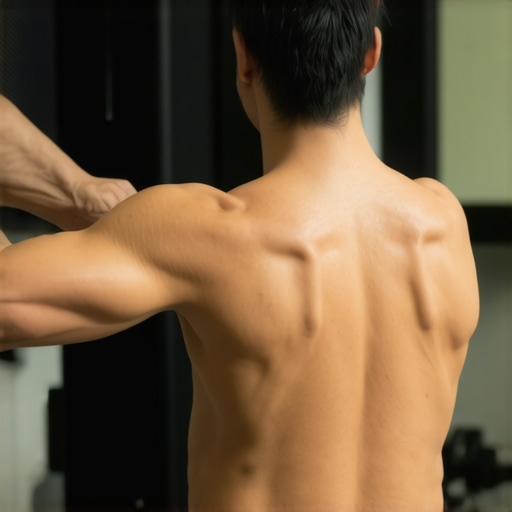
The nuance here is that an adjustment is a tool, not the entire toolbox. You have to follow that reset with the scapular drills we discussed earlier to ‘map’ that new range of motion into your nervous system. I’ve seen athletes skip this part and end up right back where they started. This synergy is central to revolutionize your rehab chiropractic techniques for faster recovery. If you only focus on the ‘crunch’ and ignore the ‘control,’ you’re just a temporary fix waiting to break again. This is also what your chiropractor wishes you knew about heavy lifting: the adjustment gets you in the door, but your movement quality keeps the door open. Have you ever fallen into this trap of stretching a ‘tight’ muscle only for it to feel worse an hour later? Let me know in the comments below.
The Two Tools That Keep My Joints From Screaming
I stopped relying on luck and started using specific tools that provide immediate feedback to my nervous system. My absolute favorite for long-term health is the 2-pound steel club. Unlike a standard dumbbell, the weight is offset, forcing your grip and rotator cuff to communicate instantly to keep the joint centered. If you have ever wondered why your grip strength predicts your shoulder longevity, it is because of this exact neurological loop where the hand ‘talks’ to the shoulder blade. I use these clubs for five minutes before any heavy pressing session. It is not about the weight; it is about the ‘proprioceptive noise’ it creates in the joint that forces the brain to stabilize. I also keep a set of high-tension mini-bands in my gym bag for pull-aparts. According to Dr. Kevin Wilk in the Journal of Athletic Training, distal loading and proprioceptive feedback are critical for preventing the very instability that leads to the need for enhancing athletic performance with targeted chiropractic care later in your lifting career.
#IMAGE_PLACE_HOLDER_D#
How do I maintain my shoulder health over time?
Consistency beats intensity every single day. You do not need a two-hour rehab session; you need a five-minute ritual that prioritizes the ‘stuck’ segments of your spine before they affect your shoulders. This is where strategic chiropractic solutions for long-term back health become a part of your lifestyle, not just an emergency visit when you can’t move. I personally check my thoracic rotation every morning. If I cannot hit 45 degrees of rotation while sitting, I know I am at a higher risk for a shoulder tweak that day. Maintenance also means looking at your environment outside the gym. Following essential tips for managing back pain through healthy lifestyle choices, like auditing your monitor height and side-sleeping position, prevents the micro-stress that adds up over a decade. It is about scaling your habits as your weights go up.
Your Smartwatch is About to Become Your Physical Therapist
The next decade of sports rehab is not going to be about better foam rollers; it is going to be about predictive biometric data. We are moving toward a world where your wearable tech will detect ‘micro-stutters’ in your scapular rhythm before you even feel the first pinch of pain. Imagine getting a notification on your watch saying, ‘Your right serratus anterior is firing 15% slower than usual; skip the heavy dips today.’ This integration of AI with real-time biomechanics will eventually make the guessing game of injury prevention obsolete. Until then, you have to be your own biofeedback machine. My advanced tip for you today: try a ‘Bottoms-Up Kettlebell Press.’ Hold a light kettlebell by the handle with the heavy part pointing toward the ceiling. The instability will force your entire shoulder girdle and your core to fire in perfect sync. If you cannot stabilize the kettlebell, do not go heavy on the dip bars. Give this a shot in your next warm-up and tell me how much more stable your shoulders feel afterward.
[image_placeholder]
Lessons From the Training Floor That Most Lifters Skip
Reflecting on my own journey, the hardest pill to swallow was realizing that more effort doesn’t always equal more progress. I used to think I could out-work a mechanical flaw, but the body has a way of slowing you down when you ignore its signals. First, stop treating your warm-up like a chore and start viewing it as a calibration phase. Second, remember that stability is a skill that needs constant maintenance, much like proven chiropractic strategies emphasize for long-term gains. Finally, the greatest myth is that you are either ‘injured’ or ‘healthy.’ In reality, you are always on a spectrum of function, and these small drills keep you on the right side of that line.
My Personal Gear Bag for Resilient Shoulders
I don’t believe in cluttering your gym bag with every gadget on the market, but there are a few essentials I never lift without. I rely heavily on small steel clubs for neurological priming; they force my rotator cuff to fire in a way that dumbbells simply can’t. I also recommend exploring movement systems that prioritize joint integrity over raw volume. For those days when a mechanical reset is needed beyond what a drill can provide, I look for expert chiropractic adjustments that work to clear the static in my nervous system. These tools aren’t crutches; they are the high-performance maintenance required for a high-performance body.
Reclaiming Your Path to Heavy Pressing
Your journey back to the dip bar doesn’t have to be a gamble. By shifting your focus from the weight on the bar to the position of your blades, you are building a foundation that will last decades, not just a few training cycles. Whether you are dealing with a nagging pinch or looking to alleviate chronic back pain that affects your lifting, the answer always lies in better mechanics and consistent input. Don’t let fear dictate your training—let intention lead the way. Have you ever tried a ‘bottoms-up’ press to test your shoulder stability before hitting a heavy set of dips? Let me know your experience in the comments below!