
I’ll never forget the Tuesday afternoon when I finally realized my upper back wasn’t just “tired”—it was officially fossilized. I was trying to reach for a coffee mug on the top shelf, and my mid-back felt like it was made of dry, brittle plywood. It felt like someone had driven a wooden wedge between my shoulder blades and just left it there. I’d spend hours trying to fix my rounded shoulders by sitting up straight, but within five minutes, I’d be slumped over again, nursing that miserable burning sensation between my shoulder blades. I was frustrated and, honestly, a bit worried I was stuck this way forever. I even found myself wondering if my mattress was destroying my spinal alignment because I’d wake up feeling like I’d been in a wrestling match. By 3 PM every day, I wasn’t thinking about my work; I was thinking about how much I wanted to lean against a doorframe and just grind my back into it. Today, I’m going to show you how a $5 rubber ball can unlock your back better than a luxury spa day.
That Mid-Back Stiffness Is Stealing Your Best Movements
The truth is, most of us treat our thoracic spine—the middle part of the back—like a forgotten relic until it starts screaming. When that area gets “locked,” everything else suffers. Your neck starts to ache, your lower back overcompensates, and you might even find that your rib cage feels stuck when you try to take a deep, satisfying breath. I’ve been there, trust me. In my early days of trying to “fix” myself, I made the classic rookie mistake: I thought more pain meant more progress. I’d mash a lacrosse ball right against my vertebrae, gritting my teeth while my eyes watered. It was counterproductive and, frankly, stupid. You don’t need to punish your spine to find relief; you just need to know where to press. I was caught in a loop where a weak core was causing chronic neck tension, but I couldn’t even stand up straight enough to engage my abs.
Is rolling around on a hard ball actually worth the hype?
I get the skepticism. If you’ve ever stepped on a Lego or a dog toy in the dark, the idea of intentionally lying on a rock-hard rubber ball sounds like a form of medieval torture. But here’s the thing: it’s the most precise tool we have for “un-sticking” the fascia and muscles that surround your ribs. Unlike a foam roller, which is too broad to get between the bones, the lacrosse ball is like a heat-seeking missile for tension. Have you ever felt like you had a literal knot that just wouldn’t budge no matter how much you stretched? Drop a comment below if you’ve ever reached for a foam roller only to find it just doesn’t hit that deep spot between your shoulder blades.
The Science of Moving Better Without the Price Tag
What surprised me most during my journey into sports rehab was how little it actually takes to see a change. You don’t need fancy gadgets or even a posture brace that might actually cause muscle atrophy in the long run. You just need a bit of leverage and five minutes of your time. Research, such as studies found on PubMed, suggests that even short bouts of myofascial release can significantly improve joint range of motion without the loss of strength often associated with long static stretching. It’s not magic; it’s just physics and physiology working together to tell your nervous system it’s okay to let go. This is about more than just “cracking” your back; it’s about restoring a movement pattern that you likely haven’t felt in years. [IMAGE_PLACEHOLDER] We’re going to stop the cycle of stiffness today and give your spine the “grease” it needs to move freely again, starting with how to actually position yourself for success.
Start with a Solid Foundation on the Floor
To get this right, you need to lie on a surface with just a little bit of give—think a yoga mat or a thin carpet. If you try this on a hard hardwood floor, the ball will slip away like a greased pig. I learned this the hard way during my first attempt when the ball shot across the room and shattered a decorative vase. Lie on your back with your knees bent and your feet flat on the floor. This position flattens your lumbar spine and prevents you from arching your back, which is a common mistake that actually increases tension in the very spot you’re trying to fix. By keeping your feet planted, you have the ‘brakes’ and ‘gas’ needed to control how much pressure you’re applying.
Identify the Safe Zone Near Your Shoulder Blades
You are looking for the ‘rhomboids’ and the ‘traps’—those meaty chunks of muscle between your spine and your shoulder blade. Never, ever place the ball directly on the bones of your spine. Not only does it hurt like crazy, but it does absolutely nothing for your mobility. Think of the ball as a focused tool to address how to tell if that knot in your back is a trigger point versus just general fatigue. If you find that your upper back feels like it needs to pop constantly, you are likely dealing with a joint that is being restricted by these tight muscle bands. Place the ball just inside the border of your shoulder blade. If you hit a spot that makes you catch your breath, you’ve found the target.
The Reach and Wrap Technique for Maximum Leverage
This is where the magic happens. Once the ball is pinned between your back and the floor, don’t just sit there. Reach your arms straight up toward the ceiling, then cross them over your chest as if you’re giving yourself a tight hug. This movement pulls the shoulder blades apart, exposing the deeper muscles and allowing the ball to sink in further. When I first did this, I felt a localized ‘thump’ in my back that felt like a release valve opening. I realized then that the real cause of that burning sensation between your shoulder blades is often just the fascia being glued together from lack of movement. #IMAGE_PLACE_HOLDER_B#
Keep Your Breath Moving or Your Muscles Won’t Relax
Your nervous system is designed to protect you. When you press a hard ball into a sore spot, your brain’s first instinct is to tighten every muscle in your body to ‘armour’ itself. You have to override that reflex. This is why learning how to use diaphragmatic breathing to calm your nervous system is the most important part of the whole process. If you hold your breath, the ball will just bounce off your surface-level tension. Slowly inhale through your nose, imagining the air traveling all the way down to the ball, and as you exhale, imagine your back melting over the ball like warm butter. Remember the truth about no-pain-no-gain in sports rehab: you want a ‘useful’ discomfort, not a sharp, stabbing pain that makes you recoil.
Test Your Progress with Active Motion
After spending about 90 seconds on a specific spot, take the ball out and lie flat. You’ll likely feel like that side of your back is literally sinking deeper into the floor than the other side. To see if the work is sticking, try a simple overhead reach. If you’ve failed the overhead mobility test every crossfit athlete should pass in the past, you’ll be shocked at how much smoother your arm moves now. You can even how to check your own shoulder mobility in 30 seconds by reaching behind your back to see if those ‘stuck’ ribs are finally playing ball.
Why Your Relief Usually Disappears by Dinner Time
Most people think that when they feel a click or a pop, they’ve successfully ‘moved’ a bone back into its rightful home. It’s a satisfying thought, but it’s mostly a myth. The reality is that the science behind that popping sound in your joints has more to do with gas bubbles in the synovial fluid than bones shifting like Tetris pieces. I used to be obsessed with the sound, thinking if I didn’t hear a ‘crack,’ the session didn’t count. This is a massive trap. If you’re constantly chasing that sound, you’re likely just hyper-mobilizing joints that are already loose while ignoring the actual stuck segments. You aren’t fixing the problem; you’re just scratching a neurological itch.
Stop Chasing the Pop and Start Chasing Stability
Here’s the nuance: real recovery isn’t just about the physical release; it’s about the neurological reset. According to research published in the Journal of Bodywork and Movement Therapies, manual therapy—including chiropractic adjustments—significantly impacts the sympathetic nervous system, essentially ‘down-regulating’ your body’s stress response. If you only focus on the muscle and ignore the nerve, you’re just painting over a water stain without fixing the leaky pipe. This is why the truth about why your adjustments don’t seem to last usually comes down to a lack of follow-up stability work. Have you ever fallen into this trap where the pain returns the moment you sit back down at your desk? Let me know in the comments. 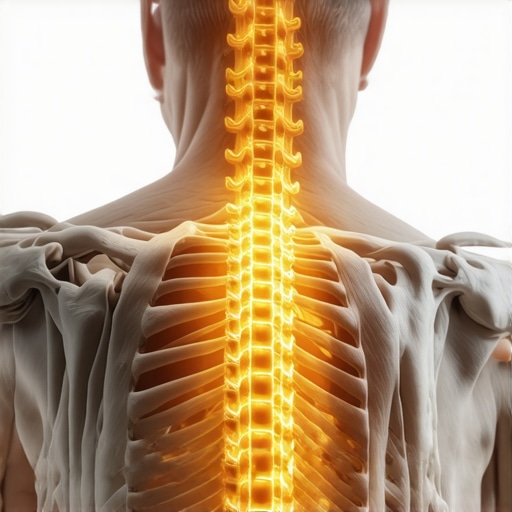
Why do your adjustments seem to fail after a few days?
It’s usually because your body is addicted to its old, dysfunctional patterns. To see real change, you have to boost your sports rehab journey with proven chiropractic strategies that pair adjustments with active movement. Think of the adjustment as opening a window of opportunity; if you don’t do something productive while it’s open, the window just slams shut again. This is where strategic chiropractic solutions for long-term back health come into play—you need to ‘save’ the new range of motion by moving through it immediately. By understanding the role of chiropractic care in effective sports injury recovery, you stop treating your body like a collection of parts and start treating it like the integrated system it is.I’ve spent a small fortune on gadgets that promised to “realign” my spine, but 90% of them ended up gathering dust in the garage. If you want strategic chiropractic solutions for long-term back health, you have to be incredibly picky about what you let into your daily routine. Beyond the lacrosse ball I mentioned earlier, my absolute non-negotiable tool is a high-quality, long-loop resistance band. I don’t use the thin, “rubber band” style ones that snap mid-workout; I prefer the 41-inch heavy-duty latex bands because they allow for consistent tension during pull-aparts and face pulls. Learning how to choose the right resistance band for shoulder rehab was a total game-changer for me because it allowed me to strengthen my upper back muscles without needing a full gym setup or expensive machines. 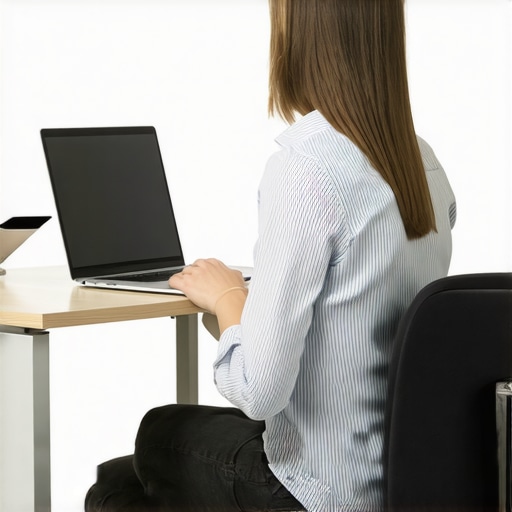 I also stopped ignoring the environment where I spend most of my time. If you commute more than thirty minutes, knowing how to optimize your car seat for lumbar support becomes just as important as the exercises themselves. I actually use a small, firm lumbar roll placed right at the base of my spine to prevent that dreaded mid-back collapse while I’m navigating traffic. It’s a low-tech fix that yields high-impact results. When I finally get to my desk, I make sure how to set up your laptop for better neck alignment is the first thing I check. If your screen is too low, you’re essentially undoing every single adjustment you just paid for within the first hour of your workday.
How do I keep my back feeling this good forever?
The secret isn’t more intense workouts; it’s consistency with “micro-dosed” movements. A study published in the Journal of Orthopaedic & Sports Physical Therapy (JOSPT) highlighted that patients who performed short, frequent bouts of corrective exercise had significantly better long-term outcomes than those who did one long, grueling session a week. I’ve personally found that following essential tips for managing back pain through healthy lifestyle choices, like taking a two-minute walking break every sixty minutes, does more for my spinal health than a ninety-minute yoga class once a week. Looking ahead, I expect we’ll see a massive shift toward wearable biofeedback. Imagine a shirt that gently vibrates when it detects your thoracic spine is beginning to “fossilize” again—giving you a real-time nudge to breathe and move. Until that technology becomes affordable, we have to be our own biofeedback loops. If you want to revolutionize your rehab chiropractic techniques for faster recovery, start by implementing just one of these ergonomic tweaks today. Pick one right now: either raise your monitor four inches or put a lumbar support in your car. Do it today, and I promise you’ll feel the difference in your energy levels by Friday.
The Mid-Back Breakthroughs I Wish I’d Known Sooner
Looking back at my journey, I realize I wasted months chasing the wrong sensations. First, I learned that more pressure isn’t better; if you’re tensing up, you’re fighting yourself. It is vital to learn how to tell if that knot in your back is a trigger point versus just a sensitive nerve. Second, I stopped obsessing over the “crack.” I finally understood that the science behind that popping sound in your joints is just gas release, not a bone relocation. Lastly, I realized that my environment was my biggest hurdle. You can roll all day, but if you don’t know how to set up your laptop for better neck alignment, you’re essentially swimming upstream.
Tools That Actually Earned a Spot in My Gym Bag
I’ve tried the vibrating rollers and the expensive massage guns, but these three things are what I actually use every single week to keep my spine moving. First, a high-quality resistance band is non-negotiable. Knowing how to choose the right resistance band for shoulder rehab changed my upper back strength completely. Second, I swear by a simple lumbar roll for my car. I learned how to optimize your car seat for lumbar support and it stopped my 3 PM back fatigue instantly. Finally, I never underestimate the power of my own breath. Taking a moment to practice how to use diaphragmatic breathing to calm your nervous system is the ultimate free recovery tool in my kit. [IMAGE_PLACEHOLDER]
Your Back Does Not Have to Feel Like a Brick
The transition from a fossilized back to a fluid, moving spine doesn’t happen overnight, but it is entirely possible. You don’t need a massive budget or a degree in kinesiology to start reclaiming your mobility. By combining these simple ball techniques with strategic chiropractic solutions for long-term back health, you are setting yourself up for years of pain-free movement. Your journey through sports rehab is a marathon, not a sprint, so be patient with your body as it unlearns years of desk-bound stiffness. Have you ever tried using a lacrosse ball for your back, or did it feel too much like a medieval torture device? Let me know your experience in the comments below!