
The sound was a sickening thwack, like a heavy rubber band snapping against wet wood. One second I was sprinting toward the finish line, and the next, I was face-down in the grass, clutching the back of my thigh while the world blurred around me. It was a Grade 2 hamstring strain, and my first instinct—the one I’m sure you’ve had too—was to try and stretch it out. I spent three weeks religiously touching my toes every morning, thinking I was a hero for pushing through the discomfort. In reality, I was just making the micro-tears worse and inviting a mountain of scar tissue to set up shop in my leg. I was falling into the classic trap where stretching your hamstrings won’t fix your chronic tightness because the issue wasn’t muscle length; it was a nasty mess of adhesions.
Stop Yanking on Your Strained Muscle and Try This Instead
When you strain a muscle, your body repairs it with a cheap, quick fix called scar tissue. Think of it like internal duct tape. It gets the job done, but it’s messy and doesn’t stretch. If you just keep pulling on it, that tape eventually frays and catches on the surrounding healthy fibers. That’s why your leg feels like a guitar string tuned three octaves too high. I realized that to truly revolutionize your rehab, you have to stop thinking about the muscle as a simple rubber band and start treating it like a complex series of sliding layers. Active Release Technique (ART) is the crowbar that pries those stuck layers apart. Today, I’m going to show you how to move past the ‘rest and ice’ plateau and use targeted manual release to get back on the track weeks earlier than you expected. [image_placeholder_1]
Is This Just an Overhyped Massage or Does It Actually Heal?
It is a fair question to ask. I used to think chiropractic work was just for back cracks, but the role of chiropractic care in effective sports injury recovery goes much deeper into soft tissue mechanics. According to a study published in the Journal of Physical Therapy Science, manual therapies that target myofascial trigger points and adhesions can lead to immediate, measurable improvements in range of motion and pain reduction compared to passive stretching. My biggest mistake early on was ignoring this science and assuming that if I just waited long enough, my body would sort itself out. It didn’t. I ended up with a limp that changed how I walked, eventually leading to a realization that your morning stretching routine is making you stiffer by noon because it never addresses the underlying glue-like adhesions. Have you ever spent months resting an injury only to have it flare up the second you tried to run at full speed again? That is the hallmark of scar tissue that hasn’t been properly released.
Break the Glue with Controlled Tension
To get your muscles sliding again, you have to treat the rehab process like a precision mechanical repair rather than a general oil change. The core logic of Active Release Technique (ART) is simple: you create a contact point on the problem area and move the muscle through its full range of motion. This creates a shearing force that physically breaks the bonds of the scar tissue. I remember a particularly stubborn session where my hamstring felt like it was made of dry leather. Every time I tried to lunge, it felt like something was going to snap. My practitioner didn’t just rub the area; he dug his thumb into the spot where the muscle met the tendon, held it with intense pressure, and told me to slowly straighten my leg. It was uncomfortable—bordering on painful—but after three reps, the snag I had felt for months simply vanished. This is why enhancing athletic performance with targeted chiropractic care is so much more than just cracking joints; it is about manual engineering of the soft tissue layers.
Locate the Adhesion by Feeling for Friction
Finding the exact spot of the adhesion is the most critical step. If you run your fingers along your hamstring with moderate pressure, you shouldn’t feel lumps or grit. If you do, those are likely adhesions where the fascia has fused to the muscle. In my own recovery, I found that my biggest issue wasn’t even in the belly of the muscle, but right behind the knee where the tendons overlap. By identifying these specific friction points, you can move past generic treatments. This precision is a major reason why many people fail with self-care; they often find that why your foam roller is useless for it-band syndrome is because the roller is too blunt an instrument to catch these tiny, specific snags. 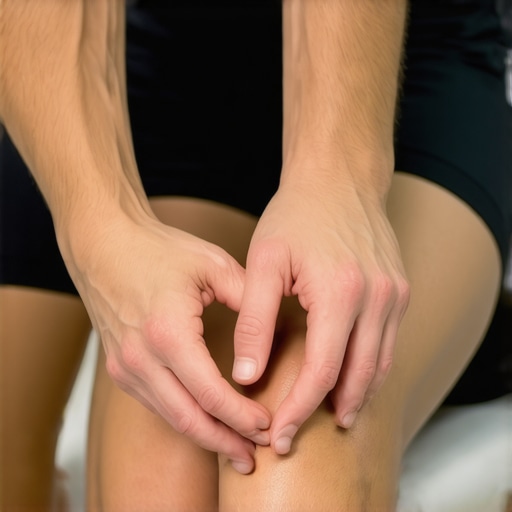
Apply the Tack and Stretch Method
The Tack and Stretch is the bread and butter of modern sports rehab. Once the practitioner finds the snag, they tack it—holding it in place while the patient moves the muscle from a shortened position to a lengthened one. This forces the muscle fibers to slide underneath the contact point. I once tried to do this myself with a lacrosse ball, and while it helped, having a professional apply the specific angle of tension made a world of difference. This method is how you boost your sports rehab journey with proven chiropractic strategies because it addresses the root mechanical block. It’s the difference between trying to untie a knot by pulling on the ends of the rope and actually sticking a needle into the knot to loosen the loops from the inside.
Fix the Pelvic Tilt to Unload the Hamstring Nerve
If you don’t fix the reason behind the strain, the adhesions will just come back. Most chronic hamstring issues are actually symptoms of a misaligned pelvis. If your pelvis is tilted forward, your hamstrings are perpetually stretched to their limit before you even start moving. I spent months getting release work done only to have the tightness return until I finally implemented the pelvic tilt fix for chronic tight hamstrings. Aligning the hips allows the muscle to sit in its natural, relaxed state, ensuring that how spinal alignment directly impacts your athletic performance becomes a boost rather than a burden. When your foundation is level, your muscles do not have to work overtime just to hold you upright.
Most people think a chiropractic adjustment is just about ‘putting a bone back in place.’ In reality, that is a massive oversimplification that ignores the most fascinating part: the neurological reset. When we perform a high-velocity, low-amplitude thrust, we are not just moving a vertebrae; we are stimulating mechanoreceptors that send a high-speed signal to your brain to override pain signals. I used to fall for the ‘bone out of place’ myth myself, but the science behind chiropractic adjustments for back pain relief shows it is actually about modulating the nervous system. If you treat your body like a collection of static Lego bricks, you will miss the fact that your brain is the one holding the tension in the first place.
The Foam Roller Trap That Actually Increases Spasms
Here is the ‘oops’ moment I see constantly: the obsessive foam rolling of the lumbar spine. When you feel a pinch in your lower back, your first instinct is to grab a hard roller and mash it out. But why you should never roll your lower back on a foam roller is because you are essentially smashing your lumbar vertebrae into your internal organs without any ribcage protection. This creates protective guarding, making the very spasm you are trying to fix even tighter. I have seen athletes set their recovery back by weeks simply because they mistook ‘intense pressure’ for ‘effective therapy.’ 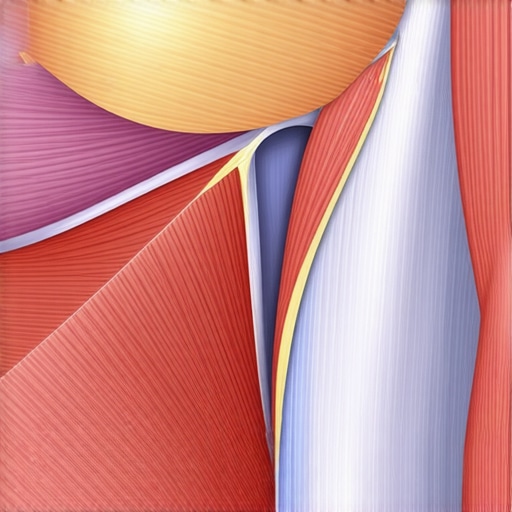
Similarly, the urge to apply a heating pad the moment your back ‘goes out’ can be a significant tactical error. While it feels good for ten minutes, why heat is often the wrong choice for a sudden back spasm is because it can increase local inflammation and fluid congestion in an already overloaded joint. This is a classic example of treating the symptom while accidentally fueling the fire. Have you ever fallen into this trap? Let me know in the comments.
Why does my muscle still feel tight even after the injury has physically healed?
This is what I call the ‘ghost’ of the injury—a neuro-reflexive loop. Even after the muscle fibers have technically knit back together, your brain might still be ‘protecting’ the area by maintaining a high level of resting muscle tone. A study published in the Journal of Manipulative and Physiological Therapeutics suggests that spinal adjustments can actually alter the cortical drive to the muscles, effectively ‘rebooting’ the software so your brain stops sending unnecessary tension signals. By enhancing athletic performance with targeted chiropractic care, we are targeting the communication between the joint and the motor cortex. This is how you finally break through that plateau where you feel 90% recovered but never quite 100%. To truly revolutionize your rehab, you must address the nervous system’s perception of threat, not just the physical structure of the muscle.
Once you have successfully cleared the hurdle of acute pain, the real work begins. I call this the ‘bridge phase’ where most people fail because they stop their treatment the moment the sharp stabs disappear. To stay functional, you need to transition from reactive care to proactive maintenance. I have found that essential tips for managing back pain through healthy lifestyle choices aren’t just suggestions; they are the bedrock of keeping your joints open and your nerves happy. If you go right back to sitting eight hours a day without changing your environment, you are essentially asking your body to recreate the same adhesions we just broke loose.
Keep Your Gains Without Living in the Clinic
Maintaining a pain-free life is about micro-adjustments in your daily routine. For example, I used to struggle with recurring L5-S1 compression until I learned how to sit without compressing your l5-s1 disc by using a slight forward pelvic tilt even while in my office chair. This small shift keeps the lumbar curve natural and prevents the ‘ghost’ tension from returning. When you combine these ergonomic shifts with strategic chiropractic solutions for long-term back health, you create a system where your body can recover from daily stressors in real-time rather than letting them accumulate into a catastrophe.
How do I maintain my mobility gains over time?
Consistency beats intensity every single time. You don’t need an hour-long stretching session; you need three minutes of high-quality movement every few hours. This is how you discover how chiropractic adjustments can alleviate chronic back pain on a permanent basis—by reinforcing the new alignment with active movement. In the future, I predict we will see a massive shift toward wearable biofeedback sensors that alert us when our joint loading becomes asymmetrical before we even feel the pain. Until then, we have to rely on our own internal ‘check-engine’ lights and the right external tools.
What Tools Actually Deserve a Spot in Your Gym Bag?
I am incredibly picky about recovery gear. Most of it is overpriced plastic, but two things changed my life: a high-density peanut ball and voodoo floss bands. While many people use a standard roller, I prefer to how to use a lacrosse ball to melt away mid-back knots because the smaller surface area allows for much deeper penetration into the rhomboids. For my legs, I use tissue flossing—wrapping a thick latex band around the muscle to create ‘occlusion’—which, according to a study in the Journal of Bodywork and Movement Therapies, significantly improves joint range of motion by shearing the fascia under high compression. It is far more effective than a massage gun if you know the proper way to use a massage gun on your quads as a secondary tool rather than a primary fix. 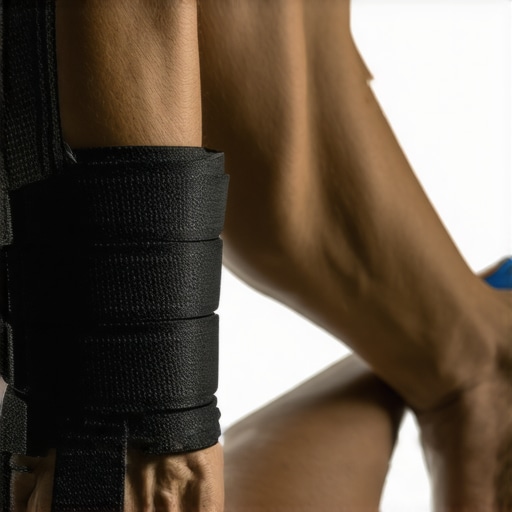
If you want to truly unlock back pain relief with expert chiropractic adjustments that work, you have to be the primary architect of your own recovery. My advanced tip for today? Try ‘voodoo flossing’ your calves or hamstrings for just two minutes before your next workout. The sheer force it applies to the adhesions is something no foam roller can replicate. Don’t wait for the next ‘thwack’ to happen—start shearing that scar tissue today.
Why I Stopped Chasing the Pain and Started Fixing the Patterns
One of the biggest shifts in my perspective happened when I stopped viewing my body as a set of isolated parts. I used to think a hamstring strain was just a muscle problem, but now I know it is often a breakdown in communication between my pelvis and my brain. If I could go back, I would tell my younger self that pain is just a sensor, not a signal to stop moving entirely. I also learned that the feeling of tightness is often your nervous system’s way of sounding an alarm because it doesn’t trust your stability. To truly boost your sports rehab journey with proven chiropractic strategies, you have to listen to those alarms without panicking. My biggest lightbulb moment was realizing that a muscle can be ‘strong’ in a gym setting but ‘weak’ during a sprint if the fascia is glued together by old scar tissue.
The Three Must-Have Items in My Recovery Bag
I do not believe in buying every recovery gadget on the market, as most are just expensive distractions. However, my essential toolkit starts with a high-density lacrosse ball for pinpoint release work on those stubborn mid-muscle knots. Second, I swear by heavy-duty resistance bands to reinforce new ranges of motion immediately after a manual release session. I also highly recommend keeping a simple movement journal to track what triggers your specific tightness; this is how you find essential tips for managing back pain through healthy lifestyle choices that actually work for your unique anatomy. Finally, having a trusted practitioner who understands the role of chiropractic care in effective sports injury recovery is the most valuable tool you can have in your corner. These resources ensure you are moving with intent rather than just guessing.
Believe in Your Body’s Ability to Rebuild
Your injury does not define your athletic future. It is a temporary setback that offers a masterclass in how your body actually functions. By focusing on the quality of your movement and the health of your soft tissues, you can come back stronger and more resilient than you were before that initial strain happened. There is a clear path to unlocking back pain relief with expert chiropractic adjustments that work and getting you back to the activities you love without the fear of a re-tear. You have the tools and the knowledge—now it is just about taking that first step toward a smarter, more mechanical approach to recovery. [image_placeholder_final]
Have you ever felt like you were doing everything right with your stretching but only getting stiffer the harder you tried? Let me know your experience in the comments below!