
It was 3:14 AM on a Tuesday, and I was staring at my ceiling, tears of sheer frustration welling up in my eyes. Every tiny micro-movement of my head felt like a hot branding iron was pressing directly into my collarbone. I had a pinched nerve in my neck, and sleep felt like a distant, impossible luxury. In my desperation, I did what most pain-addled folks do: I stacked four pillows high, propped myself up like a human lounge chair, and woke up the next morning with searing pain radiating all the way down to my fingertips. My early-career self made the classic mistake of thinking more support meant more height, which only compressed the nerve further. If you are reading this, you are probably exhausted, desperate, and wondering if you will ever get a good night’s rest again. I promise you that tonight can be different.
The Critical Setup for True Cervical Relief
When you are dealing with nerve compression, your spine demands neutral alignment. The real enemy is cervical hyperextension or extreme flexion, which narrows the tiny exit pathways of your nerve roots. I learned the hard way that trying to self-treat with random stretches often backfires, much like how cracking your own neck for relief only perpetuates the instability. According to the Harvard Health Publishing group, using a pillow that is too high or too stiff can keep the neck flexed overnight, actively worsening disc and nerve compression. To get relief tonight, we need to talk about the physical space your nerve needs to breathe. Have you ever spent an entire night tossing and turning, only to feel like your shoulder and hand went completely numb by sunrise? This happens because your sleeping posture is collapsing the joint space.
Are expensive orthopedic pillows actually worth the hype?
Let’s address the elephant in the room: you do not need to spend hundreds of dollars on a custom medical pillow to find relief. In fact, a simple, strategically placed rolled towel or a modern contour pillow can do wonders when utilized correctly. Your primary focus should be filling the natural gap between your neck and the mattress without tilting your head forward. If you are a side sleeper, you must ensure your pillow height matches the exact distance from your neck to the tip of your shoulder. For back sleepers, a flatter pillow with built-in neck support keeps the cervical spine in its natural, gently curved extension. If you are currently dealing with this agonizing discomfort, let us help you get to the root of the issue; feel free to contact us to explore personalized strategies. Ensuring your spine is supported correctly is the first step, and tomorrow we will dive into the specific sleep positions that will finally silence the pain.
Decompress Your Spine with the Shoulder-Clearance Method
Think of your compressed nerve root as a garden hose with a heavy boot stomping down on it. The water cannot flow, pressure builds up, and the lawn dies. In your cervical spine, that boot is your own skull collapsing into your shoulder line because of gravity and poor support. To lift that boot, we must create physical clearance. I remember working with an amateur baseball pitcher who was losing power because of a radiating burn down his arm. He kept trying to stretch his shoulder, completely ignoring that his sleep posture was clamping down on the nerve. Once we modified his sleeping mechanics, his recovery accelerated. This is why understanding the role of chiropractic care in effective sports injury recovery always starts with what you do during those eight hours of rest.
How to construct the perfect cervical support cradle
To construct your cradle, grab a standard bath towel and fold it in half lengthwise. Roll it up into a firm cylinder about three inches in diameter. If you sleep on your back, slide this rolled towel directly inside your pillowcase, positioning it along the bottom edge so it sits right under the curve of your neck while your head rests flat on the pillow. This simple trick maintains your neck’s natural curve, preventing the forward head tilt that makes your symptoms flare up. If you are struggling with a similar radiating ache in your arm during the day, you should check out why your pinky finger goes numbness at night to see if your sleeping habits are causing extra nerve compression down the arm.

The Side-Sleeping Framework for Single-Side Pinches
Most people instinctively curl up toward their painful side, which actually closes the joint space and pinches the nerve further. If the pain is on your left side, you want to lie on your right side. This open-side positioning uses gravity to gently pull your head to the opposite side, opening up those tiny bony exits where the nerve roots emerge. When I suffered from that brutal spasm, I tried sleeping directly on the painful side because I thought keeping it warm against the mattress would help. It was a massive mistake that left me unable to turn my head for three days.
Aligning your hips to protect your neck
Your spine is a continuous chain; an off-kilter pelvis will drag your neck out of alignment. While on your side, pull your knees up slightly toward your chest and place a thick, firm pillow between them. This prevents your top leg from dropping forward, which twists your lower back and pulls your entire spine out of a straight line. If you ignore this bottom-up alignment, your upper back compensates, putting extra strain on your cervical vertebrae. Learning the best sleeping positions for lower back relief is incredibly helpful here, as keeping your pelvis level directly reduces the mechanical tension traveling up to your neck.
While establishing the perfect cervical cradle and side-sleeping alignment provides immediate night-time relief, it only addresses half the equation. Many people believe that once they find a comfortable sleeping position, their nerve will naturally heal. In my clinical practice, I see a much more complex reality. The absolute biggest myth in spinal rehabilitation is that static rest alone cures nerve compression. Everyone says you just need to rest your neck, but in my experience, active decompression and targeted, dynamic mobility work better to keep that nerve path clear during the day so you can actually sleep at night.
The Dynamic Traction Trap That Only Worsens Compression
When desperate for relief, people often fall into the trap of using aggressive over-the-door traction devices or performing intense self-stretching routines right before bed. This is a massive mistake. A study published in the Journal of Orthopaedic & Sports Physical Therapy points out that rapid, uncontrolled mechanical traction can trigger a protective muscle spasm in the deep stabilizing muscles of the neck. Instead of opening the joint, your body clamps down to protect itself, compressing the nerve even further. This is why you should avoid aggressive self-treatment and instead understand how why you should stop cracking your own neck for relief to prevent hypermobility and secondary spasms.
Why does my neck feel worse after doing standard chin tucks?
If you have been diligently performing chin tucks only to find a sharp, shooting pain traveling down your arm, you are likely over-recruiting your superficial neck flexors. Standard physical therapy exercises are excellent, but only when your spine is stable enough to handle them. When a nerve is actively inflamed, forcing the cervical spine into deep flexion compresses the anterior disc space, pushing the disc material backward against the already irritated nerve root. If your daily routine is actively fighting your nighttime recovery, it might be time to look into strategic chiropractic solutions for long-term back health to address these deeper mechanical imbalances.
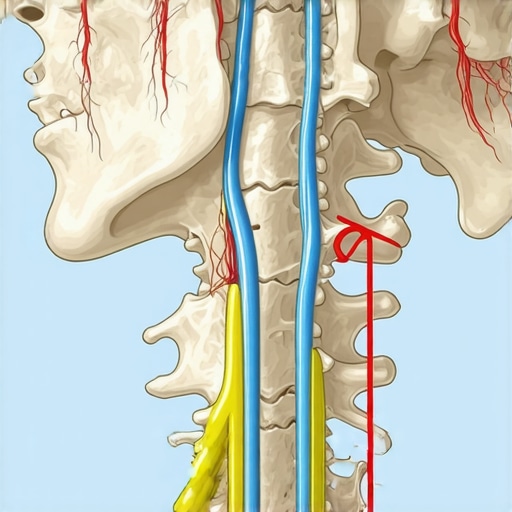
Real recovery requires a dual approach: maintaining pristine sleep posture and utilizing targeted professional care during the day to restore proper joint mechanics. By combining these strategies, you stop merely managing the symptoms and start resolving the physical compression for good. Have you ever fallen into this trap of over-stretching your neck only to wake up stiffer the next day? Let me know in the comments. If you are ready to stop guessing and want a tailored plan to decompress your spine, please feel free to contact us today.
To keep your cervical spine decompressed and avoid falling back into the cycle of excruciating nerve flares, you must transition from crisis management to daily physical maintenance. Over my years of clinic experience, I have learned that long-term stabilization requires very specific, intentional tools. I do not recommend standard foam rollers or generic vibrating massage guns for the neck; they are too aggressive and lack the precision needed for delicate cervical joints. Instead, my personal go-to tool for home maintenance is a high-density suboccipital release pivot tool. By resting your skull on this firm, molded device for just five minutes at the end of the day, you use your own head weight to gently release the hyperactive suboccipital muscles that pull your upper cervical vertebrae out of alignment. If you couple this with professional care, you can revolutionize your rehab and maintain those hard-won structural adjustments.
How do I maintain my cervical alignment over time?
Consistency in your daily routine beats occasional heavy stretching every single time. To maintain your alignment, you must audit your workstation ergonomics and actively strengthen your deep neck flexors. According to a clinical review published by the physical medicine experts at the Mayo Clinic, prolonged forward-head posture of just two inches doubles the physical load on your cervical spine, accelerating disc degeneration. To combat this, I have my patients perform gentle, isometric neck holds against their own hand pressure to build endurance in the stabilizing muscles. If you are struggling to maintain your progress or find that your daily desk setup is sabotaging your recovery, you should read our guide on how to treat tech neck symptoms while working from home to keep your neck stable during a long workday.
Looking ahead, I predict that the future of cervical rehabilitation will shift heavily toward biofeedback-driven wearable technology. We are already beginning to see wearable sensors that real-time monitor the exact angle of your cervical spine and send a subtle, haptic vibration to your wrist the moment you begin to slouch or compress your neck. This real-time feedback loop will revolutionize how we prevent nerve compression before it even starts. However, until those smart sensors are commonplace, you must rely on deliberate physical habits. If you want to dive deeper into complete spinal care, learning essential tips for managing back pain through healthy lifestyle choices will help you build a resilient, pain-free body from the hips all the way up to your skull. Try integrating the five-minute suboccipital release pivot tonight to feel the immediate release of pressure before you go to sleep.
It was 3:14 AM on a Tuesday, and I was staring at my ceiling, tears of sheer frustration welling up in my eyes. Every tiny micro-movement of my head felt like a hot branding iron was pressing directly into my collarbone. I had a pinched nerve in my neck, and sleep felt like a distant, impossible luxury. In my desperation, I did what most pain-addled folks do: I stacked four pillows high, propped myself up like a human lounge chair, and woke up the next morning with searing pain radiating all the way down to my fingertips. My early-career self made the classic mistake of thinking more support meant more height, which only compressed the nerve further. If you are reading this, you are probably exhausted, desperate, and wondering if you will ever get a good night’s rest again. I promise you that tonight can be different.
The Critical Setup for True Cervical Relief
When you are dealing with nerve compression, your spine demands neutral alignment. The real enemy is cervical hyperextension or extreme flexion, which narrows the tiny exit pathways of your nerve roots. I learned the hard way that trying to self-treat with random stretches often backfires, much like how cracking your own neck for relief only perpetuates the instability. According to the Harvard Health Publishing group, using a pillow that is too high or too stiff can keep the neck flexed overnight, actively worsening disc and nerve compression. To get relief tonight, we need to talk about the physical space your nerve needs to breathe. Have you ever spent an entire night tossing and turning, only to feel like your shoulder and hand went completely numb by sunrise? This happens because your sleeping posture is collapsing the joint space.
Are expensive orthopedic pillows actually worth the hype?
Let’s address the elephant in the room: you do not need to spend hundreds of dollars on a custom medical pillow to find relief. In fact, a simple, strategically placed rolled towel or a modern contour pillow can do wonders when utilized correctly. Your primary focus should be filling the natural gap between your neck and the mattress without tilting your head forward. If you are a side sleeper, you must ensure your pillow height matches the exact distance from your neck to the tip of your shoulder. For back sleepers, a flatter pillow with built-in neck support keeps the cervical spine in its natural, gently curved extension. If you are currently dealing with this agonizing discomfort, let us help you get to the root of the issue; feel free to contact us to explore personalized strategies. Ensuring your spine is supported correctly is the first step, and tomorrow we will dive into the specific sleep positions that will finally silence the pain.
Decompress Your Spine with the Shoulder-Clearance Method
Think of your compressed nerve root as a garden hose with a heavy boot stomping down on it. The water cannot flow, pressure builds up, and the lawn dies. In your cervical spine, that boot is your own skull collapsing into your shoulder line because of gravity and poor support. To lift that boot, we must create physical clearance. I remember working with an amateur baseball pitcher who was losing power because of a radiating burn down his arm. He kept trying to stretch his shoulder, completely ignoring that his sleep posture was clamping down on the nerve. Once we modified his sleeping mechanics, his recovery accelerated. This is why understanding the role of chiropractic care in effective sports injury recovery always starts with what you do during those eight hours of rest.
How to construct the perfect cervical support cradle
To construct your cradle, grab a standard bath towel and fold it in half lengthwise. Roll it up into a firm cylinder about three inches in diameter. If you sleep on your back, slide this rolled towel directly inside your pillowcase, positioning it along the bottom edge so it sits right under the curve of your neck while your head rests flat on the pillow. This simple trick maintains your neck’s natural curve, preventing the forward head tilt that makes your symptoms flare up. If you are struggling with a similar radiating ache in your arm during the day, you should check out why your pinky finger goes numbness at night to see if your sleeping habits are causing extra nerve compression down the arm.
The Side-Sleeping Framework for Single-Side Pinches
Most people instinctively curl up toward their painful side, which actually closes the joint space and pinches the nerve further. If the pain is on your left side, you want to lie on your right side. This open-side positioning uses gravity to gently pull your head to the opposite side, opening up those tiny bony exits where the nerve roots emerge. When I suffered from that brutal spasm, I tried sleeping directly on the painful side because I thought keeping it warm against the mattress would help. It was a massive mistake that left me unable to turn my head for three days.
Aligning your hips to protect your neck
Your spine is a continuous chain; an off-kilter pelvis will drag your neck out of alignment. While on your side, pull your knees up slightly toward your chest and place a thick, firm pillow between them. This prevents your top leg from dropping forward, which twists your lower back and pulls your entire spine out of a straight line. If you ignore this bottom-up alignment, your upper back compensates, putting extra strain on your cervical vertebrae. Learning the best sleeping positions for lower back relief is incredibly helpful here, as keeping your pelvis level directly reduces the mechanical tension traveling up to your neck.
While establishing the perfect cervical cradle and side-sleeping alignment provides immediate night-time relief, it only addresses half the equation. Many people believe that once they find a comfortable sleeping position, their nerve will naturally heal. In my clinical practice, I see a much more complex reality. The absolute biggest myth in spinal rehabilitation is that static rest alone cures nerve compression. Everyone says you just need to rest your neck, but in my experience, active decompression and targeted, dynamic mobility work better to keep that nerve path clear during the day so you can actually sleep at night.
The Dynamic Traction Trap That Only Worsens Compression
When desperate for relief, people often fall into the trap of using aggressive over-the-door traction devices or performing intense self-stretching routines right before bed. This is a massive mistake. A study published in the Journal of Orthopaedic & Sports Physical Therapy points out that rapid, uncontrolled mechanical traction can trigger a protective muscle spasm in the deep stabilizing muscles of the neck. Instead of opening the joint, your body clamps down to protect itself, compressing the nerve even further. This is why you should avoid aggressive self-treatment and instead understand how why you should stop cracking your own neck for relief to prevent hypermobility and secondary spasms.
Why does my neck feel worse after doing standard chin tucks?
If you have been diligently performing chin tucks only to find a sharp, shooting pain traveling down your arm, you are likely over-recruiting your superficial neck flexors. Standard physical therapy exercises are excellent, but only when your spine is stable enough to handle them. When a nerve is actively inflamed, forcing the cervical spine into deep flexion compresses the anterior disc space, pushing the disc material backward against the already irritated nerve root. If your daily routine is actively fighting your nighttime recovery, it might be time to look into strategic chiropractic solutions for long-term back health to address these deeper mechanical imbalances.
Real recovery requires a dual approach: maintaining pristine sleep posture and utilizing targeted professional care during the day to restore proper joint mechanics. By combining these strategies, you stop merely managing the symptoms and start resolving the physical compression for good. Have you ever fallen into this trap of over-stretching your neck only to wake up stiffer the next day? Let me know in the comments. If you are ready to stop guessing and want a tailored plan to decompress your spine, please feel free to contact us today.
To keep your cervical spine decompressed and avoid falling back into the cycle of excruciating nerve flares, you must transition from crisis management to daily physical maintenance. Over my years of clinic experience, I have learned that long-term stabilization requires very specific, intentional tools. I do not recommend standard foam rollers or generic vibrating massage guns for the neck; they are too aggressive and lack the precision needed for delicate cervical joints. Instead, my personal go-to tool for home maintenance is a high-density suboccipital release pivot tool. By resting your skull on this firm, molded device for just five minutes at the end of the day, you use your own head weight to gently release the hyperactive suboccipital muscles that pull your upper cervical vertebrae out of alignment. If you couple this with professional care, you can revolutionize your rehab and maintain those hard-won structural adjustments.
How do I maintain my cervical alignment over time?
Consistency in your daily routine beats occasional heavy stretching every single time. To maintain your alignment, you must audit your workstation ergonomics and actively strengthen your deep neck flexors. According to a clinical review published by the physical medicine experts at the Mayo Clinic, prolonged forward-head posture of just two inches doubles the physical load on your cervical spine, accelerating disc degeneration. To combat this, I have my patients perform gentle, isometric neck holds against their own hand pressure to build endurance in the stabilizing muscles. If you are struggling to maintain your progress or find that your daily desk setup is sabotaging your recovery, you should read our guide on how to treat tech neck symptoms while working from home to keep your neck stable during a long workday.
Looking ahead, I predict that the future of cervical rehabilitation will shift heavily toward biofeedback-driven wearable technology. We are already beginning to see wearable sensors that real-time monitor the exact angle of your cervical spine and send a subtle, haptic vibration to your wrist the moment you begin to slouch or compress your neck. This real-time feedback loop will revolutionize how we prevent nerve compression before it even starts. However, until those smart sensors are commonplace, you must rely on deliberate physical habits. If you want to dive deeper into complete spinal care, learning essential tips for managing back pain through healthy lifestyle choices will help you build a resilient, pain-free body from the hips all the way up to your skull. Try integrating the five-minute suboccipital release pivot tonight to feel the immediate release of pressure before you go to sleep.
The Hardest Lessons Learned from My Own Cervical Nerve Crises
Reflecting on years of both personal neck pain and clinical experience, I have realized that the hardest lesson is acceptance of structural limits. You cannot simply force or stretch a herniated disc back into place overnight. When I tried to rush my healing by aggressively pulling on my own neck, I only succeeded in tearing the micro-structures further. Another major lightbulb moment was recognizing that cervical pain is rarely isolated; my neck stiffness was a direct reflection of how poorly I braced my mid-back during daily activities. Lastly, nerve pain behaves like an echo chamber. Once irritated, it takes hours of absolute quiet, neutral positioning for the chemical inflammation to calm down. Patience and consistent, minute-by-minute postural discipline are far more powerful than any sudden, aggressive therapeutic intervention.
My Recommended Setup for Daily Spine Maintenance
To transition from active pain to long-term resilience, I highly suggest building a physical toolkit. First, secure a firm suboccipital release pivot tool to help melt away tension at the base of your skull. Second, read up on clinical guidelines from the American Physical Therapy Association regarding cervical traction limits. Finally, to truly step up your physical recovery and understand how these pieces fit into your lifestyle, I recommend exploring the science behind discover how chiropractic adjustments can alleviate chronic back pain. These steps offer a clear roadmap for anyone looking to transition out of the acute pain phase and keep their whole spine functioning beautifully.
Your Path to Deeper Rest Starts Tonight
Living with a pinched nerve can feel like navigating an endless, exhausting maze, but you do not have to walk it alone. By implementing the cervical towel roll and correcting your side-sleeping posture, you can finally give your nervous system the quiet space it needs to heal. Taking charge of your recovery today is the absolute best gift you can give your future, pain-free self. Have you ever tried the rolled towel trick, or do you have a specific sleep position that always seems to flare up your shoulder pain? Let me know in the comments below!