
I remember sitting at my desk three years ago, staring at a spreadsheet that seemed to grow more blurry by the minute. My neck felt like a rusted hinge, stiff and heavy. Without even thinking, I grabbed my chin, yanked my head to the left, and—CRACK. That familiar series of pops echoed in my ears, followed by a fleeting wave of relief. I thought I was fixing the problem. In reality, I was stuck in a destructive loop that was actually making my pain worse. If you have ever felt that desperate urge to ‘just make it pop’ so you can finish your workday, you are not alone, but you might be accidentally sabotaging your long-term health.
Stop chasing that temporary pop
I spent months convinced that I was my own best chiropractor. Every time I felt a twinge of tension, I’d force an adjustment. It felt good for about ten minutes, but then the tightness would return with a vengeance. What I didn’t realize back then was that I wasn’t actually moving the ‘stuck’ joints. Instead, I was repeatedly over-stretching the ligaments around the joints that were already moving too much. When we talk about the science behind that popping sound in your joints, it’s often just gas bubbles releasing, not a structural correction. By forcing it myself, I was creating instability. Today, I want to help you break that cycle and show you how to find real, lasting relief that doesn’t involve potentially damaging your cervical spine.
Is self-cracking actually dangerous for your spine?
I get this question all the time from neighbors and friends who see me at the gym. The short answer is: yes, it can be. While it feels like you are ‘releasing’ something, you are often ignoring the root cause, like how a weak core actually causes chronic neck tension. According to a report in the Journal of Manipulative and Physiological Therapeutics, self-manipulation lacks the necessary specificity to target restricted segments, frequently leading to hypermobility in the surrounding area. This makes your muscles work twice as hard to stabilize your head, leading to more knots and more ‘need’ to crack. Have you ever found yourself twisting your neck just to get through a long meeting or a drive home?
My biggest mistake was confusing relief with recovery
The ‘lightbulb moment’ for me happened when I realized my headaches were getting more frequent despite my constant self-adjusting. I was falling for the truth about cracking your own neck at your desk—it is a dopamine hit, not a cure. I was making the mistake of treating the symptom while my actual alignment was drifting further out of whack. Sometimes, the issue isn’t even in the neck itself; for instance, you’d be surprised how often a misaligned atlas causes chronic migraines. By the time I finally sought professional help, my neck muscles were so guarded they felt like guitar strings. We are going to look at how to retrain your body to let go of that tension properly, so you can stop being a ‘neck-cracker’ and start feeling truly mobile again.When I finally decided to stop the ‘crack-and-relief’ cycle, I started with the one thing I could control immediately: my environment. I realized I was looking down at my laptop for eight hours a day, which is the mechanical equivalent of hanging a ten-pound bowling ball from your neck by a single piece of twine. The first thing I did was grab three thick hardcover books from my shelf, stacked them under my laptop, and watched as my eye line finally leveled out with the top of the screen. You must learn how to set up your laptop for better neck alignment if you want that nagging urge to crack to truly disappear. It is not just about the screen height, though; your arms act as heavy anchors that pull your shoulders forward if they aren’t properly supported. I spent an afternoon measuring my chair and desk until I found the exact height your armrests should be for neck health, and the constant ‘fire’ in my upper trapezius muscles finally began to dim.
Lift your monitor or lose your mobility
The setup of your workspace is the foundation of your recovery. If your monitor is too low, you are forced into a forward-head posture that puts immense pressure on the cervical joints—the very ones you feel the need to pop. Think of it like a door hinge that is being pulled at an awkward angle; eventually, it’s going to squeak and feel ‘stuck.’ Elevating your screen ensures that your ears stay stacked over your shoulders, reducing the workload on those tiny stabilizing muscles in the back of your head. 
Try the 10-second reset instead of the pop
Whenever you feel that ‘itch’ to twist your neck for a quick release, your body is actually signaling a need for blood flow and movement, not a high-velocity cavitation. I replaced my cracking habit with the 10-second posture reset you can do at your desk. Instead of grabbing my chin and pulling, I would perform a gentle chin tuck, imagining a string pulling the crown of my head toward the ceiling while I took one deep breath into my upper back. This shifts the focus from ‘releasing’ a joint to ‘re-engaging’ the deep neck flexors that have gone dormant. If the tension is already escalating into a dull throb, I found that the 2-minute drill to stop a tension headache in its tracks provides far more sustainable relief than any self-adjustment ever could. It retrains the nervous system to let go of the ‘guarding’ response rather than just temporarily masking the stiffness.
Strengthen your core to stabilize your neck
It sounds counterintuitive, but your neck pain often starts near your belly button. Think of your spine like the mast of a ship; if the hull—your core and hips—is unstable, the mast will whip around and create tension at the top. I used to think my neck was the problem, but it was actually just the victim of a lazy midsection. Understanding how a weak core actually causes chronic neck tension changed my entire approach to rehab. When your core isn’t doing its job to support your upright posture, your neck muscles reflexively tighten to ‘brace’ the system. By incorporating simple stability work into my morning routine, the ‘stuck’ feeling in my cervical spine began to evaporate because the muscles finally felt safe enough to relax.I see it every single day: someone comes into the clinic complaining of a ‘tight’ hamstring or a ‘locked’ lower back, and their first instinct is to stretch it into oblivion. Here is the contrarian truth that most people get wrong: that feeling of tightness is often a protective tension, not a short muscle. If you keep pulling on a nerve that is already irritated, you are essentially picking at a scab. This is why why your morning stretches might be making your back more sensitive. When your nervous system senses instability, it ‘brakes’ the joint to prevent injury. If you force that brake to release through aggressive stretching without addressing the underlying weakness, your brain will simply clamp down harder the next time you move.
Stretching your ‘tight’ muscles might be a massive mistake
The nuance most people miss is the difference between mechanical tightness and neurological guarding. For instance, if you have been trying to touch your toes for a year and haven’t made progress, your hamstrings aren’t the problem—your pelvis or your core stability likely is. I’ve seen athletes spend hours on mobility work only to realize that why your hip flexors are still tight after a year of stretching is actually due to a lack of glute engagement. By obsessing over ‘releasing’ things, you might be accidentally increasing your risk of injury. Instead of forcing length, we should be looking at the role of chiropractic care in effective sports injury recovery to restore proper joint mechanics so the muscles can finally stop guarding.
Why does an MRI often fail to explain your actual pain level?
This is the ultimate ‘trap’ for the sophisticated patient. You get an MRI, see words like ‘disc bulge’ or ‘degeneration,’ and assume that is the source of your agony. However, research consistently shows that many people with zero pain have significant findings on their imaging. You have to learn how to read your mri report without panicking because your pain is a bio-psycho-social experience, not just a picture of a bone. Focusing solely on the ‘image’ leads to over-medicalization and unnecessary fear, which actually heightens the pain response in your brain.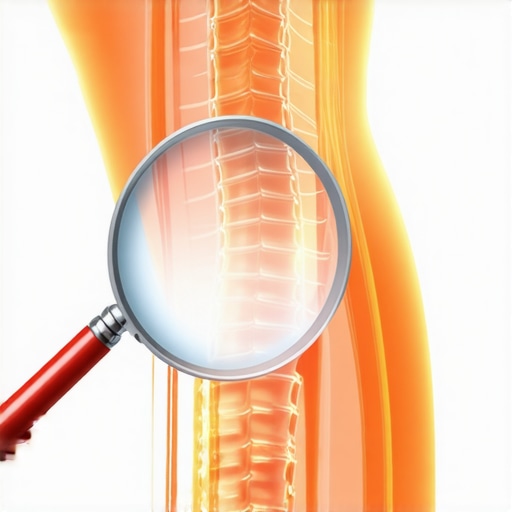
Ditch the ice pack if you want to actually heal
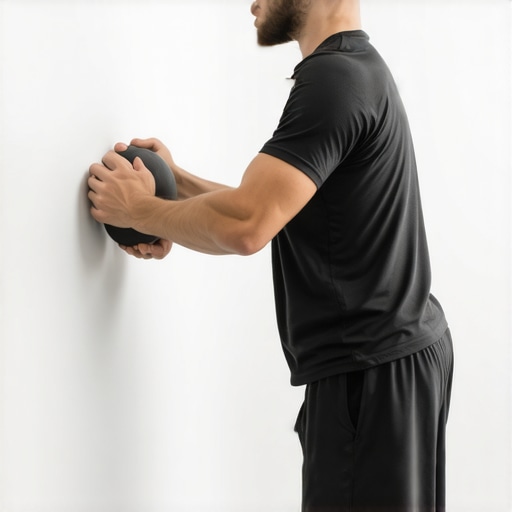
The ‘Oops’ factor that still dominates sports rehab is the obsession with icing. We’ve been told to use RICE (Rest, Ice, Compression, Elevation) for decades, but the science has shifted. A 2020 study published in the British Journal of Sports Medicine introduced the ‘PEACE & LOVE’ protocol, emphasizing that anti-inflammatory measures like icing can actually disrupt the natural tissue regeneration process by limiting blood flow to the site of the injury. This is why you should stop icing old injuries and use heat instead when you are in the sub-acute phase of recovery. Movement, not rest, is the primary driver of healing. If you are stuck in the ‘ice and rest’ loop, you are likely extending your recovery time by weeks. Have you ever fallen into this trap of stretching or icing a spot that never seems to get better? Let me know in the comments, and let’s talk about how to pivot your strategy toward strategic chiropractic solutions for long-term back health.Instead of expensive gadgets that promise a miracle cure, I keep a standard six-dollar rubber lacrosse ball in my gym bag. I personally use it every single morning before I even drink my coffee to tackle that ‘knot’ that tends to creep up under my right shoulder blade. If you haven’t tried it, you need to learn how to use a lacrosse ball for better thoracic mobility properly. Most people just roll around aimlessly, but the secret is to pin the ball against a wall and breathe into the pressure, allowing the muscle to melt around it. This isn’t just about ‘massaging’ a sore spot; it is about sending a signal to your brain that it is safe to let go of that protective tension.
My secret weapon is a six-dollar rubber ball
 Maintenance isn’t just about the physical structures; it’s about the nervous system. When I’m not in the office, I’m constantly monitoring my breathing patterns. I’ve found that how to use diaphragmatic breathing to calm your nervous system is the single most effective tool for preventing a minor twinge from becoming a full-blown spasm. This approach is backed by leading experts in spinal mechanics. Dr. Stuart McGill, in his definitive text Low Back Disorders, explains that true spinal stability requires ‘stiffness’ in the core to allow for ‘mobility’ in the limbs—a concept he famously calls proximal stiffness for distal mobility. If your core is a wet noodle, your neck and back will always feel tight because they are trying to do the core’s job.
How do I keep my spine healthy for the next decade?
I get asked this by patients who are finally pain-free and terrified of a relapse. The answer is consistent, low-level ‘scaling’ of your habits. You don’t need to spend two hours at the gym; you need to integrate essential tips for managing back pain through healthy lifestyle choices into your existing routine. For me, that means never sitting for more than 40 minutes at a time and using the trackman metric that reveals why your lower back hurts after 50 balls when I’m practicing my golf swing. I predict that in the next five years, we will see a massive shift toward wearable biofeedback sensors that alert your phone the moment your posture deviates from your personalized ‘neutral’ zone. We are moving away from reactive ‘fixing’ and toward proactive ‘tuning.’
Mastering the breath to master the pain
It’s easy to forget that how regular adjustments can lower your resting heart rate is a real benefit of spinal health. When your spine is aligned, your entire autonomic nervous system functions more efficiently. This isn’t just about back pain; it’s about systemic health. To stay ahead of the curve, I recommend looking into strategic chiropractic solutions for long-term back health that focus on functional movement rather than just temporary relief. If you really want to feel the difference today, stop what you are doing right now and try the 45-second drill to improve your ankle dorsiflexion. You’ll be shocked at how much better your lower back feels when your ankles actually move the way they were designed to.
Hard Truths I Learned While Chasing a Quick Pop
Looking back at my years of self-adjusting, I realized that I was treating my body like a mechanical object rather than a living, breathing system. The first lightbulb moment was acknowledging that pain is a protective signal. When your neck feels stuck, your brain is often intentionally tightening the area to protect an underlying instability. Forcing a release through self-cracking is like turning off a smoke alarm while the fire is still burning.
I also learned that the science behind chiropractic adjustments for back pain relief is about much more than a noise; it is about restoring the neurological communication between your brain and your joints. My biggest breakthrough came when I stopped trying to ‘fix’ myself and started listening to what my movement patterns were telling me about my daily stress. Finally, I discovered that true mobility is useless without the strength to control it—this is why unlocking back pain relief expert chiropractic adjustments that work always involves a combination of manual care and active stabilization.
The Gear That Actually Lives in My Gym Bag
I am often asked what ‘gadgets’ are worth the money. Honestly? Very few. My daily toolkit is remarkably simple. I swear by a standard rubber lacrosse ball for pinning down trigger points in the upper back. It’s cheap, indestructible, and more effective than most vibrating massagers. I also keep a copy of Low Back Disorders by Dr. Stuart McGill on my shelf; it completely shifted how I view spinal mechanics. For those looking to progress their home care, learning how to choose the right resistance band for shoulder rehab is a game-changer for building the ‘scapular brakes’ needed to keep your neck from overworking.
#IMAGE_PLACEHOLDER_E#
Your Journey Toward a Quiet Spine Starts Today
Reclaiming your health isn’t about one perfect adjustment; it’s about the hundreds of small decisions you make between those appointments. You don’t have to live with a neck that feels like a ‘rusted hinge.’ By focusing on better workspace ergonomics, strengthening your deep core, and seeking strategic chiropractic solutions for long-term back health, you can finally silence that urge to crack. Don’t be afraid to take the first step toward a lifestyle where your movement feels fluid and your joints feel safe. Your spine is incredibly resilient—it just needs the right environment to thrive. Have you ever felt like you were ‘addicted’ to cracking your own neck for relief? Let me know below and let’s talk about how to break that habit.