
I remember lying on the gym floor, grit in my teeth, rolling back and forth on a hard piece of plastic like I was trying to tenderize a cheap steak. I thought the pain meant it was working. I was a warrior, or so I told myself. In reality, I was just a guy bruising his connective tissue for no reason. My knee felt worse the next day, and I couldn’t even walk down the stairs without a sharp twinge. That was my lightbulb moment. I realized that the conventional wisdom about the IT band is often dead wrong, and my ‘no pain, no gain’ approach was actually stalling my progress. Today, we are fixing that. I am going to show you how to actually get relief without the needless bruising and why your current routine might be the culprit behind your stubborn discomfort.
Stop Grinding Your IT Band Into the Floor
The IT band is not a muscle you can simply knead out with brute force. It is a thick, fibrous band of fascia that acts more like a heavy-duty bridge cable than a rubber band. It is incredibly strong; in fact, research published in the Journal of the American Osteopathic Association suggests it would take over 2,000 pounds of force to actually ‘stretch’ or deform human fascia significantly. If a foam roller could actually ‘loosen’ your IT band, your legs would probably lose their structural integrity during a brisk walk. Most of us treat it like a tight muscle, but when you roll directly on it, you are just compressing it against the femur, which often irritates the sensitive bursa underneath. This is exactly why your foam roller is useless for IT band syndrome if you are using it the way most people do. I made this mistake for years, thinking I was ‘breaking up’ scar tissue. I wasn’t. I was just causing inflammation. If you want to boost your sports rehab journey, you have to stop attacking the symptom and start looking at the tension in the surrounding muscles.
Is This Plastic Roller Actually Worth the Hype?
You have probably seen the gym gurus swearing by their daily rolling sessions, but if it hasn’t worked for you yet, your skepticism is well-founded. The hype usually focuses on the wrong target. We are not trying to melt the IT band itself; we are trying to influence the nervous system and relax the muscles that pull on it, like the glutes and the TFL. Have you ever felt like you are just making the pain worse every time you roll out? You are not alone. It is a common frustration that stems from a misunderstanding of anatomy. We need to shift the focus to the lateral hip moves that stop runners knee by targeting the muscles that actually control that tension. In the next section, I am going to show you the specific ‘offset’ technique that changed everything for me and my clients.
Target the Tensioners Not the Fascial Cable
Think of your IT band like a heavy-duty suspension bridge cable. If the cable is too tight, you do not go out and try to smash the steel wires with a hammer. You adjust the tension at the anchor points. For your leg, those anchors are the Tensor Fasciae Latae (TFL) and the Gluteus Maximus. Most people think they are tight because they need to stretch, but why your morning stretching routine is making you stiffer by noon often comes down to the body’s protective response. When I first started working with runners, I spent weeks trying to ‘loosen’ their bands. One client, a gritty ultra-marathoner, actually developed a bruise the size of a dinner plate from her foam roller. We stopped the rolling, started hitting her TFL with a lacrosse ball, and her IT band pain vanished in forty-eight hours.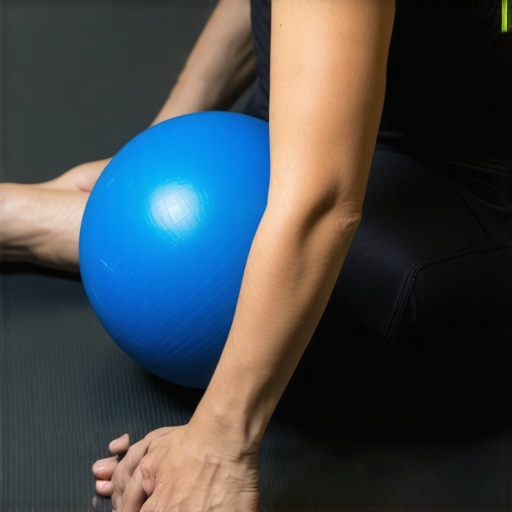
The Offset Technique for Hip Relief
Here is how you do it correctly. Instead of lying directly on your side, rotate your body about 30 degrees forward so you are on the fleshy part of your hip, just below the belt line. This is your TFL. Use a soft roller or a tennis ball first. If you find a spot that feels like a concentrated zing, stay there. Don’t saw back and forth like a lumberjack. Just breathe. This type of soft tissue work is a key part of how to revolutionize your rehab chiropractic techniques for faster recovery. By relaxing this muscle, you are effectively letting the slack out of the IT band without ever touching the inflamed area of the knee.
Wake Up Your Glutes to Save Your Knees
If the TFL is the tensioner, the glute medius is the stabilizer. When your glutes are sleeping, your IT band has to work overtime to keep your leg from collapsing inward. This is exactly why your glutes turn off during long distance runs and leave you limping by mile ten. I remember prepping for a local 10k and my knee felt like it was being poked with a hot needle. I did three sets of lateral walks before my next run, and the pain did not show up. It was not a miracle; I just gave my IT band a break by making my hips do their actual job. You can even try the glute medius drill for faster lateral cuts to build that explosive stability.
Re-educate Your Nervous System Without Force
Sometimes the tightness you feel is just your brain holding onto a protective pattern. This is where the science behind chiropractic adjustments for back pain relief overlaps with sports injuries. If your pelvis is tilted or your lower back is locked up, your nervous system will keep those hip muscles on high alert. You cannot roll your way out of a neurological on switch. If you are struggling with persistent tension, checking the alignment of your sacrum is vital, as the deadlift setup error that trashes your sacrum can often ripple down and create what feels like IT band syndrome. Focus on movement quality rather than just smashing the pain away. To truly fix the issue, you must address the hip mechanics that cause the friction in the first place.Most experts tell you to fix your alignment by looking in a mirror and making both sides match. I am here to tell you that is a fool’s errand. In my years of clinical practice, I have found that forced symmetry often leads to more injuries because it ignores your natural anatomy. Instead, we should be enhancing athletic performance with targeted chiropractic care that respects your body’s unique movement patterns. We are not looking for a perfect picture; we are looking for efficient power transfer.
Stop Chasing Symmetry and Start Testing Function
The real ‘hidden nuance’ in sports rehab is understanding that your body is a master of compensation. If your IT band is tight, your brain might be using that tension to stabilize a ‘leaky’ pelvis. This is the ultimate ‘oops’ factor: athletes who spend hours stretching their ‘tight’ muscles without realizing that the tightness is actually a survival mechanism. It is exactly why stretching your hamstrings won’t fix your chronic tightness if the real issue is an unstable sacroiliac joint. If you pull away that tension without replacing it with functional stability, you are just inviting a more serious injury. You have to ask yourself if you are treating a symptom or fighting your body’s own defensive strategy.
Why is Your Body Holding Onto That Tension?
This is the question that separates the amateurs from the pros. We often think of pain as a hardware problem—a torn muscle or a slipped disc. However, more often than not, it is a software problem. The science behind chiropractic adjustments for back pain relief shows that we are not just moving bones; we are hitting the ‘reset’ button on the nervous system. A landmark study published in the British Journal of Sports Medicine emphasizes that neuromuscular control and proprioception are often better predictors of injury than simple muscle strength. When your nervous system is in a high-alert state, it does not matter how much you roll or stretch; the tension will return the moment you stand up because the brain still feels unsafe.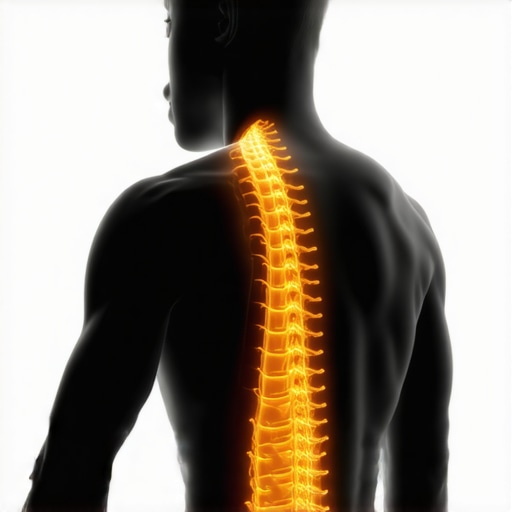
The Protective Splinting Trap You Need to Avoid
Do not make the mistake of ignoring the foundation of the kinetic chain. I have seen countless runners focus entirely on their hips while ignoring the fact that their ankles are as stiff as a board. Believe it or not, ankle stiffness is the real cause of your knee pain and IT band issues more often than the hip itself. If your ankle cannot dorsiflex properly, your knee is forced to collapse inward, and your IT band has to scream for help just to keep you upright. By integrating chiropractic adjustments that alleviate chronic back pain and improve joint mobility throughout the entire leg, you stop the ‘fire’ before it starts. Have you ever fallen into this trap of stretching a muscle that was actually just trying to protect you? Let me know in the comments.I personally swapped my 3-foot foam roller for a $5 lacrosse ball years ago, and I haven’t looked back. The foam roller is a blunt instrument; the lacrosse ball is a scalpel. When you learn how to use a lacrosse ball to melt away mid-back knots and hip tension, you realize that precision beats force every time. The IT band doesn’t need to be flattened; the muscles controlling it need to be desensitized. I use the ball specifically on the Tensor Fasciae Latae (TFL). By placing it just below the iliac crest and leaning forward 30 degrees, I can hit the specific trigger points that dictate the ‘tightness’ felt at the knee. If I’m dealing with general stiffness after a long lift, I might use the proper way to use a massage gun on your quads to improve blood flow before diving into deeper mobility work. This combination allows for a much more nuanced recovery than simply grinding my leg into the floor.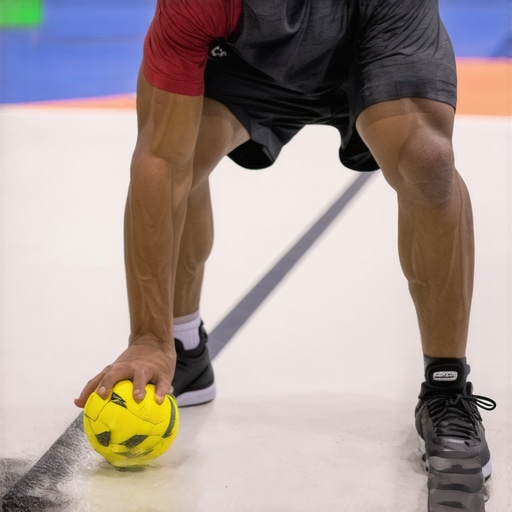
How do I maintain my hip health long-term?
Consistency is the boring answer, but the ‘how’ is what actually saves your season. You don’t need sixty minutes of stretching; you need five minutes of daily ‘check-ins’ to ensure your hardware is functioning. I perform a single-leg squat test every morning before my coffee. If my knee caves inward or my hip hitches, I know my stabilizers are offline. This proactive approach is a cornerstone of strategic chiropractic solutions for long-term back health. By catching these small mechanical shifts before they become painful, you stay on the road instead of the treatment table. Maintenance also requires looking at the big picture, which includes essential tips for managing back pain through healthy lifestyle choices, such as prioritizing sleep and hydration to keep your fascia resilient. A 2021 study published in the International Journal of Sports Physical Therapy highlighted that eccentric loading of the hip abductors led to far superior long-term outcomes for athletes with lateral knee pain compared to those who only stretched. This means focusing on the ‘lowering’ phase of your hip exercises to build true fascial strength.
Why Wearable Tech is the Future of Pain Management
Looking ahead, the era of ‘guessing’ why your knee hurts is coming to an end. We are moving toward a future where wearable gait sensors will detect IT band strain before you feel a single twinge. Devices that measure peak impact and ground contact time will integrate with AI to tell you exactly when your glutes are starting to fatigue. This level of data will allow the role of chiropractic care in effective sports injury recovery to be even more surgical in its application. We will be able to correlate spinal alignment with real-time gait data to prevent injuries before they manifest. For now, the most powerful tool you have is self-awareness. If you want to see an immediate change in your hip mobility, I challenge you to try the 30-degree TFL offset release for just two minutes tonight. You’ll feel a level of slack in your leg that a foam roller simply can’t provide.
The Hard Truths I Learned After Years of Grinding My Legs Into Plastic
The most profound shift in my recovery came when I stopped viewing my body as a piece of meat that needed tenderizing and started seeing it as a complex communication network. I finally understood that the science behind chiropractic adjustments for back pain relief is about much more than popping joints; it is about signaling safety to the brain. When your IT band feels like a guitar string, it is often because your nervous system is sounding an alarm to protect an unstable hip. I spent years trying to ‘fix’ my legs with brute force, only to realize that to truly boost your sports rehab journey, you have to work with your biology, not against it. Realizing that stability is the true antidote to fascial tension was my biggest lightbulb moment.
A Minimalist Toolkit for Resilient Hips and Knees
You do not need a garage full of expensive gadgets to stay healthy, but you do need the right ones used with precision. My personal ‘holy trinity’ for hip health includes a firm lacrosse ball, which I use similar to how to use a lacrosse ball to melt away mid-back knots, to address the TFL directly without bruising the IT band. I also rely on the proper way to use a massage gun on your quads to flush the tissues and improve blood flow before my runs. Lastly, I trust a simple mirror for my daily single-leg squat check; it is the most honest tool you own for spotting mechanical leaks. These basics, combined with strategic chiropractic solutions for long-term back health, provide a foundation for movement that no trendy foam roller can match.
Reclaiming Your Miles Without the Fear of Friction
Pain has a way of making you feel like your best athletic days are behind you, but that is rarely the case once you address the root cause. By shifting your focus from ‘breaking’ tissue to enhancing athletic performance with targeted chiropractic care, you are investing in longevity rather than just chasing symptoms. You deserve to run, lift, and play without that nagging ‘click’ or ‘zing’ holding you back. If you are tired of the temporary fixes and want a plan that actually addresses your unique movement patterns, feel free to contact us to start your real recovery. Your body is capable of incredible things once you stop fighting it and start listening. Have you ever felt like your foam roller was actually bruising you more than helping you? Let me know in the comments below!