
I still remember the “clunk” of my favorite ceramic mug hitting the kitchen floor. My hand just gave out. No warning. Just a sudden, sharp jolt and then… nothing. For months, I’d been waking up with hands that felt like they belonged to a wooden puppet—stiff, tingling, and completely useless for the first ten minutes of the day. I tried the heavy braces. I tried the ice. I even stopped lifting because my wrist hurt so much during front squats that I thought I’d permanently damaged the joint. But the real “lightbulb moment” happened when I realized I wasn’t dealing with a muscle knot; my median nerve was essentially “glued” to the surrounding tissue. Today, I’m going to show you exactly how to un-stick that nerve so you can get your grip back. [IMAGE_PLACEHOLDER]
Stop Pulling Your Nerves Like They Are Rubber Bands
The mistake most of us make—myself included—is treating a nerve like a tight hamstring. I spent weeks trying to “stretch” the pain away. I’d pull my fingers back as hard as I could, hoping for a release. Big mistake. Nerves have the consistency of a cooked noodle, and they hate being yanked. When you stretch a nerve that’s already irritated, you just make it angrier. Instead of tension, we need movement. We’re going to fix that by learning how to “floss” the nerve, creating space and blood flow without the trauma.
Does this ‘flossing’ thing actually work?
I was the biggest skeptic at first. It felt too gentle. How could moving my head and wrist in a weird “waiter-carrying-a-tray” motion do more than a $50 brace? But here’s the science: nerves need to slide through “tunnels” in your muscles and fascia. When they get stuck, you get that classic carpal tunnel numbness. According to research published in the Journal of Hand Therapy, nerve-gliding exercises can significantly reduce pressure within the carpal tunnel, providing a mechanical way to “vacuum out” the inflammation. I made a huge mistake early on by overdoing it. I thought if three reps were good, thirty must be better. I ended up with a forearm that felt like it was on fire for two days. Have you ever tried a new stretch and ended up feeling worse the next morning? It’s a frustrating cycle. If you’re struggling with that deep, annoying ache, you might also want to check if your elbow pain is actually a grip strength problem disguised as something else. Let’s look at how to get that messenger moving again with a nerve gliding routine that helps relieve arm numbness without the gym-rat “no pain, no gain” mentality.Imagine your median nerve is a fine silk thread running through a narrow plastic straw. If that straw gets pinched or filled with gunk, the thread can’t move. In your body, the ‘straw’ is the carpal tunnel and the fascia of your forearm. To get that thread moving again, we aren’t going to pull it from both ends—that just snaps the thread. We are going to pull from one end while letting go of the other to restore mobility.
Master the Delicate Art of Nerve Flossing
To start, sit tall and drop your shoulders away from your ears. If you’re constantly hunched over a laptop, you’re likely compressing the exit points for these nerves at the neck before they even reach your arm. If you’re unsure where your discomfort originates, learning how to identify if your back pain is muscular or nerve related can give you a clue about how your body handles neural tension in general. 
The Waiter Carrying a Tray Position
Extend your arm out to the side at shoulder height. Turn your palm up toward the ceiling and gently pull your fingers back toward the floor, like you are balancing a heavy dinner tray. This is the ‘tension’ phase for the wrist. Now, here is the secret: as you pull your wrist back, tilt your head toward that same shoulder. This gives the nerve slack at the neck while you pull at the wrist. Then, as you relax your wrist and curl your fingers in, tilt your head away to the opposite shoulder. I remember the first time I tried this at a rest stop during a long drive when my hand was a block of ice. I did five slow, rhythmic glides. At first, it felt like nothing was happening, but by the fourth rep, a warm wave of blood flow hit my fingertips. It wasn’t a stretch; it was a mechanical reset that provided immediate relief.
Avoid the Trap of Aggressive Movement
More is definitely not better here. If you feel a ‘zing’ or increased numbness, you are pulling too hard and irritating the nerve further. Nerves require a gentle ‘sliding’ motion, not a ‘stretching’ one. Integrating essential tips for managing back pain through healthy lifestyle choices like better hydration and anti-inflammatory habits can help keep the tissues around the nerve supple and responsive to these movements.
Check for Other Sticky Points
Sometimes the wrist isn’t the only culprit. If your shoulder is rolled forward, it creates a secondary pinch point that mimics carpal tunnel. This is why why your shoulder pinches during overhead presses and the fix usually involves more than just rotator cuff work—it involves creating neural space. If you find that these self-care glides only provide temporary relief, it might be time to look into strategic chiropractic solutions for long-term back health or extremity work to ensure the joints themselves aren’t the mechanical barrier. Much like how chiropractic adjustments can alleviate chronic back pain by restoring alignment, a targeted adjustment to the small bones in your wrist or the first rib in your neck can often be the final piece of the puzzle that lets the nerve glide freely without restriction.
But even with perfect flossing, many people find themselves stuck in a plateau. They do the glides, they wear the brace, yet the numbness returns every time they pick up a barbell or a laptop. This usually happens because they are treating the ‘site’ of the pain rather than the ‘source’ of the tension. In my clinic, I frequently see what we call ‘Double Crush Syndrome.’ This is where a nerve is compressed at two separate points—say, your neck and your wrist—making it much more sensitive than a single compression ever would. If you only address the wrist, you’re only solving half the math problem.
Stop chasing the symptom and look upstream
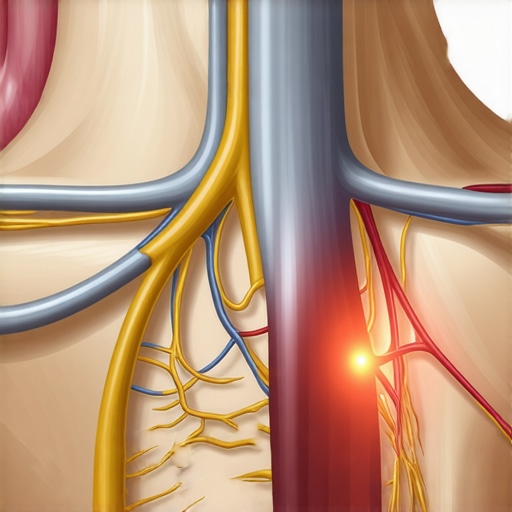
When you focus exclusively on the area that hurts, you ignore the entire kinetic chain. A study published in the Journal of Orthopaedic & Sports Physical Therapy demonstrated that patients with distal symptoms like carpal tunnel often show significantly better outcomes when the cervical spine is treated alongside the wrist. This is precisely the truth about why your adjustments don’t seem to last; if the nerve is being ‘choked’ at the neck, no amount of wrist stretching will provide permanent relief. We need to clear the path from the spine all the way to the fingertips.
What if the tightness you feel isn’t even a muscle?
One of the biggest mistakes I see is the ‘hamstring trap.’ People feel a pull in the back of their leg and spend twenty minutes a day on a traditional toe-touch stretch. But if that tension is actually neural—originating from a disc issue in the lower back—you are essentially ‘cheese-wiring’ your sciatic nerve against your pelvis. You aren’t getting looser; you are just irritating the nerve until it stays perpetually inflamed. This is exactly why stretching your hamstrings won’t fix your chronic tightness. You have to differentiate between a short muscle and a protective nerve response that is just trying to keep your spine safe.
Don’t fall into the stability trap
Another common myth in sports rehab is that ‘more stability’ is always the answer for nerve-related back pain. I’ve seen athletes spend months doing heavy core bracing, only to find their leg or arm numbness worsening. This happens because why most core exercises actually make lower back pain worse when the abdominal pressure is too high, effectively clamping down on the very nerves that are trying to heal. Nerves require blood flow and a gentle ‘pumping’ action to recover, not a rigid cage of muscle that restricts their movement. To truly excel, you must boost your sports rehab journey with proven chiropractic strategies that prioritize dynamic mobility over static stiffness. Have you ever fallen into this trap of stretching a ‘tight’ muscle only to feel worse the next day? Let me know in the comments.
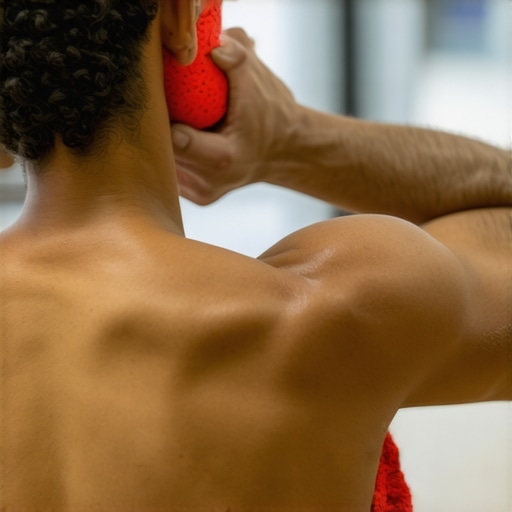
Maintaining the progress you’ve made with nerve flossing and adjustments isn’t about spending two hours at the gym; it’s about the surgical application of the right tools at the right time. I’ve wasted hundreds of dollars on vibrating foam rollers and ‘miracle’ posture shirts, but I always come back to a simple, high-density lacrosse ball. Why? Because most people make the foam roller mistake that worsens shoulder impingement by applying broad, blunt pressure to a delicate joint. A lacrosse ball, however, allows you to pin down the specific fascia near the first rib or the rhomboids, creating a fulcrum for the nerve to glide against. I personally use it every evening to tackle the specific points where my desk work creates a ‘snag’ in my neural path.
The gear that actually stays in my gym bag
Beyond the lacrosse ball, I recommend a high-quality Voodoo Floss band for ‘tack and stretch’ work on the forearms. By briefly compressing the tissue and then moving through a full range of motion, you are essentially ‘re-hydrating’ the sliding surfaces the nerves rely on. This is a vital part of how to boost your sports rehab journey with proven chiropractic strategies. If you aren’t addressing the quality of the ‘tunnel’ the nerve lives in, you’re only doing half the work. I also suggest looking into your sleep setup; I’ve found that the simple way to sleep without waking up with a stiff neck often involves a specific cervical roll that keeps the ‘upstream’ nerve roots open while you dream.
How do I maintain nerve mobility over time?
Consistency beats intensity every single time. Dr. Michael Shacklock, a world-renowned expert in neurodynamics, points out that nerves are sensitive to even small changes in pressure. This means that a 30-second glide performed three times a day is infinitely more effective than a 30-minute session once a week. You have to teach your nervous system that this new, sliding range of motion is safe. I integrate this into my life by using how to use a lacrosse ball to melt away mid-back knots as a ‘buffer’ between my work day and my workout. This ensures that I’m not carrying the day’s tension into a heavy lifting session.
The future of biofeedback and spinal health
I predict that within the next five years, we will see a massive shift toward wearable biofeedback sensors that monitor ‘neural tension’ in real-time. Instead of waiting for the numbness to start, your watch will vibrate when your neck posture begins to ‘pinch’ the brachial plexus. We are moving away from reactive ‘fixing’ and toward proactive ‘tuning.’ Until then, the best insurance policy you have is strategic chiropractic solutions for long-term back health that focus on joint spacing and neural clearance. Combining these professional adjustments with essential tips for managing back pain through healthy lifestyle choices creates a resilient body that doesn’t ‘glitch’ under stress. My advanced tip for you today: try performing your nerve glides while hanging passively from a pull-up bar. The added decompression from the hang makes the nerve glide significantly more effective.
The Neural Secrets I Had to Learn the Hard Way
My biggest lightbulb moment was realizing that nerves are the body’s alarm system, not just static wires. When I stopped trying to ‘kill the pain’ and started listening to the ‘why’ behind the tension, everything changed. I learned that my wrist pain was often just a scream for help from a compressed neck, a concept that changed how I view every injury. I also realized that consistency isn’t about intensity; it’s about frequency. Five minutes of gentle work throughout the day beats a one-hour ‘beast mode’ session every time because nerves need constant reminders of safety. Finally, I discovered that true relief comes when you stop chasing the shadow and start addressing the light—meaning you look at the source, not just the symptom.
Gear That Actually Moves the Needle for Recovery
I don’t believe in buying every gadget on the market, but a few items are game-changers for maintaining neural space. I swear by a high-density lacrosse ball for pinning down stubborn fascia that traps nerves. I also keep a Voodoo Floss band in my bag to ‘shear’ the tissue around the carpal tunnel, which is a vital part of how to boost your sports rehab journey with proven chiropractic strategies. Finally, I never travel without a specific cervical roll because the simple way to sleep without waking up with a stiff neck is to ensure those upstream nerve roots aren’t being crushed while you dream.
[IMAGE_PLACEHOLDER]
Your Future Without the Constant Numbness
You don’t have to live with a hand that feels like a wooden block or a grip that fails you when it matters most. By integrating the nerve gliding routine that helps relieve arm numbness into your daily habits, you are taking back control of your nervous system. Real progress happens when you stop fighting your body’s protective signals and start working with its biology. Whether you choose to pursue strategic chiropractic solutions for long-term back health or commit to a daily habit of nerve flossing, the key is to stay the course. You now have the mechanical keys to unlock your potential; it is time to turn them. Have you ever noticed your hand numbness flare up specifically when you are stressed or after a long day at the desk? Let me know in the comments below.